Key takeaways
- Fixed screw patterns and hard takt targets usually favor dedicated multi-spindle equipment.
- High mix, frequent engineering changes, and uncertain volumes usually favor cobot screwdriving.
- Torque traceability depends on calibrated drivers and data capture, not on the robot label alone.
- Production life and fixture burden are often the final tie-breakers when both paths look viable.
Which one fits your line?
If your product has a fixed screw pattern, stable volumes, and a hard takt target, dedicated multi-spindle equipment is usually the better choice. If your line changes models often, engineering keeps moving holes and stack-ups, or launch volumes are still uncertain, a cobot screwdriving cell is usually the safer bet.
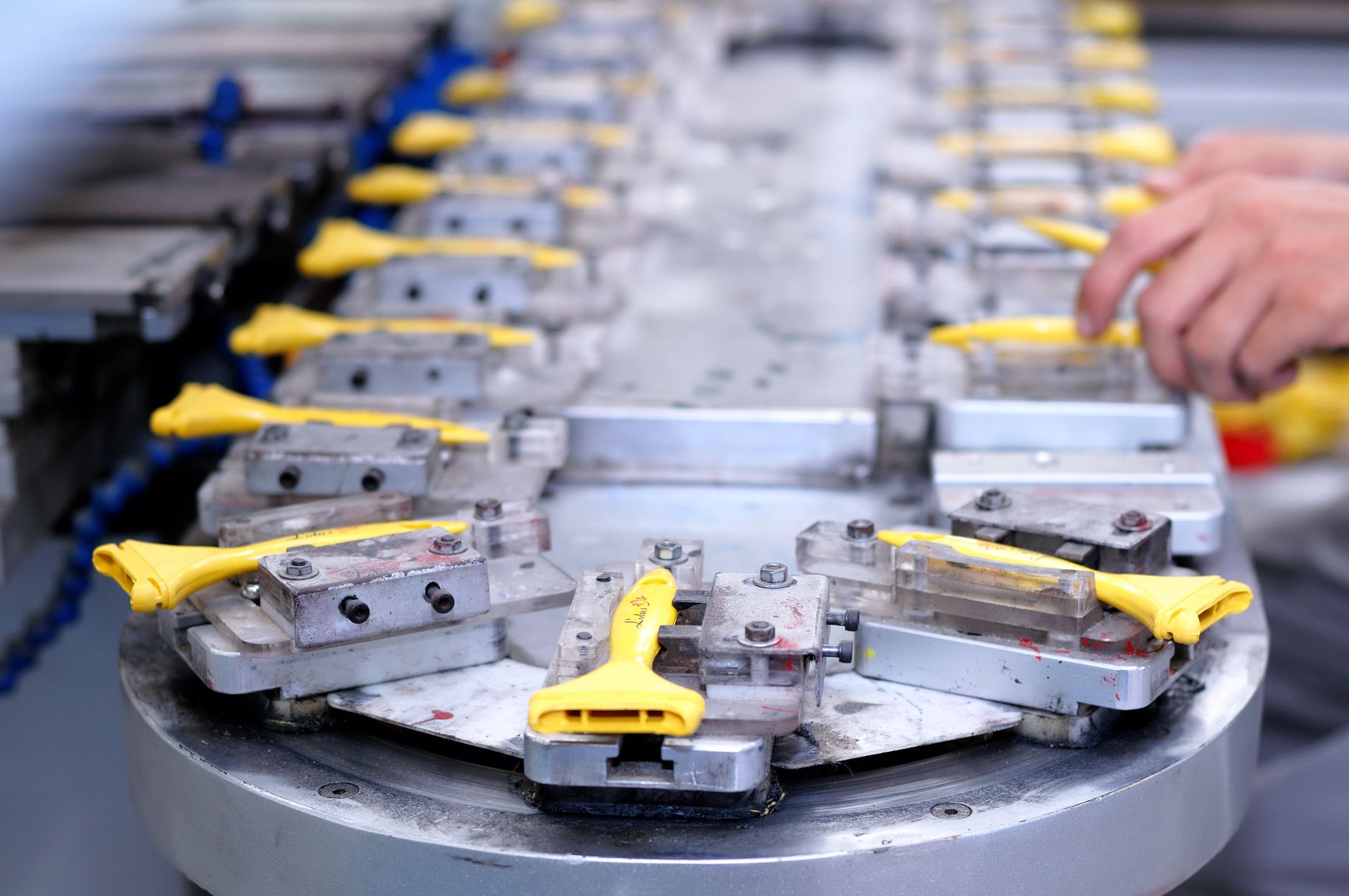
The reason is simple. Multi-spindle stations buy speed by driving several fasteners at once. Cobot cells buy flexibility by moving to many positions with one tool, accepting more motion time in exchange for easier reprogramming, lower fixture exposure, and simpler relocation.
A 2026 assembly automation case study documented a six-spindle station that completed all fastening in 2.8 seconds with torque-angle verification. That is the ceiling a flexible cobot cell is usually competing against. The right choice comes down to takt, model variety, traceability demands, fixture burden, and how long the assembly is likely to stay unchanged.
When does cycle time settle it?
Cycle time usually settles the argument first. A 2026 automatic screwdriving product sheet lists 1 to 3 seconds as possible for a single fastening cycle, depending on access and head size. That is before you add robot travel, settle time, bit approach, retract, and any screw-present retries.
By inference from those data points, a cobot cell stays competitive when screw counts are modest or the line values flexibility more than pure takt. Once the part carries four, six, or eight screws on a frozen pattern, simultaneous tightening changes the math fast. Multi-spindle equipment compresses motion out of the cycle instead of trying to optimize it away.
- One or two screws per part keeps a cobot in the conversation.
- Four or more screws on a fixed pattern usually tilts the case toward dedicated multi-spindle hardware.
- Mixed screw patterns and frequent design revisions give the cobot back some ground.
How much variety can the process absorb?
Model variety is where cobots earn their keep. According to NIST, collaborative robots are especially attractive for high-mix, low-volume manufacturers because they can adapt to part variation with minimal programming and reduce the need for custom fixturing. NIST also points to shops with 50 to 500 employees, family product mix, and desired payback periods around six months as a strong fit.
Dedicated multi-spindle equipment likes the opposite condition. It pays off when the screw map, clamp stack, and presentation geometry are disciplined enough to justify hard tooling. If every quarter brings a new enclosure, bracket, or accessory pack, the fixture library can start growing faster than the output gain.
What does traceability really demand?
Traceability is not about the arm alone. It is about calibrated torque generation, pass-fail logic, part identification, and storing records in a form quality can retrieve later. NIST notes that torque traceability rests on metrological traceability, and its current ENTR_v2 program covers 0.01 to 1 N m at 0.1 percent accuracy, with ENTR_v3 under development for 0.01 to 340 N m at 0.5 percent accuracy.
In practice, both approaches can produce per-fastener records if the driver and controls are instrumented correctly. Multi-spindle stations often make this easier at volume because every spindle lives in a fixed, repeatable station. A cobot can absolutely do torque-angle capture too, but only if the data architecture is specified from day one and not bolted on after launch.
Where fixture cost changes the answer
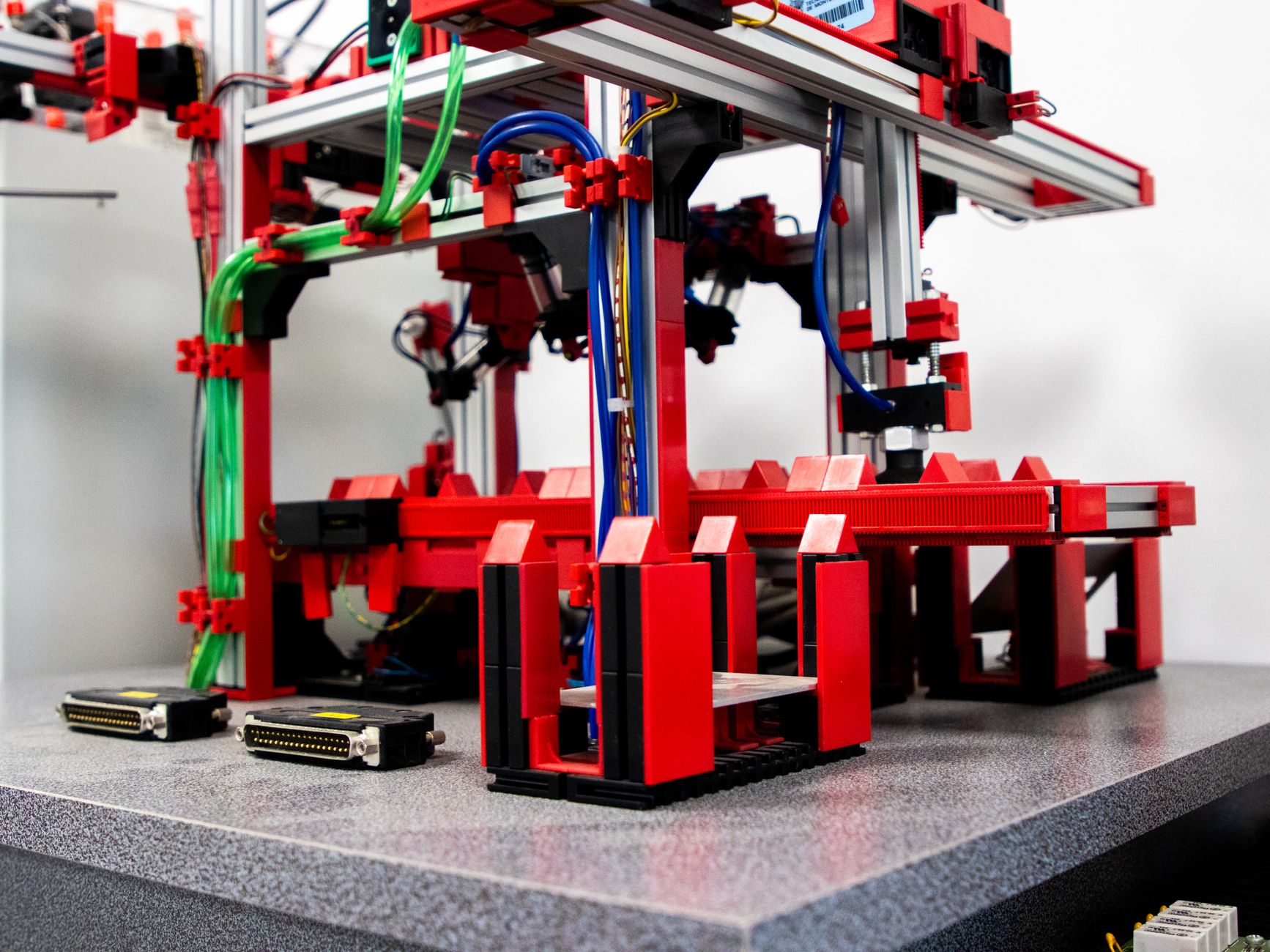
Fixture cost is the quiet line item that flips many buying decisions. A multi-spindle head only delivers its famous speed when the part is presented in the same place, at the same orientation, with the same hole pattern and stack height, every cycle. The hardware around the spindles, nests, locators, clamps, escapements, and poka-yoke, often becomes the real project.
Cobots usually ask for less hard tooling. That is one reason NIST highlights their value in high-mix work. You still need stable presentation and a serious fastening process, but vision, compliance, and simpler part holding can absorb more variation than a dedicated head built around one exact pattern.
How painful will changeovers be?
According to ISO's guidance on ISO/TS 15066, collaborative cells are built around techniques such as safety-rated monitored stop, hand guiding, speed and separation monitoring, and power and force limiting. My inference is straightforward. Shared-space flexibility comes with a speed discipline that favors quick recipe changes more than maximum mechanical output.
On a cobot cell, a new model might mean a new recipe, a different bit, revised screw feed settings, and a quick teach touch-up. On a multi-spindle station, the same change can mean a new nest, new center distances, a new head plate, altered reaction control, or no practical change at all if the product family was standardized properly. That spread is why changeover risk has to be discussed before PO, not after FAT.
- Ask how often engineering changes hole locations after SOP.
- Ask if screw count and pitch stay common across the family.
- Ask how long each model stays active before the next revision lands.
What does year-three maintenance look like?
Maintenance is different, not lighter. A dedicated multi-spindle station concentrates wear in slides, spindles, feeders, mechanical reaction elements, and custom tooling. When it drifts, the fault pattern is often easy to repeat and diagnose, but one station problem can stop every fastener on the part at once.
A cobot cell usually has fewer custom mechanical elements, but it depends more on TCP accuracy, sensor health, safety devices, and reliable screw presentation. The ergonomic upside is real. OSHA lists excessive force, repetitive motion, awkward posture, and vibration as core MSD risk factors, and BLS reported 332,600 manufacturing injury and illness cases in 2024, a rate of 2.7 per 100 full-time workers. Manual screwdriving is not the only contributor, but it is exactly the kind of repetitive task many plants want off human wrists and shoulders.
How long will this assembly stay alive?
Production life is the tie-breaker when the first six categories feel close. A Springer review on reconfigurable manufacturing argues that manufacturers keep getting pushed toward more responsive systems because product variety, shorter lifecycles, and demand swings punish rigid equipment. That is not an argument against dedicated fastening. It is a reminder to size dedication to the life of the product, not to the excitement of launch.
If the assembly is mature, the annual volume is dependable, and the screw pattern is unlikely to move, dedicated multi-spindle equipment can compound its advantage year after year. If the product is still learning what it is, a flexible cobot cell often protects capital and reduces regret. Bad fits usually come from buying speed for a product that will not stay still, or buying flexibility for a product that stopped changing long ago.
Where Service Robot Co. fits
That is why a vendor neutral robot integrator matters. Service Robot Co. is a full-service commercial robot integrator for US businesses. We stay OEM-neutral, pick the right robots across manufacturers, then finance, deploy, integrate, train, and service every unit through a nationwide US engineer network. One vendor for the whole lifecycle, and that includes telling a plant when a dedicated fastening machine is the smarter call.
For teams still proving the process, a collaborative robot arm lease, cobot leasing for manufacturing, or manufacturing plant robot leasing can validate torque windows, screw presentation, and operator flow before anyone freezes hard tooling. From there, the same program can roll into robot financing for small business, monthly payment programs, a lease purchase program, phased deployment no shutdown planning, robot deployment and integration, and a robot maintenance service plan. The buying decision gets better when the process is proven first and the architecture is chosen second.