Key takeaways
- A renovation is the easiest moment to shape the edges a fairway mower depends on.
- Measure slopes after final grading, and treat drop offs and wet banks as hard stops.
- Build transition strips with a consistent width so the mapping has a clear edge to hold.
- Keep every public road and shared drive outside the autonomous route entirely.
- Start in zones with existing power and nearby supervision, then widen the route.
Does a renovation decide whether a robot mower can run the fairways?
Often, yes. A rebuild is the one stretch of time when you can reshape edges, grades and crossings at the lowest disruption, and an autonomous fairway mower depends on exactly those features. If the map shows a clean edge, a manageable grade and a route that never leaves the property, the machine can cut with light supervision. If the course was shaped around hand mowing, the robot will spend its days finding exceptions.
Golfdom's November and December 2025 issue carries superintendent guidance on layout suitability for autonomous fairway mowers. Read that guidance before the club signs off on the plan. The checks below draw on vendor documentation and trade coverage, and each one should be confirmed against the specific mower model and your own ground.
How steep can the banks be before a mower stops?
Slope is the first gate. Golf Course Architecture Issue 80 (April 2025) reports a claim that robotic mowers can handle slopes up to 70 percent. That figure comes from a manufacturer adjacent source and was not independently tested, so read it as the ceiling a vendor advertises, not a number to design to.
Measure grades after final shaping, not from the plan drawing. A bank that looks gentle on paper can hold a drainage line or a soft spot that changes traction after rain, so mark wet faces and drop offs as separate limits.
- Survey grades after final shaping and seeding, then map from that survey.
- Mark drop offs, bunker lips and pond banks as hard stop lines.
- Flag north facing banks that hold water as wet weather holds.
How should a transition strip between fairway and rough be built?
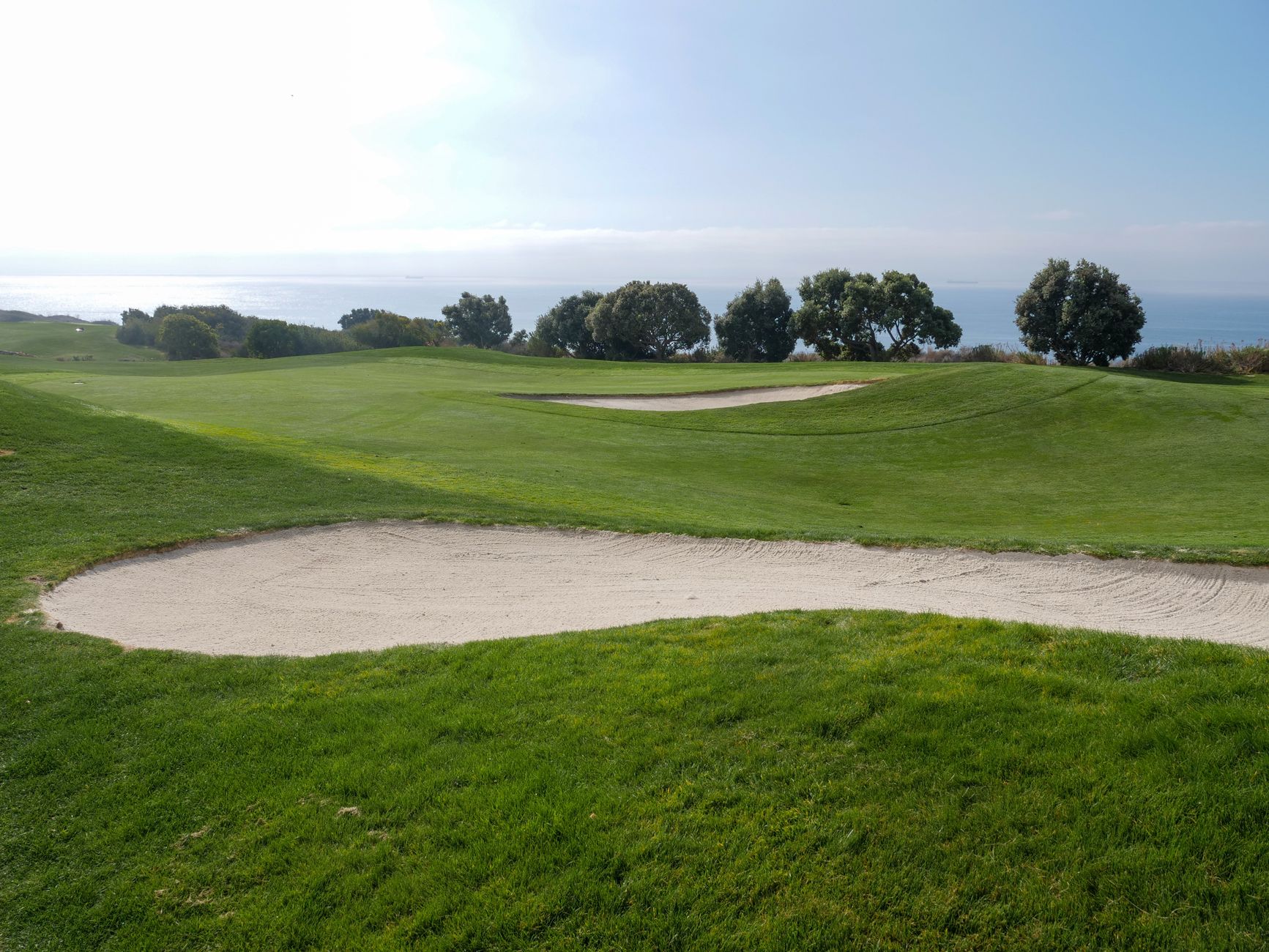
Transition strips are where renovations most often trip a robot. As of November 2026, Husqvarna describes its First Cut function, for CEORA and Automower 580L EPOS models, as a free software update that creates a transition zone between fairway and rough. According to that material, the greenkeeper refines the zone, and each zone can carry its own cutting height and schedule. That is a vendor account, and Husqvarna also points out that legacy mapping never tidied may need groundwork first.
The build matters as much as the software. A strip with a consistent width and a clearly defined edge gives the mapping something to hold. A ragged edge, or a blend of sod and rough, gives it a guess, and a guess is what triggers a hold.
Where do public roads and crossings go in the design?
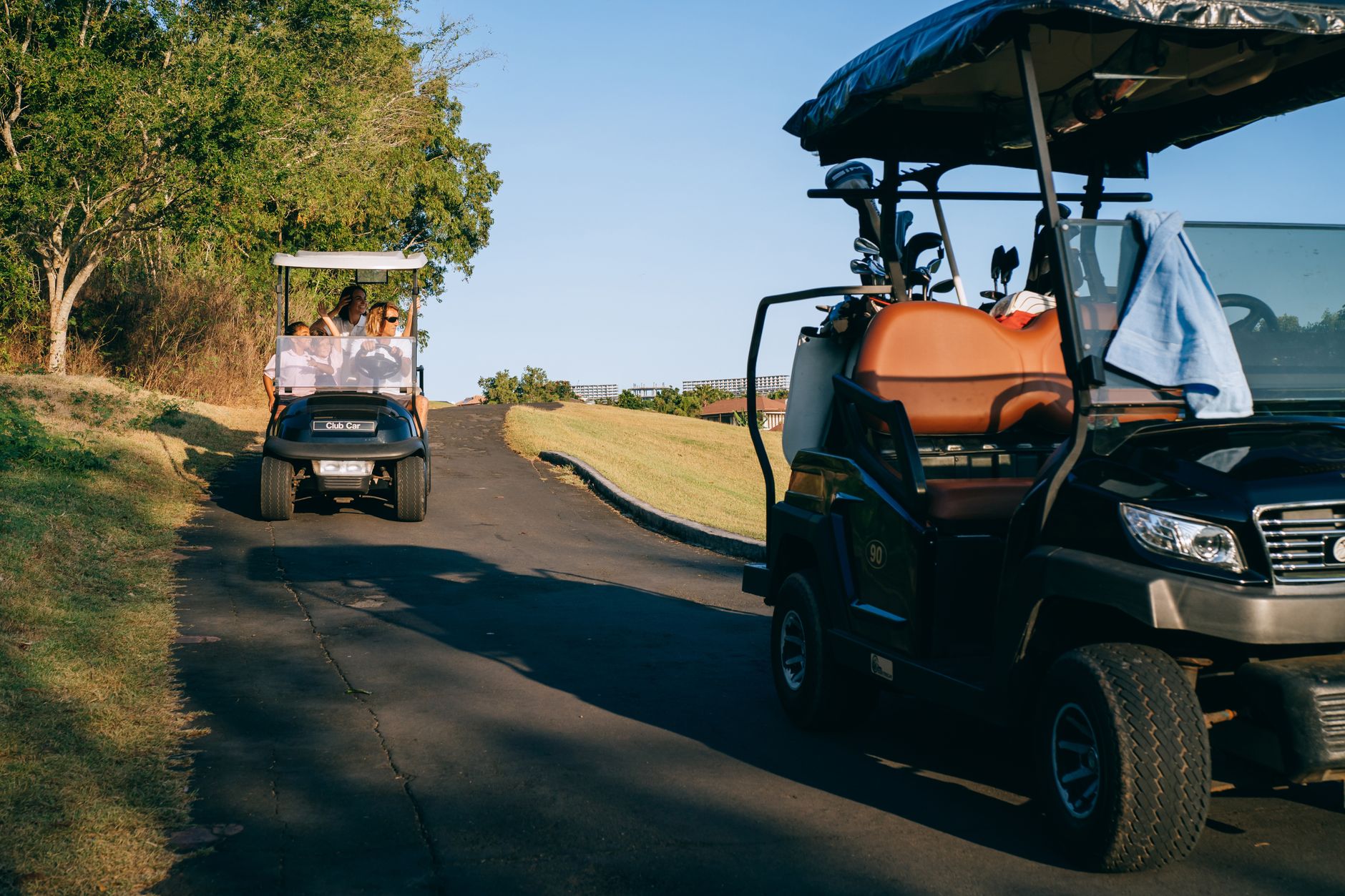
The rule is simple. A robot mower should never need a public road to reach the next fairway. Treat every road frontage, shared drive and neighbor boundary as an exclusion zone on the map, not a line the operator is trusted to remember.
Walk the boundary with the crew and mark where fairways touch a street, or where the only link between two holes runs over a cart path or a culvert. Redesign that link where you can. Where you cannot, add a crossing point with a supervised hold, or keep that stretch on manual mowing. Creek crossings and bridge ramps belong on the same list.
Where should the first mowing zones start?
Start where power and supervision already exist. Trade guidance on rollout points toward areas with existing power, such as the clubhouse, the driving range, halfway houses and adjacent holes. Clubhouse surrounds also keep the machine away from some cart and foot traffic while the crew learns its habits.
Begin with one zone or a handful of holes, then widen the route once the first weeks show where the mower holds and where it stops.
How do boundaries and maps get set during the rebuild?
Boundary setup belongs in the renovation schedule, not after it. Toro says its autonomous mowers were a key tool during the renovation at Interlachen Country Club, which is returning some original course features. That is a vendor account, but it shows mapping happening inside the rebuild rather than after it.
Husqvarna's approach at a Golfdom Summit involved driving the mowers around the service area to create a geofence. Map after the grade is final, because a moved edge makes the recorded boundary wrong.
This is the step Service Robot Co. runs during a site assessment. We are OEM neutral, so the mower model follows the course rather than a catalog. We lease robots through financing on a lease running three years, with one fixed lease payment quoted after the site assessment, then deploy, integrate, train and service each unit under RoboCare.
What stays with the crew on a renovated course?
Greens are the clearest limit. An older USGA Green Section Record article, Rise of the Machines, says autonomous mowing of greens was not then available to superintendents. Check the article date and current guidance before assuming it still holds, but plan greens as crew work for now.
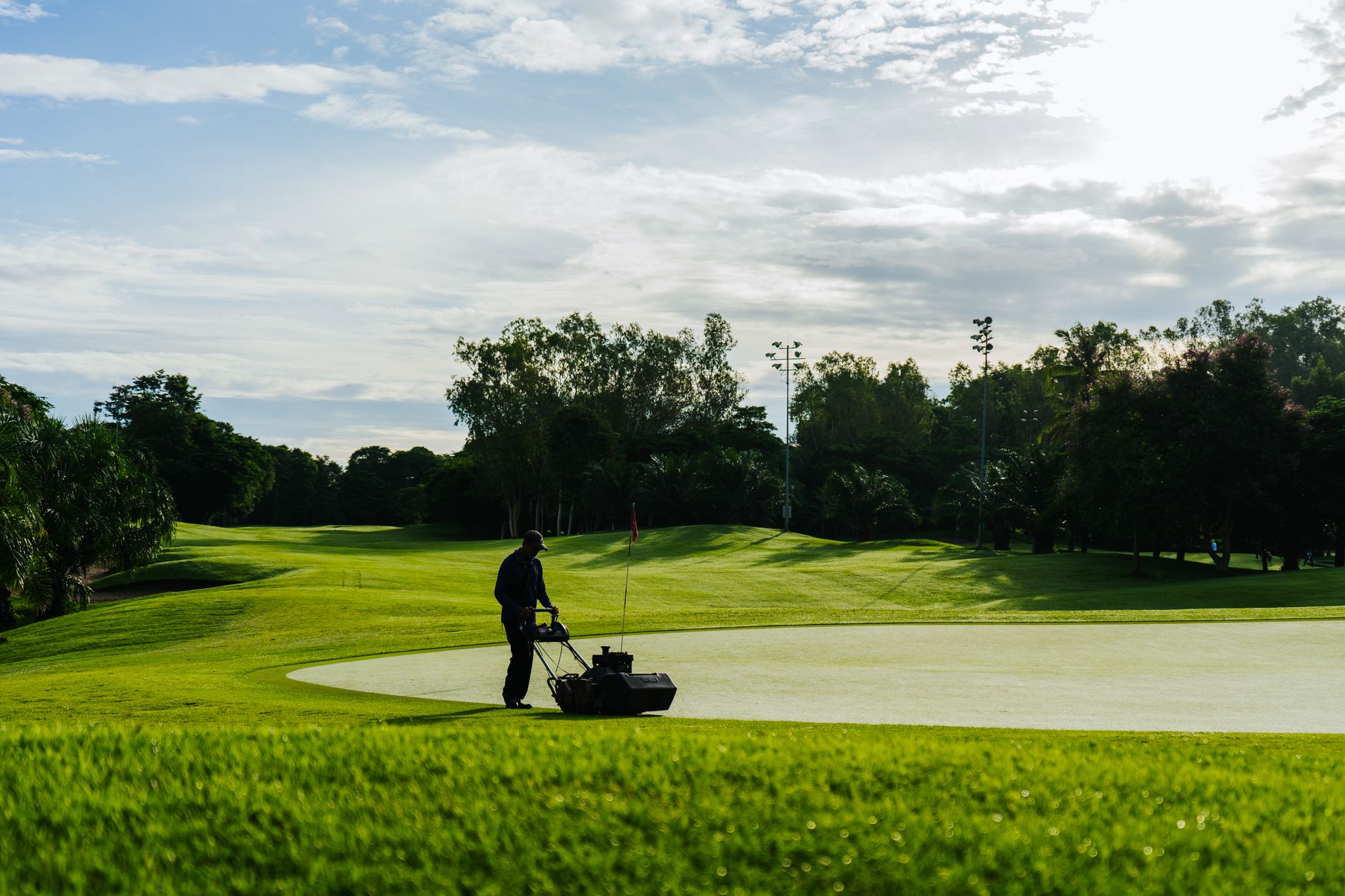
Hand work stays too: trimming around obstacles, and edges the machine cannot read. Put those hours in the budget before counting the fairway fleet as freed crew time.
Frequently asked questions
Want a robot working for you?
Tell us the job and the site. We will recommend the robot, quote the lease, and keep it serviced.
Sources
- Golfdom November and December 2025 issue
- Golf Course Architecture, Issue 80 (April 2025)
- Golf Business News: Husqvarna adds First Cut functionality
- Golf Business Monitor: Husqvarna First Cut review
- Star Tribune: Toro autonomous golf course mowers
- USGA Green Section Record: Rise of the Machines
- Golfdom: Are autonomous mowers the solution to the labor crisis
- Golfdom: How old school superintendents can embrace the newest technology