Key takeaways
- Yes, a robot can pay off in quick-lube, but mainly on customer-facing hard floor, not active service bays.
- Use current BLS labor benchmarks of $17.71 wage and $23.63 total compensation per hour in your break-even math.
- Slip control matters because BLS logged 479,480 private-industry fall, slip, and trip cases with days away from work over 2023 and 2024.
- Commercial cleaning robot leasing usually makes more sense than buying first in a wet, chemically messy quick-lube site.
- OEM-neutral deployment and nationwide service coverage matter more here than brand loyalty.
Yes, but only on the right square feet
Yes. A robot can pay off in a quick-lube service center when it owns the customer-facing hard floor instead of trying to clean the whole shop. The best targets are wet entrances, waiting areas, and service write-up lanes during slow windows or after close. The worst target is the active bay itself, where fresh oil, hoses, jacks, drains, and constant vehicle motion turn a floor machine into a traffic problem.
The labor math is better than many operators assume. The U.S. Bureau of Labor Statistics lists a median hourly wage of $17.71 for janitors and building cleaners in May 2025. Its March 2026 employer-cost data puts total compensation for service occupations at $23.63 per hour. If a robot reliably removes recurring close-out scrubbing, the dollar value is not trivial.
Safety gives the case real bite. OSHA says floors must be kept clean and, to the extent feasible, dry, and kept free of leaks and spills. BLS says falls, slips, and trips generated 479,480 private-industry cases with days away from work over 2023 and 2024, with a median 13 days away. In a quick-lube setting, a robot earns its keep when it cuts routine labor and helps keep slick public areas under control.
Why is quick-lube floor care its own niche?
This is a real niche, not an edge case. The U.S. Census Bureau counts 9,085 employer establishments in NAICS 811191, Automotive Oil Change and Lubrication Shops. The same 2023 federal data set reports $11.098 billion in revenue for the category. A lot of small, messy, high-turnover facilities live inside that number.
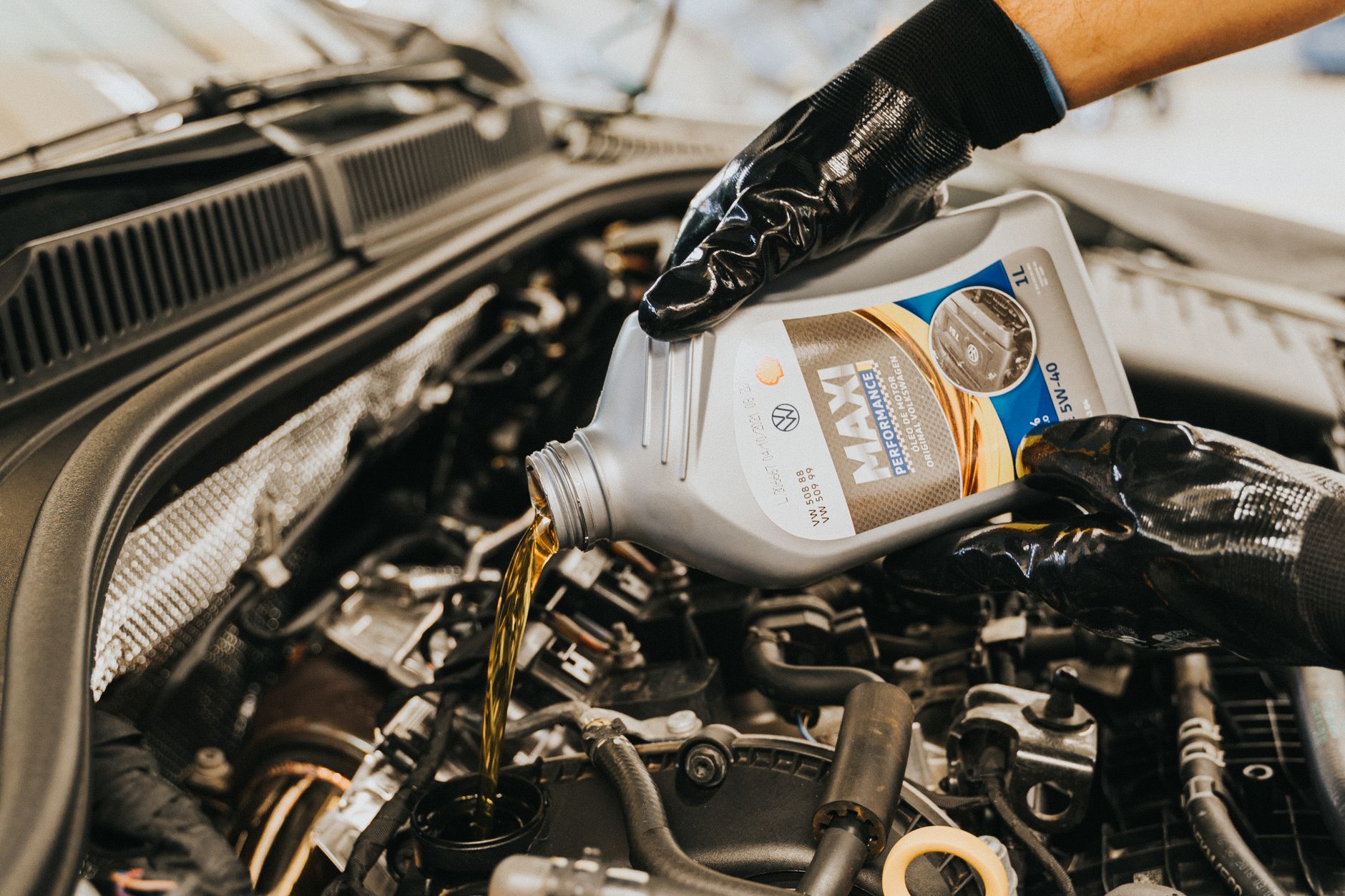
Quick-lube floors also carry a peculiar soil mix. EPA notes that service stations, fleet maintenance facilities, and quick lube shops generate and handle used oil, and that used oil can be contaminated by dirt, metal scrapings, water, or chemicals. That is why a center can look clean at 3 p.m. and develop a greasy track line by 5 p.m.
Chemical exposure is part of the picture too. NIOSH lists mineral oil mist exposure routes as inhalation, skin contact, and eye contact, and lists irritation of the eyes, skin, and respiratory system among the symptoms. A robot in this environment is not just polishing appearance. It has to manage residue without smearing it through customer space or turning it into a fresh hazard.
What part of the slip problem can a robot actually fix?

Not all slip risk is fair to assign to automation. A robot will not replace absorbent, hand cleanup for a sudden sump spill inside an active bay. It also will not make a neglected mat program disappear. What it can do is keep the repeat-offender zones cleaner on schedule instead of waiting for a porter, a service writer, or a technician to notice the floor has gone bad again.
That distinction matters because same-level incidents are costly in time. In the BLS data, falls, slips, and trips serious enough to cause days away from work carried a median of 13 lost days. For an operator running lean, even one preventable lobby or write-up-lane fall can upend the savings from a month of manual floor care.
So the sensible safety claim is modest but important. A robot is not a substitute for spill response. It is a consistency tool. Consistency is exactly what busy quick-lube centers struggle to maintain between the first rainy car of the morning and the last greasy close of the night.
Which areas belong on the robot map?
The winning map is narrower than many buyers expect. In this niche, robotic floor care pays back when the route stays disciplined and repeatable. Public hard floor, lightly controlled traffic, and predictable close-out windows are friendly terrain. Bay interiors and anything with routine liquid pooling are not.
That is why a site survey matters. The robot that pays off here is the robot that fits your floor, your thresholds, your mats, and your traffic pattern. Map too much, and the machine spends its time getting interrupted. Map the stable square feet, and it starts behaving like dependable overnight floor care.
- Front vestibules and entry tile that take in rainwater, road grit, and tracked oil.
- Customer waiting areas with hard flooring, especially spaces that must look presentable all day.
- Service write-up lanes after peak rushes or after the last vehicle handoff.
- Interior corridors and back-office hard floor outside the active maintenance zone.
- Skip active service bays, pit edges, lift areas, hose crossings, and any floor that routinely holds fresh oil or standing water.
How should you model payback?
Start with labor-only break-even. Take the monthly program cost and divide it by your hourly labor value. The conservative floor is the BLS May 2025 median janitor wage of $17.71. A better employer-side benchmark is the BLS March 2026 total compensation figure for service occupations, $23.63 per hour. That gives you a clean threshold for how many cleaning hours must disappear each month before the robot has paid for itself on labor alone.
Then add only the operational gains the site can truly prove. Count closing-time scrubbing that no longer falls on supervisors or technicians. Count midday recleans in wet entrances and waiting areas if the robot actually performs them. Count manager call-backs avoided because the floor is reset before open. Do not count bay degreasing, emergency spill cleanup, or any task the machine cannot do safely.
That last point is easy to miss. A quick-lube site can look robot-ready in a dry walkthrough and become a different building during the first storm. If the machine holds up when entries turn slick and write-up lanes start tracking residue, the payback case gets much stronger.
- Use wage-only math as the low case.
- Use loaded employer labor as the decision case.
- Treat safety improvement as upside, not the whole justification.
- Exclude square footage that needs manual degreasing first.
- Run a pilot long enough to include rainy days, not just clean-weather weeks.
What safety headaches can a robot create, and how do you prevent them?
The main failure mode is not that the machine misses dirt. It is that the deployment ignores the shop rhythm. A robot can create headaches if it blocks egress, crosses active vehicle paths, drags oil past the threshold between shop and lobby, or docks where staff need to move fast at close. Those are deployment errors, not proof that robotic floor care cannot work here.
Chemical housekeeping matters too. EPA emphasizes spill cleanup and good housekeeping for used-oil handlers, and NIOSH reminds employers that mineral oil mist exposure involves skin and eye contact as well as inhalation. In practice, that means using the right pads, the right detergent, and strict no-go zones around fresh contamination. A robot should be removing routine tracked-in residue, not chasing fresh spills.
Good programs keep the rules simple. Clean wet entries on schedule. Clean public hard floor after the rush. Keep humans on sudden spills and heavy degreasing. Train the closing crew to inspect the route, empty recovery tanks, and verify that mats and thresholds are set before the machine starts its run.

Lease or buy?
For many operators, a commercial cleaning robot lease is the cleaner first step. A robot lease monthly plan, a service robot lease program, a floor scrubber monthly lease, or a broader leasing arrangement keeps the spend in operating expense. These monthly payment programs make a single-site test easier to stomach. In a niche with unpredictable soil loads, no upfront capital and no long term contract can be more valuable than owning hardware early.
This is also the point where full-lifecycle support starts mattering more than the machine itself. A quick-lube operator should look for RoboCare™ service, remote triage, on-site dispatch, training, and a clear backup plan if the unit goes down. If the program is sold as cheap commercial robot leasing but the service model is thin, the buyer often ends up paying for downtime in labor anyway.
Service Robot Co. fits this buying pattern well because it operates as a full-service commercial robot integrator for U.S. businesses, not a single-brand reseller. The company is OEM-neutral, then handles finance, deployment, integration, training, and service through a nationwide U.S. engineer network. For a quick-lube group, that means one partner, one number, and one vendor for the whole lifecycle across purchase or lease, robot financing for small business, go-live support, and commercial robot repair service.
The smarter starting point is a free site assessment from a vendor neutral robot integrator. If you are pricing an autonomous floor scrubber lease or a robot floor cleaner lease, compare the support stack before you compare the monthly line item. That is also the right moment to compare robot leasing vs buying and any lease purchase program.
The practical verdict
A robot usually pays off in a quick-lube center when the facility has enough stable public hard floor to clean every day, enough soil load to force repeated recleans, and enough closing labor that managers can feel the drag. It usually disappoints when buyers expect a general-purpose machine to clean active bays like a human with absorbent, degreaser, and judgment.
So the right test is not Can a robot clean this building. The right test is Can a robot own the predictable square feet that keep bothering us. In quick-lube, that is often enough. Get the map right, keep the safety rules tight, and pair the machine with a service robot lease or robot leasing for business program that includes real support. Then the payoff case moves from theory to operations.
Frequently asked questions
Sources
- Census profile for automotive oil change shops
- Census revenue table for NAICS 811191
- EPA used oil guidance for businesses
- OSHA walking-working surfaces rule
- CDC NIOSH pocket guide for mineral oil mist
- BLS janitors and building cleaners wage data
- BLS employer compensation table for service occupations
- BLS slips, trips, and falls injury table