
Key takeaways
- Whole-blood drone delivery makes operational sense when a trauma network has concentrated severe bleeding incidents, short flight paths, and EMS crews already trained to transfuse in the field.
- The August 3, 2026 Tampa General announcement matters because it ties blood logistics to dispatch, fire rescue stations, and trauma physicians, not to a stand-alone drone demo.
- The hard part is not the aircraft. It is the cold chain, launch authority, landing or drop workflow, clinical documentation, and backup procedures when weather or airspace shuts flights down.
- Regional programs work best when one neutral integrator connects drones, EMS, dispatch, hospital logistics, training, and service under a single operating model.
When does whole-blood drone delivery actually make sense?
It makes sense when blood must reach a trauma scene faster than a ground unit can reliably move it, and when EMS crews can put that blood to work the moment it arrives. In that setting, a drone is not a publicity device. It is a time-compression tool for hemorrhage cases where minutes carry real clinical weight.
That is why the August 3, 2026 announcement from Tampa General Hospital deserves attention. Tampa General said its new EMS-driven whole-blood drone program is designed to deliver blood in under three minutes on average across a 70 square mile area in Hillsborough County, with operations tied to Hillsborough County Fire Rescue and aimed at getting transfusion capability to the scene before hospital arrival.
The sharper answer, then, is this: whole-blood drone delivery fits a regional trauma network when three conditions line up at once. The network has enough severe bleeding incidents in defined zones to justify dedicated coverage. Field clinicians already have a protocol for prehospital transfusion. And the air operation can be made routine within FAA rules, local approvals, and blood-bank handling requirements.
Why this use case is different from general medical drone talk
Much of the medical-drone discussion drifts into specimen shuttles, pharmacy drops, or vague future-state claims. Whole blood is different. It has a narrow mission, a higher operational burden, and a much clearer payoff threshold. The patient is usually unstable, the receiving clinician is already on scene, and the product has to arrive ready for immediate use.
According to the American College of Surgeons, uncontrolled bleeding is the leading cause of preventable trauma death. The same organization has argued that quicker field access to blood could save thousands of lives each year. That does not mean every county should launch drones. It means the target problem is serious enough to justify a disciplined network design where the geography, call volume, and EMS skill set support it.
Tampa General’s structure is notable for another reason. The initial deployment is tied to two fire rescue stations, Station 9 and Station 37, chosen because they serve areas with high volumes of penetrating trauma and hemorrhagic injury. That is the right planning logic. Start with hot zones, not blanket coverage.
What does the operating workflow look like from 911 call to transfusion?
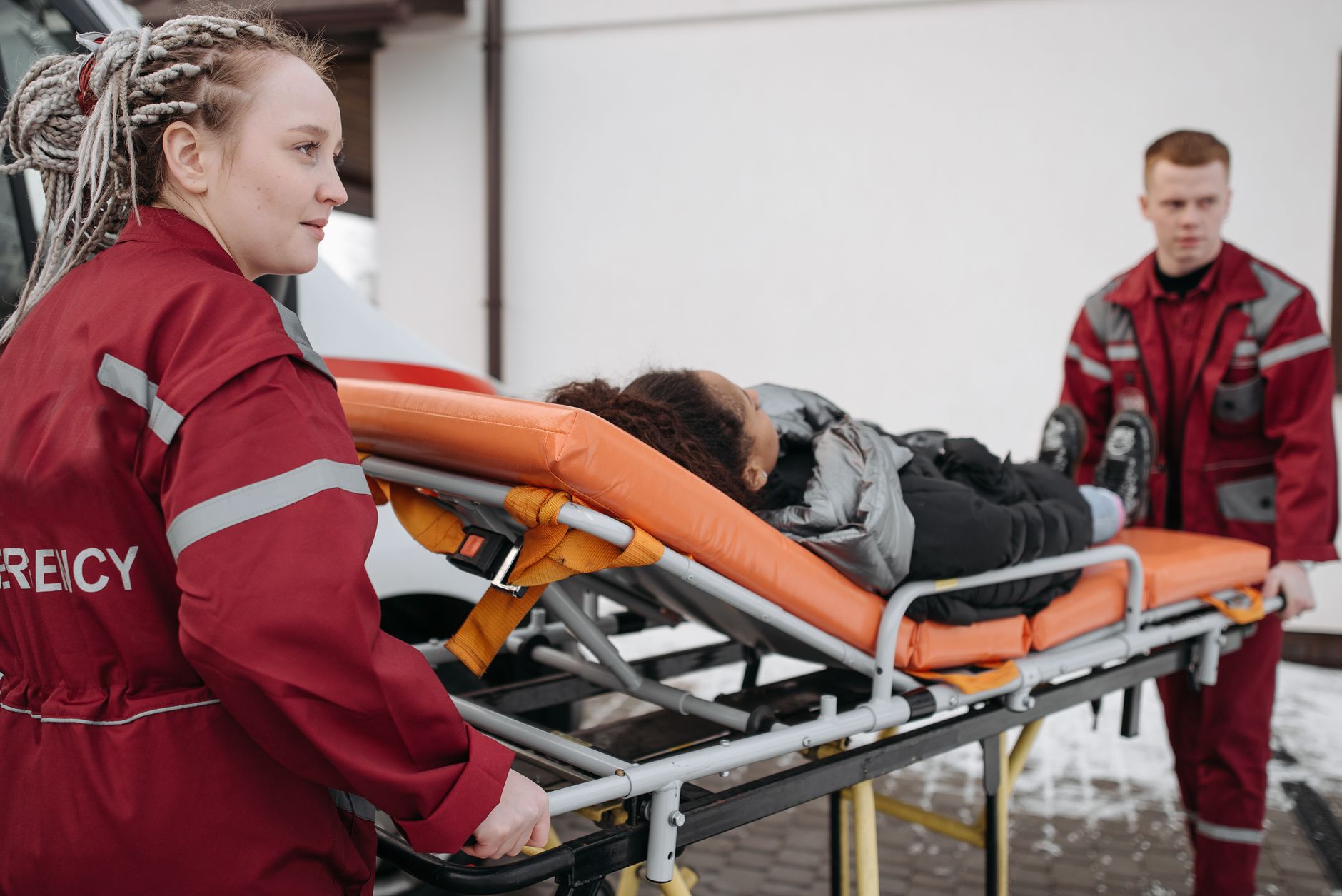
A workable program starts at dispatch, not at the drone pad. The first trigger is a 911 event that suggests life-threatening blood loss: penetrating trauma, a major crash pattern, or another high-risk hemorrhage presentation. Dispatch sends ground units as usual, but the protocol also allows a request for blood launch without waiting for the patient to reach an emergency department.
Next comes medical authority. The responding crew, under local protocol and medical oversight, confirms that the case meets criteria for prehospital blood. A drone team or automated dispatch layer launches from the nearest authorized station. The blood unit travels in a temperature-controlled payload, and the handoff point must be simple enough for a field crew to manage under pressure.
Then comes the clinical transfer. EMS receives the package, verifies chain of custody, confirms product identity, begins transfusion if indicated, and documents times, vitals, and product use. The trauma center, blood bank, and EMS quality team all need that record. If the product is not used, return and disposition rules matter just as much as the outbound flight.
- Dispatch identifies probable severe hemorrhage and pages standard EMS assets
- Eligible crew or command confirms prehospital blood criteria
- Drone launch is authorized from the assigned station or hub
- Blood arrives at a preplanned handoff point with product verification steps
- EMS starts transfusion under protocol and documents timing and use
- Hospital blood bank and trauma service reconcile the product record after the call
Where do the clinical handoffs usually break down?
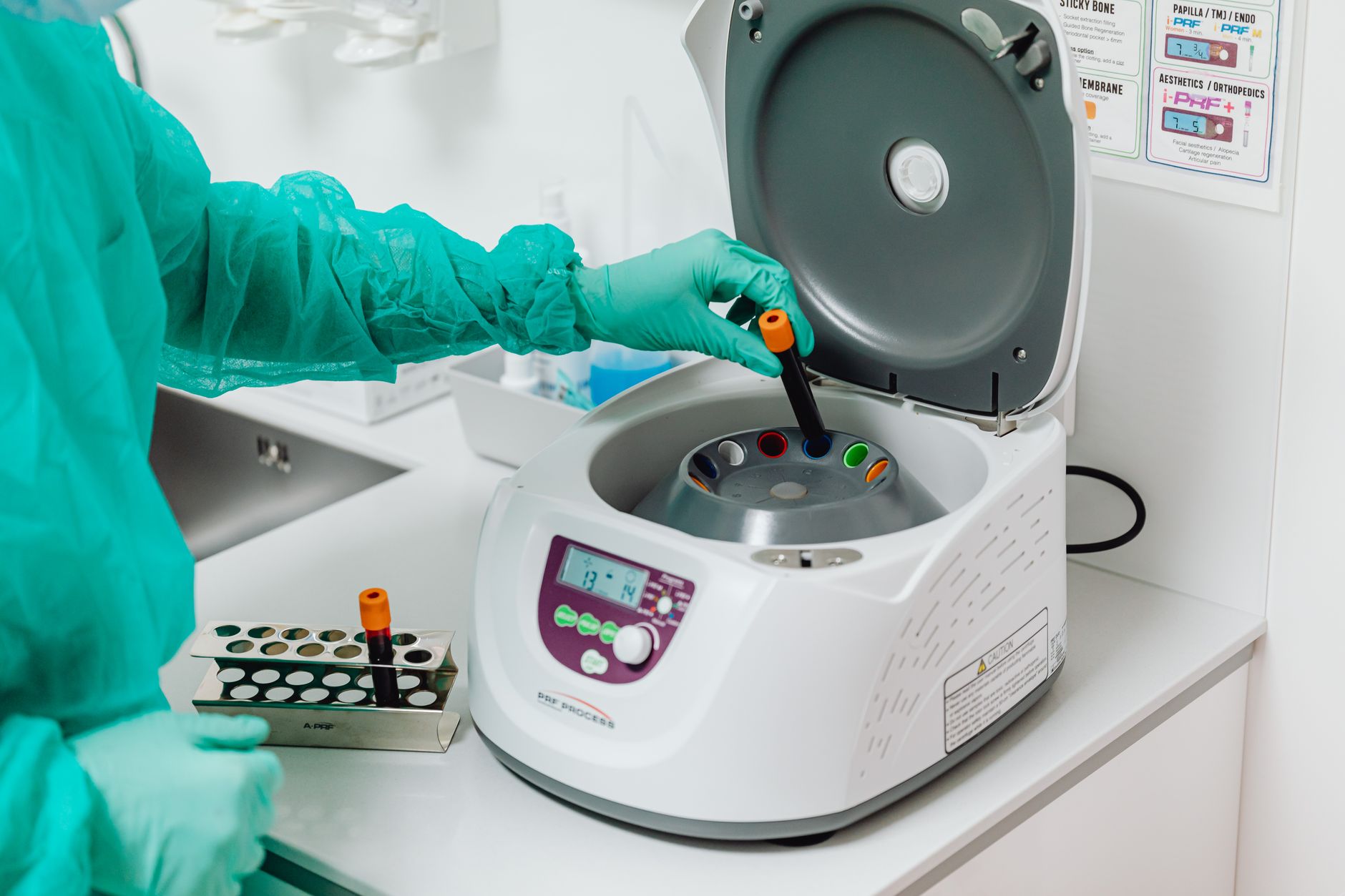
The fragile points are predictable. One is decision quality in the field. A drone can only help if the dispatch logic and medic protocol identify the right patient early enough. Another is product accountability. Whole blood cannot become an orphan package with fuzzy documentation, uncertain temperature history, or unclear responsibility after a scene changes fast.
Training matters here more than many non-clinical teams expect. The blood bank has to trust the field process. EMS has to know exactly who can request launch, who can spike the unit, what vitals or injury patterns qualify, and what to do if the patient’s status changes before arrival. According to AABB reporting on civilian EMS guidance, prehospital blood programs need clear indications, equipment standards, monitoring, medical oversight, and administrative oversight. Drone delivery does not remove any of that. It adds another handoff to get right.
There is also a placement question. AABB reported in April 2026 on geo-mapping work that used massive transfusion protocol data, trauma events, and fire-station locations to identify where prehospital whole blood resources are most needed. That is a practical lesson for drone networks too. Put aircraft where the transfusions are likely to be, not where a map looks balanced.
What airspace and approval constraints shape the model?
In the United States, this is an aviation program before it is a logistics program. FAA Part 107 still centers routine small-drone operations on visual line of sight, and beyond visual line of sight work generally requires a waiver or another approved operating path. The FAA also requires Remote ID compliance for registered drones, and operations in controlled airspace need authorization.
If a network wants recurring package delivery flights, Part 135 can enter the picture depending on the operating model. The FAA’s package-delivery guidance makes clear that safety, operator certification, and environmental review are not side notes. They are the frame around the service. Local government approval can matter too. Tampa General stated that its program was scheduled to come online in October 2026, subject to approval by the Hillsborough County Commission, with a board meeting set for September 2.
This is why regional trauma systems should treat drone blood delivery as a governed corridor program, not as a casual add-on. Weather minima, alternate dispatch logic, launch denial criteria, geofencing, pilot responsibility, and incident reporting all need to exist before the first real trauma call.
- Visual line of sight limits under Part 107 unless the operator has approved relief
- Airspace authorization requirements for controlled airspace
- Remote ID compliance for applicable aircraft
- Possible Part 135 obligations for package-delivery operating models
- County or municipal approvals for public-safety deployment
- Weather, noise, and emergency fallback procedures
How should a regional trauma network decide if the model pencils out operationally?
Start with the map. Look for clusters of severe bleeding incidents that sit just far enough from stocked ambulances or trauma-center supply points to create a meaningful time gap. Tampa General’s announced design is narrow on purpose: two stations, a 70 square mile service area, and an under-three-minute average target. That is a pilot geometry, not a countywide fantasy.
Then test the staffing reality. If EMS crews are not already trained, equipped, and authorized to administer whole blood in the field, the drone adds complexity without immediate benefit. The aircraft cannot be the first mature part of an immature blood program. The transfusion program has to come first, with the drone layered in where it removes travel time.
Finally, model the failure cases. What percentage of eligible calls happen in weather the aircraft cannot fly? How many launch sites are needed to preserve coverage if one pad is down? What happens when the blood unit arrives and the patient has already departed? Good programs are built around exception handling, not only best-case flight times.
Where a neutral integrator earns its keep
A regional blood-drone program cuts across organizations that do not usually buy technology together. Dispatch, EMS command, trauma surgery, the blood bank, public safety aviation, county leadership, and hospital logistics all own a piece of the risk. That is exactly where an OEM-neutral service model has real value.
Service Robot Co. fits that layer as a full-service commercial robot integrator for U.S. businesses. For a program like this, the job is not to push one aircraft or one software stack. It is to choose the right mix across manufacturers, connect the operating pieces, finance and deploy the system, train the people who touch it, and keep it running through one vendor for the lifecycle. In practice, that means robot deployment and integration, one partner one number for service, and an accountable operator sitting between clinical users and the underlying hardware.
That neutral role matters even more if the network expands beyond one use case. A trauma region may start with blood, then add specimen hops, medication movement, or other hospital delivery robot rental and autonomous mobile robot rental workflows on the ground side. A vendor neutral robot integrator can connect those layers without forcing the health system into a single-brand architecture.
What should hospital and EMS leaders watch over the next year?
The first signal is not media coverage. It is operational proof. Leaders should watch for launch reliability, scene handoff times, unused-product rates, temperature-control compliance, and whether crews actually request the service in eligible cases. If a program is clinically valuable but rarely activated, the problem is usually workflow design, not demand.
The second signal is governance maturity. Programs that last tend to publish tight eligibility criteria, train jointly across EMS and hospital teams, and review every mission like a quality case. According to FAA guidance, approvals for advanced operations are built on showing how risk is controlled. Health systems should apply the same standard internally.
The third signal is expansion discipline. Tampa General’s announced plan starts with a defined pilot area and future expansion based on early data. That is the right posture. Regional trauma networks should scale after they can prove dispatch accuracy, blood handling, and safe air operations in a bounded zone, not before.
The regional service model is the real product
Whole-blood drone delivery is easy to describe as a flight. In reality it is a regional service model made of protocols, custody, launch authority, and human trust. The aircraft matters, but it is only one moving part.
The hospitals and EMS agencies that make this work will be the ones that think like network operators. They will define where blood drones shave clinically meaningful time, where they do not, and how every handoff is governed. In that frame, the question is not whether drones are exciting. It is whether a trauma system can turn faster blood access into repeatable field care. That is the threshold that matters.
Frequently asked questions
Sources
- Tampa General Hospital press release, Aug. 3 2026
- AABB summary of Tampa General whole-blood drone program
- FAA Part 107 small UAS regulations
- FAA Remote ID requirements
- FAA package delivery by drone and Part 135
- American College of Surgeons on prehospital blood access
- AABB on civilian EMS prehospital blood guideline
- AABB on geospatial placement of prehospital whole blood
Service Robot Co. is not affiliated with, sponsored by, or endorsed by the companies mentioned in this article.