Key takeaways
- Drones and quadruped robots provide a safer alternative to manual inspections by removing human workers from hazardous heights and confined spaces.
- Automated inspections increase efficiency, allowing for more frequent and consistent data collection compared to traditional methods.
- Quadruped robots in property management can deliver operational savings averaging $48,600 per deployment with a typical payback period of 2.5 years.
- Robotic platforms capture high-resolution visual and thermal data, enabling early detection of structural issues, leaks, and insulation gaps.
- A full-service robot integrator can manage the entire lifecycle, from selecting the right robot to deployment, maintenance, and support.
A New Vantage Point for Building Maintenance
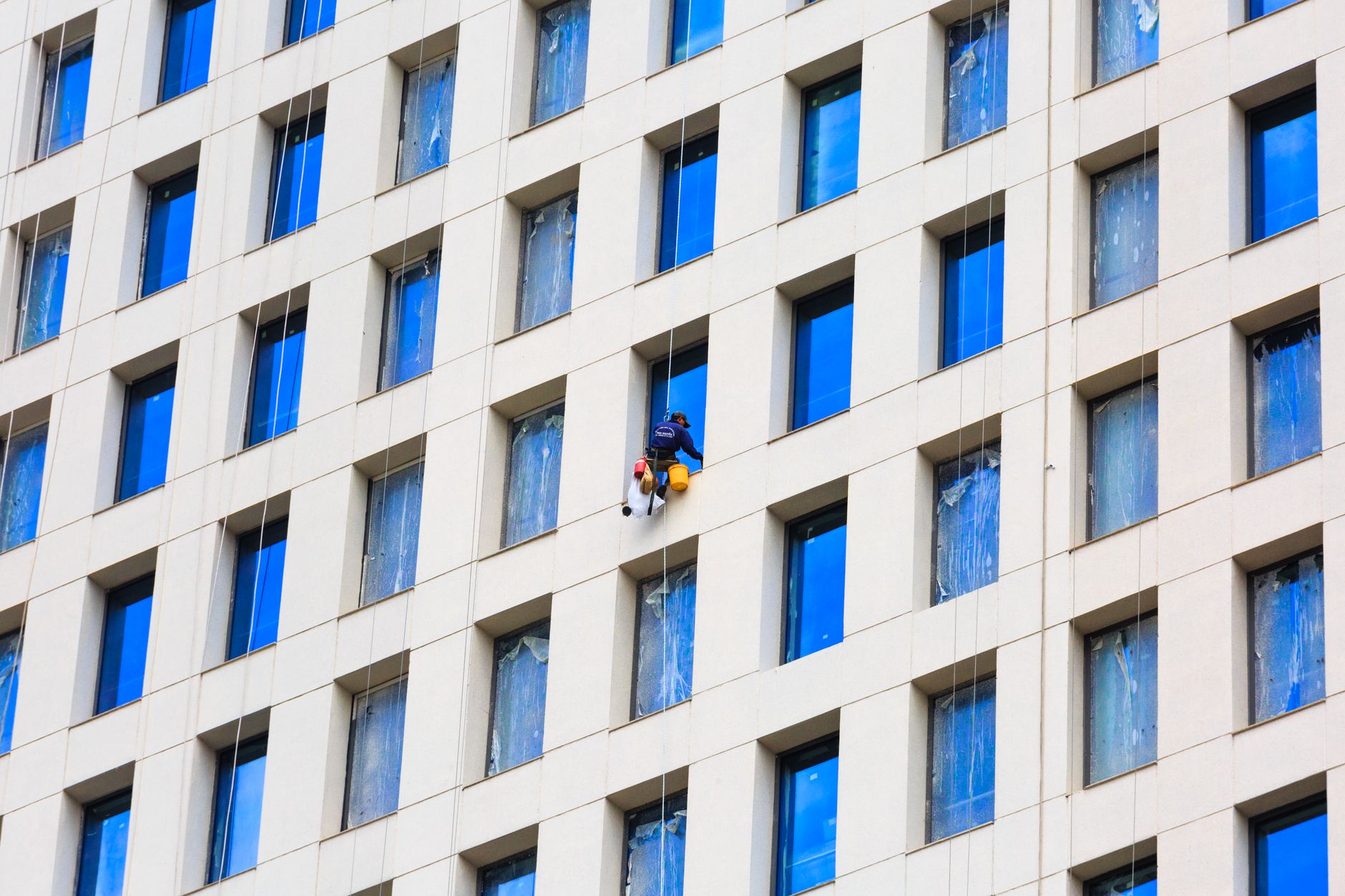
Maintaining a commercial building's exterior is a relentless and often dangerous task. Facility managers have traditionally relied on scaffolding, rope access, and manual inspections to check for water damage, structural faults, and wear on facades and roofs. This approach is slow, expensive, and, most importantly, it puts workers at significant risk.
A new generation of robots is changing this equation. Unmanned aerial vehicles (drones) and autonomous four-legged robots, often called quadrupeds, are now being deployed to conduct detailed exterior building inspections. These machines can navigate hard-to-reach areas with ease, providing a level of data consistency and operational frequency that manual methods cannot match. They operate safely from the ground or the air, eliminating the human element from the most hazardous parts of the job.
The financial case is just as compelling. For property managers, quadruped robots are delivering average operational savings of $48,600 per deployment. These savings are achieved by reducing labor costs and, more critically, by catching minor issues before they escalate into catastrophic failures, with a typical payback period of 2.5 years.
How Do Drones Handle Facade Inspections?
Drones have become the most widely adopted platform for the initial assessment of building exteriors, particularly for high-rise structures. They can survey large surface areas quickly, capturing tens of thousands of high-resolution images and thermal readings in a matter of hours, a task that would take days or weeks for a human crew.
Equipped with visual and thermal cameras, these aerial robots can identify a wide range of potential issues. Thermal imaging reveals hidden problems like water ingress beneath the facade, insulation gaps, or overheating electrical components that are invisible to the naked eye. This data allows for a comprehensive, multi-layered understanding of the building envelope's health.
The process transforms building maintenance from a reactive to a proactive model. According to a case study by Haag Global, drones significantly reduce inspection times and the need for expensive equipment like scaffolding or aerial lifts. This efficiency allows for more frequent inspections, enabling managers to track the progression of identified issues and prioritize maintenance tasks more effectively.
What Is the Role of Quadruped Robots?

While drones excel at high-level facade scanning, four-legged robots handle the complex, ground-level, and rooftop environments that wheeled robots cannot. These agile machines can climb stairs, navigate over obstacles like pipes and cable runs, and maintain stability on uneven surfaces, making them ideal for detailed inspections of roofs, mechanical penthouses, and parking structures.
A single quadruped can be outfitted with a modular payload of sensors, including high-resolution cameras, thermal imagers, LiDAR for 3D mapping, and even acoustic sensors to detect gas or water leaks. They can perform autonomous patrol routes, collecting consistent data day after day to create a detailed historical record of asset conditions. This repeated, precise data collection helps detect subtle changes over time that might signal a developing problem.
The impact on safety is profound. Quadrupeds can enter and inspect confined spaces like crawlspaces or mechanical pits, which would otherwise require special permits and safety monitoring for human personnel. This capability alone significantly reduces both risk and labor hours for facility management teams.
The Real-World Financial and Safety Impact
The primary driver for adopting robotic inspections is the dramatic improvement in safety. By removing humans from at-height work and confined spaces, property owners mitigate the single greatest risk associated with facade and roof maintenance. This shift not only protects employees but also reduces liability and insurance costs.
The financial return is equally significant. Direct cost savings from replacing manual inspection methods with robotics can be substantial, with some industrial reports showing savings of 60-85% per inspection point. However, the largest financial benefit often comes from avoiding unplanned failures. A robot that inspects a roof daily or weekly is far more likely to catch a small leak before it leads to major interior water damage and costly emergency repairs.
Facilities that implement consistent robotic patrols report significant reductions in unplanned downtime and a sharp drop in hazardous-zone entries. This operational continuity, combined with lower direct inspection costs, builds a strong argument for investment in these advanced robotic systems.
How to Integrate Robots Into Your Operations
Deploying an effective robotics program goes beyond simply buying a machine. It requires careful planning, integration with existing maintenance workflows, and ongoing support. This is where a vendor-neutral integrator becomes a critical partner. At Service Robot Co., we specialize in creating turnkey robotic deployments for businesses across the United States.
Because we are OEM-neutral, our process begins with understanding your specific property and challenges. We then select the right drone, quadruped, or combination of robots from various manufacturers to fit your precise needs. We do not force one brand; we find the best tool for the job.
Our full-service model covers the entire lifecycle. We handle the financing, on-site deployment, and mapping to establish autonomous patrol routes. Our nationwide network of engineers provides comprehensive training for your staff and delivers ongoing maintenance and repair services. With Service Robot Co., you have one partner and one number to call for the entire program, ensuring your investment delivers its maximum potential without burdening your internal teams.
What Does the Future of Robotic Building Maintenance Look Like?
The technology is evolving rapidly. As artificial intelligence and machine learning platforms become more sophisticated, they will be able to analyze the vast datasets collected by robots with even greater accuracy. This will enable predictive analytics that can forecast potential failures with a high degree of confidence, allowing maintenance to be scheduled before any damage occurs.
We can also expect to see the rise of multi-robot collaboration, where fleets of drones and quadrupeds work together to create a complete digital twin of a building. This living 3D model, continuously updated with real-time sensor data, will provide facility managers with an unprecedented level of insight into their building's health. The role of robots in property management is set to expand, moving from simple inspection to a central element of intelligent, predictive, and safe building operations.