Key takeaways
- The 2024 Black Desert Championship was the first PGA Tour stop to mow bentgrass fairways with autonomous platforms on an overnight window.
- Superintendent Ken Yates kept conventional fairway mowers on standby and remapped routes once tournament ropes changed the footprint.
- During competition week the crew stopped driving fairway units and shifted hours toward bunkers and detail work.
- Greens, tees, and bunkers still demand skilled staff even when fairways and rough run on a mapped schedule.
- A vendor-neutral integrator can map routes, finance the purchase or lease, and support the mower under one service plan.
What changed at Black Desert in 2024?
When the PGA Tour brought its first Utah event to Black Desert Resort in Ivins, the agronomy story was not only bentgrass in the desert. According to Golf Course Industry, superintendent Ken Yates ran a fleet of four all-electric autonomous mowing platforms on fairways during the 2024 Black Desert Championship, marking the first time robotic fairway mowing supported a Tour stop.
The units mowed on a 2 a.m. to 6 a.m. schedule while the field prepared for daytime play. Yates told the publication the cut quality matched expectations and that Tour agronomists who visited the week before the event grew comfortable with the setup once they saw the mowers on the ground.
The pilot mattered because it tested autonomy under broadcast pressure, not on a quiet Tuesday member round. That is the bar many superintendents use when they ask whether fairway robots are a novelty or a scheduling tool.
Why did Yates still keep backup fairway mowers?
Autonomy did not remove risk from the maintenance plan. Yates told Golf Course Industry he kept conventional fairway mowers available because any new system needs a fallback until routes and routines are proven.
Mapping also had to follow the tournament, not only the everyday course. FireFly staff arrived about six weeks ahead of the event, according to the article, and remapped after the first pass did not account for gallery rope lines. By two weeks out, Yates said he was no longer worried about fairway coverage.
That sequence is a useful template for any course weighing robots ahead of a member guest day or city amateur. You map with the course as players will see it, you rehearse on quiet nights, and you keep a human-driven fairway unit ready until the autonomous window is boringly reliable.
How did the crew's work shift during tournament week?

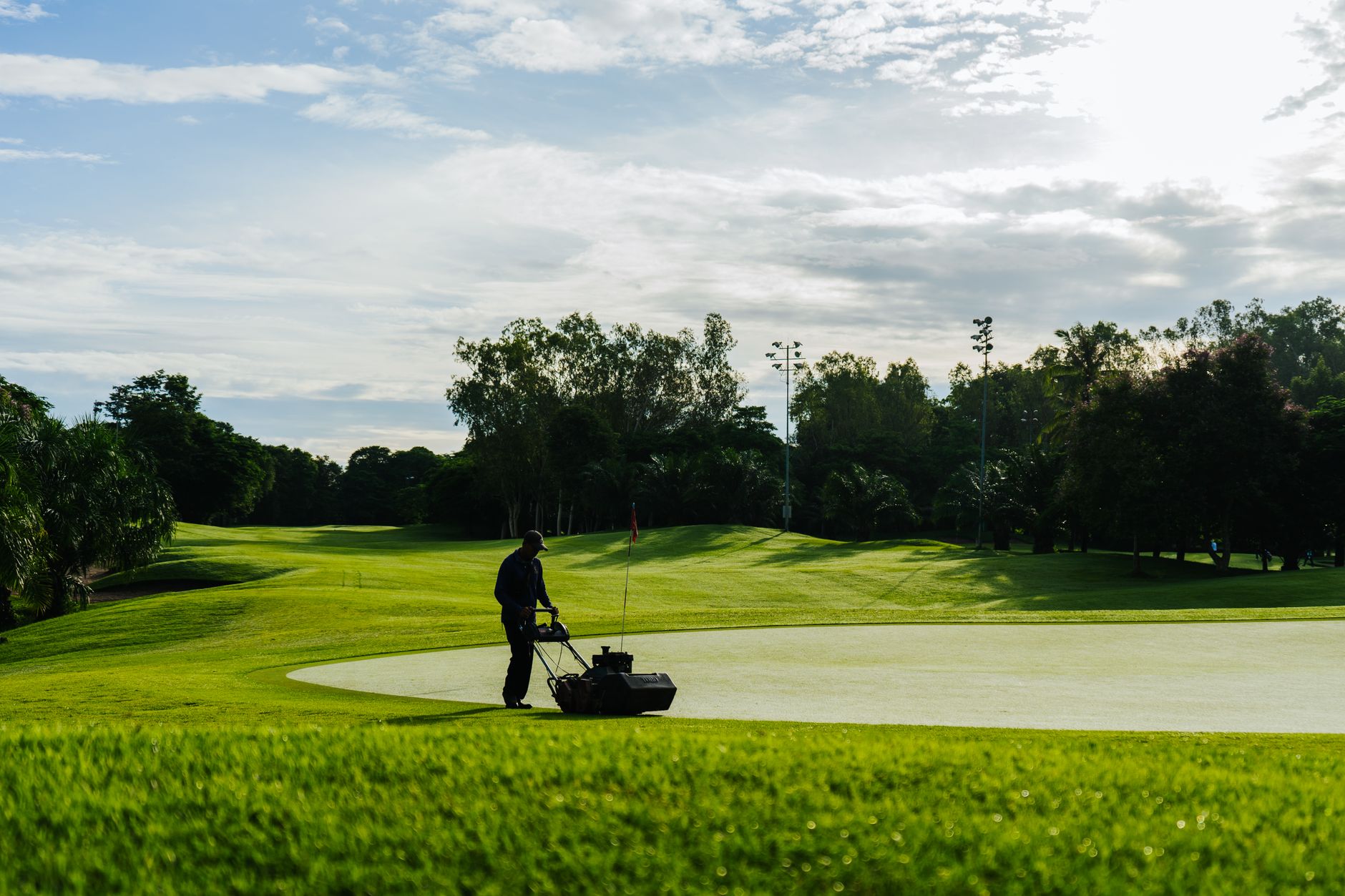
The labor story is subtler than replacing people. Yates said his team did not operate fairway mowers during the championship, which opened hours for bunkers, edging, and other detail tasks that often wait until fairway strips are finished.
He framed the robots as another tool in a shed that already runs automated irrigation and sprayer technology. After more than three decades in the trade, he compared the shift to earlier jumps in how water and plant protectants are applied.
For a superintendent reading this at a daily-fee track or a private club, the practical question is which backlog clears first when fairway passes no longer consume the 5 a.m. to 8 a.m. block. Bunker faces, approach cleanup, and cart-path edging are common winners.
Where do people still matter on the course?
Fairway and rough mowing is only part of the mowing budget. Greens and tees still need reel precision, height-of-cut discipline, and hand work around collars. Bunkers need raking, edging, and stone management that no fairway robot touches.
Black Desert's bentgrass fairways also sit in a demanding climate. Yates noted low humidity and newer bent varieties that recover faster than older cultivars he used in the 1990s, according to Golf Course Industry. Turf type and microclimate still dictate how aggressively you can schedule autonomous strips without stressing plants.
Robotic fairway mowing should shrink seat time on wide turf. It should not be sold as a way to eliminate agronomy staff or to mow putting surfaces.

What are other courses doing with autonomous mowing?
Tour pilots draw attention, but club golf is where adoption spreads quietly. The USGA Green Section Record reported in 2025 that Atlanta Athletic Club runs autonomous mowers on nearly all turf except greens on its par-3 course and expanded autonomous rough mowing on the Riverside Course late in the year, with charging stations tucked along tree lines to stay out of play.
Those installs highlight infrastructure questions every superintendent asks early: where units dock, how staff reach them for blade work, and how rain affects access paths. Storage and service access are as important as the mowing algorithm.
If your course is considering fairway robots, walk the property at dawn and mark where a charger would annoy members. That walk saves more time than any software demo.
How should you time a fairway robot project on your calendar?
Yates began exploring autonomous fairways after a demo roughly seven months before the Tour event, then invested weeks in mapping and rehearsal. Most clubs will not face network television, but they do face member season peaks and aerification windows.
A sensible sequence is to map fairways and rough after you know your summer tee sheet, run autonomous cycles on low-traffic nights, and only then narrow backup mowing. Trying to launch the week before a club championship repeats the rope-line lesson from Black Desert without the benefit of a vendor team on site for six weeks.
Fall can be attractive in cool-season markets because growth stays steady and play often thins. Spring works when you need to catch up on rough height before summer cart traffic.
Where does Service Robot Co. fit if you are ready to explore?
Service Robot Co. is a vendor-neutral integrator, which means the first job is matching an autonomous fairway mower to your slopes, turn radii, and stay-out zones rather than pushing a single catalog entry.
We walk the course with your superintendent, map fairways and rough, set schedules around play, and train the staff member who monitors runs. Courses buy outright or lease through financing, with pricing coming after a free site assessment. RoboCare support covers triage, check visits, and warranty terms so you are not juggling separate finance and service vendors.
Fairway robots are the lead offer for golf, yet the same partnership can add clubhouse scrubbers, cart-path sweepers, or lot cameras when those jobs belong in the same project plan.
What should you ask vendors before you sign?
Ask how remapping works when you move tees or set tournament ropes. Black Desert needed a second map pass once ropes were up, and your course will have its own moving targets.
Ask what data you receive after each run and who owns it. Yates told Golf Course Industry the manufacturer gathered intensive field data during the two-week tournament window, which helped refine the product. You should know what performance logs you can share with your board or greens committee.
Ask explicitly what stays manual. Greens, tees, bunkers, and fine trim should remain crew work. If a pitch sounds like one machine handles the entire property, slow down and reframe the scope.
Frequently asked questions
Sources
Service Robot Co. is not affiliated with, sponsored by, or endorsed by the companies mentioned in this article.