Key takeaways
- Fixed sensors win when you need continuous readings and immediate alarms at known risk points.
- Mobile robots win when you need maps, source hunts, and coverage that can move with the facility.
- Calibration, sensor response time, and placement drive data quality more than the hardware format.
- Most commercial sites get the best result from a hybrid of fixed nodes and robot inspections.
Which approach wins first?
If you need a constant watch at known points, fixed sensors are the better first layer. They sample continuously, alarm at the spot where they are mounted, and keep clean time-series records for temperature, humidity, particulates, carbon dioxide, VOCs, and specific gases. That makes them better for battery rooms, mechanical rooms, loading docks, process cells, and occupied zones where a delayed alert is unacceptable.
If you need to find where contamination starts or how it spreads across space, mobile robots are stronger. A 2021 Journal of Cleaner Production study compared nine stationary carbon dioxide sensors with one robot-mounted sensor and found the mobile system estimated source position about 1.83 meters from ground truth, versus 3.1 meters for the stationary setup, while using far less installed infrastructure. That is the core tradeoff. Fixed networks win at continuous watch, and mobile robots win at spatial diagnosis.
For most commercial sites, the best answer is not one format alone. Use permanent sensors to watch critical points all day, then send a robot to map anomalies, investigate complaints, and recheck spaces after layout or process changes. That layered model usually gives the strongest mix of response time, coverage, calibration discipline, and long-run cost control.
Where fixed networks still dominate
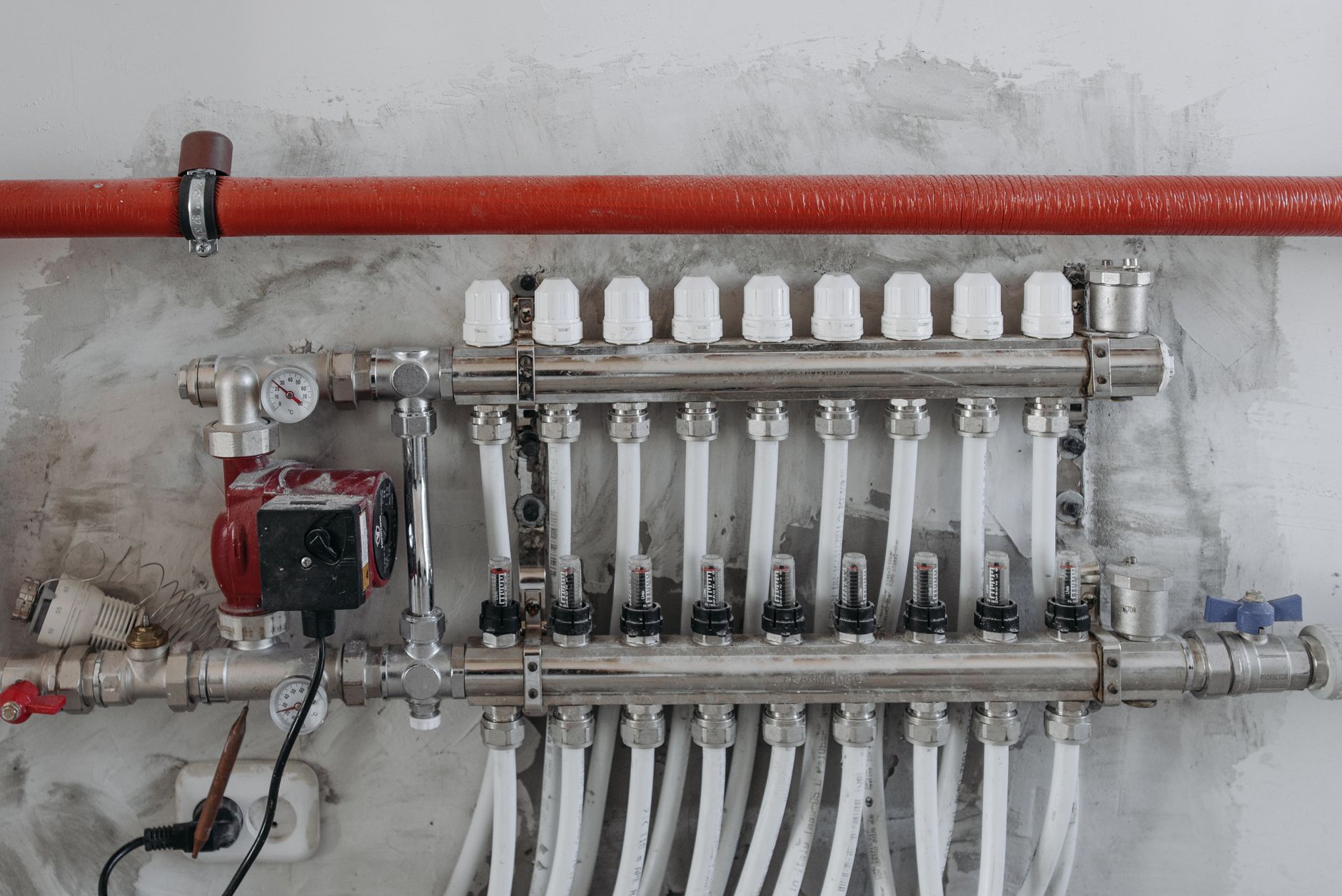
Fixed networks are strongest when the monitoring question is tied to a place. A sensor above a charging area, by an outside-air intake, or near a mixing room sees every minute that passes at that location. It does not need to travel there first. That makes fixed nodes the better choice for fast alarms, compliance records, and trend data you can compare day to day.
The value grows when the target metric is time-based. The EPA's current NAAQS table lists an annual PM2.5 standard of 9.0 micrograms per cubic meter, a 24-hour PM2.5 standard of 35 micrograms per cubic meter, an 8-hour carbon monoxide standard of 9 ppm, and a 1-hour nitrogen dioxide standard of 100 ppb. If a facility is tracking outdoor intake air, truck-dock infiltration, or perimeter emissions, uninterrupted records matter more than a single pass from a robot.
Fixed nodes also fit temperature and humidity very well. The CDC notes that most healthcare areas use 30 to 60 percent relative humidity, and that levels above 60 percent promote fungal growth. In any space where occupancy, product quality, or infection control depend on stable conditions, a standing sensor network is usually the cleaner first layer.
Where mobile robots see more
Mobile inspection robots matter when the problem is spatial, not just temporal. Air does not spread neatly. It pools, curls around racking, rides thermal plumes, and hangs up in dead pockets. A mobile robot turns one payload into a moving survey instrument, which lets you see gradients instead of isolated points.
A 2022 Journal of Field Robotics review notes that mobile robots can sample different locations with a single gas-sensing device and thereby provide greater measurement resolution over a target area than static sensors. A 2017 Environmental Science & Technology study of repeated street-level mobile monitoring resolved patterns at roughly 30 meter scale, found persistent pollution differences greater than 5 times within individual city blocks and greater than 8 times overall, and identified hotspots shorter than 100 meters. Buildings and plants have the same basic problem at smaller scales.
That makes robots strong for localized anomaly hunts. If particulates spike near a roll-up door only during certain traffic patterns, or a gas trace appears near a drain, valve bank, or washdown corner, a robot can map the gradient and point technicians toward the source. Fixed nodes can tell you that something changed. Mobile robots are better at showing where the change starts and how it spreads.
How response time changes the answer
Response time is not a slogan. It is physics and route design. EPA guidance says fast-response sensors are useful for mobile monitoring and very rapid changes, while slow-response sensors fit stationary monitoring where concentrations change more gradually. The same guidebook notes that high time resolution matters when you want to observe seconds-to-minutes swings.
That means a mobile robot is only as good as four things: the sensor's own lag, the robot's travel speed, the dwell time at each stop, and the interval between revisits. If a leak plume lasts 20 seconds and the robot comes by every 15 minutes, the robot will miss it. If the anomaly lingers or repeats, the robot can detect it and then build a map that a fixed node never could.
For temperature and humidity, this trade usually leans toward fixed sensors because the variables are stable enough to trend from known points. For particulates and gases tied to episodic sources, the answer depends on event duration. Short critical alarms favor fixed nodes. Spatial surveys, complaint investigations, and root-cause work favor mobile robots.
Calibration is the real battleground

Data quality lives or dies on calibration, collocation, and placement. The EPA says air sensors need periodic checks and can be collocated side by side with a reference monitor to see if they produce comparable data. If they do not, the raw output may need correction factors or equations. EPA also notes that a monitor only detects pollutants or factors it was built to sense, so neither fixed nor mobile hardware gives a full picture if the payload is wrong.
Fixed networks have an advantage here because every node has a known home. You can document height, nearby airflow, and surrounding processes, then compare like with like over long periods. EPA indoor guidance advises placing monitors in the breathing zone, about 3 to 6 feet for a typical adult, and away from walls, vents, and direct pollutant sources unless source capture is the goal.
Mobile robots bring a different kind of discipline. Their timestamps, map coordinates, sensor warm-up, stop points, and route speed all affect the reading. The benefit is that you may be maintaining one carefully characterized payload instead of dozens of wall boxes. The penalty is that every moving survey needs clean operating rules or the map becomes decorative rather than trustworthy.
Humidity and cross-sensitivity complicate both approaches. In the EPA's Enhanced Air Sensor Guidebook, high moisture above 85 percent relative humidity can cause optical particulate sensors to overestimate, and oxidants such as ozone can interfere with electrochemical nitrogen dioxide sensors. Those are not edge cases. They are everyday reminders that air-quality instrumentation is context-sensitive.
Redundancy is not the same as density
Redundancy is not the same thing as sensor count. Ten fixed nodes do not give ten times the certainty, but they do give parallel observation. If one node fails, the rest keep watching their zones. A single robot with a single payload is serial by nature. If it is docked, blocked, or in service, its route is blind until it returns.
Robots can answer with operational redundancy instead of pure density. A second unit, scheduled repeat passes, or a spare calibrated payload can keep coverage alive, and a mobile platform can also cross-check fixed nodes when readings look suspect. This is one reason mixed architectures age well. Each method audits the blind spots of the other.
This is why service architecture matters as much as sensing architecture. Spare payloads, second routes, dock coverage, and clear alarm failover rules should be designed up front. Redundancy decided after go live usually costs more and protects less.
Lifecycle cost follows layout volatility
Lifecycle cost turns on layout stability. In a stable facility with known risk points, fixed sensors often look better over time because they sit still, watch continuously, and avoid route tuning, charging logistics, and robot traffic management. In a warehouse, plant, or lab that changes zones often, mobile systems can age better because you can remap the route instead of rewiring the monitoring layer. EPA also notes that air pollutant monitors have a limited lifespan and can become less reliable over time, so replacement planning belongs in both models.
The 2021 Journal of Cleaner Production study is a useful shorthand. One robot-mounted carbon dioxide sensor outperformed a nine-sensor stationary setup on source localization accuracy, while using less infrastructure. That does not prove a robot is always cheaper. It does show how quickly fixed-node cost rises when you need finer spatial granularity instead of point alarms.
That is why many operators start with an inspection robot lease, an autonomous mobile robot lease, or an AMR lease before standardizing. Service Robot Co. supports purchase or lease, robot leasing for business, leasing, and monthly payment programs with RoboCare™ service and no upfront capital, which lets teams test routes, dwell times, and escalation rules before deciding how much permanent sensor density they actually need.
The hybrid architecture most facilities land on
The strongest architecture for most commercial sites is a layered one. Put fixed nodes at the places that cannot wait: outside-air intakes, dock edges, battery areas, chemical rooms, dense occupancy zones, and any spot tied to product quality or safety. Then use a mobile robot for scheduled sweeps, complaint follow-up, post-maintenance checks, and map refreshes after layout changes.
In practice, the fixed network becomes the tripwire and the robot becomes the investigator. A rising particulate trace can trigger a route. A humidity excursion can send the robot to compare adjacent zones. A gas alert can launch a follow-up map that shows concentration falloff and helps maintenance narrow the source faster.
For U.S. businesses, that mixed model works best when one party owns the full lifecycle. Service Robot Co. is a full-service commercial robot integrator and vendor neutral robot integrator for U.S. businesses. It stays OEM-neutral, picks the right robots across manufacturers, and then handles site assessment mapping, financing, turnkey robot deployment, integration, training, go live support, commercial robot repair service, and multi vendor one dashboard support through a nationwide U.S. engineer network. That gives operators one partner one number from pilot through long-run service.