Key takeaways
- Floor-stacking AMRs cut fixed steel, but they can consume more open staging space as SKU count and touch points rise.
- Rack-mating AMRs cost more at the handoff, yet they usually deliver denser, more repeatable transfers.
- Mixed pallet footprints and changing flows often favor floor pickup, especially when 48x40 is not the whole pallet mix.
- Pilot the interface, not just the robot, because transfer points usually decide uptime, labor touches, and payback.
Which pallet interface is usually the better buy?
Most sites should start by matching the interface to the building, not the robot. Floor-stacking AMRs are usually the faster, lower-friction path when pallet moves are simple, staging depth is available, and pallet sizes vary. Rack-mating AMRs tend to win when the same handoff repeats all day, floor space is pinched, and the operation needs predictable pickup height, alignment, and traffic control.
The trade is straightforward. Floor pickup cuts fixed hardware and lets a pallet transport robot grab loads almost anywhere a clean, marked lane exists. Rack or stand mating spends more on the handoff point, but it turns every transfer into a controlled event. That improves repeatability, reduces awkward human touches, and makes it easier to tie the AMR into conveyors, lift tables, wrappers, or fixed workstations.
If you read nothing else, read this. Use floor-stacking for flexibility and low facility change. Use rack-mating for density and disciplined flow. The best AMR pallet mover is the one whose pallet interface matches your SKU mix, replenishment rhythm, and how much permanent steel you are willing to install.
How does floor space really change?
Space is no longer cheap slack. CBRE reported that U.S. industrial vacancy fell to 6.5 percent in Q2 2026, while leasing reached 268.7 million square feet in the quarter. In that climate, the pallet interface matters because it decides how much of your cube becomes working inventory and how much becomes approach lane, buffer, and handoff geometry.
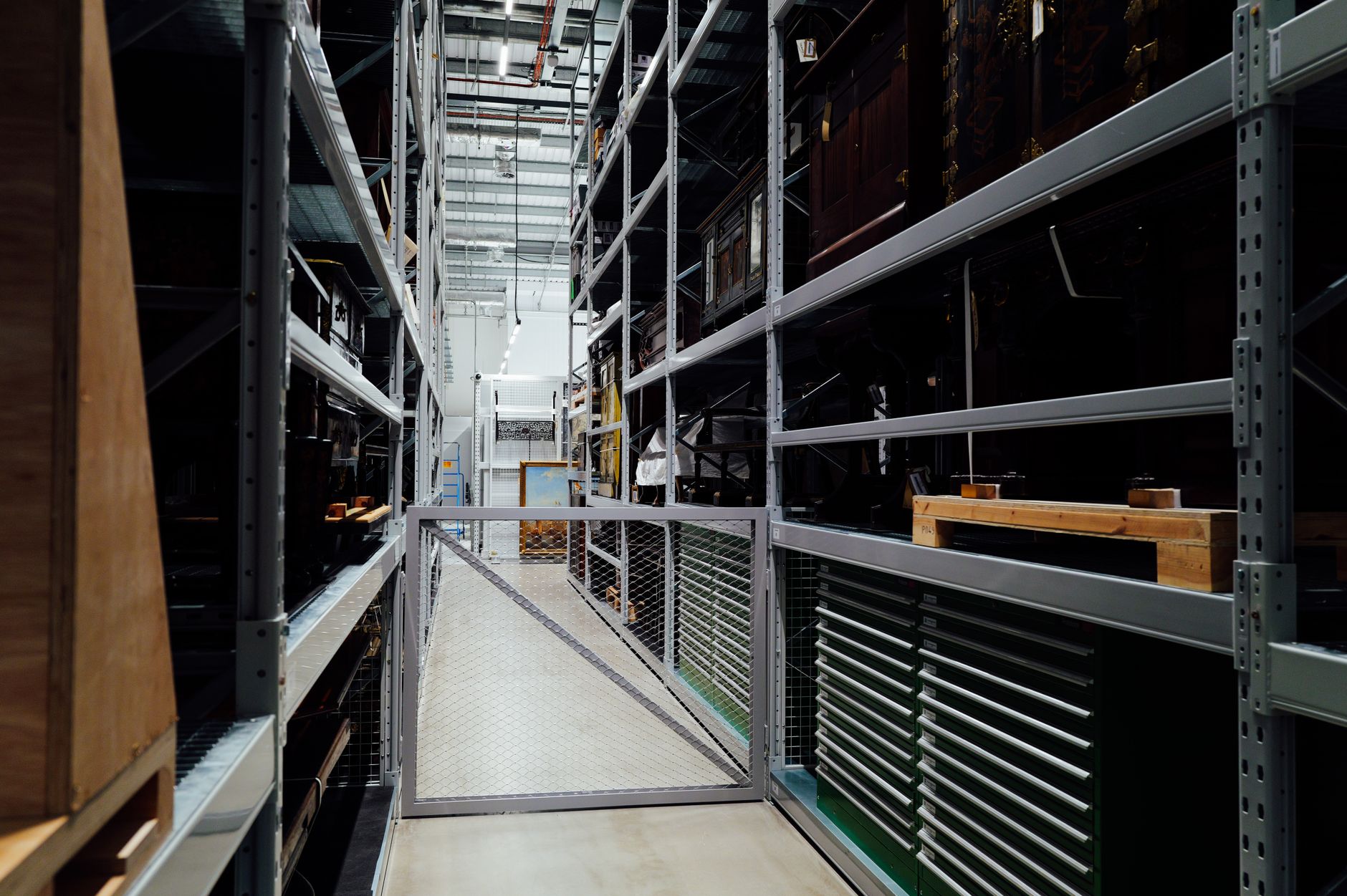
Rack-mating usually squeezes more pallets into the same footprint because storage goes vertical and the interface can live inside a planned rack bay or stand. OSHA notes that racking expands the amount of storage possible, and that conventional rack systems built around counterbalanced lift trucks often need about 12 feet of aisle width. A rack-mating AMR does not erase aisle needs, but it can let you redesign where humans and lift trucks travel and where robots do the repetitive transport automation.
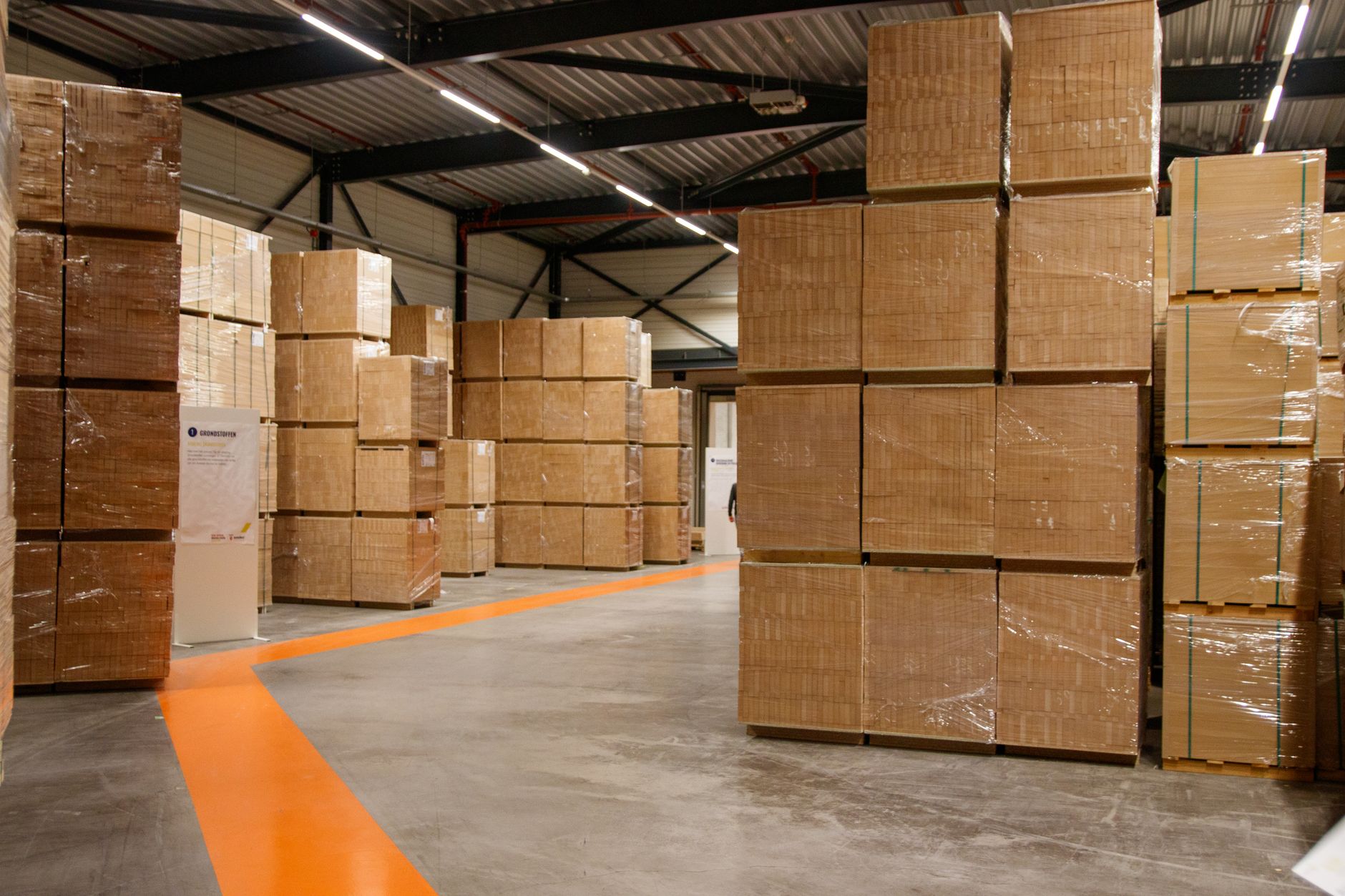
Floor-stacking flips the equation. It avoids rack steel at the robot touch point, but you still need clear floor slots, turning room, and safe pedestrian separation. Dense block stacking can look space-efficient on paper, yet the last pallet in a block is rarely the easiest pallet to access. As soon as you need many SKUs, many destinations, or frequent replenishment, open floor staging starts to sprawl.
What hardware has to sit at the handoff?

This is where buyers often miss the real work. A floor-stacking setup sounds bare bones, but the area still needs good floor condition, repeatable pallet placement, enough clearance for the AMR to center its forks or lift deck, and a simple discipline for stretch-wrap tails, broken boards, and load overhang. If inbound pallets arrive crooked or damaged, the robot inherits that mess.
Rack-mating adds more hardware, but it also buys control. OSHA's warehousing guidance points to palletizers, turntables, raised bottom rack levels, and even vacuum hoists rated up to 150 pounds as ways to reduce bending and awkward reaches around pallet loads. In AMR terms, that same logic applies to stands, lift tables, flow racks, and transfer shelves. You spend on fixtures so the robot and the people meet the pallet at a known height and angle every time.
The practical question is not how little hardware you can get away with. It is which hardware removes the most failure modes. For a warehouse robot lease or short pilot, a temporary floor lane may be enough to prove routing. For a long-life rack interface, anchoring, guarding, sensor placement, and pallet presentation deserve engineering attention on day one.
How much flexibility do you keep as the operation changes?
Flexibility often decides the contest. Woodpack Global's published pallet survey summary says the 48x40 pallet is the most common dimensional pallet at 35 percent, but custom pallets still accounted for 39 percent of pallets in the survey. That matters because rack-mating works best when the pallet envelope is tightly controlled. Floor pickup is usually more forgiving when loads vary by footprint, deck condition, wrap bulge, or label placement.
That does not mean floor-stacking is always the flexible choice. If your process depends on first-in, first-out rotation, automated wrapping, fixed inspection points, or direct feed into a production cell, a stand or rack pocket can be the more adaptable base over time because it gives every upstream and downstream device the same handshake. Flexibility is not just about odd pallets. It is also about how many other systems must touch the same load.
This is one reason an OEM-neutral review matters. An autonomous mobile robot lease that looks strong in open floor demos can struggle once the same unit must dock into fixed handoff points across multiple zones. A vendor neutral robot integrator should test pallet condition, rack tolerance, and load variation before anyone commits to a fleet shape.
What happens to safety and labor exposure?
BLS listed 1.8346 million warehousing and storage employees, preliminary, for July 2026, and 286,750 industrial truck and tractor operators in 2025. Pallet moves still depend on a huge labor base, and many of the ugly touches happen at the first and last few inches of the handoff. That is exactly where interface design shows up in fatigue, product damage, and near misses.
OSHA warns that pallets placed on the floor force workers to bend at the waist, and its warehousing guidance recommends raising pallets, keeping access to three sides, and keeping heavier handling within a safer lift zone. Rack-mating can reduce some of that low-level reaching because the transfer height is engineered. Floor-stacking can also be safe, but only if the layout prevents workers from constantly correcting skewed pallets by hand.
Safety scrutiny is also getting sharper. OSHA says its renewed nationwide warehousing and distribution center inspection program began July 31, 2026. A good pallet interface therefore does more than help the robot dock. It creates stable stacks, predictable clearances, protected rack faces, and clean pedestrian rules that a supervisor can defend in an audit and on a busy third shift.
Where does deployment cost really move?
Floor-stacking usually looks cheaper because the robot can start with less fixed steel. That is often true. But some of the bill just moves into floor prep, traffic striping, pallet-quality discipline, software rules for staging, and the labor of keeping pickup zones clean and available. The less controlled the pallet, the more exceptions the team handles.
Rack-mating pushes more cost into the facility at the start. Expect stands or modified rack bays, anchors, guarding, interface sensors, tighter tolerances, and sometimes lift or conveyor hardware around the AMR. In return, you often get cleaner handoffs, less human straightening, and better support for repetitive transport automation that feeds the same lanes every shift.
That is why robot leasing vs buying cannot be the only budget question. U.S. operators also need to compare facility work, service expectations, and how fast they want to scale. Service Robot Co. helps clients model the full stack, from autonomous mobile robot leasing or material handling robot leasing for a pilot, to robot financing for small business, monthly payment programs, or a lease purchase program once the interface is proven.
- Floor-stacking cost buckets: floor mapping, staging space, pallet quality control, pedestrian separation, and exception handling.
- Rack-mating cost buckets: stands or rack changes, guarding and sensors, anchoring, lift or conveyor tie-ins, and tighter commissioning.
How should a U.S. operator choose and pilot the right setup?
Start with three measurements. Count pallet faces touched per hour, count unique pallet footprints, and map how many handoffs must land at one exact point instead of a general staging zone. High face velocity and fixed destinations lean rack-mating. High variation and open-ended staging lean floor pickup.
Then pilot the interface, not just the navigation. A commercial robot demo should include ugly pallets, partial pallets, worn floor joints, wrapped corners, and a live shift change. If you want a warehouse robot lease, AMR leasing, or try before you buy program, use it to prove clearance, recovery behavior, and what humans do when a pallet arrives a few inches off.
For U.S. warehouses that do not want to stitch together robots, finance, integration, training, and field service from separate vendors, Service Robot Co. acts as one partner for the whole lifecycle. We are a robot integrator for warehouses that stays OEM-neutral, handles turnkey robot deployment, and supports phased deployment with no shutdown through a nationwide engineer network. That makes the floor-stacking versus rack-mating decision much easier to test honestly, and much harder to get wrong.