Key takeaways
- Write one cut height, one stripe rule and one edge tolerance, then measure every site the same way.
- Robot passes suit open turf; keep parking islands, sign bases and drive thru edges with crews until a site test says otherwise.
- Map canopy, slopes and drains on every lot, because RTK signal can drop under trees.
- Log minutes by zone so any labor saving is real, not an operator sitting beside a machine.
- Our checks found no restaurant franchise robot mowing results, so pilot one site before promising a group wide outcome.
Can one cut standard hold across many restaurant lawns?
Yes, provided the standard is written as numbers a crew can check and each site is mapped into zones. Robot passes take the open turf. Crews keep parking islands, sign bases and drive thru edges until a site test shows the machine meets the edge tolerance.
Specify three things in one shared document: a cut height target band, a stripe rule, and an edge tolerance that sets how far turf may sit from a curb, sign base or lane edge. Then let each site map carry the local geometry, so the standard stays fixed while the lots change.
How should each site be mapped before the first pass?
Mapping turns each lot into zones: open turf, parking islands, sign bases, drive thru edges, dumpster pads and keep out areas. Record slopes, drains, trees and obstacles as well. A robot can only hold an edge it knows about.
Positioning matters. One guide says RTK accuracy is often stated as 1 cm plus 1 ppm horizontally, and that accuracy degrades with distance from the reference station. The same guide family names dense tree canopy as the main failure mode, so canopy belongs on the map from the first visit.
Treat ratings as starting points. One vendor adjacent estimate says a unit rated at 2 cm may achieve 3 to 5 cm in typical suburban yards. For an edge standard, that gap is what matters, so test the real boundary on each site. Kress describes its RTK 5000 as a residential class unit with dead reckoning for tree shaded areas. That is a manufacturer claim, checked as of November 2026, and it is not a commercial benchmark.

Where do robot passes take the open turf?
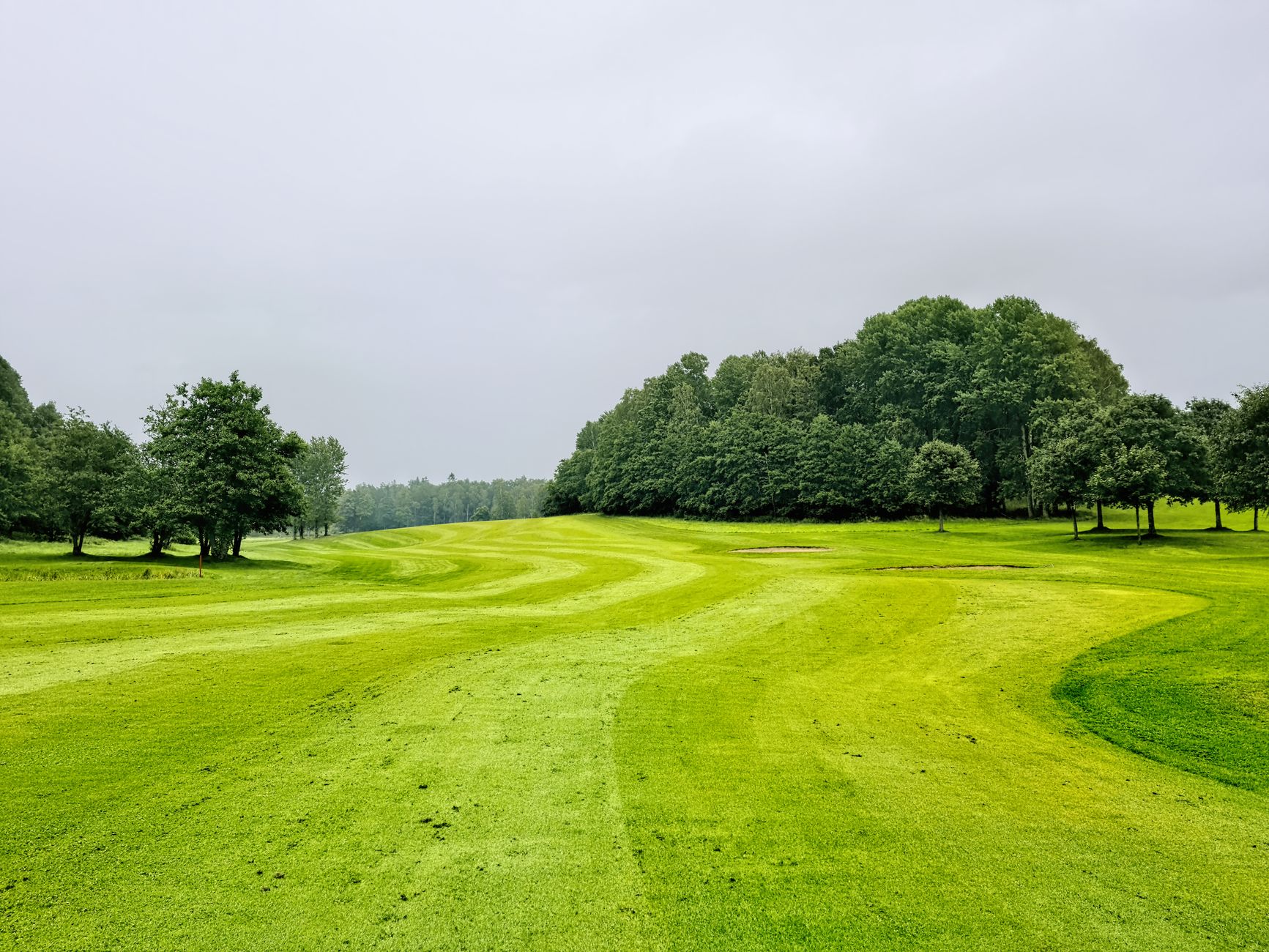
Open turf is where robot passes earn their place. A local news report on a robotic mower at an apartment complex describes diagonal cutting patterns that change direction as the machine works. Property management said the pattern gave the grounds a polished look.
That shows a pattern can stay consistent over a large field. It does not show a restaurant frontage will match, because a frontage packs far more edges into each square yard. Set the stripe direction per site, then inspect the first two passes before the robot runs unattended.
Which areas stay with the crew?
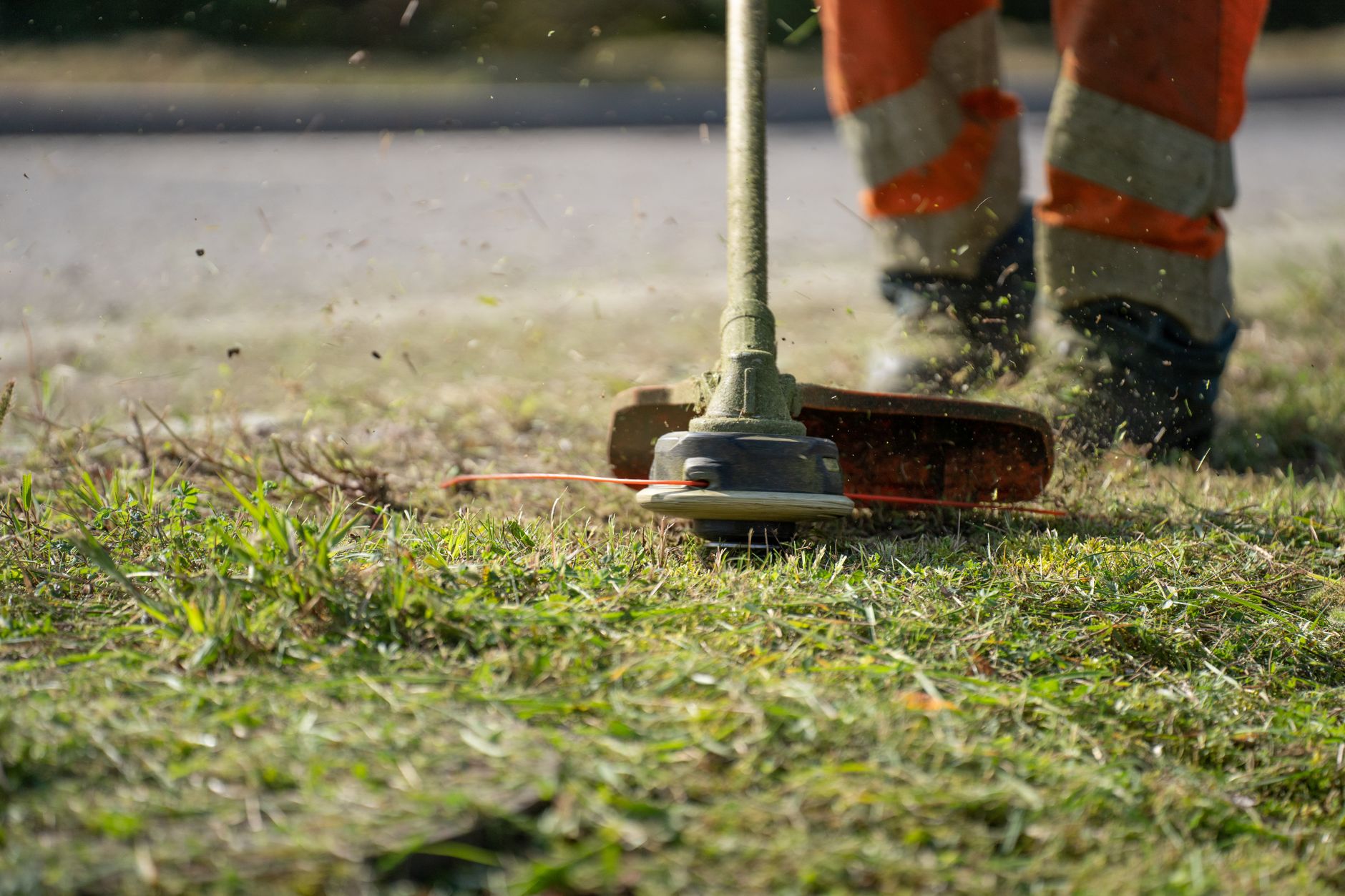
Parking islands, sign bases and drive thru edges have tight corners, posts, curbs and sight lines that the map must capture exactly. Until a site test shows the robot holds the edge tolerance in those zones, keep them on crew work. Our sources did not verify robot handling of these areas, so this is a planning boundary, not a finding.
The crew's role then shifts from pushing the whole lot to finishing edges and sign bases. Schedule that hand work straight after each robot pass, so the boundary, where a flaw is most visible, gets attention the same day.
How do you prove the same standard at every site?
Measure the same points on every visit. Take height readings at fixed spots in each zone, photograph stripe direction and edge lines from the same position, and log results against the site standard. Repeat weekly so drift shows early.
Vendor claims exist for uniformity too. Ballenger Landcare, a Florida firm, launched a robotic remote mowing service in November 2025 and cited a study saying robotic mowers improved turfgrass uniformity and green cover from November to April. That figure comes from the firm's announcement, so treat it as vendor reported and check it against your own internal log.

Does a robot pass reduce crew hours?
Only when crew time actually moves to other work. If a worker sits beside a machine that mows the whole site, no labor is saved. Savings depend on which zones the robot covers and how many minutes the crew still spends on the rest.
Log minutes by zone for two weeks before a pilot and two weeks after. Compare hand time on open turf with time on islands, sign bases and edges. That record is what a franchise finance team will ask for.
Market size is context, not proof. An Oxmaint vendor blog says the North American robotic lawn mower market reached $1.28 billion in 2025 and is projected to reach $2.02 billion by 2034, at 5.2 percent annual growth. Those figures are vendor reported and were not checked against a third party source.
How does Service Robot Co. support a multisite plan?
Service Robot Co. is an OEM neutral integrator. We pick robots across manufacturers, lease them through financing on a three year lease, deploy and integrate them, train staff, and service every unit under RoboCare, backed by regional service engineers in every state we service.
For a franchise group, the step that matters first is the site assessment. Zone maps, canopy checks and the edge test happen there, and the result is one fixed lease quote. One partner means one service contact across every store, not a stack of separate vendor relationships.
What should an account manager put in front of a franchise group?
Lead with the standard, then the map, then the labor split. Show one store's zone table, the stripe rule, the edge tolerance and the log format. Offer a single site pilot before any group wide rollout.
Say plainly that our checks found no restaurant franchise mowing results with metrics. A pilot at one location gives the group first hand evidence, which carries more weight than any vendor figure, including the ones in this article.
Frequently asked questions
Want a robot working for you?
Tell us the job and the site. We will recommend the robot, quote the lease, and keep it serviced.
Sources
- Local12 report on a robotic mower at an apartment complex (KELO source)
- Ballenger Landcare robotic mowing announcement (via finanzen.net)
- Oxmaint robotic lawn care for property management
- RTK accuracy guide 2026 (rtkdata blog)
- Wire-free robot mower RTK accuracy guide 2026 (rtkdata)
- RTK GPS lawn mowers guide (householdrobot)
- Kress Mission RTK 5000 Automower product page (GGM Group)