Key takeaways
- Each open field worker or crew lead seat leaves routes the crew cannot fully run, so route math makes the gap visible.
- Green Industry Pros' 2025 State of the Green Industry report found 29% of respondents named labor as their most pressing concern.
- An undated Green Industry Pros jobs gap piece reported that 42% of contractors found field workers harder to find and retain, and 59% said the same of crew leaders.
- List routes by property first, then mark which open turf a robot pass could cover.
- The crew lead's time is the cost people miss, because supervision and scheduling do not shrink when that seat empties.
What does an open seat do to a mowing route?
Every open field worker or crew lead seat leaves at least one route the crew cannot fully run. That sounds obvious, but most bid sheets carry headcount as a single number, and the route list underneath it rarely gets the same scrutiny. Turning retention figures into route math is how you find the gap before a client does.
The survey figures are the starting point. According to Green Industry Pros' 2025 State of the Green Industry report, 29% of respondents named labor as their most pressing concern. A separate Green Industry Pros piece on the jobs gap, which carries no date in the version we reviewed, reported that 42% of contractors found field workers harder to find and retain than before, and 59% said the same of crew leaders.
Read those numbers as a warning about routes, not only about hiring. If the lead seat is the hard one to keep, the crew does not just lose a pair of hands. It loses the person who sequences the day.
Which figures are dated, and what do they leave out?
Label every number before it goes into a bid or a board memo. The 29% labor figure comes from the 2025 report, and the excerpt we reviewed describes a survey of 424 individuals, with 13% naming regulatory issues as a primary concern. The 42% and 59% figures appear in an undated article, and the excerpt did not include the full text, so check that piece before quoting it anywhere.
The jobs gap piece also lists reasons contractors gave for recruiting trouble. Each one points somewhere different:
- A perceived work ethic problem among candidates
- Lack of year round employment
- Low pay
Year round work is a scheduling question, so plan for it
Of the three reasons, year round employment is the one route math can speak to directly. A route register shows which properties carry work in which months, and where a seat sits idle for part of the year. That exposure tells you where a seasonal hire fits and where it leaves a gap.
Work ethic and pay are harder to plan around. Those problems need recruiting and retention work, and the routes have to absorb the gap while that work continues.
How do you list routes by property?
Start with a register, not a headcount. Write every property the crew mows as one row, then record its stops, the seat that normally runs it, and the hours it takes with the full crew. A route that depends on one named person is the first place an empty seat will show up.
Keep the columns plain so the sheet is easy to update when a seat changes hands:
- Property name and total mowable area
- Route stops and drive time between them
- Seat assigned: field worker, crew lead, or shared
- Open turf that a robot pass could cover
- Edging, trimming and cleanup hours that stay with people
Which open turf can a robot pass cover?
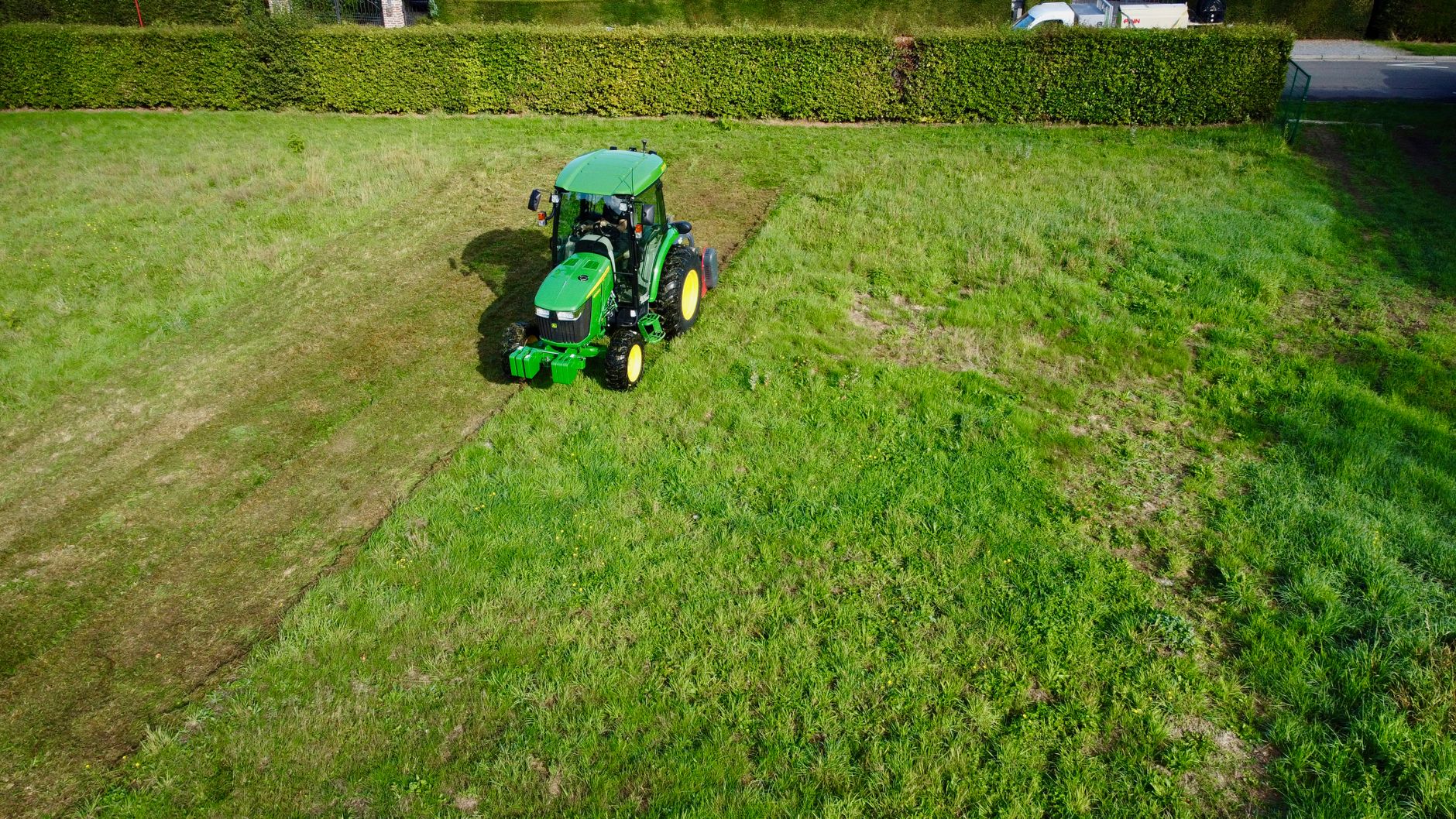
Not all turf belongs to a robot, and the sheet should say so. Open, reasonably level lawn with clear sight lines and few obstacles is where a robot pass can take on most of the mowing. Edges along beds, around signs and in tight corners still need a person with a trimmer, and so does the cleanup afterward.
Mark each route as robot coverable, shared, or crew only. A route marked robot coverable over most of its area does not remove the seat from the schedule, but it changes what that seat does during the week. The field worker can move to the edge and detail work the route still requires.
Where does the crew lead's time actually go?

The lead seat is often the least measured line on a route sheet. The lead sequences the day, checks cut quality, handles client questions and keeps equipment moving. When that seat empties, those tasks do not disappear. They fall to the field workers, and the mowing slows.
Trade press has flagged the same problem from another angle. A related Green Industry Pros piece, also undated in our notes, reports that contractors voiced concern about finding good managers as well as good field workers. Lead retention is a supervision problem before it is a mowing problem.
Log the lead's time for one normal week and split it into supervision, scheduling, quality checks and driving between properties. Those four buckets show whether any of that time could move to a robot pass, or whether the work is tied to people who must stay on site.
How should the route plan change when a seat stays empty?
Three moves are available: reassign the routes to the seats that remain, drop the lowest priority property from the schedule, or cover the open turf with equipment. The right choice depends on the register, not on hope that the next hire arrives.
Robot leasing belongs in that third option, and it is what Service Robot Co. does. We are OEM neutral. We choose the right robot across manufacturers for each site, then offer it on lease through financing, with one fixed lease quote made after a site assessment and a lease term of three years. We deploy and integrate the unit, train the crew on it, and service it under RoboCare, our service plan, with regional service engineers in every state we service.
A lease does not replace a crew lead. What it can do is take the open turf off a route that a seat used to cover, so the people who remain spend their hours on work that still needs them.
What should you check before you bid the next contract?
Run the register against the seats you actually have, not the seats you hope to fill. If a route depends on one person, mark it as exposed. If a route depends on the lead, treat the lead's hours as a hard constraint. Only then does the bid show a realistic number of contracts the crew can run.
Check the sources too. The 29% figure is from a 2025 report. The 42% and 59% figures are undated in the version we reviewed. Put those dates in the bid's assumptions, next to the route list, so the reader can judge how old each number is.

Frequently asked questions
Want a robot working for you?
Tell us the job and the site. We will recommend the robot, quote the lease, and keep it serviced.