Key takeaways
- IFR ranked hospitality second by application in its 2026 service robot data, behind transport and logistics.
- The hospitality group covers mobile guidance, information points and telepresence, and the summary says nothing about cleaning or delivery.
- The figures come from a sample of 238 suppliers and are not projected to the whole industry.
- Use the ranking to frame pilot questions, not to promise staff hours or guest numbers.
Where hospitality landed in IFR's 2025 robot data
The International Federation of Robotics ranked hospitality second by application in its service robot data covering 2025 shipments. Transport and logistics finished first. According to IFR's press release, that category recorded 117,500 units sold in 2025, up 21 percent, with a 47 percent market share.
Overall, professional service robot shipments rose 24 percent to almost 250,000 units in 2025, according to the same release. Hospitality sits inside that growing total. The release, as we reviewed it, does not give a hospitality unit count, so this article does not put a number on it.
That gap matters. A ranking shows where units went relative to other categories. It does not tell a hotel general manager how many robots are working near the front desk, or what they do across a shift.
Which hotel and resort jobs the category covers
IFR's hospitality group, as described in its release, covers three application types: mobile guidance, information points in public settings, and telepresence robots. Each one maps to a recognizable job on a property.
Mobile guidance robots move through public space and lead people. At a resort, that means walking a guest from the lobby to a conference room, or pointing a family toward the pool deck and the kids club.
Information points answer routine questions about hours, amenities, transit and local dining. They take repetitive questions away from a front desk already stretched during arrival peaks. Telepresence robots carry a remote person into a physical space, so a reservations specialist or a corporate trainer can join a walk through the lobby over a screen on a mobile base.

What the figure does not say about cleaning
Professional cleaning is reported as its own category. A Supply Chain Digital report on the release places it third, though that figure comes from a secondary summary and should be checked against IFR's full tables before anyone quotes it.
Cleaning is not one of the three hospitality types listed above. A hotel reading the hospitality rank should not assume it captures floor scrubbing, lobby sweeping or overnight restroom care. A guidance unit in the atrium does not clean the floor it rolls across.
That separation changes the question a property team should ask. Floor care belongs to a different line in the data, and in practice it needs a different robot, a different route test and a different measure of success.
What the figure does not say about delivery
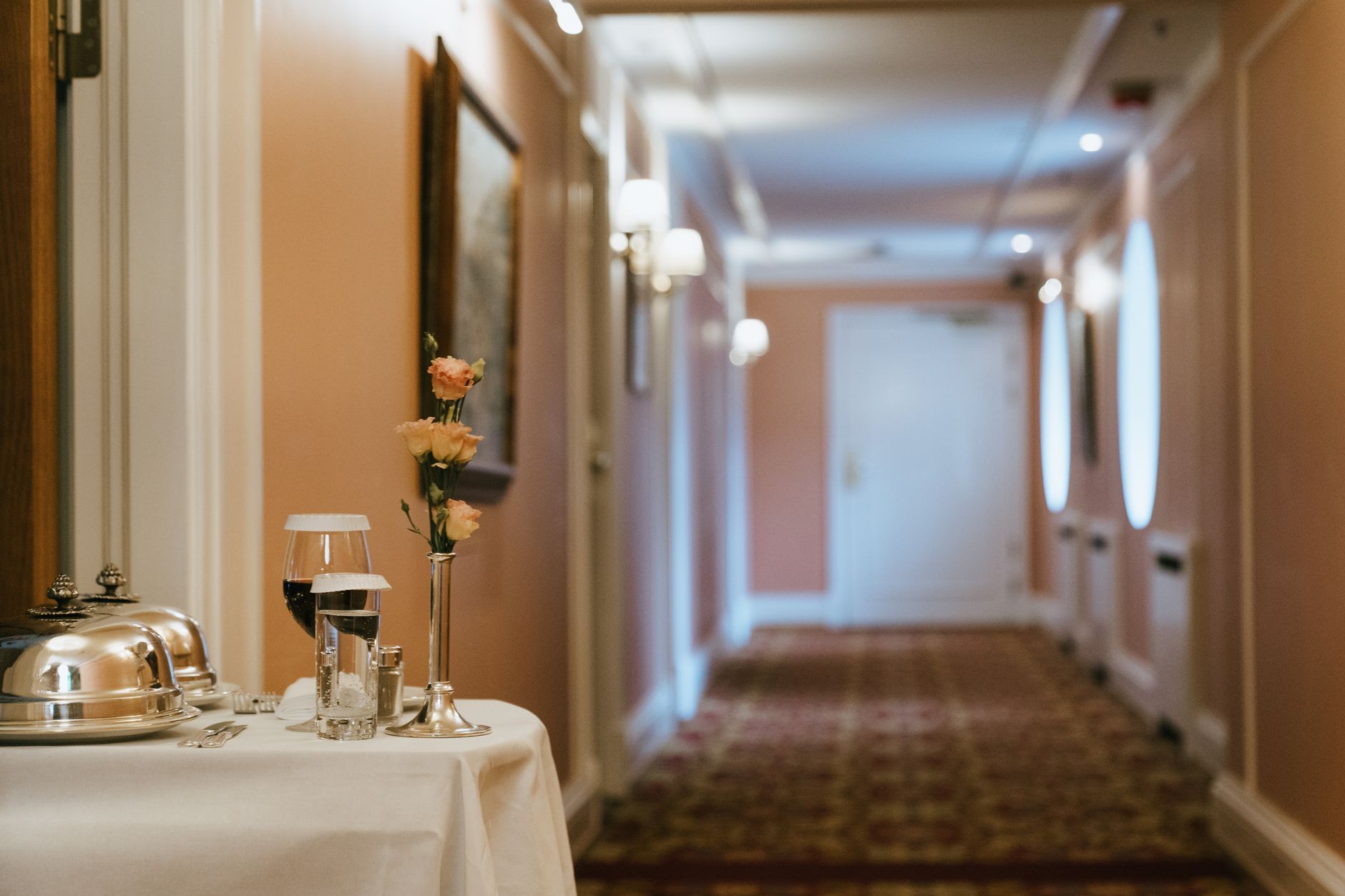
Room service, amenity runs and linen movement are not among the three categories in IFR's hospitality description. The sources we reviewed do not say where delivery robots are counted, so the hospitality rank cannot be used to size a delivery program.
Delivery is also a different kind of job. A robot that rides an elevator, crosses a service corridor and hands a tray to a staff member has to manage doors, handoffs and guest privacy. A guidance unit mostly needs to route people through open space. Treat a ranking that says nothing about delivery as silence, not as support.
How to read a sample of 238 suppliers
The figures come from a sample of 238 service robot suppliers. IFR states that the data is not projected to the whole industry, so the hospitality rank reflects what those suppliers reported shipping in the categories IFR defines.
Shipments are not installations. A unit leaving a factory may sit in a warehouse, appear at a trade show, or serve a pilot that later ends. Read the rank as evidence of where demand is moving, not as a count of working robots in hotels.
Comparisons across IFR editions need care too. IFR's guidance warns against lining up figures from different reports, so the hospitality rank belongs in a single report comparison, not in a trend line built from older tables.
How to use the ranking with corporate and franchise leaders
A ranking helps in a budget meeting only if it is framed honestly. Corporate and franchise leaders tend to ask the same few questions, so bring answers, not adjectives.
- Ask which of the three hospitality jobs your property needs, guidance, information or telepresence, before comparing any robot.
- Ask whether cleaning and delivery are being evaluated as separate line items, because the IFR hospitality description does not combine them with hospitality.
- Agree on the metric and the measurement window before a pilot starts, such as guest questions answered per shift or staff minutes returned.
- Ask what happens when a unit goes offline during peak arrivals, and who responds, and how fast.
Where a site assessment fits in the decision
Service Robot Co. is a full service commercial robot integrator for US businesses. We work across manufacturers, so the robot we recommend is the one that fits the task and the floor, not one brand's catalog. We finance, deploy, integrate, train and service each unit through a nationwide US engineer network, so a property works with one partner for the full lifecycle.
Robots reach a property through a lease. We offer a lease with a three year term and one fixed lease quote, issued after a site assessment that maps the space, the traffic and the tasks. For a hotel team comparing a guidance pilot against a cleaning plan, the quote arrives alongside the site findings, so the numbers and the floor plan can be checked together.

Frequently asked questions
Want a robot working for you?
Tell us the job and the site. We will recommend the robot, quote the lease, and keep it serviced.
Sources
Service Robot Co. is not affiliated with, sponsored by, or endorsed by the companies mentioned in this article.