Key takeaways
- IFR put transportation and logistics at 47% of 2025 professional service robot shipments, with 117,500 units.
- The 47% figure covers professional service robots only and rests on a 238-supplier sample, so it is not a count of sites.
- Your first step is a typical week of logged hand-moved loads, walking time and cart use.
- Walking time often hides inside shifts and deserves its own column in the audit.
- Start with one route and one leased unit, then measure against your own baseline.
Is manual hauling still the right default for your site?
Manual hauling can still be the right default for a small site with light, infrequent moves. For many larger warehouses, plants and campuses, though, it has become a habit rather than a decision. The industry data gives that habit a reason to be reexamined. According to the IFR press release carried on Kyodo News PR Wire, transportation and logistics was the top professional service robot application in 2025, with 117,500 units and a 47% share of professional service robot shipments.
That is a market signal, not a verdict on your floor. The data does not show that your route needs a robot. The answer comes from an audit of your loads, your walking time and your carts, and it takes little more than a typical week of attentive logging.
Run the audit before you choose any machine. If the logs show repeated, predictable moves on the same routes, transport robots deserve a serious look. If moves are rare and irregular, a good cart and a second pair of hands may still win.
What does the 47% figure measure, and what does it miss?
The share is useful, but read it narrowly. According to Supply Chain 247's coverage of the IFR data, the 47% applies to professional service robots only, not to all robots shipped worldwide. IFR's service robot figures come from a sample of 238 suppliers, drawn from a wider set of 1,001 manufacturers, and IFR says the data is not projected to the whole industry.
The release body gives 117,500 units for transportation and logistics, although some of its bullet points round the figure to 117,000. Use 117,500 when you quote it. IFR also reports that global professional service robot shipments rose 24% to almost 250,000 units in 2025, according to a press release reprinted by Vietnam News.
Those totals explain the pace of the category. They say nothing about a particular aisle, dock or cart line. Compare your logs with your floor, not with a national average, and be wary of any comparison that mixes separate IFR reports, because IFR itself discourages that.
What does manual hauling look like once it becomes the default?
Default habits rarely appear on a budget line. They show up as small patterns that repeat each shift, and each move looks ordinary on its own.
- Carts wait at a station until someone walks over to move them
- Pallets are staged by hand near the dock because no one is responsible for the route between zones
- Staff leave a pick area to fetch an empty tote, then walk back
- Supervisors reroute loads around a blocked aisle from memory rather than along a set path
Step one: log every hand-moved load for a typical week
Pick a typical week, not a peak week or a slow one. For each move, record the origin, the destination, a rough weight class, the start and end times and who moved the load. A clipboard works. A shared spreadsheet works better, because you can sort it by route later.
Log the moves that feel trivial. Small, frequent loads add up, and they often produce the most walking. Keep the form short enough that people will complete it during a busy shift, or the log will capture the quiet shifts and miss the rest.

Step two: separate walking time from handling time
Handling time is the minutes spent lifting, loading and placing a load. Walking time is the minutes spent moving between points, with or without a load in hand. Most sites track handling. Far fewer track walking, which is why it hides in plain sight.
Use the log to estimate both. Walking time usually shows up as the gap between two tasks, as a fetch that delays a pick, or as a return trip with an empty cart. Those gaps are repetitive and measurable, which makes them the strongest evidence for or against a transport robot.
Step three: count carts, tugs and idle capacity
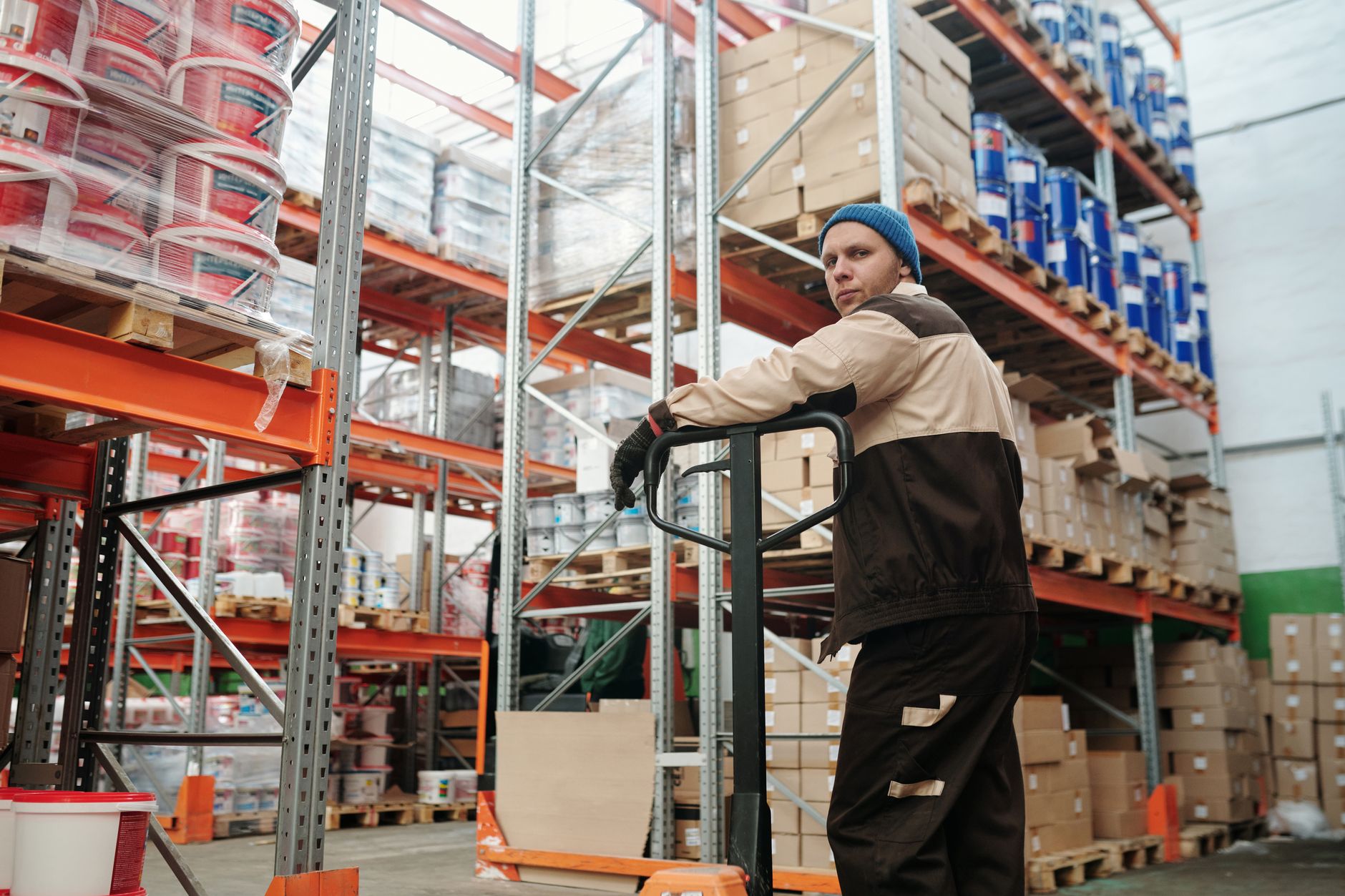
List every cart, cart type, tug and pallet jack in regular use. Note which ones sit idle, which wait in queues and which get pushed by hand over long distances. A cart fleet already on the floor can be a useful starting point for a tug robot, provided the hitch, load limits and cart condition suit the machine.
Idle carts and walking staff point in opposite directions. If carts outnumber the people who move them, the bottleneck is elsewhere. If people walk carts that could move themselves, the bottleneck is hauling, and the audit has found it.
Which routes point toward a transport robot?
Sort the log by route, then rank the routes by repeated moves. A transport robot suits a route with frequent, predictable trips, a stable path and clear floor conditions. It is a weaker fit for one-off moves, blind corners without signage, or aisles that rearrange every shift.
Then check the physical site. Floor condition, door and elevator access, aisle width, pedestrian traffic and charging locations decide whether a unit can run a route cleanly. A route that looks ideal on paper can fail at a single threshold or a narrow doorway.
Where Service Robot Co. fits in the audit
Service Robot Co. is a full-service commercial robot integrator for US businesses. We are OEM-neutral, which means we select the right robots across manufacturers for the work, then finance, deploy, integrate, train and service each unit through a nationwide US engineer network. One vendor covers the whole lifecycle, from the first site visit to daily support.
Our offer is a lease only, on a 3-year lease with one fixed lease payment quoted after a site assessment. That assessment includes site assessment mapping of the route and the physical checks listed above, so the quote reflects your floor rather than a generic layout. Lease financing and go live support sit inside the same engagement.
Is falling behind a reason to skip the audit?
Falling behind is a real worry when competitors talk about automation. A robot installed on the wrong route, though, costs more than a late start. Use the audit to rank your routes, then pick the one with the most repeated moves as the first candidate.
Start with one route and one leased unit. Measure the same logged metrics against your baseline over a defined trial period. If the numbers move, extend the trial to the next route. If they do not, you will have learned the limits of your floor at modest cost, which is still a better position than guessing.
Frequently asked questions
Want a robot working for you?
Tell us the job and the site. We will recommend the robot, quote the lease, and keep it serviced.