Key takeaways
- Hold three settings steady at every community: cut height, cutting cadence and edge line.
- Drift shows first along walks, curbs, corners and clippings left on paving, not in the open field.
- A robot mower fits open, repeatable turf on a fixed route, with a crew member supervising nearby.
- Hand trimming still sets the look residents judge, so budget crew time for edges on every visit.
- A dated weekly record gives a property manager proof instead of promises.
What keeps an apartment lawn looking the same each week
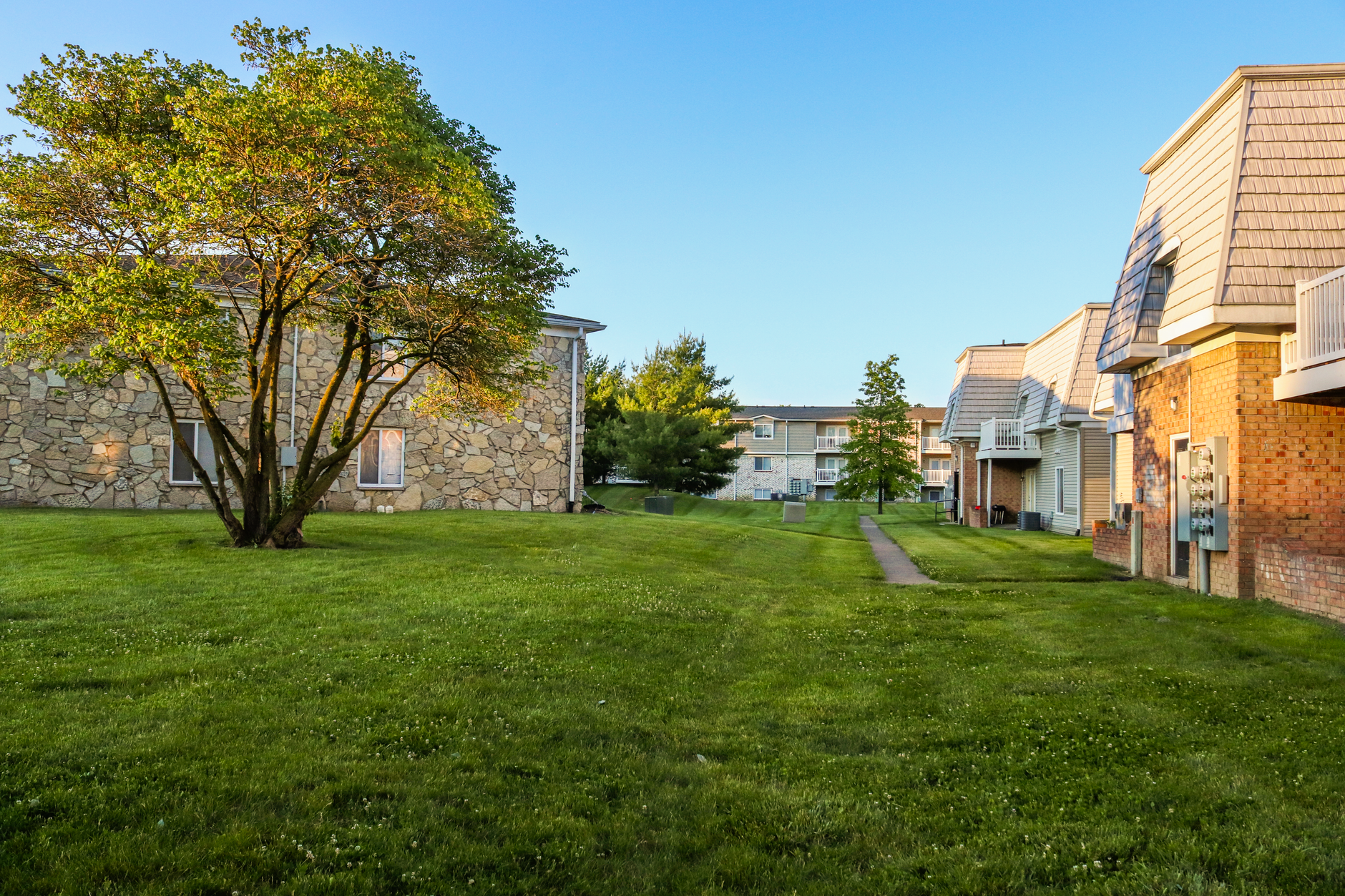
A consistent apartment lawn depends less on any single mow than on repeating the same three settings: cut height, cutting cadence and edge line. When a contractor holds those steady across every community on the route, residents and property managers see the same lawn from one week to the next. When one setting drifts, they notice quickly.
Height and cadence are the easy parts to write down. The harder part is the edge, because that is what a manager sees from a parked car or a walkway. Most of the work that protects the look happens at the perimeter, not in the middle of the field.
An autonomous mower on open turf can hold height and rhythm steadily on a fixed weekly route, provided a crew member supervises nearby and hand trimming finishes the edges. That split between robot and crew shapes the rest of this piece.
Where residents and managers notice drift first
Drift rarely appears in the middle of a lawn first. It appears where people walk, park and compare one visit with the last.
- Walkway and curb edges, where a ragged or skipped pass shows against hard paving within days.
- Corners and tight turns around light poles, dumpsters and utility pads, where hand strokes vary most from one crew member to the next.
- Clippings left on paved areas after a mow, which read as a careless finish even when the height is correct.
- Height after a delayed week, since grass that has grown long looks different from grass that was cut on schedule.
What written specs ask for on height, cadence and edges
No single national standard governs apartment lawn care, but public and association documents give a contractor a baseline to write against. One apartment grounds article gives a mowing height range of 2.5 to 4 inches, and a South Carolina housing RFP calls for a uniform height of about 3 inches. The height in your contract sets the target, and the crew must hit it on every visit.
Cadence is often set by frequency limits. An HOA landscape guide says commercial properties, including HOAs, require weekly mowing to stay healthy. A City of Pleasanton, California specification caps service at once per week unless the city project manager authorizes otherwise, so a weekly route can also be a contract boundary.
Edging is where specs get specific. Brightview residential service standards require edging of sidewalks, curbs and paved areas at each mowing during the growing season, and they call for a clean, straight cut edge. Specs also commonly require a litter check before mowing and clippings cleared from paved areas afterward. Some contracts disallow partial mowing unless weather forces a delay.
How grass type, season and local rules change the baseline
Carrying one standard across many communities is where consistency usually breaks. A cool-season lawn and a warm-season lawn respond to the same cut height in very different ways, and the same mowing week can look right in June and wrong in August.
The practical method is to write one baseline weekly cadence and one edge rule, then attach a short variance sheet for each community. The sheet records grass type, the seasonal height adjustment and any local ordinance or association rule that changes the route. Crews then work from the sheet, not from memory.
Where an autonomous mower fits a fixed weekly route
Research on robotic mowing points in one direction on uniformity. A 2018 UF/IFAS trial on St. Augustinegrass in Florida set a robotic mower to cut daily at 2.4 inches, from 9 a.m. to 3 p.m., and compared it with traditional mowing at 3.5 inches. The extension publication reports more uniform turf and greater green cover with the robot, along with lower labor and emissions. That was one Florida turf trial, not an apartment property, so read it as direction rather than a guarantee.
A Nordic STERF factsheet on golf courses reports high turfgrass quality and more uniform, consistent turf from daily robotic mowing. Both sources point at daily, light cutting, a rhythm that suits a robot on a fixed route better than a crew that returns every few days.
Upfront cost is the honest counterweight. Turf Magazine coverage notes that an autonomous mower costs more to acquire than a manual mower, although firms increasingly treat it as a capital investment. The robot earns its place on open, repeatable turf with clear paths, and it does not take over the perimeter.
Keep a crew member nearby during every run. Someone close by can catch a stalled unit, a blocked gate or a stray toy before it becomes a complaint, and can pull the robot back when a route changes.
Why hand trimming still sets the look clients judge
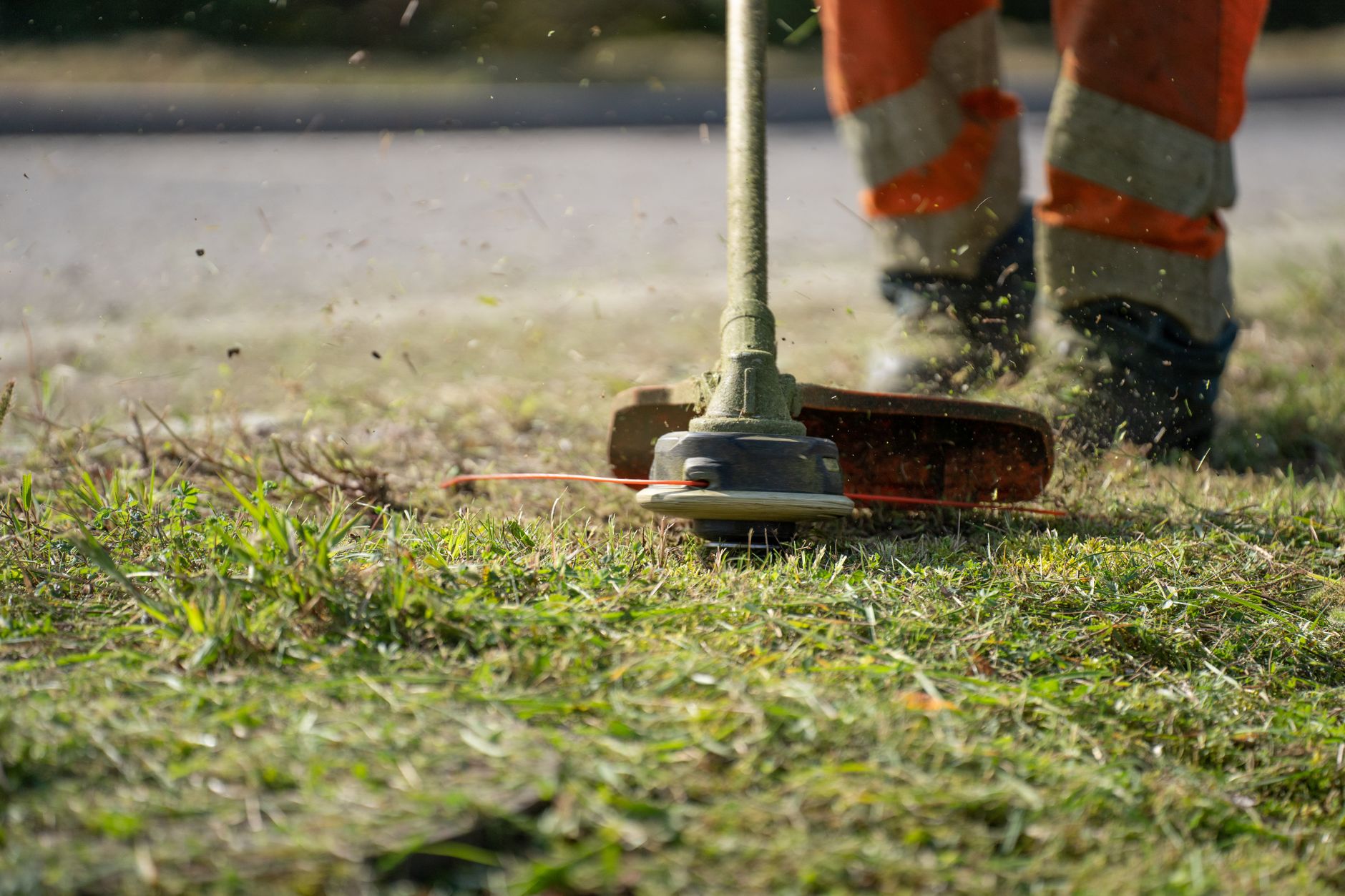
Even a flawless open field can lose the account if the edge looks wrong. Hand trimming and edging around beds, stairs, fences, sign bases and curb returns remain the work residents judge, because those lines sit beside objects that never move.
Hand work also corrects what the mower leaves behind. On most sites a robot will not match a trimmer on a tight radius around a light pole, so the crew finishes those corners on every visit. The goal is not to race the robot. It is to finish the frame the robot cannot reach.
Sequence matters. Run the litter check first, then the open mow, then edging and trimming, then clear the paved areas. The order is what makes one visit look like the last.
Building a consistency record a property manager can check
A property manager should not have to take the crew's word for it. A short weekly record that matches the spec does that work: height set at each visit, the date of the last edge pass, photos of the walk lines, and any weather-driven skip with its reason.
Service Robot Co. helps contractors and communities add robots where the route supports them. We are a full-service commercial robot integrator with an OEM-neutral approach, so we pick the right machine across manufacturers, then finance, deploy, integrate, train and service it through a nationwide US engineer network. Robots reach a site through a lease: we start with a site assessment, and the three-year lease carries one fixed payment quoted after that assessment.
Where a mower does not fit yet, the record still works. Logging height, edge passes and exceptions for the hand crew gives the manager the same evidence whether the open field is cut by hand or by robot.

Frequently asked questions
Want a robot working for you?
Tell us the job and the site. We will recommend the robot, quote the lease, and keep it serviced.
Sources
- UF/IFAS Extension: robotic mower trial on St. Augustinegrass
- Nordic STERF factsheet: use of robotic mowers on golf courses
- Brightview residential service standards
- Homeowners association landscape guidelines
- City of Pleasanton landscape maintenance specification
- Apartment grounds article (Naylor)
- Columbia SC housing lawn service RFP
- Turf Magazine: robotic mowers overview