Key takeaways
- Open lawn panels suit a robot mower best, while beds, islands, entries and tight corners stay with the crew.
- Slope specs mix percent and degrees, so confirm both before you map a berm.
- Splitting out open turf changes the mix of crew hours instead of erasing them.
- Campus pilots report time returned, not full crew replacement.
- The site assessment comes first, and only then is one fixed lease payment quoted.
Which parts of an office lawn can a robot mow?
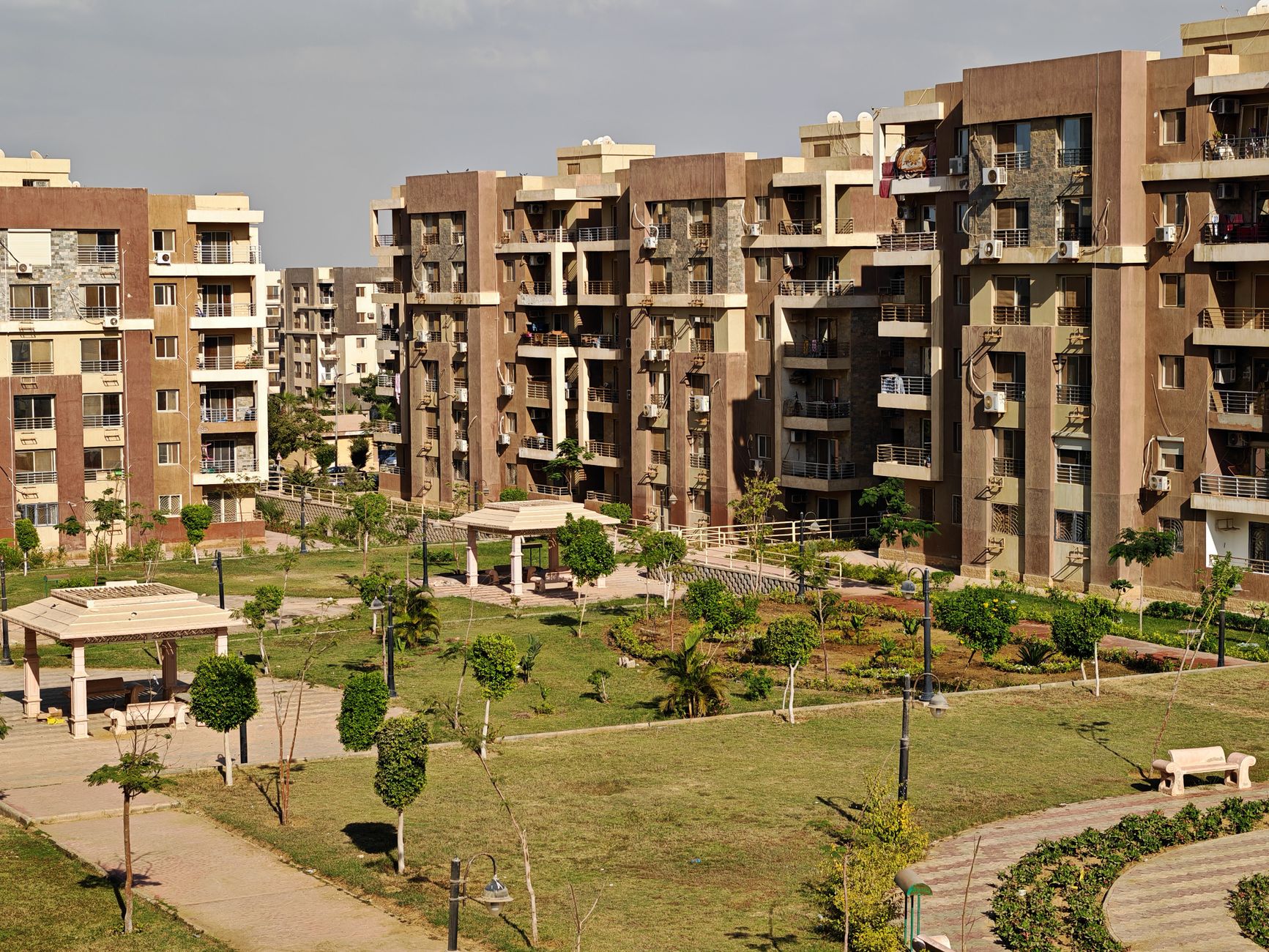
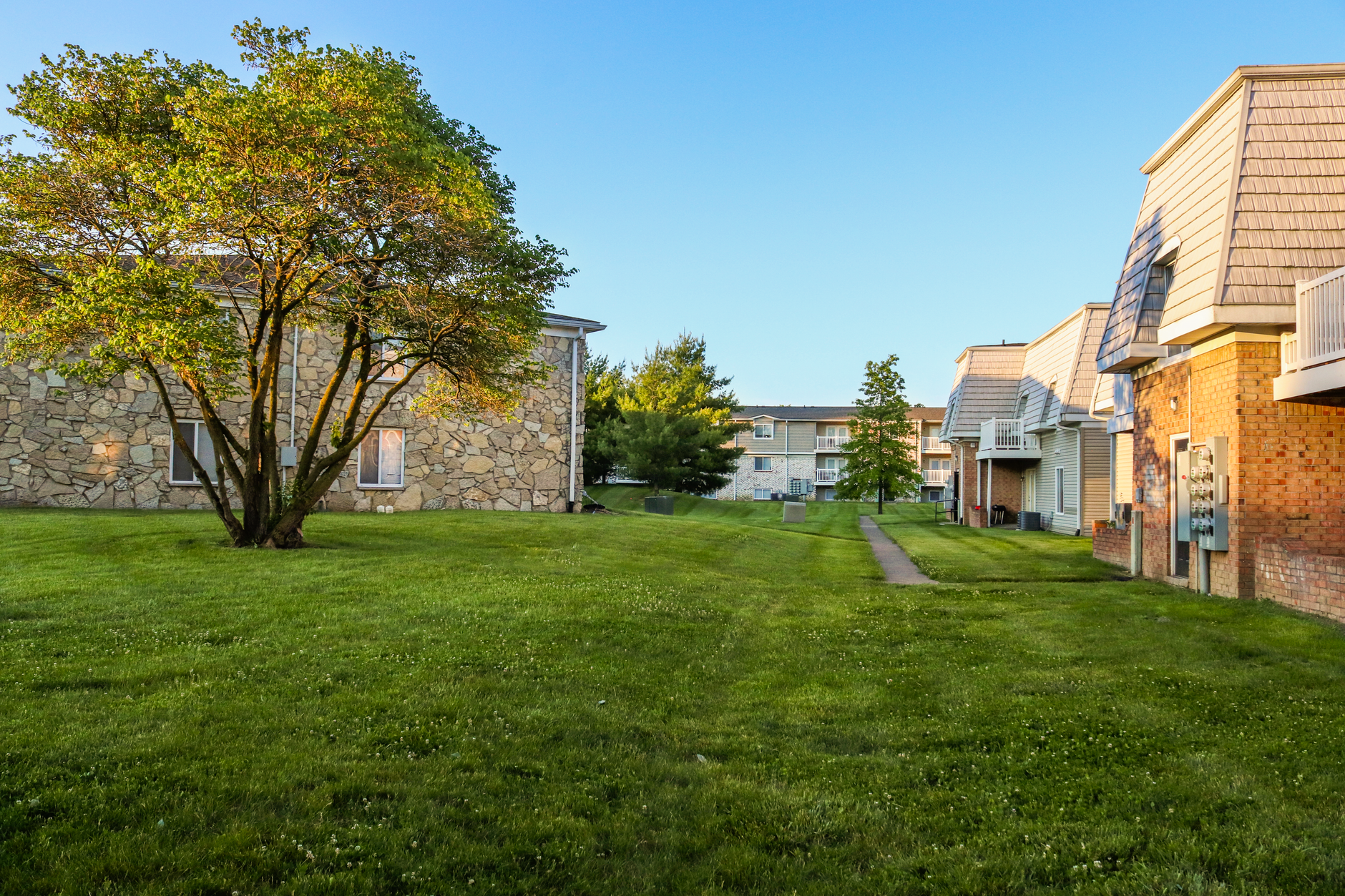
Open turf is where a robot mower earns its place on an office campus. Large lawn panels between buildings, with few beds and few fixed obstacles, can be mapped once and cut on a repeating schedule.
The bed islands, entry beds, walkways and tight corners usually stay with the crew. Hand work remains the right tool there, and the zone plan should say so in writing before any robot goes live.
How do you sort a campus into robot and crew zones?
Walk the site with a map and test each patch. Check that it is open and continuous, free of fixed obstacles, and able to hold a clean loop back to the charger. A patch that passes all three belongs in the robot zone. Everything else goes to the crew, even when it looks like lawn.
Most office lawns end up hybrid. The sorting usually produces four kinds of ground, and each one needs a different owner.
- Robot zone: open panels wide enough for a mower pass, with a clear loop back to the charger.
- Hybrid patch: a panel with one island, where the robot mows around a fenced bed and the crew trims the edge.
- Crew zone: bed islands, entry beds, walkways, curbs and the corners around signs, light poles and fences.
- Keep out: slopes or berms beyond the mower's rated limit, which go to a walk behind mower or a hand crew.

What do published slope limits mean for an office berm?
Slope figures are easy to misread because manufacturers publish them in percent and in degrees. Husqvarna's support guidance for its Automower line, checked as of November 2026, says not to lay boundary wire across a slope steeper than 15 percent. It also says to isolate steeper ground with that wire, keeping 1.5 m (5 ft) from the bottom of the slope to the wire.
Honda lists its HRM 520 at up to 24 degrees, or 45 percent, in the work area, with boundary wire where the slope is under 10 degrees, or 17 percent. Those are consumer model specs, so a commercial site should confirm the rated limit in the documentation for the exact model proposed.
Dry ratings do not predict a wet clay bank after a storm. Wire guided units suit canopy cover, while RTK units need a clear view of the sky. Both points belong on the site assessment checklist, next to the berm measurements.
How much crew time have campuses actually returned?
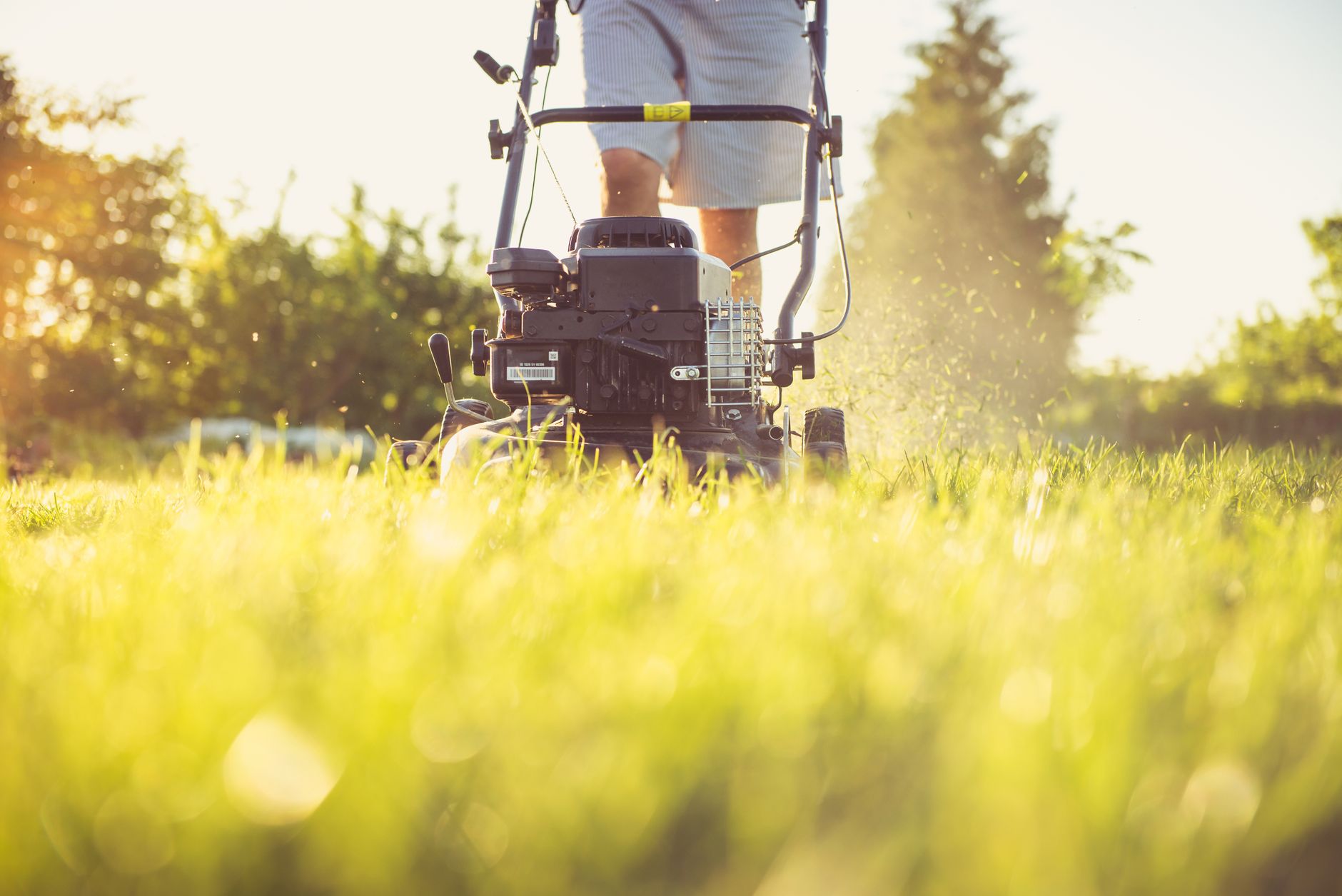
The best proof comes from campuses, though not from office parks. The University of Nebraska at Kearney reported that mowing can consume about 120 man hours a week across roughly 150 acres. The university had added two robotic mowers and was still evaluating the pilot.
Slippery Rock University put one Automower 315X on a courtyard. A staff member said it lets the crew focus a couple of hours of weekly labor elsewhere on campus. Saint Scholastica reported that its mower saves about 100 hours of labor per year.
The University of Oklahoma described its Echo mowers, each covering about 15 acres a day, as an addition to the crew rather than a replacement. These are self reported campus figures, not controlled before and after studies.
Where do the freed hours go once open turf is split out?
Splitting open turf does not erase the job. It changes the mix. Hours that once went to pushing a mower across wide panels move toward bed edges, islands, entry beds and the corners a mower cannot reach, where the work is slower and the standard is higher.
Slippery Rock's staff framed the gain the same way, as time redirected to other work on campus. An office park should write the new crew schedule first and then count the hours back, rather than assume they vanish from the cost base.
What still needs a crew after the robot starts?
A USGA Green Section Record article on autonomous mowers says they reduce labor demand but still need routine service. That piece predates the 2025 product launches and says full autonomous greens mowing was not then available, so read its limits as dated.
Crews keep the service tasks, boundary repairs after storm damage, edge trimming and any zone the robot cannot enter. Put those tasks on the crew calendar before go live, so the freed hours are not promised before they exist.

How is the wider industry planning for autonomous mowing?
A 2025 survey published by Golf Course Industry found that 61 percent of respondents expect to deploy autonomous fairway, green and slope mowers by 2035, a technology they do not yet run. It is a trade publication survey, not a GCSAA study, so it shows intent rather than installed counts.
Golf courses differ from office parks, but the planning logic carries over. The same zone questions apply to any campus with large open turf and detailed beds.
How Service Robot Co. maps an office park before any lease
Our work starts with a site assessment. We map open turf, islands, slopes and canopy cover, then choose robots across manufacturers that fit each zone, so the mower is picked for the ground rather than for a catalog.
We lease robots through financing on a three year lease, with one fixed payment quoted after the site assessment. Our nationwide US engineer network handles integration, go live support and service, so an office park deals with one partner and one number.
Frequently asked questions
Want a robot working for you?
Tell us the job and the site. We will recommend the robot, quote the lease, and keep it serviced.
Sources
- Fox 42 KPTM report on a university robotic mower
- Slippery Rock University news: Automower courtyard pilot
- Saint Scholastica campus news on mower labor savings
- Yahoo News: University of Oklahoma high tech mowers
- Husqvarna support: installing an Automower on steep slopes
- Honda HRM-520 owner manual listing
- Golf Course Industry 2025 technology survey
- USGA Green Section Record: autonomous mowers on golf courses