Key takeaways
- A thin week rarely loses a renewal alone, but a run of visible lapses can.
- Route logs and timecards show whether a short crew lines up with client complaints.
- Aspire's 2025 survey put recruiting and retaining staff at 51% among the main hurdles to goals.
- Robot mowers can hold open turf steady during a short week, but they do not prevent every loss.
- Set coverage before the gap opens, and tell the client what protects the property that week.
How does one short week turn into a lost renewal?
One thin week rarely costs a renewal on its own. What costs it is a run of visible lapses that the client notices and remembers: a trim skipped at the front walk, stripes that wander from visit to visit, an edge that looks tired by the time the account manager walks the property. When a seat stays empty, those hand tasks are usually the first to slip.
The sequence is what matters. A missed trim in one week gets forgiven, but three weeks of uneven cuts changes how the client judges the whole contract. By the time the renewal conversation opens, the client has already formed a view of the property that is not the one you bid.
Thin crew coverage erodes the quality a renewal was priced on, and that erosion is gradual. Robot mowers can keep the open turf steady while the crew is short. They do not stop every loss, and they do not replace the trimming and edging that clients see most.
What do your route logs show before the renewal does?
Route logs are your earliest warning. Compare planned passes against completed passes for each property, and flag every week where the crew ran with an open seat. Lay those dates beside the visit notes and callbacks your account managers keep. A short week followed by complaint notes is the pattern to act on, and it sits in your records.
Renewal history answers the second question. Sort lost, downgraded or delayed renewals by the date the first quality complaint appeared, then check whether that date falls inside a staffing gap on the timecards. Work from your own figures, because no outside average can tell you how your accounts behaved.
Pull these for each property before you plan coverage:
- Planned passes against completed passes, week by week
- Trim and edge tasks deferred in each short week
- Open crew seats on the timecards for the same weeks
- Complaint and callback notes tied to those dates
- Renewal outcome and date for every account touched by a gap

Is hiring really the bottleneck?
Aspire's commercial landscape survey, fielded May 2 to 23, 2025, reached 1,015 commercial landscape contractors. Thrive Analytics ran the fieldwork for Aspire. The findings are vendor reported, so read them as a directional picture rather than a census. Among the main hurdles to 2025 goals, respondents named material costs at 52% and recruiting and retaining staff at 51%.
The same survey put customer retention at 40% among 2025 goals, alongside revenue growth at 64% and customer acquisition at 48%. Repeat business made up 35% of revenue, and word of mouth referrals from satisfied clients made up 26%, both contractor reported. A lost renewal therefore reaches well beyond one line on the books.
Coverage of Aspire's October 2025 release carries the then general manager of landscaping saying that hiring challenges are about finding quality talent, not just headcount. That is the point this article takes forward. Adding a body to the route is not the same as keeping the trim and stripe standard the client renewed.
Where do robot mowers fit when a seat stays empty?

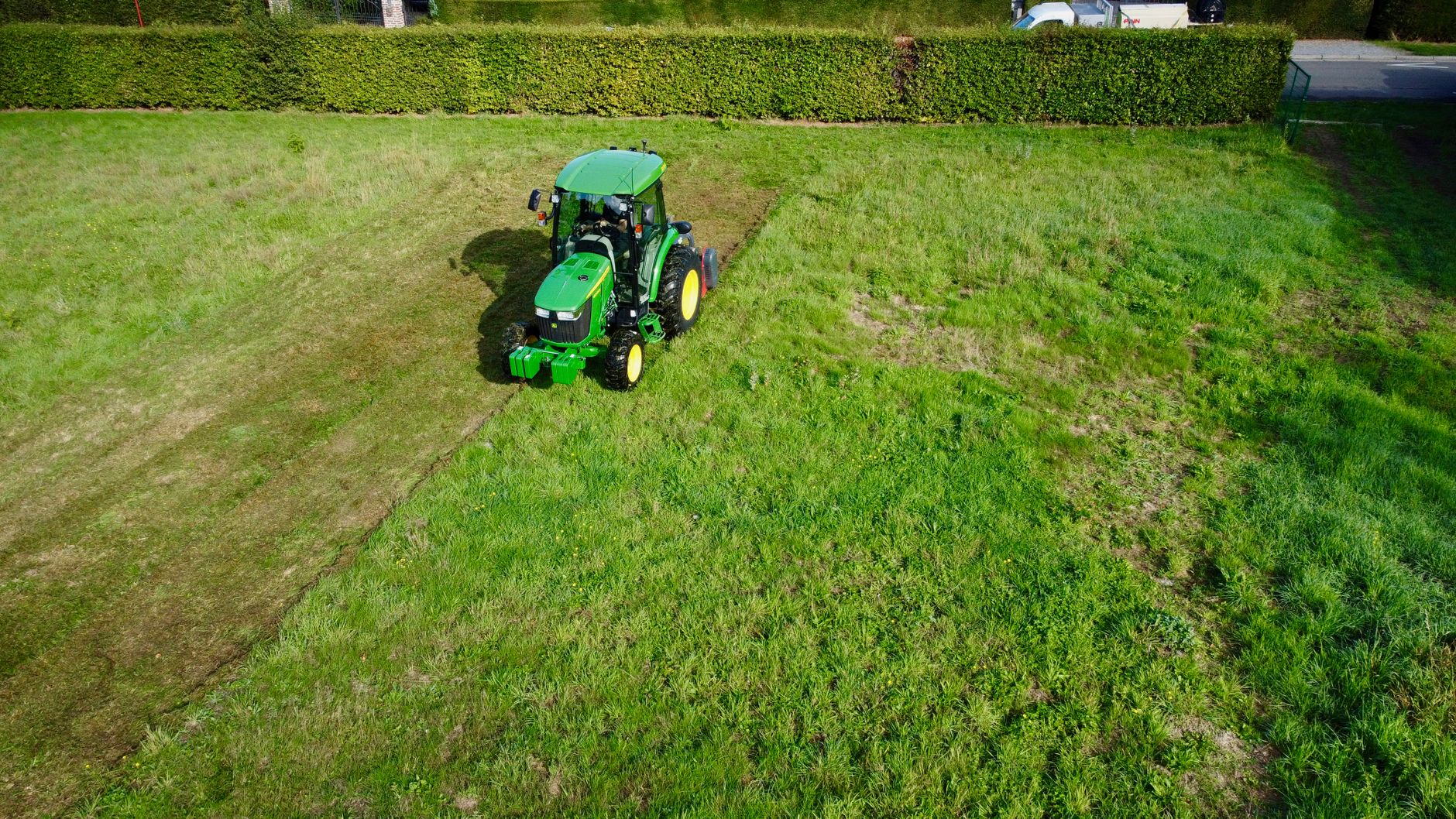
Robot mowers take the open turf: large, regular areas that follow a fixed route. When a seat stays empty, those passes can keep running on schedule while the crew puts its hand time into trimming, edging and the detail areas near entries and beds. The client still sees consistent height on the big lawns, and the crew guards the edges that carry the most visual weight.
The tradeoff is scheduling. A robot working open turf needs its route and charging window planned so it does not run into crew work on the same lawn. Sites with dense obstacles, steep grades or areas that were never mapped may still need crew passes, and trimming around fixtures stays with people.
Plan on the robot protecting the open turf during a short week, not the entire property.
How should a contractor set up coverage before the next short week?
Start with a site assessment. Service Robot Co. is a vendor neutral robot integrator, so the mower recommendation comes from the property, its grades, obstacles and turf layout, rather than from one manufacturer's catalog. Our service robot leasing runs through financing on a three year lease, and the customer receives one fixed robot lease payment quoted after the site assessment.
A phased start often fits a landscape contractor. Begin with one leased unit on the most visible turf, watch the route logs through a full short week, and expand only when the numbers hold. Deployment, integration, training and servicing run under RoboCare, our service plan, backed by regional service engineers in every state we service, so a field fault has an engineer behind it rather than a second short week.
What should a client hear about coverage during a short week?
Promise standards, not perfection. A client who hears that a robot mower covers the open turf and the crew covers the detail work has a clear picture. A client who hears that nothing will ever be missed will eventually have a reason to doubt the whole account.
Tell the client when a short week is coming and what protects the property that week. Send the trim and edge schedule before the gap, not after the complaint. A planned adjustment reads very differently from a silent drop in quality, and the record of those notices will carry weight when the renewal conversation opens.

Frequently asked questions
Want a robot working for you?
Tell us the job and the site. We will recommend the robot, quote the lease, and keep it serviced.