Key takeaways
- Mowing route overtime usually traces to four causes: long operator days, weather backlogs, equipment repairs and uneven route loads.
- Under the federal overtime rule, covered nonexempt workers owe time and a half for hours over 40 in a workweek.
- A robot mower mainly cuts seat hours on repetitive open turf passes and reduces dependence on a single machine.
- Weather backlogs, edging, cleanup and unfilled roles still need scheduling and staffing fixes.
- Tag every overtime hour by cause before deciding what, if anything, to lease.
Where do the extra mowing hours come from?
Overtime on a mowing route is rarely one bad week. It usually builds from four sources: long operator days, weather that compresses work into fewer dry days, equipment repairs that idle a crew and then force a catch up push, and route loads that give one seat far more acreage than the others. Every one of those sources adds hours that land past the 40 hour line in a workweek.
A robot mower can reduce some of them, mainly the hours spent on a mower seat for repetitive passes and the exposure to one machine going down. Other causes need scheduling rules or staffing decisions, and no machine changes those on its own. Sorting the causes is the first job, before any talk of equipment.
How the overtime rule applies to crews
Under the federal Fair Labor Standards Act, covered nonexempt workers must receive time and a half their regular rate for hours over 40 in a workweek, according to Department of Labor Wage and Hour Division material. The DOL release we reviewed carries a notice that some of its news releases may be out of date, so check the latest guidance before setting any pay rule.
Department of Labor enforcement summaries involving landscaping firms describe a recurring set of problems. Employers paid straight time for overtime hours, classified crew leaders as exempt, paid a flat daily rate regardless of hours worked in a week, and left hours unrecorded. Each one turns ordinary long days into a pay liability, so the pay structure deserves as much review as the route map.
Long days and the seat hours behind them
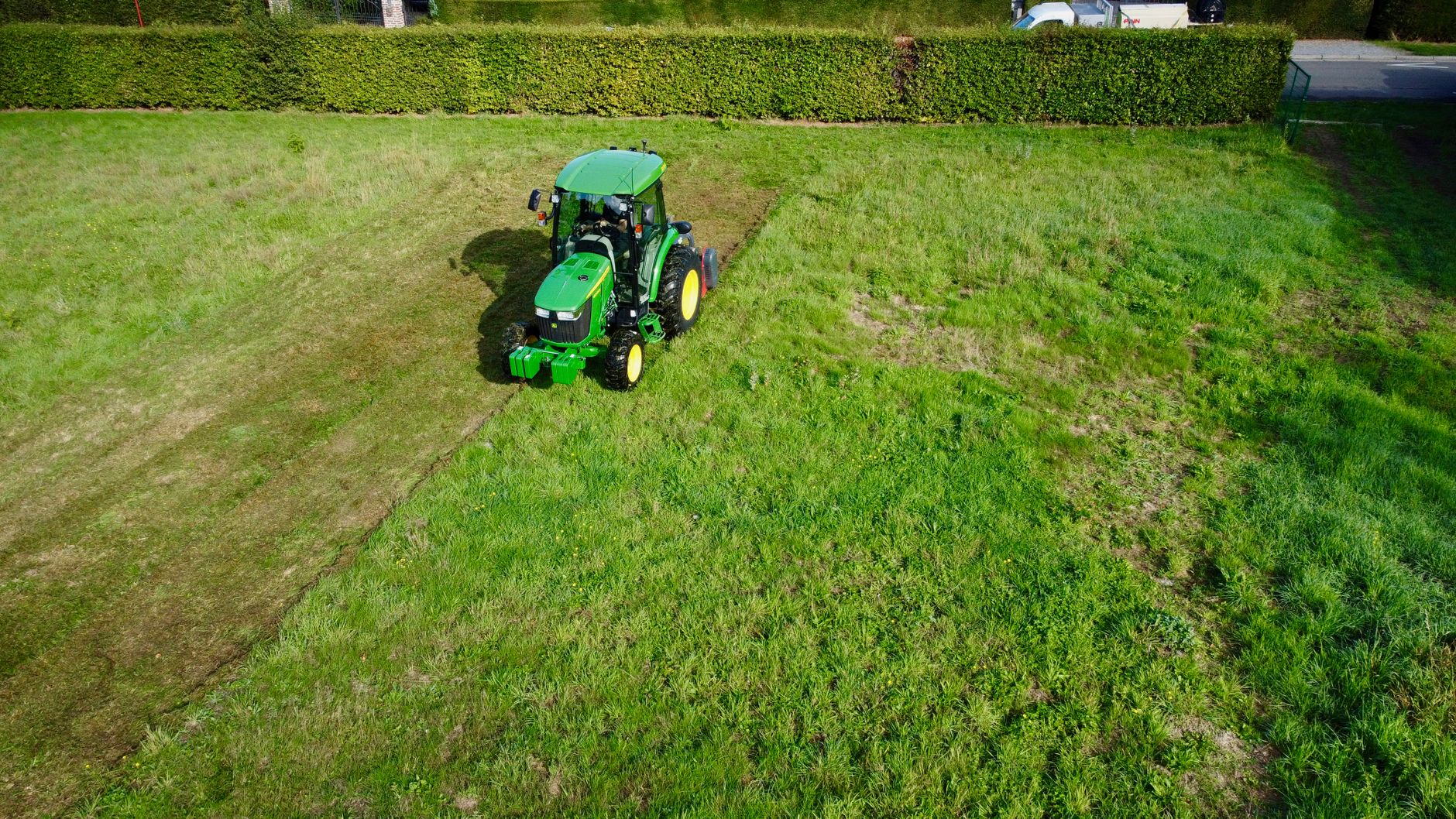
The most visible overtime comes from long operator days. On a ride on mower, a crew member spends much of the shift on repetitive passes over open turf, and when the route list runs past the scheduled shift, the overflow becomes overtime. Those passes are the part of the day a robot mower can take over, freeing the operator for edging, trimming and cleanup work that still needs a person.
Plan robot run windows against the route list rather than around the crew's arrival time. Open turf in the middle of a site is usually the first candidate, because it is repetitive and has few obstacles. Borders, beds, tight corners and debris removal stay on the crew calendar, so the saving shows up in seat hours rather than in total crew hours.
Weather delays and the catch up week

Rain and heat do not remove work. They push it into a shorter window, and the crew works longer days to clear the backlog. A lost Tuesday becomes a Saturday or a run of ten hour days, and each of those hours can land in overtime. Work that slips in one week often reappears as a sequence of long days, which is harder to see in weekly totals than in a single bad day.
A robot mower may resume passes once a window opens, but the site survey has to confirm how a given unit handles soft turf before anyone counts on it. The stronger fix sits in the calendar. Build rain days into the route plan, rank sites so the most time sensitive ones get the first open windows, and avoid stacking a backlog onto a single crew.
Equipment repairs that idle a crew
When a ride on mower goes down, the operator either waits on paid time or moves to other work, and the acreage queued for that machine often gets cut later in long shifts. One machine carrying a whole route is the weakest point in the schedule. Adding robots adds units, but it also adds a service question: how quickly does a stopped unit return to the field?
That is where service coverage matters as much as the machine. Service Robot Co. (servicerobotco.com) integrates, deploys and services each unit under RoboCare, with remote triage, on site dispatch and spare unit coverage. The program is designed to limit how long a stopped unit leaves a route uncut. Ask any vendor for its repair response commitments in writing before you rely on them.

Uneven route loads and the heaviest seat
Overtime often concentrates on one route. One crew member draws the largest turf section, the longest drive between sites or the most obstacles, while a second finishes early. An average of total crew hours hides the problem, because the overtime sits with whoever holds the heaviest route.
Rebalance routes by mowing time and travel time rather than by number of sites, since two sites can differ widely in acreage. A robot mower can take the long open passes off the heaviest route, and the rebalanced loads should show up first in the overtime column. Rebalancing is a scheduling exercise, and a machine cannot finish it alone.
Which fixes belong to scheduling and staffing
Some causes will not respond to a robot at all. Staffing gaps force the remaining crew into longer shifts, and the labor data points to a widespread squeeze. Green Industry Pros reported that more than half of responding landscape contractors planned to hire additional field workers and crew leaders over the next two years, though the publication date was not shown in the material we reviewed.
Landscape Ontario's December 2024 State of the Industry reported that 53 percent of surveyed members faced a labor deficit. That is a Canadian figure and predates the 2026 period this article covers. The Aspire 2026 Commercial Landscape Industry Report drew on more than 1,000 US commercial landscaping professionals surveyed in May 2025, but it is vendor reported and gated, and its overtime figures were not visible to us. Use these sources as context for labor pressure, not as a benchmark for your own hours.
Tagging overtime by cause before a lease decision
Before anyone compares lease terms, pull recent timecards and tag every overtime hour with one cause: long day, weather, repair, uneven load or unfilled role. The totals show which fixes deserve budget. A three year lease should target a category you can name, not a general sense that the crew is stretched. Start with these five records.
- Recent timecards, with each overtime hour marked by route and by operator.
- Overtime hours compared against acreage and drive time for every route.
- Repair days for each machine, with the hours the crew waited for it.
- Weather days and the size of the backlog each one created.
- Unfilled roles and the shifts that went to overtime to cover them.
Frequently asked questions
Want a robot working for you?
Tell us the job and the site. We will recommend the robot, quote the lease, and keep it serviced.