Key takeaways
- A compact autonomous scrubber fits between lesson blocks when the gap, the route and the noise all pass a trial run.
- Listed area ratings are theoretical, so time a real run on your own pro shop and bay floors before trusting the gap.
- Disruption usually comes from schedule overlap and noise, so check those two first.
- Cleaning robots ranked third among professional service robot categories in IFR's World Robotics 2025 report, with floor cleaning as the main use.
- Start with one leased unit, and get a fixed robot lease payment quoted after a site assessment.
Can a small floor robot clean between lesson blocks?
Yes, in most pro shops and teaching bays with hard floors, a compact autonomous scrubber can handle the gap between lesson blocks. Three things decide whether it fits: how long the gap lasts, how much floor the route covers, and how much noise the next group will hear. Check all three before anyone signs off.
The robot does not replace the staff member who closes the bay. It takes the repeat pass, the grit at the entry mat, the drink ring by the register, and the scatter of tee plugs and grass dust that lessons leave behind.
What does a lesson block leave on the floor?
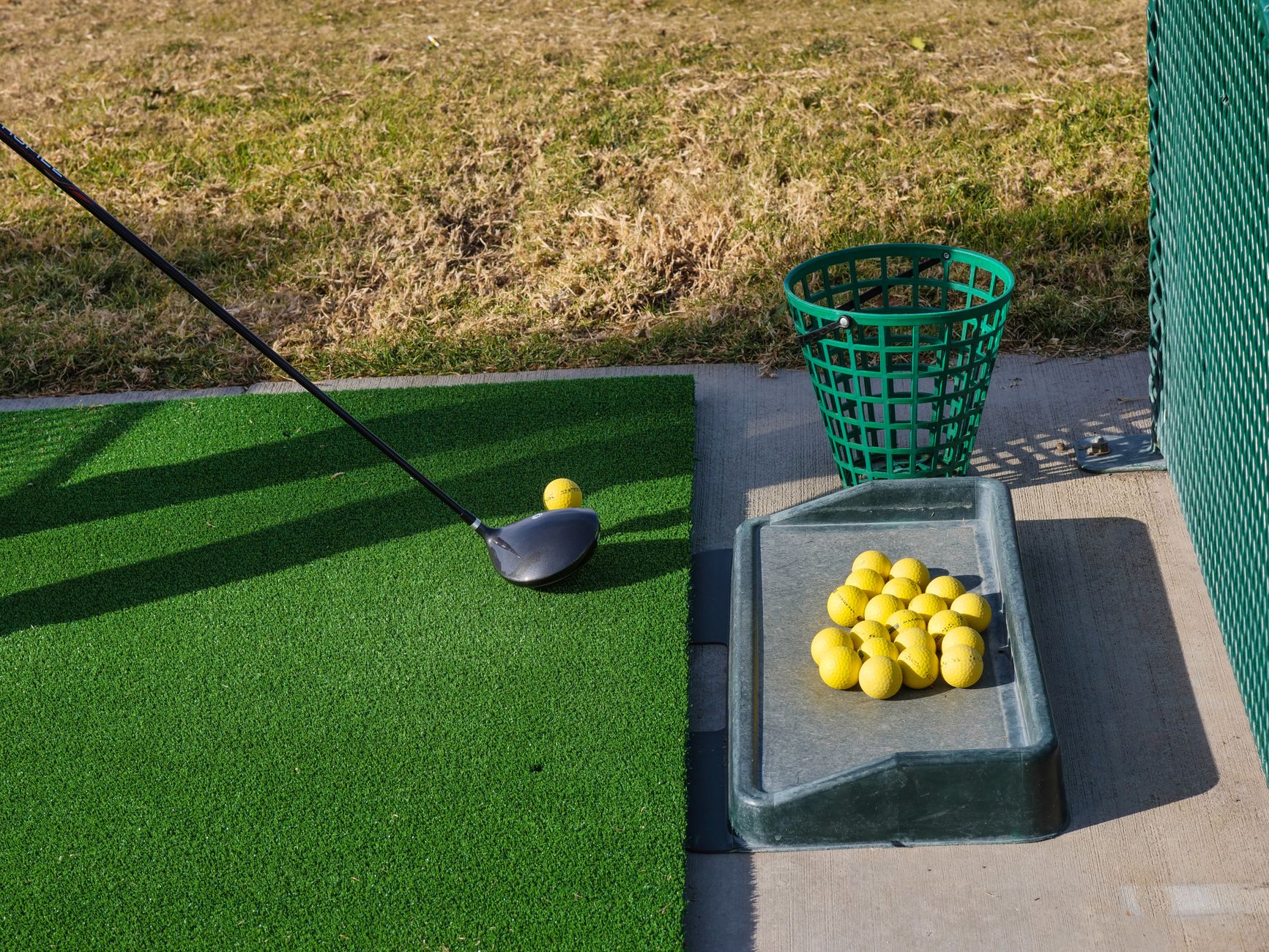
Teaching areas collect a different mix than retail floors. Grass clippings and soil ride in on member shoes and bags, especially after a session on the practice green. Hitting bays shed rubber mat crumbs, tee plugs and range dust, while the pro shop picks up grit at the door and spills at the counter.
That mix matters for equipment choice. Dry pickup handles grit and debris, wet scrubbing handles spills, and a vacuum alone will not lift a spilled drink. A machine that does both covers the full range of what lessons leave behind.
How much floor can a robot cover in one gap?
Compact autonomous scrubbers are rated in area per hour, not minutes per room. The Wetrok Robomatic Marvin, as listed on a vendor page checked in November 2026, shows autonomous performance of up to 1,400 square meters per hour, described as theoretical, with battery life of up to 3 hours in eco mode.
Do the arithmetic on your floor. A 200 square meter room at that theoretical rate needs about 8.6 minutes of pure run time. Turns, stops, detours and charging add to that, so give the gap several times the pure figure, then time a trial run.
How quiet does a robot have to be?
Noise decides whether a robot fits a teaching floor, because a coach's voice and the crack of a ball carry in a hitting bay. Uline lists its 14-inch manual compact scrubber at 68 dBA. A public bid for an autonomous scrubber asked for sound under 62 dB, which gives a procurement benchmark to hold any vendor to.
Footprint matters too. The Marvin listing gives dimensions of 1050 by 605 by 850 millimeters, so measure the aisle between display tables and the doorway before the first run. Listings use different test methods, so compare them on paper and then in the room.
How much battery is enough for a short block?
Battery figures vary widely. Uline lists its 20-inch manual compact scrubber at up to 120 minutes per charge. Bissell's BGUS1500 compact scrubber-drier spec sheet lists 25 minutes of autonomy and a 90-minute charge, which suits a short gap only if the machine docks quickly after each run.
Those are manual machines, so they show the range of battery figures, not autonomous runtimes. Place the dock in a corner that stays clear during lessons, because a dock in a cart path or doorway becomes a trip hazard.
What should you check so members are not disrupted?
Disruption comes from collisions in time and space, so the checks below target both. Run them before the first full week.
- Walk the route at lesson pace and mark every spot where a member stands, such as a putting mat, a chair line at the register, or a teaching target.
- Confirm auto-stop buttons and a horn, the two stop features a public bid for an autonomous scrubber asked for.
- Train the route with a coach present, using teach-and-repeat learning, so the path stays predictable for the people sharing the floor.
- Set SMS or web dashboard alerts to reach the front desk, so a stuck unit gets a look before the next group arrives.
- Lift loose mats and tuck cords before each run, since a rolled edge can snag wheels and stop the machine mid-route.
- Hold runs to the window after one group leaves and before the next arrives, with a buffer for late arrivals.
How do you build the routine around the lesson calendar?
Build the routine from the lesson calendar, not the other way round. Tie the robot run to the last group's exit, then have a staff member look for standing water or a dropped tee plug before the next group arrives. A quick look catches what a route map cannot.
Start with a one-week log. Record gap length, run time, every pause, and any member complaint. Those few columns show whether the gap or the floor area needs changing, and they give a vendor something concrete to answer.
Where do cleaning robots sit in the market?
Cleaning is no longer a niche use in the professional service robot market. According to IFR's World Robotics 2025 report, which covers 2024 sales, professional cleaning robots ranked third among professional service robot categories. Sales rose 34% to more than 25,000 units, and floor cleaning is the main application.
IFR's World Robotics 2026 report, covering 2025 sales, says total professional service robot shipments rose 24% to about 250,000 units. Transportation and logistics was the largest application at 117,500 units, and cleaning stayed third. No 2025 cleaning unit figure appears here because none was verified, and IFR figures from separate reports should not be merged.
How does a lease fit a pro shop budget?
Service Robot Co. is an OEM-neutral integrator. We select the robot for the floor from across manufacturers, then lease it through financing on a 3-year lease. The customer receives one fixed robot lease payment, quoted after a site assessment that maps the pro shop, the teaching bays and the gap timing. A pilot can start with one leased unit.
Once the unit is running, RoboCare, our robot maintenance service plan, covers its service. Regional service engineers provide on-site dispatch, and remote triage helps sort faults before a technician travels. Spare unit coverage can keep a backup available for days the primary machine is down.
Frequently asked questions
Want a robot working for you?
Tell us the job and the site. We will recommend the robot, quote the lease, and keep it serviced.
Sources
- IFR World Robotics 2025 press release on service robot growth
- IFR World Robotics 2026 press release on professional service robot shipments
- Wetrok Robomatic Marvin vendor listing (Archiexpo)
- Uline 14-inch Compact Auto Floor Scrubber H-8041
- Uline 20-inch Compact Auto Floor Scrubber H-9424
- Bissell BGUS1500 compact scrubber-drier spec sheet
- Public bid solicitation for an autonomous floor scrubber