
Key takeaways
- Buy the cobot as part of a validated packaging cell, not as a stand-alone arm.
- Match payload and reach to real tooling, sealer geometry, and changeover fixtures.
- Vision, label control, and lot traceability become core requirements when release records depend on them.
- Since FDA QMSR took effect on February 2, 2026, documentation depth matters as much as cycle time.
- Clean-environment fit and end-effector material choice can break package integrity before the robot ever faults.
What matters most before you compare cobot models?
Start with the packaging process, not the arm brochure. In medical device packaging, the right cobot is the one whose payload, reach, repeatability, tooling, vision, and environmental fit can be validated against your package specifications and release records.
That is even more important now. According to the FDA's Quality Management System Regulation page, the QMSR became effective on February 2, 2026 and aligns U.S. device quality requirements with ISO 13485:2016. A packaging cell now has to look good not only in cycle tests, but in documented evidence.
So the selection question is simple. Can this cobot load, present, seal, label, inspect, and trace each lot the way your quality system requires, without making changeovers painful or revalidation constant? If the answer is unclear, the arm is not selected yet.
How do payload and reach translate to real packaging work?
Payload in packaging is never just the device weight. It is the device, dunnage or tray, the end effector, any compliance or quick-change plate, cabling at the wrist, and the dynamic load created when the robot accelerates, decelerates, or presses into a fixture.
Reach is just as easy to misread. A cobot may have enough nominal envelope for pick and place, then fail when it has to clear a pouch magazine, approach a rotary sealer squarely, hand off to a labeler, or place reject parts into a contained bin without crossing awkwardly through guarding.
Map the full motion path in the real cell. Include infeed height, outfeed orientation, operator access, camera stands, seal jaw approach, and any future inspection station. End of line automation gets expensive when an arm has to be replaced because the wrist cannot enter the last part of useful space.
- Product at maximum packaged configuration
- End effector and quick-change hardware mass
- Cable and vacuum line drag at the wrist
- In-process contact forces at nests and fixtures
- Safety margin for future SKUs and tooling
How much repeatability is enough for regulated packaging?
Repeatability only matters relative to the tolerance stack you are trying to hold. Tray loading can tolerate more positional drift than pouch presentation into a narrow seal zone or label placement against a fixed datum used by downstream vision.
Do not judge this on a showroom demo. Test with your real packaging materials, because thermoformed pockets, flexible pouches, cartons, and labels all move differently from machined fixtures. The gripper can also add compliance that the robot spec sheet does not show.
A useful rule is to size repeatability around the hardest quality-critical step, not the easiest transfer. If seal integrity, label placement, or code readability can swing with a small stack-up, the cell needs proof on production-like materials before approval.
Which end effector usually makes or breaks the cell?
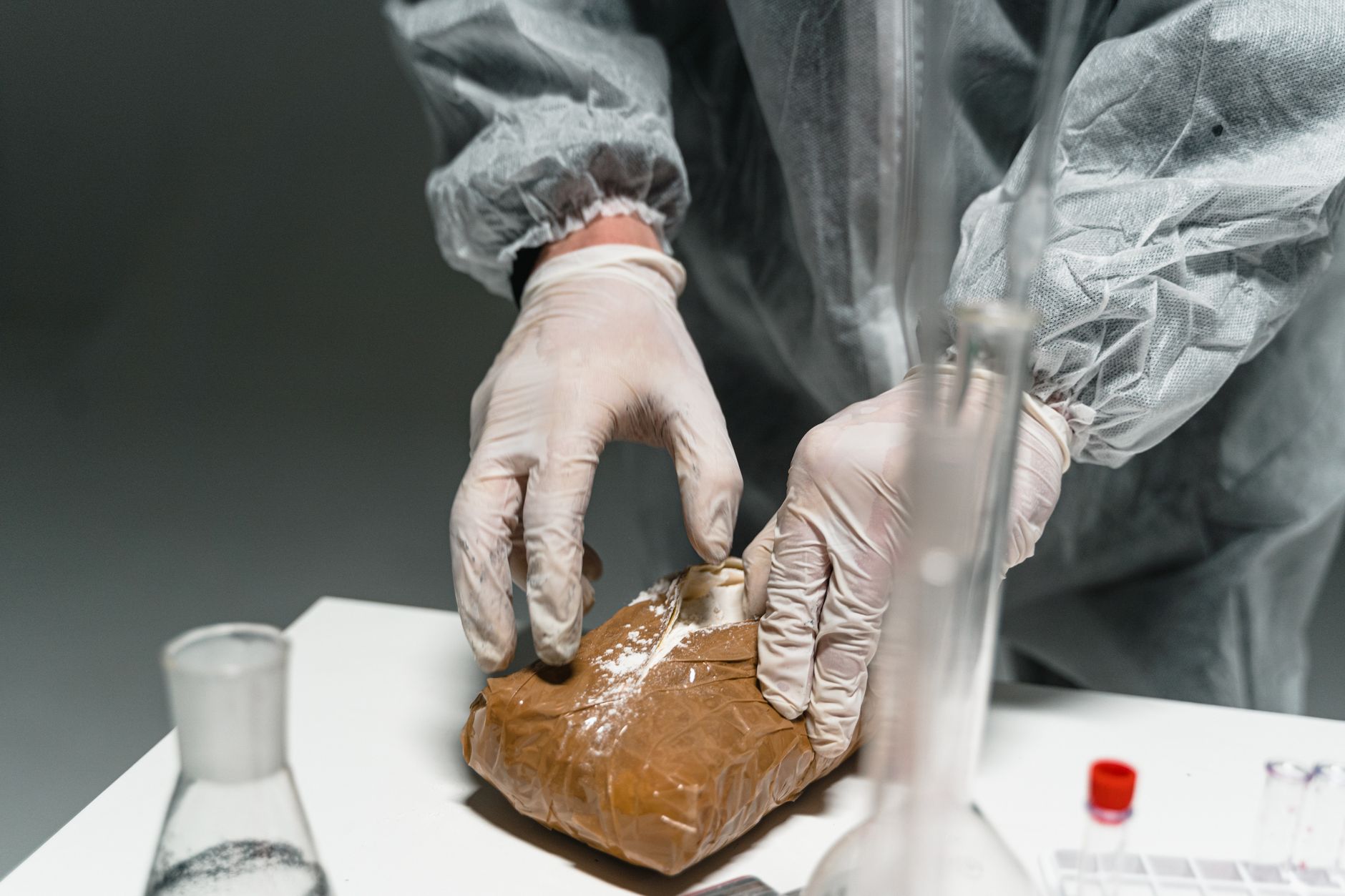
In medical device packout, the end effector is usually the fragile point. Vacuum tooling may grip a pouch or carton cleanly, yet wrinkle a breathable lid, mark a label panel, or lose hold when static, dust, or film texture changes.
Material choice matters. Soft-contact surfaces, ESD-aware components where needed, low-particle wear surfaces, and cleanable geometries matter more than a flashy tool concept. If operators swap cups, fingers, or nests during changeover, the tool has to repeat accurately after each swap.
Choose tooling that protects the package as much as the product. A sterile barrier can fail long before the robot throws a fault, which is why gripper trials should look for scuffing, fiber shed, seal interference, adhesive transfer, and dropped-part recovery behavior.
- Compatibility with films, trays, cartons, and labels
- Low particle shedding and easy wipe-down
- Fast, repeatable tool changes
- Positive detection of part present and part released
- Documented wear limits for cups, fingers, and pads
When should vision be part of the purchase, not an upgrade later?
Usually from the start. Vision is what turns a pick-and-place arm into a packaging cell that can verify orientation, confirm part presence, read 1D and 2D codes, check label position, and send suspect packs to inspection without guessing.
It also changes what kind of flexibility you can afford. A high-mix line with frequent SKU changes can offload some variation to camera logic instead of hard tooling, but only if lighting, focus, code grading, and pass-fail rules are controlled like any other validated process element.
If the cobot will feed sealers, labelers, or inspection stations, define the handshake early. The robot should know when a label was printed, when an inspection failed, when a sealer recipe changed, and when a reject needs segregation. Vision without integration becomes a camera that watches mistakes happen.
What does the environment demand from the robot cell?
Not every medical device packaging line belongs in a cleanroom, but many run in tightly controlled environments, and the robot has to fit that discipline. According to ISO 14644-1:2015, cleanroom classification is based on airborne particle concentrations across threshold sizes from 0.1 micrometers to 5 micrometers. That is a useful reminder that exposed wear points and awkward cable routing are not small details.
Look for smooth cleanable surfaces, minimal particle traps, protected utilities, and maintenance access that does not force technicians to disturb the pack zone unnecessarily. If lubrication, fan wash, or abrasive gripper wear can enter the product path, you do not have an equipment problem alone. You have an environmental control problem.
Sterile packaging raises the bar again. The FDA recognized standards database lists ISO 11607-1 for sterile barrier systems and packaging systems, and ISO 11607-2 for validating forming, sealing, and assembly processes. The cobot therefore has to preserve package integrity, not just hit a cycle time.
How should validation evidence drive the buying decision?
Ask first for the evidence model, then for the arm. The FDA recognized consensus standards database lists ISO 11607-1 and ISO 11607-2 with their 2023 amendments, and the FDA detail page for ISO 11607-2 describes it as the standard for validating forming, sealing, and assembly processes.
That means your cobot choice must support protocol-driven testing, recipe control, version control, and clear revalidation triggers after changes. A fast arm is not enough if a gripper swap, software patch, or labeler adjustment creates a documentation scramble every time engineering improves something.
The FDA's QMSR FAQ adds another current wrinkle. Since February 2, 2026, FDA inspections can review management review, quality audit, and supplier audit reports that were previously exempt under the old rule. In practice, packaging automation now rewards clean documentation habits as much as clean motion.
If release decisions depend on electronic records, design that from day one. The FDA's Part 11 guidance says Part 11 applies when required records are maintained electronically. User permissions, time-stamped events, vision logs, and electronic sign-offs should be treated as regulated records when they support batch release or deviation review.
- FAT and SAT templates tied to package critical quality attributes
- Software validation plan for robot, HMI, vision, and printers
- Change-control and revalidation rules for tooling and code
- Data export for lot history, deviations, and audit review
- Training records for operators, mechanics, and quality staff
Why do changeovers and traceability reshape the cell design?
High-mix medical device packaging lives or dies on changeover discipline. A cobot that teaches easily but forces manual label edits, manual recipe selection, or loose line clearance steps can still create the wrong pack at the wrong time.
According to the FDA's UDI Basics page, device labels and packages generally must carry a UDI, and the production identifier can include the lot or batch number, serial number, expiration date, and manufacturing date. That makes the packaging cell a traceability engine, not just a handling station.
The FDA's labeling guidance also says label issuance checks, including control numbers and expiration dates used on labels, must be recorded in the device history record. So the practical question is not only whether the cobot can place the label area correctly. It is whether the line can prove which label revision, lot, code read, and sealer recipe were used on that run.
Design the cell around those proofs. Tie the robot to sealers, labelers, print-and-verify equipment, and inspection stations so the line can stop on a mismatch, quarantine rejects clearly, and close the lot with a clean record set.
- Sealer recipe call and confirmation
- Print, apply, and code-read verification
- Reject confirmation and segregated reject handling
- First-article check after each changeover
- Lot closeout export to MES, ERP, or electronic batch record system
Where does Service Robot Co. fit in a regulated packaging program?
The common buying mistake is treating the arm as the project. In regulated packaging, the robot, tool, vision, sealer, labeler, inspection logic, training, and service model behave as one validated system. That is why cell architecture matters more than brochure comparisons.
Service Robot Co. is built for that wider job. We are an OEM-neutral, vendor neutral robot integrator for US businesses, and we handle robot deployment and integration across manufacturers, then finance, deploy, train, and service every unit through a nationwide US engineer network. For teams comparing collaborative robot arm leasing, cobot leasing for manufacturing, or a purchase or lease path, the goal is one partner and one number across the lifecycle.
That approach matters most when a plant wants a robot pilot program or a phased deployment no shutdown. The paperwork, operator training, spare strategy, and RoboCare™ service plan should scale with the next cell, not restart from scratch each time.