Key takeaways
- CDC says 211,640 private-industry workers suffered severe fall injuries requiring days away from work in 2020.
- BLS recorded 127,680 fall-on-same-level cases in 2020, far more than falls to a lower level in private industry.
- OSHA requires walking-working surfaces to be kept clean and, where feasible, dry, and to be kept free of spills.
- In large facilities, the business case for spill patrol robots is about incident prevention, response speed, documentation, and labor coverage together.
Do spill patrol robots make a real safety case?
Yes. In large facilities, autonomous spill detection and rapid response are not just a labor play. They are a risk-control play. The safety case starts with a plain fact from the CDC's National Institute for Occupational Safety and Health: 211,640 private-industry workers suffered severe fall injuries requiring days away from work in 2020, and same-level slips and falls were especially prominent in healthcare, building cleaning and maintenance, and transportation and material moving.
That matters because many spill hazards are mundane, recurring, and spread across too much square footage for manual patrols to catch quickly every time. A puddle near a receiving door, a leak in a refrigerated aisle, a drink spill in a hospital corridor, tracked-in rain at an entrance. None looks dramatic. Any one of them can still put an employee on the floor and a claim on a manager's desk.
The case for spill patrol robots is simple. If a facility can detect wet-floor hazards sooner, verify them faster, and trigger cleanup before foot traffic turns a minor spill into an injury event, it improves the odds on the part of fall prevention that usually breaks first: response time.
What do the injury numbers actually show?
The headline figure is large, but the breakdown is more revealing. According to the Bureau of Labor Statistics, private industry logged 211,640 days-away-from-work cases in the broad category of falls, slips, and trips in 2020. Of those, 127,680 were fall-on-same-level cases. Another 50,100 were same-level falls caused by slipping, and 50,980 of the total fall-on-same-level cases led to emergency room visits.
This is why same-level fall prevention deserves more operational attention than it usually gets. Lower-level falls are catastrophic and highly visible, so they draw focus. Same-level falls are different. They happen in ordinary circulation zones, they are tied to housekeeping discipline, and they scale with foot traffic, floor condition, and delay.
The CDC frames the pattern clearly. The highest counts of nonfatal fall injuries are in educational and health services and in healthcare and social assistance, and those injuries are mostly slips and falls on the same level. The same CDC page also calls out nursing and residential care, ambulance services, building cleaning and maintenance, and transportation and material moving as high-risk areas. That is almost a map of where large indoor facilities struggle to keep floors continuously safe.
Why are big facilities especially vulnerable?
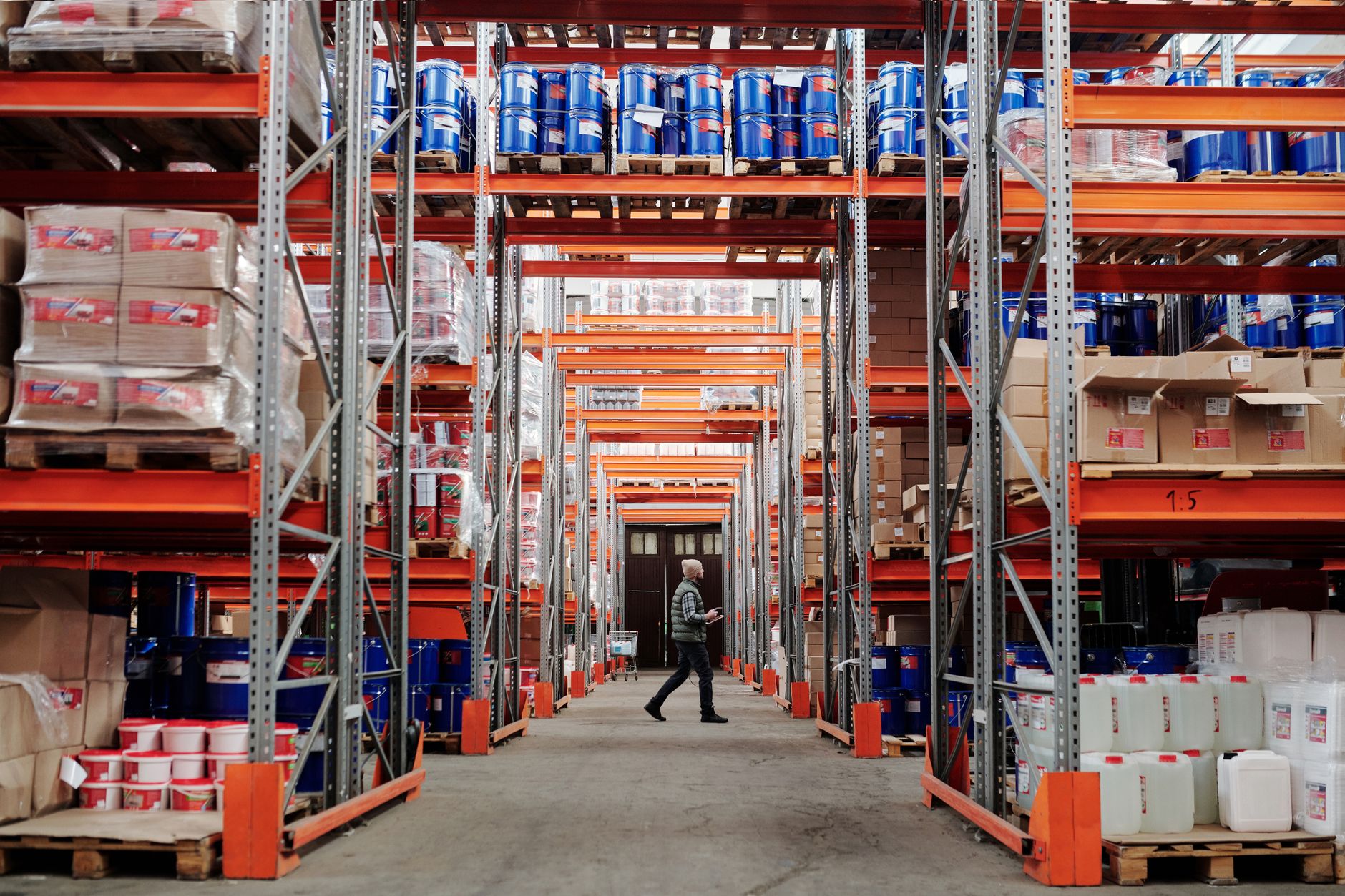
Because distance is the enemy of housekeeping. In a compact site, staff can see most circulation routes and reach a spill quickly. In a distribution center, hospital campus, airport concourse, casino, manufacturing plant, or big-box store, the geometry changes. The hazard can sit unobserved for minutes, and those minutes are exactly when exposure accumulates.
Large facilities also have more spill sources. Dock doors bring in water and grit. Pallet movement shakes loose product. Refrigeration sweats. Carts drip. Beverage stations overflow. Restrooms track moisture into hallways. Cleaning crews can only be in one place at a time, and overnight coverage often stretches thin across a wide footprint.
That is where a spill patrol robot earns its keep. It does not replace every janitorial task. It patrols the square footage humans cannot watch continuously, flags anomalies, creates a repeatable inspection rhythm, and gives supervisors a faster path from hazard discovery to hazard control.
Where does OSHA fit into the argument?
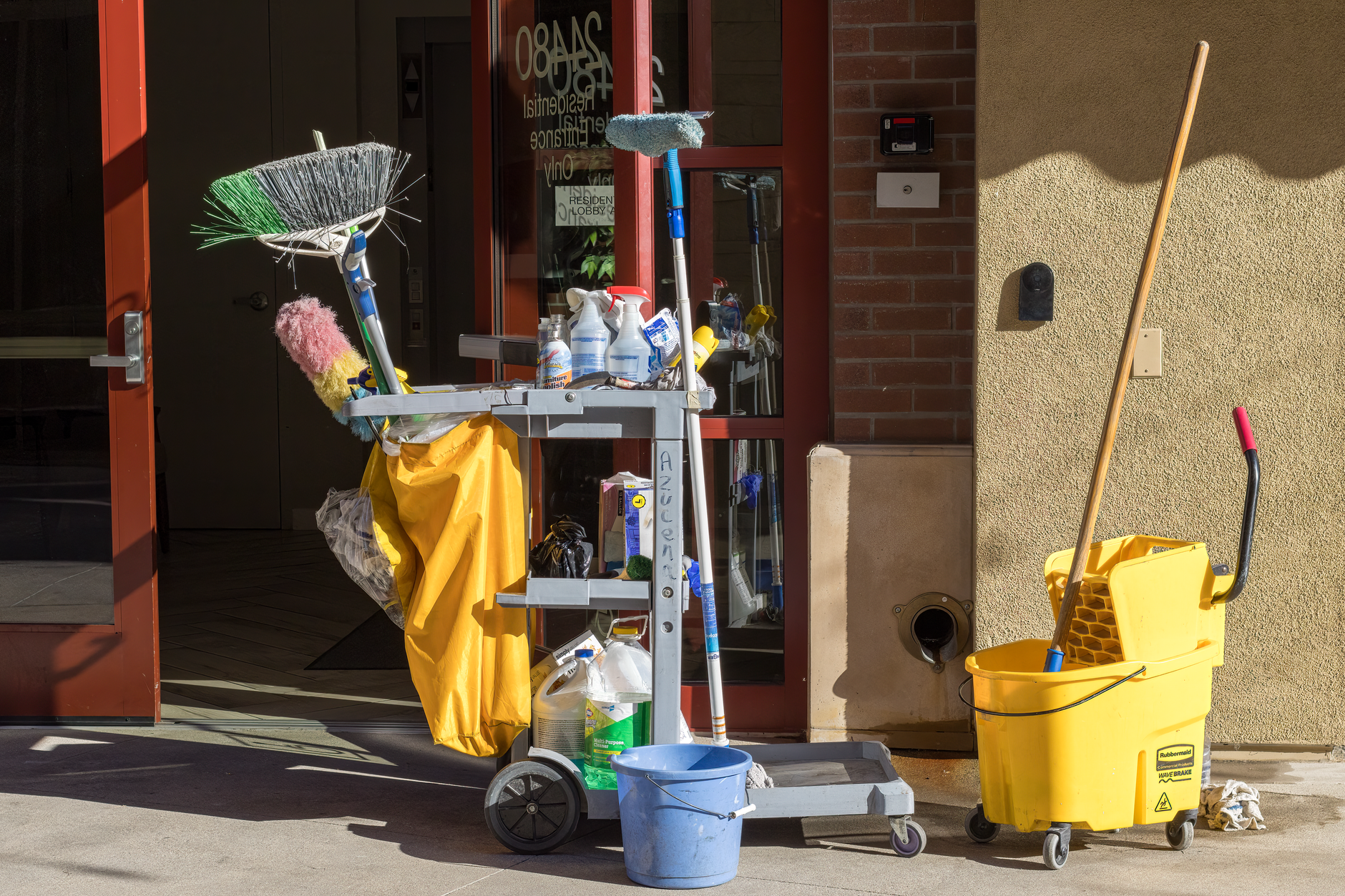
OSHA's walking-working surfaces rule is direct on this point. Under 29 CFR 1910.22, employers must keep walking-working surfaces clean and orderly, maintain floors in a clean and, to the extent feasible, dry condition, and keep those surfaces free of hazards such as leaks and spills. OSHA also requires hazardous conditions on walking-working surfaces to be corrected or repaired before employees use them again, or guarded if immediate correction is not possible.
In hospital housekeeping guidance, OSHA gets even more concrete. The agency recommends a program for safe, immediate cleanup of floor spills. That language matters because it speaks to the operational gap many facilities face. They know spills must be handled immediately. The hard part is spotting every spill immediately across a vast footprint.
OSHA also estimated that its updated general-industry walking-working-surfaces rule would prevent 5,842 lost-workday injuries each year. The takeaway is not that a robot fulfills compliance by itself. It does not. The point is that regulators already treat slip, trip, and fall control as a serious and preventable source of lost-workday injury. A machine that shortens detection and response supports that duty.
What does a good spill patrol workflow look like?
The strongest deployments are procedural, not theatrical. A robot patrols predefined routes in the hours and zones where wet-floor risk is highest, such as entrances during rain, food service corridors, receiving lanes, refrigerated pick paths, restroom approaches, and long healthcare hallways. When it detects a likely spill or abnormal floor condition, it pushes an alert to the right person, with location data that is precise enough to dispatch fast.
From there, the workflow should be crisp. Verify the alert, isolate the area if needed, clean the spill, and log the closeout. The value is not only fewer blind spots. It is a tighter chain of evidence. Patrol logs, timestamps, alert history, and response records help operators show that floor inspection was active and systematic rather than casual and inconsistent.
That record matters most in the facilities where traffic is constant and incident reconstruction is painful. A manager who can show when a patrol passed, when a hazard was flagged, and when staff responded is in a far stronger position than one relying on memory and a paper checklist clipped to a cart.
How should operators think about the business case?
If you justify a robot on labor alone, you are narrowing the picture too much. The safety case adds several layers: fewer unobserved hazards, faster cleanup, less time spent on low-yield patrol walking, stronger incident documentation, and more consistent large facility coverage. Those gains do not replace janitorial work. They make janitorial work more targeted and more defensible.
This is also why commercial cleaning robot rental and robot leasing for business can make sense in spill-sensitive environments. Operators often need to prove the workflow in a live building before they standardize it. A commercial robot demo, a robot pilot program, or a service robot rental structure can let a site test patrol routes, alert quality, and handoff discipline without waiting for a full capital cycle.
Service Robot Co. fits this part of the market because the company is a full-service commercial robot integrator for U.S. businesses, and it stays OEM-neutral. That matters in spill patrol because the right fit depends on floor type, facility geometry, staffing model, and integration needs. Service Robot Co. can help clients evaluate lease rental or sale paths, finance the fleet, deploy it, train staff, and service each unit through a nationwide U.S. engineer network, with one partner for the full lifecycle.
Which sites benefit most from autonomous spill detection?
The pattern is straightforward. The best candidates are facilities with long travel paths, recurring wet-floor conditions, and uneven staff visibility. Hospitals, airports, distribution centers, food production plants, grocery stores, convention venues, manufacturing sites, and large educational campuses fit that profile. They combine broad square footage with enough traffic that a short delay can turn into a real exposure window.
The use case is especially strong where floor safety varies by hour. A site may look manageable at noon and become far harder to patrol at shift change, after deliveries, during weather events, or late at night when headcount drops. A robot gives those periods a dependable inspection layer instead of leaving them to chance.
For operators exploring autonomous floor scrubber rental, floor scrubber for warehouses, or warehouse cleaning robot rental programs, this is the missed angle. The machine is not valuable only because it cleans. It can also function as an always-moving set of eyes on the exact walking-working surfaces that generate a large share of same-level injuries.
The practical question is not if spills matter, but how fast you find them
The data does not support treating same-level falls as minor background noise. According to BLS, fall-on-same-level cases alone reached 127,680 in private industry in 2020. According to OSHA, spills and leaks belong on the short list of hazards employers must control on walking-working surfaces. According to the CDC, sectors with dense indoor operations continue to carry a heavy share of these injuries.
That is why spill patrol robots deserve a place in the facility safety conversation. Not as a gimmick, and not as a substitute for disciplined housekeeping. As a tool for closing the gap between when a spill happens and when a human team knows about it. In large facilities, that gap is where risk breeds.
If a site already struggles with overnight cleaning coverage, long patrol loops, or inconsistent hazard discovery, the right next step is a measured pilot with clear success metrics. Detection time. Dispatch time. Closeout time. Repeat spill zones. Incident trend line. A vendor neutral robot integrator such as Service Robot Co. can structure that pilot around the building you actually run, with maintenance included, deployment support, and one partner, one number when the equipment needs service.
- Track average time from spill occurrence or likely occurrence to detection.
- Measure response time from alert to cleanup completion.
- Map repeat spill zones by hour, doorway, department, and floor type.
- Compare manual patrol coverage before and after autonomous patrol adoption.
- Review incident logs, near misses, and emergency room referrals over the pilot period.
Frequently asked questions
Sources
- CDC NIOSH Falls in the Workplace
- BLS Table EH1 2020 Nonfatal Injuries by Event
- BLS Table R64 2020 Falls by Industry Sector
- BLS Table R8 2020 Incidence Rates by Industry
- OSHA 1910.22 Walking-Working Surfaces
- OSHA Hospital Housekeeping Slips Trips Falls
- OSHA Walking-Working Surfaces Final Rule
- BLS 2020 Employer-Reported Workplace Injuries Release