Key takeaways
- Courts ask how long a spill was present, so an overnight wet patch can become the central evidence in a claim.
- The Bureau of Labor Statistics counted 958,960 days away from work cases tied to falls, slips and trips in 2024.
- A federal court in California found a spill present for 4 minutes and 20 seconds insufficient for constructive notice.
- Scheduled passes with time stamped logs show when a floor was last checked, which speaks directly to duration.
- Spill detection adds timed alerts between passes, but it only reduces exposure if someone acts on each alert.
Why does a spill left overnight create liability?
A wet patch that nobody mops overnight does two things at once. It creates a hazard for the first person through the door at six, and it starts a timeline. Whoever slips on it will be asked how long it had been there, and the answer often decides the claim.
Premises liability generally turns on whether the owner knew or should have known about a condition. For spills, that knowledge is usually inferred from duration. A spill that sat long enough to be found is the one that lands a business in front of a jury, and an unattended floor is an easy place for that duration to build unseen.
Scheduled sweeps and spill detection work on that timeline directly. They do not make a floor safe by themselves, and they do not replace a written policy. They shorten the window in which a spill can sit, and they leave evidence showing when the floor was checked.
How large is the injury problem behind these claims?
According to the Bureau of Labor Statistics, there were 844 fatalities from falls, slips and trips across all sectors in 2024. The same BLS data lists 958,960 cases involving days away from work for falls, slips and trips that year. Check the BLS tables for exact scope before quoting either figure beside another.
The National Safety Council says slips, trips and falls were the second leading cause of workplace death in 2024, and the third leading cause of injuries resulting in days away from work across 2023 and 2024. Those rankings explain why a wet floor rarely stays a small matter once someone is hurt.
How long does a spill have to sit before it counts?
There is no universal number, and the answer varies by state and by case. Practitioner summaries describe duration as the central question, with plaintiffs generally needing evidence of how long a spill was present. Verify the governing law in each jurisdiction before relying on any rule of thumb.
Texas offers a clear example. A 2026 Cozen summary reports that the Supreme Court of Texas reaffirmed a strict constructive notice standard, requiring temporal evidence that the condition existed long enough to be discovered.
The appellate record shows how much rides on timing. In Leyba v. Walmart, a federal court in California found a spill present for no longer than 4 minutes and 20 seconds insufficient for constructive notice. In Trout v. Mr. Hero, an Ohio appellate court reversed a 1.3 million dollar verdict, holding that the plaintiff still had to show how long the spill was present even with company cleanliness policies in evidence.
What evidence do plaintiffs and defendants look for?
Duration is rarely proved by a clock on the wall. Practitioners point to circumstantial evidence: the look of the puddle, footprints tracked through it, dried or sticky residue, inspection logs and video. Each item tells a story about time, and a defense team reads them as closely as a plaintiff does.
An inspection gap can matter as much as the spill itself. Where an adequate inspection schedule would have caught the spill and no inspection happened, that gap can support a constructive notice argument. An overnight floor with no pass between closing and opening creates exactly that gap.
- Time stamps for each sweep or scrub pass, recorded by zone
- Spill detection alerts with the time each fired and who acknowledged it
- Photos or video taken at the start of the shift
- Notes on residue, tracking or pooling found during each pass
- Corrective actions and the time each spill was cleared
How do scheduled sweeps close the timing gap?
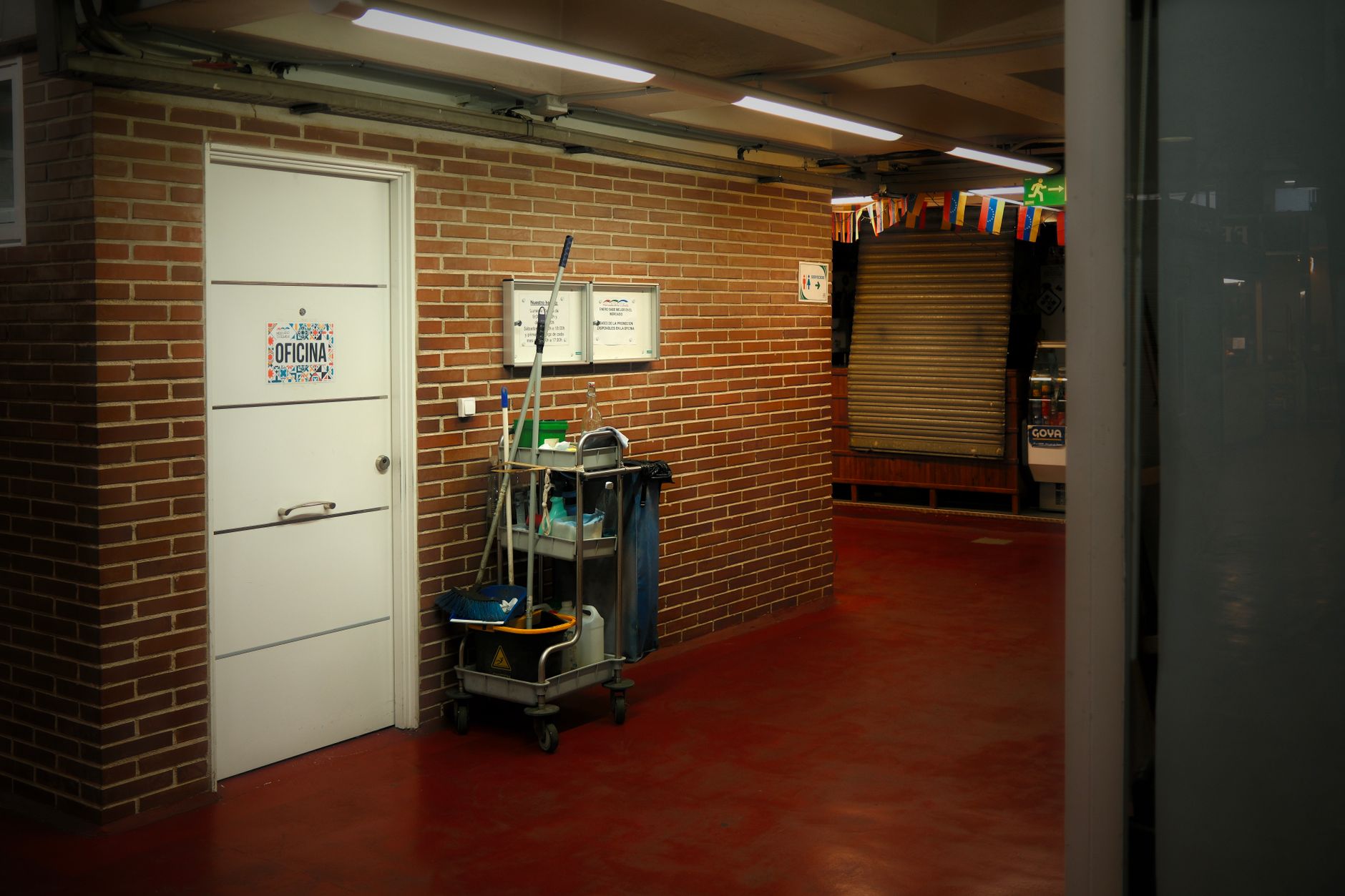
A scheduled pass changes the arithmetic. If a zone is swept or scrubbed every few hours overnight, a spill that starts after one pass is found or cleared before the next. The record then shows an inspection interval instead of an unexplained stretch, and the interval is what matters. Set it by zone traffic, not by a single nightly sweep.
Schedules have to be realistic. A pass that is planned but skipped leaves the same gap as no pass at all, and a log that says otherwise makes the gap harder to explain. Build the schedule around the zones that see the most wet traffic: entrances, restroom corridors, loading areas and food counters.
What does spill detection add between scheduled passes?
Scheduled passes check the floor at intervals, and detection watches between them. Patent US 10,967,519, filed by Fisher et al., describes a robot carrying an imaging device that finds spills while moving. Detection can trigger a stop or an alert, and a confidence measure can gate that alert. The same filing family mentions reflectance, electrical and friction sensing.
Patent US 11,759,079 targets autoscrubbers. A sensor reads the floor behind the machine, checks the readings against liquid thresholds and sends a notification. One related filing ties notification timing to how long the cleaned area takes to dry, a useful idea for night shifts. These documents describe approaches, not product specifications, and they report no accident outcomes. Treat them as a picture of what the technology attempts, not proof of what a site will see.
Where does a managed lease fit into this?
Service Robot Co. (servicerobotco.com) is an OEM neutral integrator. We select the floor robot that suits the layout, lease it through financing, deploy and integrate it, train staff, and service every unit under RoboCare, our service plan, backed by regional service engineers in every state we service. Before any quote, a site assessment maps the zones and the pass schedule, and the lease is quoted as one fixed lease payment on a 3 year term.
For a liability conversation, the important word is continuity. Overnight coverage depends on the unit running, and a service plan with remote triage and on site dispatch keeps the schedule from quietly lapsing. Pair that schedule with the records described above, and ask your counsel how your state treats constructive notice.
Frequently asked questions
Want a robot working for you?
Tell us the job and the site. We will recommend the robot, quote the lease, and keep it serviced.
Sources
- Bureau of Labor Statistics, Injuries, Illnesses, and Fatalities
- National Safety Council, 2026 Preventing Slips, Trips and Falls Fact Sheet
- DM Law practitioner summary on constructive notice in slip and fall cases
- Cozen, Supreme Court of Texas Reaffirms Strict Constructive Notice Standard
- Marshall Dennehey, Appeals Court Overturns 1.3 Million Slip and Fall Verdict
- Studicata summary of Leyba v. Walmart Inc. (C.D. Cal. 2022)
- Google Patents, US 10,967,519 (Fisher et al.)
- Google Patents, US 11,759,079 (wet floor detection and notification)