Key takeaways
- The janitorial industry faces a persistent labor shortage, with high turnover creating hundreds of thousands of openings each year.
- Robotic cleaners serve as 'co-workers' to human teams, taking on repetitive, physically demanding tasks like floor scrubbing.
- This collaboration allows human staff to focus on detailed, complex cleaning jobs that require critical thinking.
- Automating strenuous tasks helps reduce the high rates of musculoskeletal injuries common among cleaning staff.
- A full-service robotics integrator can help businesses deploy and manage a multi-brand fleet without upfront capital.
The Unfilled Shifts: Understanding the Janitorial Labor Crisis
The janitorial services industry is grappling with a significant and persistent labor shortage. According to IBISWorld, the U.S. janitorial services industry employed over 2.3 million people in 2026. However, the U.S. Bureau of Labor Statistics (BLS) projects about 351,300 openings for janitors and building cleaners each year on average over the next decade.
This high number of openings isn't primarily from industry growth, which is projected at a modest 2 percent. Instead, it stems from the need to replace workers who transfer to other occupations or exit the labor force entirely. The turnover rate in the cleaning industry is notoriously high, with some estimates placing it between 100% and 200% annually for many companies.
This constant churn creates immense operational challenges for facility managers and building service contractors. The direct costs of recruiting, hiring, and training new staff are substantial. Moreover, persistent understaffing can lead to inconsistent cleaning quality, failure to meet hygiene standards, and burnout among the remaining employees.
What is the Physical Toll of Janitorial Work?
Janitorial work is physically demanding, a fact reflected in the high rates of on-the-job injuries. The work involves repetitive motions, awkward postures, and heavy lifting, all of which contribute to a high incidence of musculoskeletal disorders. According to data from the Bureau of Labor Statistics, janitors suffer an average of 50,000 injuries annually that are serious enough to require time off from work.
Tasks like mopping large floors, pushing heavy carts, and scrubbing surfaces for extended periods take a toll on the body, particularly the back, shoulders, and knees. Over time, this physical strain can lead to chronic pain and debilitating injuries, forcing experienced workers to leave the profession prematurely.
This physical burden is a major factor in the industry's high turnover. By addressing the most strenuous aspects of the job, employers can create a safer and more sustainable work environment, which is crucial for retaining valuable team members.

How Do Robots Function as Co-Workers?
Introducing autonomous mobile robots (AMRs) into a cleaning regimen is not about replacing human workers. It is about creating a collaborative team where robots and people work together, each focusing on what they do best. This model frames robots as reliable 'co-workers' that handle the most grueling and repetitive tasks.
Consider the job of cleaning thousands of square feet of flooring in a warehouse, airport, or convention center. An autonomous floor scrubber can perform this task overnight without an operator, consistently and tirelessly. It navigates large spaces, avoids obstacles, and provides reliable, uniform cleaning every single time.
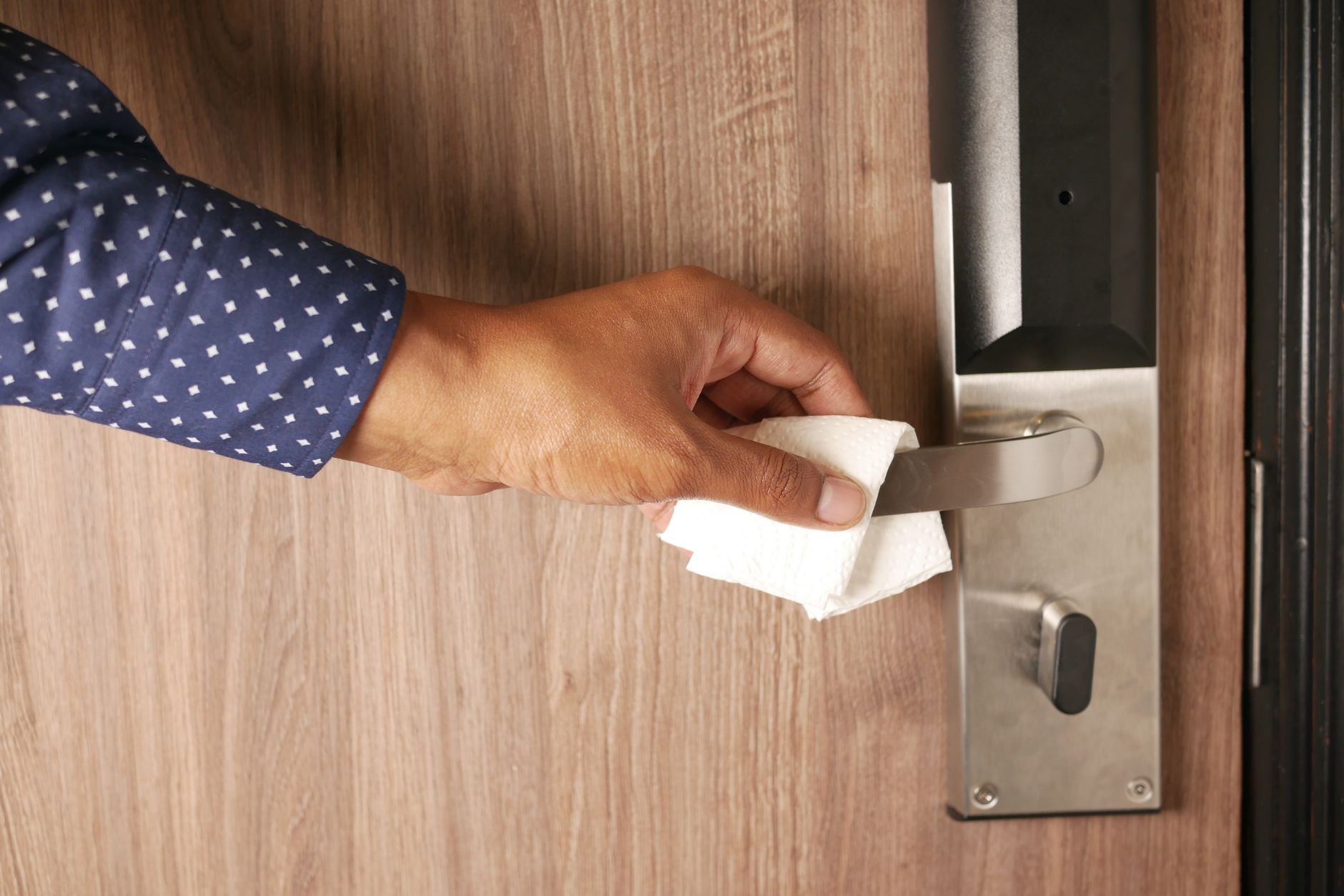
This frees up the human staff to concentrate on more detailed and nuanced work. While the robot handles the expansive floors, the janitorial team can focus on sanitizing high-touch surfaces, cleaning restrooms, performing detailed dusting, and addressing specific cleaning challenges that require human observation and problem-solving skills.
What are the Operational Benefits of a Human-Robot Team?
Integrating robotic co-workers delivers significant operational advantages beyond simply filling a labor gap. The consistency provided by autonomous cleaners elevates the overall standard of cleanliness. Robots perform their programmed tasks with precision every time, ensuring that large areas like hallways and aisles receive the same high level of attention during every shift.
This approach optimizes the deployment of your human staff. Instead of spending hours on physically taxing floor care, employees can be reassigned to higher-value tasks, improving both their job satisfaction and overall facility hygiene. This can lead to a more positive work environment and help reduce the high turnover rates associated with monotonous, strenuous work.
Furthermore, many robotic cleaning systems provide data and reporting on their performance. Facility managers can gain insights into when and where cleaning was performed, verify task completion, and use this data to optimize cleaning schedules and resource allocation.
How Can a Business Adopt This Model Effectively?
Adopting a robotic workforce can seem daunting, with questions around choosing the right equipment, managing different manufacturer platforms, and handling maintenance.
This is where a full-service commercial robot integrator becomes a critical partner. At Service Robot Co., we provide a vendor-neutral approach. We are not tied to a single OEM, so we select the best autonomous floor scrubbers, vacuums, or sweepers for your specific facility, whether it's a grocery store, hospital, or distribution center.
We manage the entire lifecycle through a single point of contact. This includes financing options like robot rental and leasing to avoid large upfront capital expenditures, professional deployment and integration with your existing workflows, and comprehensive training for your staff. Our nationwide network of US engineers handles all service and maintenance, ensuring your robotic co-workers deliver maximum uptime and value. One partner for the whole process simplifies everything.
Looking Ahead: A Sustainable Future for Janitorial Teams
The janitorial labor shortage is not a temporary trend; it is a structural challenge for the facilities management industry. High turnover and the physically demanding nature of the work require a forward-thinking approach.
By re-imagining cleaning crews as human-robot teams, businesses can create a more efficient, resilient, and sustainable operational model. This collaborative approach directly addresses the factors that drive workers away, reducing physical strain and allowing employees to engage in more varied and less monotonous tasks.
Ultimately, this partnership elevates the role of the human cleaner. It transforms a physically punishing job into a technically skilled one, where employees oversee automated systems and focus their expertise on the complex cleaning challenges that will always require a human touch.