Key takeaways
- Two-shift utilization can cut deburring payback nearly in half because fixed cell costs barely move while avoided manual labor doubles.
- Use loaded labor and cost per good part, not base wage and cost per abrasive, or the model will misprice the current state.
- Changeover minutes and rework rates are often the real swing factors in high-mix deburring, not cycle time alone.
- Safety exposure belongs in the sheet because repeated hand-tool work carries measurable injury and lost-time risk.
What actually drives payback on a deburring cell?
For most two-shift shops, the payback on automated deburring is driven less by the sticker price of the cell and more by how many productive hours the cell runs each day. A deburring cell that runs one shift spreads its fixed cost across one stream of parts. The same cell running across two shifts spreads nearly the same fixed cost across roughly twice the output while displacing twice the manual touch time.
That is why utilization usually beats headline robot price. A3's current ROI calculator asks for hours per shift and number of shifts as core inputs, and its model carries maintenance as a fixed annual cost. Shift coverage changes the denominator fast. The quote on the hardware does not.
Using current U.S. labor data and A3's example base system cost of $150,000 as a placeholder input, a conservative deburring model can land at about 27 months of simple payback on one shift and about 13 months across two. Those results come from sourced labor and maintenance figures, plus explicit shop assumptions for throughput, tending labor, and changeovers that you should swap for your own numbers.
Which inputs belong in a task-level ROI model?
Task-level ROI starts with one question: what does one good deburred part cost you now, and what would that same good part cost after automation? Plantwide labor cuts, broad headcount stories, and generic labor shortage robots talk are too loose for this job. Deburring is a narrow process, so the model should stay narrow.
If you cannot measure one of those rows yet, estimate it and mark it as an assumption. That is still better than ignoring it. The weakest deburring business case is usually the one that counts only purchase price and direct headcount, then acts surprised when changeovers or touchbacks eat the savings.
- Loaded direct labor rate for the current manual deburring crew
- Attended labor needed to load, unload, inspect, and recover the automated cell
- Good parts per productive hour, manual and automated
- Changeover minutes per recipe or part family, including abrasive swaps
- Consumable spend per good part, not per wheel or disc
- Rework rate and touchback minutes per reworked part
- Probability-weighted safety exposure credit for removing repetitive hand-tool work
- Annual fixed cell cost, which can be a purchase, robot leasing for business, or monthly payment programs
Start with the loaded labor rate, not base wage
According to the U.S. Bureau of Labor Statistics, grinding, lapping, polishing, and buffing machine tool operators posted a median annual wage of $46,550 in May 2025. That is about $22.38 an hour at 2,080 hours. Separate BLS employer cost data for March 2026 show manufacturing employers paying $32.20 per hour in wages and salaries plus $16.07 in benefits, which means benefits run at roughly half of base wages.
Apply that benefit ratio to the $22.38 occupation wage and the loaded labor rate comes out near $33.55 an hour before shift premiums or overtime. That single conversion changes the math. A shop that still models deburring labor at bare wage rates is understating the cost of the current state.
BLS also notes that evening and weekend work is common for metal and plastic machine workers because manufacturers keep equipment running for extended periods. In other words, the two-shift environment in this article is not exotic. It is normal factory math, and that makes utilization the right first lens.
What does a conservative two-shift example show?
Here is a worked example. The labor and maintenance inputs come from current sources. The production assumptions are deliberately plain and should be replaced with your own time study.
On one shift, the manual labor line costs about $117,425 per year. The automated cell still needs tending labor, about $44,034 per year on these assumptions, and it carries the $7,500 maintenance row. That leaves about $65,891 in annual net benefit from labor alone, which puts simple payback at roughly 27.3 months on the $150,000 placeholder cell cost.
Run the same cell across two shifts and the manual labor exposure doubles to about $234,850 per year, while tending labor rises to about $88,069 and the maintenance row stays fixed at $7,500. Net annual benefit rises to about $139,281, and simple payback drops to roughly 12.9 months. Capacity also rises from 70,000 to 96,250 good parts per shift-year, so the cell adds 26,250 good parts of annual capacity for each shift it covers.
- Base system cost placeholder from the current A3 calculator: $150,000
- Annual maintenance from the same A3 model: 5 percent, or $7,500
- Manual deburring crew: 2 operators per shift
- Automated cell tending: 0.75 operator per shift
- Productive time: 7 hours per 8-hour shift and 250 production days per year
- Manual output: 40 good parts per hour
- Automated output: 55 good parts per hour
Why can changeovers make or break the math?
Robotic deburring likes repeatability and punishes sloppy setup discipline. In a high-mix shop, the cell can look excellent in cycle time and still disappoint financially because it spends too much of the day waiting for fixture swaps, abrasive changes, recipe selection, or part presentation fixes.
The arithmetic is unforgiving. If a cell sees four changeovers a day, every 5 minutes you remove from the changeover routine gives back about 83 productive hours per shift-year. At 55 good parts an hour, that is roughly 4,583 more parts of annual capacity from one editing pass on the setup routine.
This is another reason two-shift use matters so much. If second shift runs established part families instead of constantly introducing odd jobs, utilization climbs without doubling engineering effort. A cheaper quote on a cell will not rescue a shop that treats changeover as free.
- Group similar part families so one program and one fixture cover more SKUs
- Standardize grippers, nests, and tool offsets so abrasive changes do not trigger a fresh prove-out
- Prepare recipes offline before the batch arrives at the cell
- Schedule wheel and media changes by wear pattern instead of waiting for finish quality to drift
Where do consumables and rework quietly move the result?
Consumables are easy to misread because the invoice line for each wheel or disc looks small next to the cell cost. Grainger currently lists one 4-inch surface-conditioning flap wheel at $85.43. That number matters only when you tie it to good parts, tool life, finish quality, and how much operator babysitting the abrasive really needs.
Track consumables per good part and rework minutes per 100 parts. If a manual process sends 4 parts in 100 back for touchback and the automated cell brings that down to 2 parts in 100, a shop making 100,000 parts a year avoids 2,000 touchbacks. The rework row often hides more labor than the visible deburring bench.
If each touchback takes 3 minutes, those 2,000 avoided rework events return 100 labor hours to the plant. At the $33.55 loaded labor rate above, that is another $3,355 a year before you count schedule relief or better on-time delivery. This is a modeled example, not an industry benchmark. The point is that quality drift belongs in the ROI sheet.
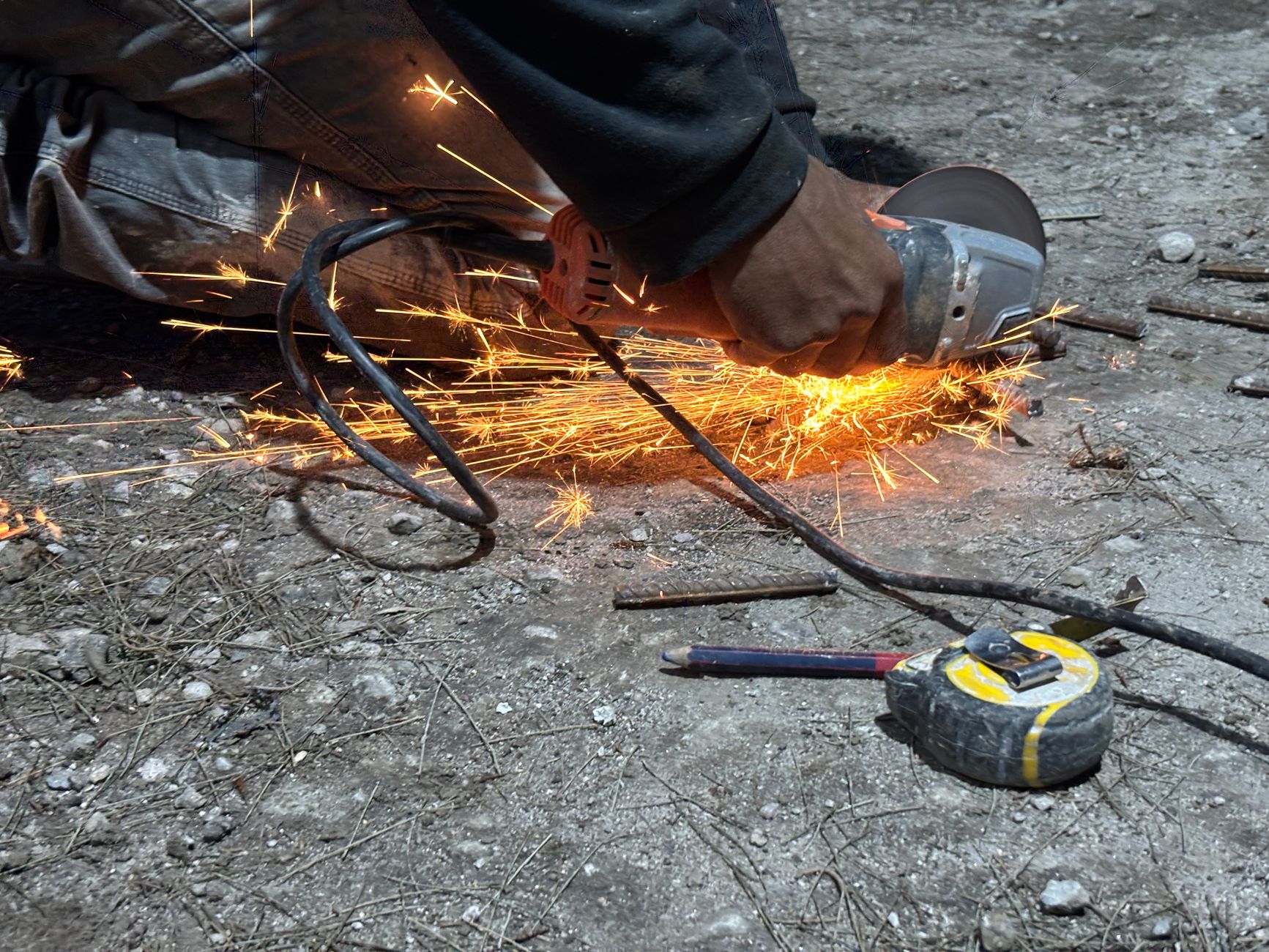
Why safety exposure deserves a line in the model
Safety is not a soft add-on in deburring. BLS reports that fabricated metal product manufacturing recorded 3.2 total recordable cases and 1.8 cases involving days away from work, restriction, or transfer per 100 full-time workers in 2024. BLS also reports median days away from work of 14 for overexertion cases, 13 for falls, and 5 for contact incidents across private industry.
The cost side is just as real. Liberty Mutual's 2025 Workplace Safety Index says overexertion involving outside sources accounted for $13.7 billion in costs, falls on the same level for $10.5 billion, and struck-by object or equipment plus falls to a lower level for nearly $11.6 billion. NIOSH has also warned that advanced stages of vibration syndrome have appeared after exposures as short as one year among workers using vibrating hand tools.
That does not mean you plug a giant savings number into the sheet and call it done. It means zero is the wrong answer. A probability-weighted safety credit is honest when automation removes thousands of repeated hand-tool exposures, sharp edge contacts, and operator hours spent in front of abrasive processes.
What changes when one partner owns the lifecycle?
Deburring payback is won in the messy middle. Fixturing, guarding, recipe libraries, operator training, second-shift recovery, and service response all decide whether the cell stays productive after the launch week. A full-service commercial robot integrator earns its keep by owning those details instead of selling hardware and disappearing.
Service Robot Co. is a vendor neutral robot integrator for U.S. businesses. We pick the right robots across manufacturers, then finance, deploy, integrate, train, and service every unit through a nationwide U.S. engineer network. For a deburring cell, that one vendor for the full lifecycle matters because uptime, recipe discipline, and field support influence utilization more than brochure price ever will.
If your plant is comparing purchase or lease, robot leasing for business, or monthly payment programs, run the exact same task-level model across all three. Then ask a harder question: who will keep the cell making good parts on second shift six months after go-live. That answer usually decides ROI more reliably than the lowest initial quote.