Key takeaways
- Map every sign, hole marker and yardage stake before the first autonomous pass, not on tournament morning.
- Give each physical object a footprint and a buffer, then test that buffer on foot and on the machine.
- Sort each item into a clearance the mower slows for or a hard stop it will not enter.
- Treat sensing as a backup, since a university obstacle project aimed at golf-ball-sized objects is no longer active.
- Re-map after every sponsor install, stake move or event setup, and log each change.
What must a tournament mower skip?
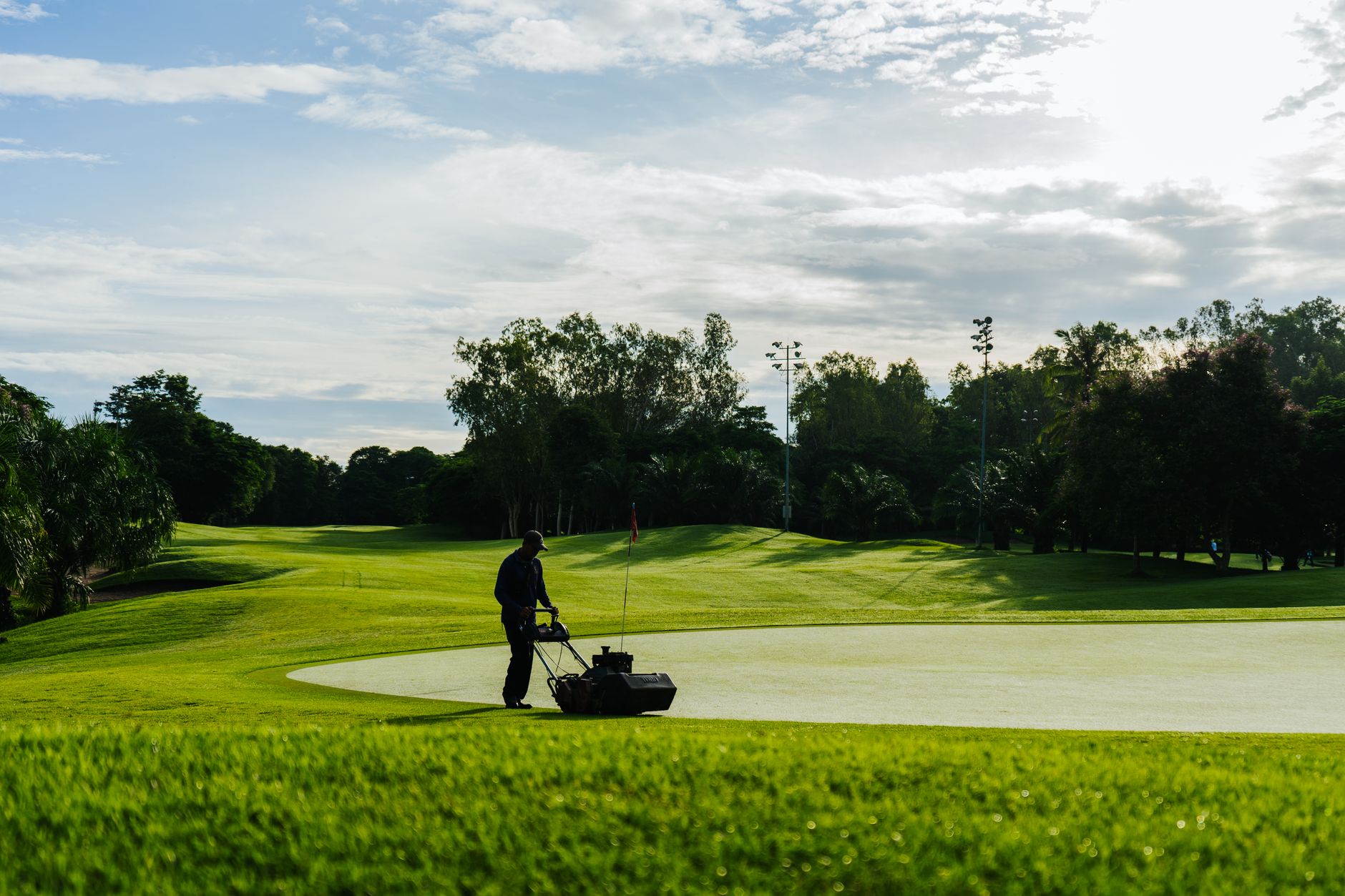
A robot mower on tournament turf has to skip anything that stands in its path or rises above the grass: sponsor signs, hole markers, yardage stakes, and the event furniture that tends to appear overnight. The mower does not understand what those objects mean. It only knows what the map tells it, so the crew's real job is to put every object on that map and decide in advance whether the mower slows around it or stops short of it.
Our research for this piece did not turn up a published standard, from a golf association or a manufacturer, that names sponsor signs or yardage stakes as a category. What it did find was narrower: patent filings that describe keep-out zones on greens, vendor support pages on stay-out zones, and a university obstacle project that is no longer active. The method below is practical guidance built from that gap, not a rulebook to cite to a committee.
Why does each object need a digital keep-out zone?
A Canadian patent application describes training a robotic greens mower by driving it around the perimeter of a green, with a separate trajectory for a keep-out zone, using RTK-GPS data. It is a patent application, not a product claim, so read it as a description of one approach. A related patent defines a keep-out zone as an area beside the green that the mower is not meant to enter, and describes a larger work zone that can cover several or all greens on a course.
The same logic carries over to event objects. A sign is not a green, but it can be treated as a fixed point on the map, with a footprint and a buffer the mower respects. Husqvarna publishes support pages on creating stay-out zones, which shows that stay-out zones are a documented feature for at least one vendor. We did not review the step-by-step content of those pages, so check the exact procedure for your model before your crew relies on it.

How do you sort signs, markers and stakes?
Not every object behaves the same way on the map. A tall fixed sign and a plastic stake that a breeze can tip need different entries, and treating them alike is how a mower ends up skirting a flag nobody told it about.
- Fixed sponsor signs and display frames: map the footprint, add a wider buffer, and mark any anchor lines or cords running out from the base.
- Hole markers and flags: map the base point and a clearance wide enough that the mower's route never grazes the flag or its pole.
- Yardage stakes: map each stake individually and recheck after wind, because a stake that leans or shifts moves outside its mapped zone.
- Temporary event displays: map them the morning of the event, since they can arrive after the overnight map was last checked.
Clearances and hard stops: a checklist for the crew
Two categories do most of the work. A clearance is a buffer the mower keeps while it passes an object. A hard stop is a zone it does not enter, and where it halts until a person clears the item. Decide which is which before the event, and write the rule where the supervisor can see it.
- Clearance measured on the ground from the object's edge with a tape, then confirmed by a test pass at the planned speed.
- Hard stop for any sign, marker or stake placed on a green, a tee, or the walking line between them.
- Hard stop for any cord, hose or cable crossing the mower's route, until the cable is confirmed secured.
- Hold for any item that moved since the last walk, until a named person has reset it on the map.
- Manual override plan: a person can lift the mower off the course without leaving it stopped mid-pass across a fairway.
- Written sign-off from the crew lead and the tournament director before the first pass.
Can a mower sense these objects on its own?
Sensing helps, but it should be a backup, not the plan. According to a Carnegie Mellon project page, its automated turf work aimed to detect obstacles as small as a golf ball without false positives. A later CMU project status page says the project is no longer active, so that goal should not be read as a shipping feature.
Vendors describe their own sensing. The FJD Turf Ranger product listing mentions LiDAR obstacle detection and bumpers on its RM21P model. Ask exactly what any model detects, at what size, and whether it handles an object that moved after the map was saved.
How do you map the course before the fleet runs?
Walk the course with the mower's map loaded, not from memory. Walk or drive the perimeter, check each sign, marker and stake against the entry list, and record any object the map does not show. Save the map with a date and the name of the person who checked it.
Service Robot Co. handles this step as site assessment mapping. We are OEM-neutral, so we select the robot for the course rather than from one manufacturer's catalog, then deploy, integrate and train the crew. A lease is quoted after the site assessment as one fixed lease payment on a 3-year lease, and RoboCare, our service plan, covers the units after go-live. The quote follows the walk, not the other way around.
What happens on tournament morning and after?
On the morning of the event, a named lead works through the holds list, confirms that each sign and stake sits where the map says, and reads each hard stop aloud to the crew. Anything that moved goes on hold until someone resets it. Nobody should be guessing where a flag is before the first tee.
After the event, the sequence reverses. Remove or reposition the objects, record every change in the log, and update the map before the next scheduled pass. A short weekly log is cheap protection against a mower that spends tournament week chasing flags it was never told about.
Frequently asked questions
Want a robot working for you?
Tell us the job and the site. We will recommend the robot, quote the lease, and keep it serviced.
Sources
- Canadian Intellectual Property Office, patent application 3121495 (RTK-GPS greens mower training and keep-out trajectory)
- Patent text defining a keep-out zone beside a green and a multi-green work zone
- Carnegie Mellon Robotics Institute, automated turf management project page
- Carnegie Mellon Robotics Institute project status page (project no longer active)
- Husqvarna support: creating stay out zones with AIM technology
- Husqvarna support: what is a stay out zone and how do I create one
- FJD Turf Ranger versatile robotic mower product listing