Key takeaways
- A truck accessory showroom can run an overnight floor robot once the route is mapped around lifted trucks, open cargo bays and display racks.
- Loose cords, air hoses and ramp edges are the hazards to design out before the first run.
- Walk the route with the robot before it runs alone, and read the route log every morning.
- According to IFR, cleaning was the third-largest professional service robot segment in its 2024 count.
- A lease starts with a site assessment, and the fixed payment is quoted after that assessment.
Can an overnight floor robot work in a truck accessory showroom?
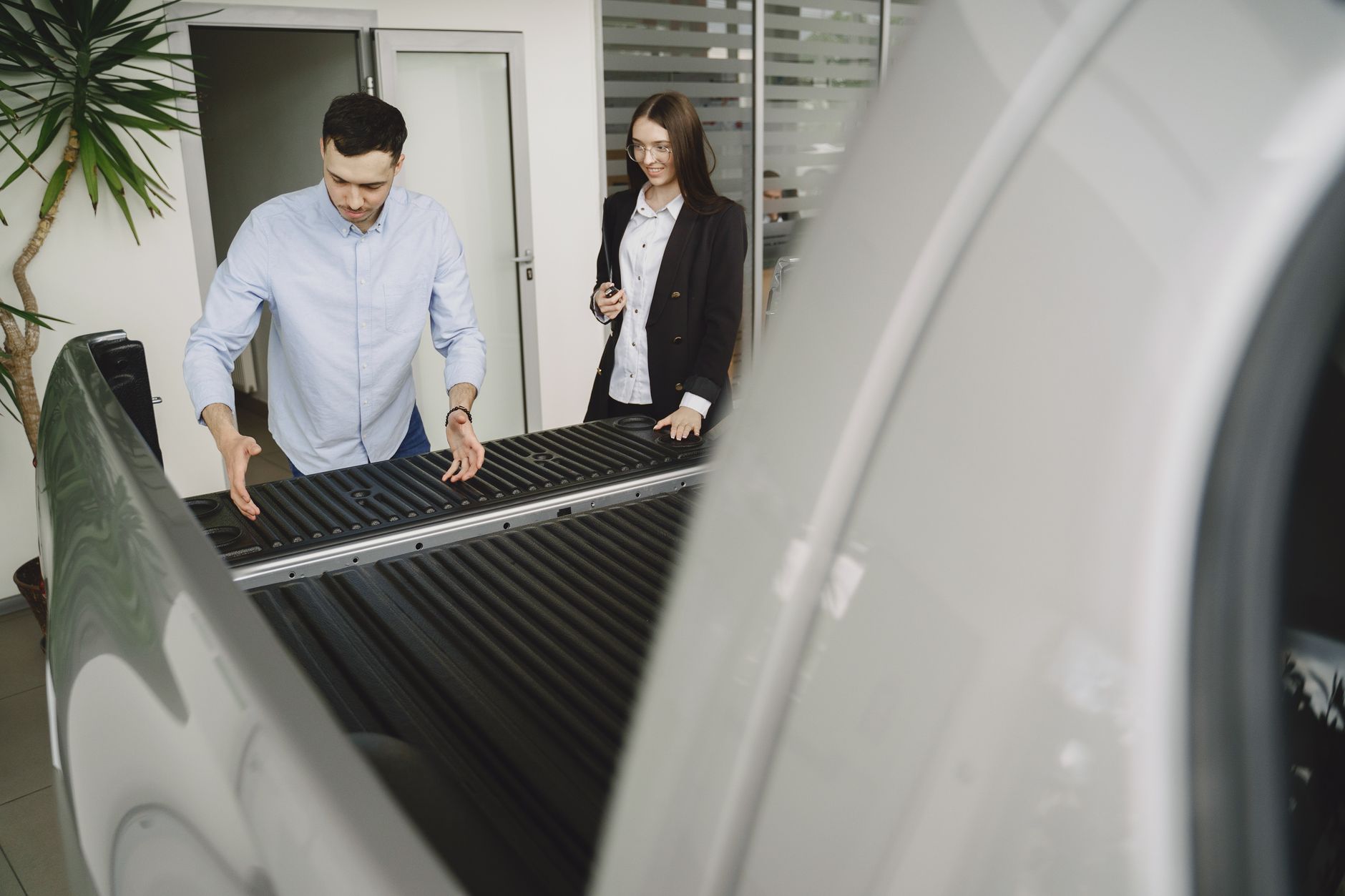
Yes, provided the route is planned around the showroom as it actually is rather than a generic retail plan. A truck accessory showroom holds vehicles that sit high off the floor, tool displays at waist and shoulder height, and open cargo bays that reach into aisles. Each of those needs its own rule before a floor robot circulates after close.
The short answer is that the floor can be cleaned overnight with a mapped route, a set of no-go zones and a test period. The longer answer depends on how many trucks stay on the floor, where the ramps and lifts sit, and when the last staff member leaves. A site assessment gathers those facts before anyone sets a route.
How do you map a route around lifted trucks and open cargo bays?
A lifted truck changes what a robot sees. Tires and the bumper sit near the floor, but a running board, light bar or raised bed rail can sit well above the floor line. A sensor mounted low on the robot may read the tire and miss the overhang above it, so mapping has to capture the vehicle footprint and the clear space above the wheels, not only the contact patches.
Open cargo bays create the same problem in a different place. A dropped tailgate or a bed open to the rear can extend into an aisle at a height a floor robot will not register as an obstacle. Treat every open bay as a no-go zone unless the robot has been validated against that exact geometry, and keep staff from parking vehicles across the route after the final walk-through.
Map the showroom with trucks in their normal positions, then remap whenever the display changes. A truck moved two feet can close a corridor, and a route built on last month's layout will fail quietly. Mark which lanes stay clear all night and which may be crossed only when empty.
Where do cords and ramps create the hazard?

Accessory showrooms run more cords than most retail floors. Tire inflators draw air hoses across the floor, lighting for lift-kit displays often runs on extension cords, and demo charging stations for electric accessories tend to sit on aisle edges. A cord stretched across a walkway is a trip hazard for people and a snag for the robot, so the route should treat every run as a fixed obstacle.
A law-firm guide on OSHA extension cord rules says the walking-working surface foundation is 29 CFR 1910.22, and that a loose cord across a walkway is a trip hazard the employer must eliminate or guard against. That guide is a secondary source, so check the regulation text before quoting it in a policy. A compliance summary from ASMARK says temporary extension cords are limited to 90 days under 1910.305(a)(2) and that daisy-chaining is prohibited, which also needs confirming against the regulation.
Ramps and thresholds need the same attention. A loading ramp into a cargo bay, a raised display platform or a door threshold is a change in height the robot must either be validated to handle or be routed around. Mark each transition on the map and decide in advance, not during a run, what the robot does at it.
Which tool displays and fixtures need their own rules?
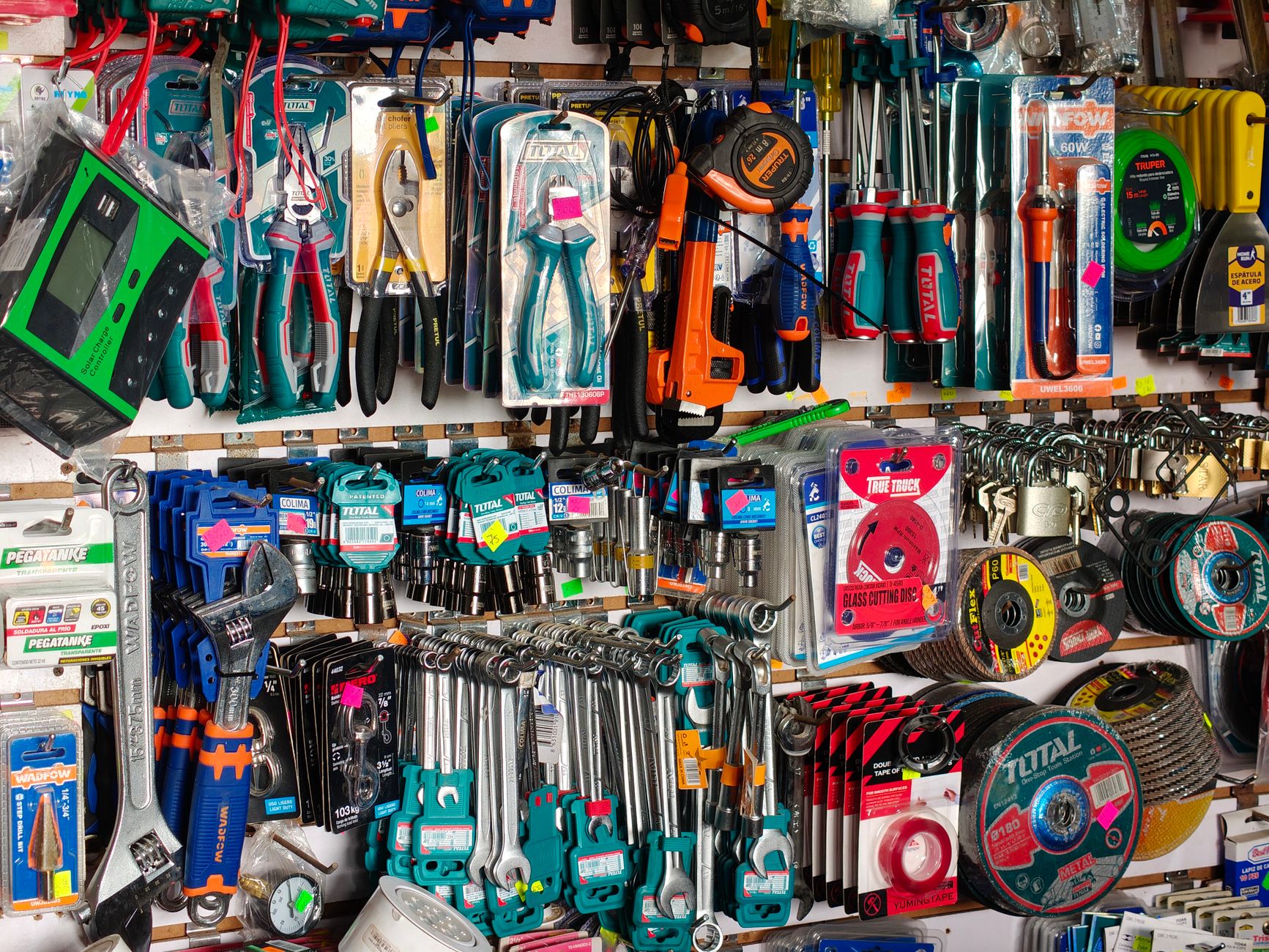
Tool displays are the most crowded part of the floor. Pegboard walls, rolling tool chests and floor-standing bins of hitch parts put objects at ankle height, and a thin rail or a rolling caster can be missed by a sensor set for a wider target. Test each fixture type on its own instead of assuming one sensor setting covers all of them.
Overnight runs also collide with daytime habits. A display stool pushed into an aisle, a dropped shrink-wrap roll or a box left under a rack will stop the robot or force a reroute. A closing routine that clears the floor reduces those stops and gives the robot a clean run.
- Clear the lowest shelf and floor bins of loose parts before close.
- Park trucks with tailgates closed, or flag open ones as no-go zones.
- Coil and hang every cord and air hose off the floor.
- Push demo stools and tire stands against the wall.
- Keep the charging dock approach clear of carts and cartons.
What should you test before the first full week?
A first full week is when small gaps surface. Run a single zone for several nights before adding the rest of the floor, and read the route log each morning rather than only after the first finished run. A route that completes but leaves a wet patch beside the tire rack has failed the job.
Test these conditions with the trucks, displays and staff habits you actually have. Record each result in the log, and do not expand the route until every test has passed or has a written workaround.
- Cord detection: lay a cord across one aisle and confirm the robot stops or reroutes.
- Overhang: stage an open tailgate or a flagged no-go and confirm the route holds.
- Ramp and threshold: cross each transition at the slowest speed and confirm the robot waits or skips it.
- Staff interruption: step into the path during a run and check the stop and resume behavior.
- Dock approach: confirm the charger is reachable from every end-of-run position.
How big is the cleaning robot market, and how far can its figures be trusted?
Cleaning is no longer an experimental use. According to IFR's World Robotics 2025 Service Robots report, as reported by RoboticsTomorrow in October 2025, professional cleaning robot sales rose 34% to more than 25,000 units in 2024. Cleaning was the third-largest professional service robot segment, at 13% of professional service robot use, behind transportation and logistics and hospitality.
Read those figures with care. They describe 2024, not the current year, and the report draws on a sample of 294 service robot suppliers. IFR also advises against combining figures from different World Robotics reports, so a showroom's case should rest on its own floor measurements more than on an industry headline.
Where does a robot lease fit a showroom like this?
Service Robot Co. is a full-service commercial robot integrator for US businesses. We are OEM-neutral, so the robot is chosen for the floor rather than from one manufacturer's catalog. We finance, deploy, integrate, train and service each unit through a nationwide US engineer network, which keeps the whole lifecycle with one vendor and one number to call.
Robots reach a customer through a three-year lease, with one fixed payment quoted after a site assessment. In a showroom, that assessment produces the map, the no-go zones and the cord and ramp list, and go-live support covers the first runs. The quote reflects the floor the robot will actually clean, because the assessment comes first.
Frequently asked questions
Want a robot working for you?
Tell us the job and the site. We will recommend the robot, quote the lease, and keep it serviced.