Key takeaways
- Voice can help restaurant robots most when the task is narrow, repetitive, and tied to a clear menu or beverage flow.
- The near-term payoff is not fewer people at the front. It is fewer handoffs, faster ordering, and better use of labor during rush periods.
- Upselling works best when voice is context-aware and short. Long, chatty scripts usually slow the line and irritate guests.
- The hard part is not the robot body. It is integration with POS, payments, menu logic, exception handling, and on-site support.
- Restaurant groups should pilot voice-enabled robots in one constrained service moment before redesigning labor across a full store.
What should restaurant groups expect from voice-enabled robots over the next two years?
Expect voice AI to spread into restaurant robots quickly, but in a narrow way first. Over the next two years, the strongest use cases are simple ordering moments, beverage pickup, host-stand triage, and tightly scoped food runner robot or server assistant robot workflows where the menu is finite and the next action is obvious.
What changes is not that a robot suddenly becomes a great server. What changes is that a robot can take a spoken request, confirm it, trigger a task, and hand that task into a physical service flow without a human re-keying every step. That can matter in limited service, bars, stadium-style counters, hotel outlets, and high-volume restaurant groups chasing faster turns with leaner staffing.
The sober view is this. Voice improves service when it removes friction from a repetitive exchange. It adds complexity when operators ask it to handle broad conversation, heavy customization, unclear acoustics, or emotionally delicate guest recovery. In other words, voice is coming fast, but its value will be uneven and very operational.
- Best near-term fits: beverage ordering, simple counter ordering, order status questions, pickup routing, and scripted upsell moments
- Weak near-term fits: long table-service conversations, highly customized orders, allergy-heavy edge cases, and complaint handling
Why is the category moving now?
The most concrete recent signal came on May 6, 2026, when a voice AI company and a robotics manufacturer said they would debut a live, voice-enabled robotic beverage experience at the 2026 National Restaurant Association Show in Chicago. That matters less as a novelty demo than as a market marker. Voice ordering and robotic fulfillment are now being shown as one continuous service loop, not two separate technologies.
The venue matters too. The National Restaurant Association said the 2026 Show ran May 16 through May 19 at McCormick Place, and the Association's pre-show materials said more than 2,000 suppliers and over 50,000 attendees were expected. When a workflow appears on that stage, large operators notice, compare notes, and start asking which pieces are ready for chain rollout.
Restaurant demand is also pushing in this direction. The National Restaurant Association projects $1.55 trillion in industry sales for 2026 and about 15.8 million restaurant jobs. At the same time, the U.S. Bureau of Labor Statistics reported 753,000 job openings in accommodation and food services for June 2026. That is the backdrop. Operators still need people, but they are looking for technology that trims wasted motion and stabilizes service when the labor market stays tight.
Where does voice actually improve ordering?
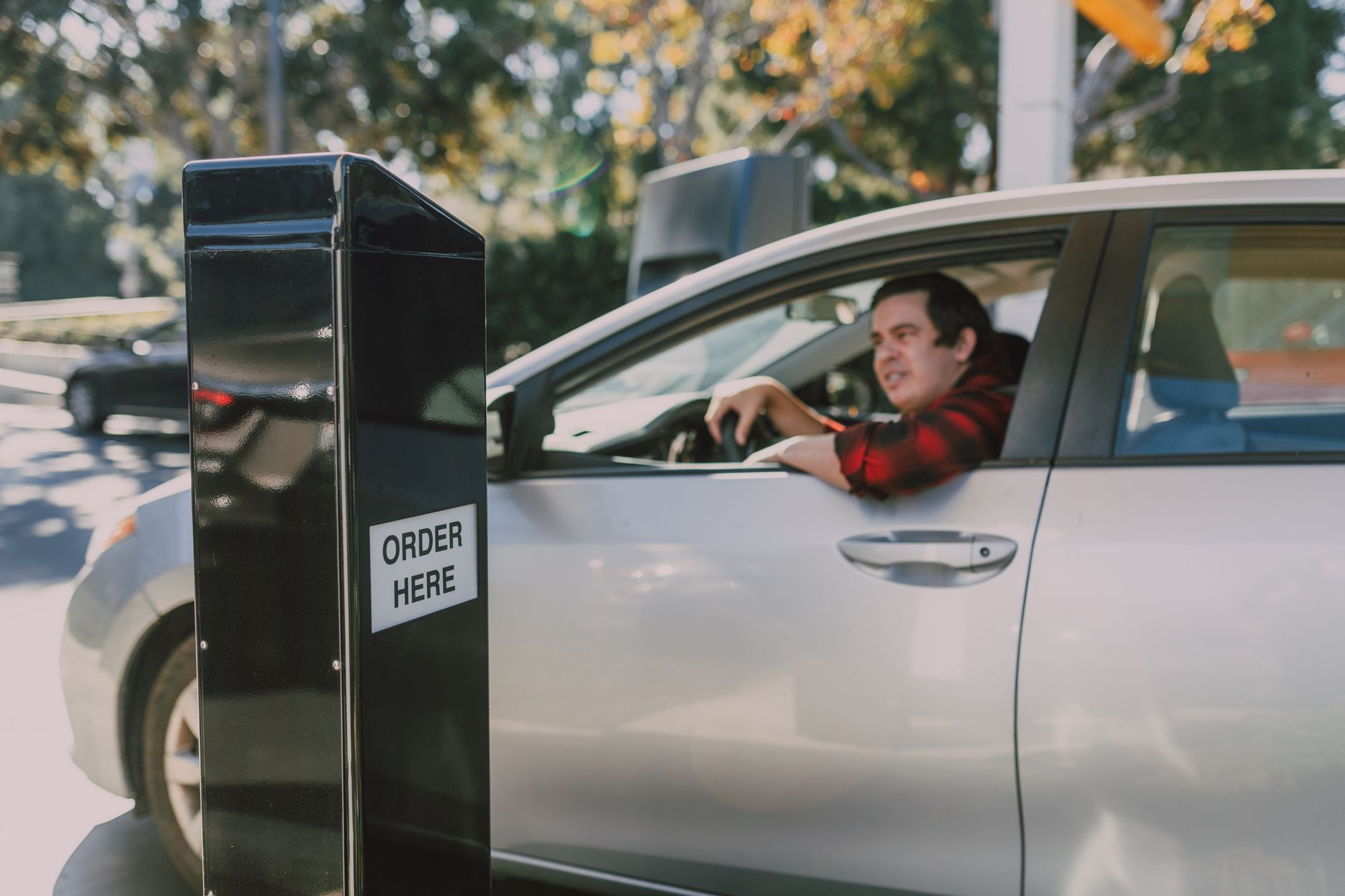
Voice helps most when the order tree is short and the physical handoff is immediate. Think drinks, desserts, late-night snacks, refill requests, order-ready notifications, or a limited counter menu. In those moments, a voice-enabled food service robot rental or restaurant delivery robot rental can do something useful: greet, capture intent, confirm the item, and push the task into production or delivery without bouncing the guest to another device or person.
This lines up with how restaurant demand already behaves. According to the National Restaurant Association's Off-Premises Restaurant Trends 2025 report, nearly 75 percent of restaurant traffic now happens off premises. The same report says 47 percent of adults pick up takeout at least once a week, 42 percent use the drive-thru weekly, and 37 percent order delivery weekly. Restaurants already live in a world shaped by convenience, repeat orders, and compressed service windows. Voice fits that world when it shortens the path from intent to transaction.
It also fits what guests already say they want from tech. In the Association's Restaurant Technology Landscape Report 2024, seven in ten limited-service customers said they would be likely to place an order using a smartphone app, and operators' top customer-facing tech priority was making ordering and payment easier and faster. Voice is not a replacement for app ordering. It is an additional front end for moments when speaking is easier than tapping.
The trap is trying to make voice universal. If every order needs five clarifications, a screen or human cashier is still better. The right design goal is not machine conversation. It is low-friction order capture for a narrow service moment.
Can voice raise check average, or is that mostly sales deck talk?
It can help, but only under strict conditions. Voice is good at one relevant suggestion tied to the order already in progress. Add a large tea to that combo. Turn that soda into a cold brew. Add a second cookie for the office. Those are brief prompts with clear economics and low cognitive load.
It is much worse at the kind of upsell that works in a good dining room, where timing, tone, facial cues, and table context matter. A robot that pitches too often sounds pushy. A robot that pitches too late clogs the line. A robot that pitches with no awareness of order value, daypart, or stock levels quickly becomes background noise.
Restaurant groups should judge voice upsell on three operating numbers, not vibes. First, accepted offer rate. Second, service-time impact. Third, error or abandonment rate after the offer. If accepted offer rate rises but throughput slips, the gain is fake. If the prompt creates confusion that staff must rescue, labor cost creeps right back in.
This is where integration matters more than theatrics. The voice layer needs live menu logic, modifier rules, item availability, and simple business rules by daypart. Without that plumbing, a beverage service robot becomes a talking prop instead of a reliable revenue tool.
What changes in labor design, and what does not?
The biggest labor effect is job reshaping, not mass staff replacement. In the next two years, voice-enabled robots are more likely to absorb fragments of work than whole roles. Greeting. Basic order intake. Status questions. Repetitive delivery loops. Simple beverage transactions. That frees human staff for exceptions, hospitality, recovery, and throughput peaks.
That distinction matters because restaurant labor is broad and fluid. The National Restaurant Association said in April 2026 that restaurants employ more than 10 percent of the U.S. workforce. The Bureau of Labor Statistics says employment of waiters and waitresses is projected to decline 1 percent from 2024 to 2034, but still average about 456,700 openings each year because replacement demand remains high. Restaurants are still people businesses. The pressure is on coverage, churn, and consistency, not on eliminating every service role.
For operators, the practical redesign question is not How many heads can we cut. It is Which service touches should stay human, which can become self-service, and which can be handed to a server assistant robot with voice on top. In many stores, the answer will be a mixed model: fewer dead-end handoffs, more cross-trained staff, and more attention on the moments guests actually remember.
A strong pilot can also clarify where a service robot rental belongs in scheduling. If the robot reliably handles late-night drinks, pickup-zone questions, or short delivery loops, managers can reassign labor toward expo, hospitality, or peak-hour sales. That is a more credible path than promising a fully autonomous front of house.
Where does voice add complexity faster than value?
Noise is the first enemy. Busy restaurants are full of overlapping speech, music, blenders, ice, dish pits, and open kitchen noise. A voice system that performs well in a quiet demo can degrade fast in a Friday rush. Even when speech recognition is accurate, the guest may not trust it if the confirmation flow feels clumsy.
Menu complexity is the second enemy. The more modifiers, substitutions, allergy notes, and combo rules you carry, the more exception paths appear. Those paths are where service time stretches and human intervention returns. A voice-enabled robot should start with the part of the menu that is easiest to standardize, not the part with the highest emotional stakes.
Maintenance and support are the third enemy. Restaurants do not buy a clever interaction. They buy uptime. That is why robot deployment and integration cannot stop at the unit itself. The real work includes POS links, payment flow, network reliability, remote triage, staff training, cleaning procedures, and on-site dispatch when the machine is down during service.
This is also where many groups underestimate the burden of a single-vendor bet. If voice, hardware, software, financing, and field support all live in separate silos, the operator ends up coordinating the mess. Complexity migrates from the service counter into the back office.
What should operators ask before they pilot one?
Start with one narrow moment of service and one measurable problem. Do not pilot voice because it looks futuristic at a trade show. Pilot it because one workflow is slow, repetitive, costly, or chronically hard to staff. Good examples include beverage service during predictable peaks, pickup-zone triage, or a restaurant busser robot rental paired with simple guest prompts in high-volume formats.
Then pressure-test the operating model. Who owns menu updates. What happens when an item is out. How does the robot handle age-gated products, allergy notes, or a guest who changes their mind mid-order. How long does recovery take after a failed interaction. Who supports the store at 8:30 p.m. on a Saturday.
This is where Service Robot Co. has a practical role. For restaurant groups, the issue is rarely just finding a machine. It is finding the right robot that fits your floor, your menu logic, and your staffing model, then making lease rental or sale, robot deployment and integration, training, maintenance included support, remote triage, and on-site dispatch work as one program. A vendor neutral robot integrator can keep the project focused on service performance instead of gadget management.
In plain terms, one partner and one number matters more as voice enters the picture. The more layers in the stack, the more valuable it becomes to have one lifecycle owner who can finance, deploy, integrate, train, and service every unit through a nationwide engineer network.
What will the next two years probably look like?
Expect more pilots than chainwide standardization in full-service dining, and faster adoption in narrow, high-repeat formats. Beverage counters, QSR-style ordering moments, pickup-heavy operations, and venue environments with constrained menus are the most likely proving grounds. Voice will show up first where it can shave seconds, not where it needs social intelligence.
Expect operators to get more disciplined about what counts as success. The winning programs will be judged on order accuracy, throughput, attachment rate, uptime, labor redeployment, and guest acceptance. The losing programs will still be talking about novelty six months later.
Expect financing and deployment models to matter too. Many groups will prefer a service robot rental, robot leasing for business, or robot as a service structure while they test voice in live operations. That is rational. The category is moving fast, and the safest path is to pilot with clear service metrics, prove the fit, and only then widen the footprint.
Voice is coming to restaurant service robots fast. But fast does not mean broad, and broad does not mean useful. The operators who win will be the ones who keep the scope tight, the measurements honest, and the guest experience at the center.
Frequently asked questions
Sources
- SoundHound AI NRA Show 2026 announcement
- National Restaurant Association Show schedule
- National Restaurant Association pre-show overview
- National Restaurant Association State of the Industry 2026
- National Restaurant Association Off-Premises Trends 2025
- National Restaurant Association Technology Landscape 2024
- U.S. Bureau of Labor Statistics JOLTS June 2026
Service Robot Co. is not affiliated with, sponsored by, or endorsed by the companies mentioned in this article.