

Key takeaways
- Weekend medal fields often start at dawn and keep fairways hot through midday.
- Autonomous fairway loops need hole-level holds, not a single course-wide shutdown.
- Shotgun and split-tee formats change which corridors stay busy longest.
- Starters and turf monitors should share one morning release sheet.
- Service Robot Co. can map weekend buffers during fairway robot deployment.
Why weekend medal play reshapes dawn fairway windows
Medal weekends concentrate stroke play on Saturday and Sunday when casual rounds also peak. That means more carts on fairway corridors between 7 a.m. and early afternoon than a midweek league night.
Autonomous fairway mowers follow mapped loops that cross the same grass medal groups use on long par fours. A quiet Friday night map may be wrong by the first Saturday tee time.
Superintendents still need presentation for Monday members, so the goal is targeted holds, not parking robots all weekend.
Build the morning hold calendar before medal week
Import the pro shop medal tee sheet for both days, including any split tees or crossover starts.
Mark every hole that hosts consecutive starts, not only hole 1. Corridors on holes 3 through 12 often stay busy after the first wave tees off.
Post hole numbers at chargers and in the starter shack so robot operators read the same list as starters on radio.
Shotgun versus traditional tee times
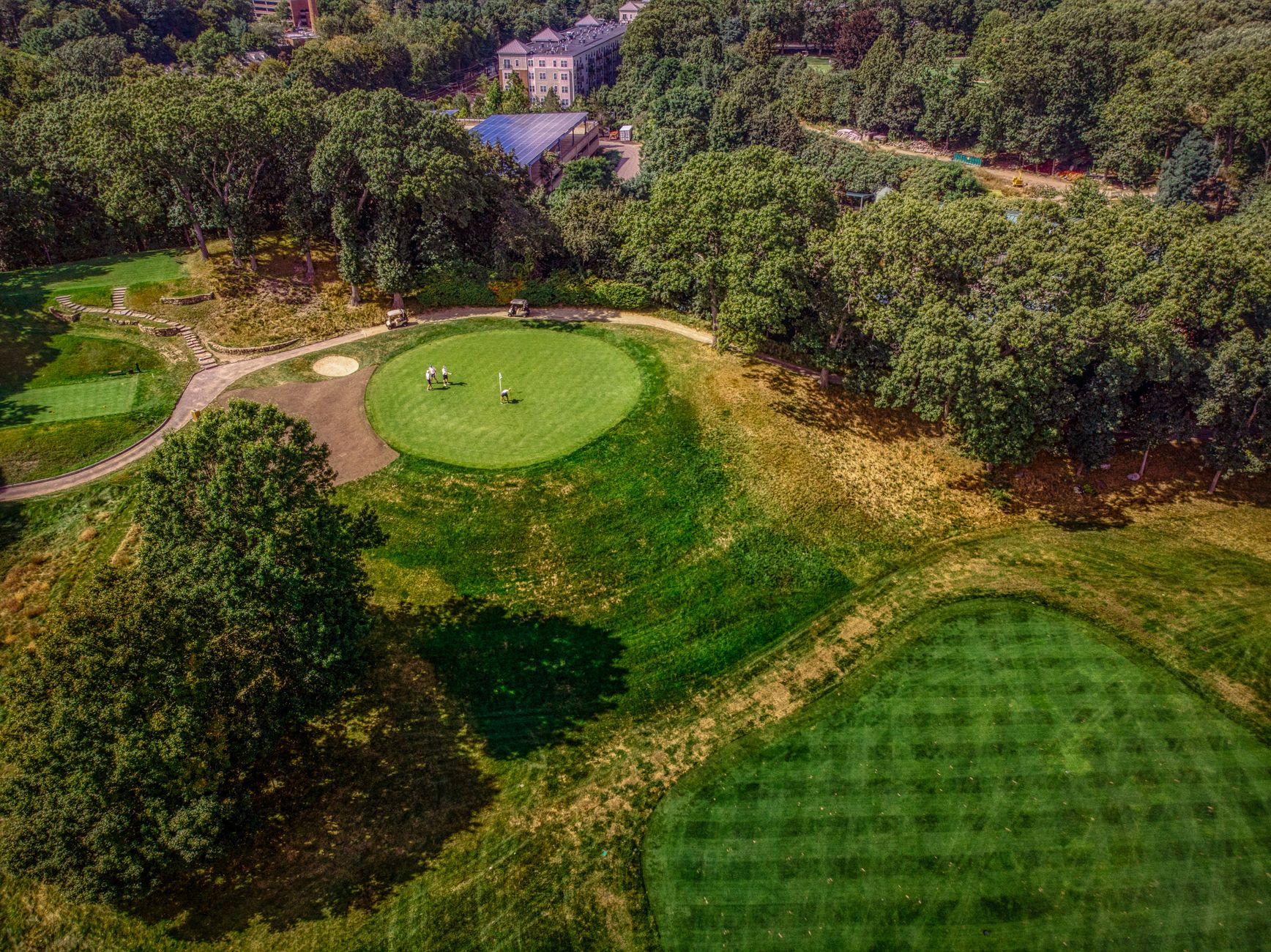
Shotgun medal events flood every fairway at once. Plan a full-card hold until the last group clears each hole exit, not only the landing zone.
Traditional tee times let robots work on distant holes early, but only if geofences block crossover paths between nines.
Weather delays on medal morning can compress two waves into one corridor. Extend holds when starters post a delay.
Polygon holds on the quiet nine
When medal play uses one nine only, robots can often keep working on the other loop if maps version for that weekend.
Confirm crossover walks and maintenance paths do not send a unit onto the busy nine during a cart change.
Test geofences with a slow escort walk before the first medal Saturday.
Pace buffers behind the last morning group
Medal play rewards ready golf, which can tighten foursomes on fairways. Robots should stay behind the last cart, not between groups.
Add buffers on holes where robots must cross from one panel to another after a dogleg.
Radio starters when a slow group runs long so maintenance does not lift a hold early.

Dew, frost, and soft weekend turf
Weekend dew stays on fairways longer when cart traffic is light before the first tee. Holds may need to extend even after play moves forward.
If cart-path-only rules apply, buffer path-edge turns so robot tires stay on pavement.
Log which holes stayed soft for Monday planning.

Coordinate with the pro shop and starters
Medal secretaries know which flights habitually run late. Share that list with turf monitors before Saturday.
Explain that holds protect pace and turf, not delay medal play for mowing vanity.
Offer a one-page sheet with holes off limits and earliest release times each morning.
Where buy or lease support fits
Service Robot Co. stays vendor neutral, then lines up buy or lease financing, mapping, training, and RoboCare support through one contact.
Integrators can import weekend hold templates and adjust geofences after the first medal month.
A nationwide network of regional service engineers helps update maps when formats change.


