Key takeaways
- The 2026 Senior Women's Open used autonomous mowers on select areas, and no source we reviewed says they cut the greens.
- The first-of-its-kind claim and the mower role come mainly from vendor reporting, so read them as such.
- Setup work, especially zone mapping and boundary checks, is the part a superintendent can copy directly.
- Superintendent comments describe crews shifting toward supervision and higher value work.
- Treat the Barton Hills week as a source of planning questions, not as proof of turf outcomes.
What happened at Barton Hills in August 2026
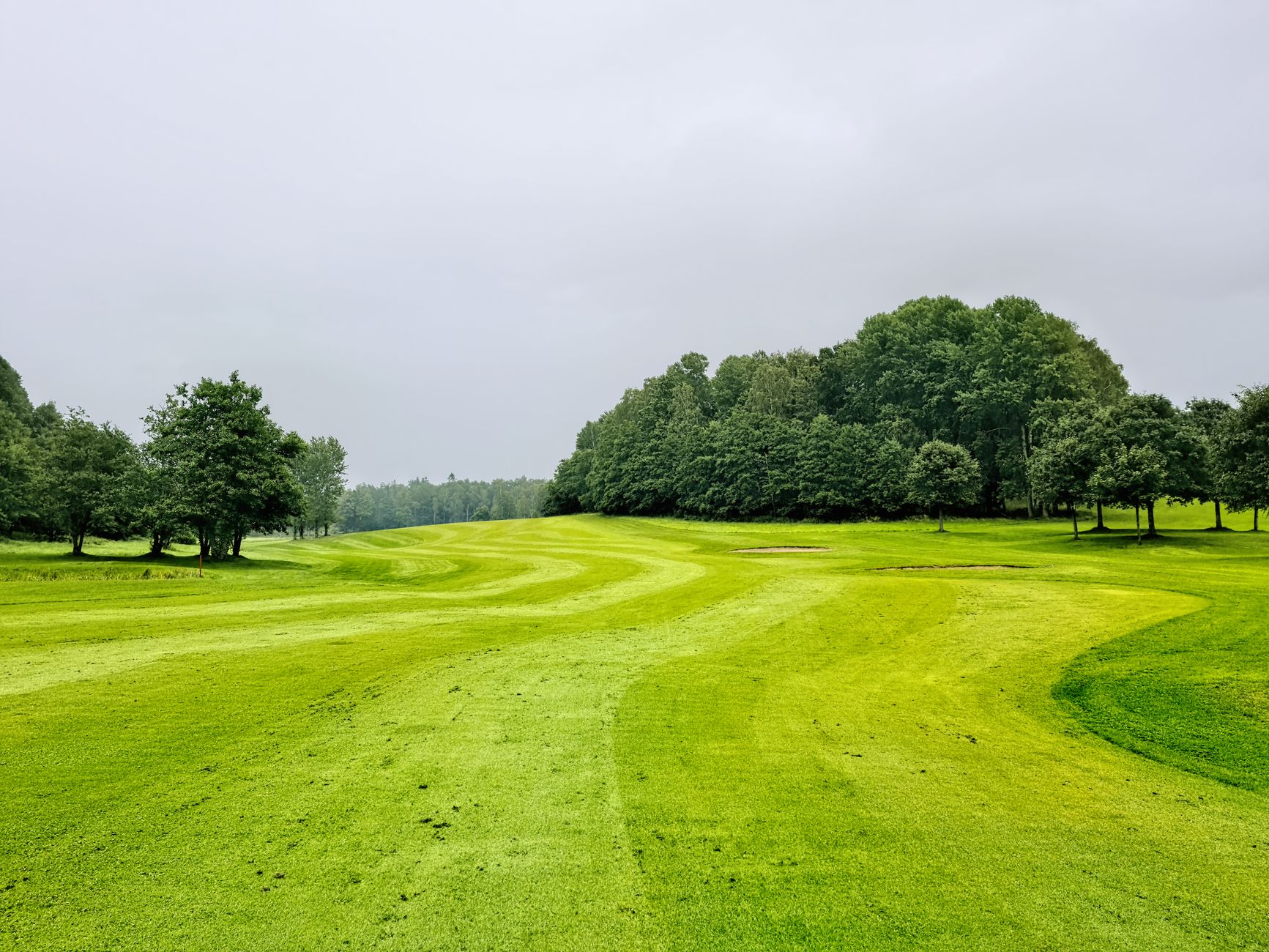
The 2026 U.S. Senior Women's Open was held August 20 through 23 at Barton Hills Country Club in Ann Arbor, Michigan. Turf Magazine reports that Husqvarna robotic mowers maintained select areas of the course, and it describes the event as one of the first official USGA championships to use robotic mowing in course maintenance.
The short answer for turf managers: the mowers worked on assigned select areas. None of the sources we reviewed say the autonomous units cut the greens, and we do not claim that they did. What the week offers is a working example of autonomous mowing inside a championship calendar, with a crew, sponsors and a gallery all in view.
As of November 2026, most of the coverage we found traces back to a Husqvarna press release, so treat the framing as vendor reported. We found no independent data on turf results, and no figure for how many acres the mowers covered.
How long has Barton Hills run robotic mowers?
According to Turf Magazine, Barton Hills has run Husqvarna mowers on fairways and roughs since 2022. One report puts the club's fleet at 30 mowers. The August 20, 2026 press release names Automower 580L EPOS and 535 AWD EPOS models, and it says Husqvarna was a featured sponsor of the maintenance team.
That history may matter more than the championship headline. A club with several seasons on a fleet has had time to settle routines for docking, charging and fault recovery. A championship then tests those routines against a tighter schedule and a larger crowd.

What did the superintendent say the mowers are for?
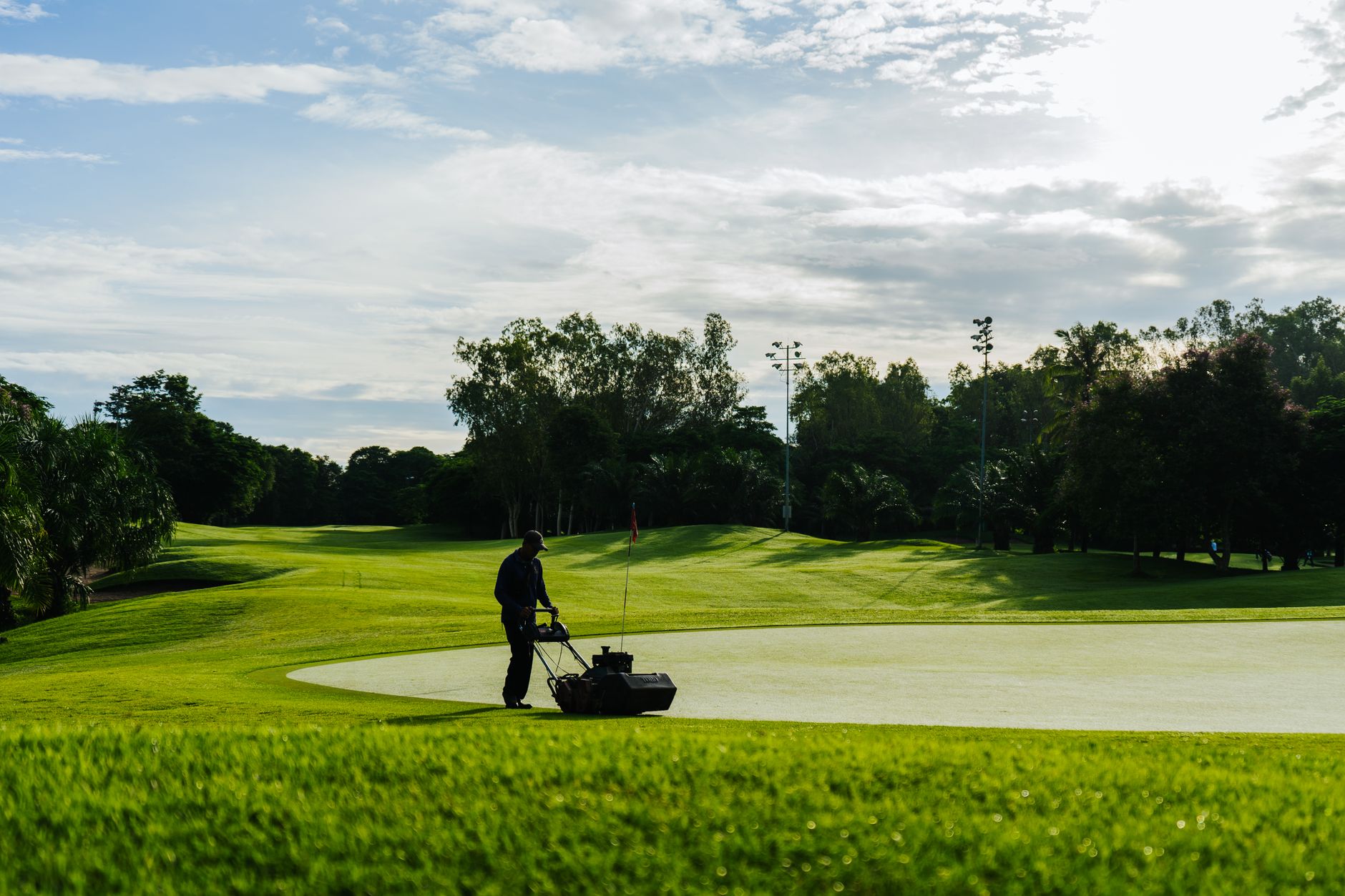
Superintendent Andrew Christesen said the mowers support championship level conditions, citing healthier turf and more consistent playing conditions, as reported by Sports Field Management. These are his stated goals. The coverage does not include measured turf data that would let a reader check them.
Turf Magazine reports that Christesen says crews now focus on higher value work rather than being replaced. The coverage frames the mowers as a response to labor shortages. That framing deserves a careful read. Shortages are real across the green industry, but a sponsor's release ties its product to that problem by design.
Husqvarna's David Plaster called the event a stage for showing the growing role of robotic mowing. That is a vendor voice speaking about its own product category.
How should a superintendent set up autonomous mowing for a major?
The event reports publish no setup checklist, so what follows is a practical reading of what a championship team has to settle before the mowers run. Start with the map. Define each select area and each keep out zone, then walk the boundaries on foot instead of trusting the drawing alone.
Most of this work is invisible to spectators, which is why it gets skipped. Rehearsal takes crew time now, which is cheap next to a stalled mower in front of a full Saturday gallery. Walk the course at the same hour the event runs too, since shadows and wet morning grass change how a mower reads an edge.
- Map every select area and keep out zone, then confirm boundaries on the ground before the week begins.
- Site charging and docking points where they stay clear of tournament traffic, cart paths and spectator routes.
- Set run windows around tee times, practice rounds and setup crews, not around the mower's own schedule.
- Assign one person to watch stops, obstacles and fault alerts, with a direct line to the greens crew for hand work.
- Rehearse fault recovery and manual takeover before the first official round.
Who does what on a championship mowing crew?
The sources describe the crew shift only in general terms: the superintendent says crews focus on higher value work. They do not list job titles for the event. So what follows is what a crew should plan for, not a record of who did what at Barton Hills.
Mowers handle repetitive passes on assigned areas. People handle what a mower judges poorly: hand cutting around tight spots, reading turf that looks wrong, clearing debris, and calling a unit off the course when conditions change. A crew lead should own the daily go or no go decision, and the greens crew should not be pulled onto mower duty in the middle of a round.
Labor is the pressure point. When fewer people run more machines, one absence can leave a zone uncut. Cross train at least two people on dispatch and fault handling so the routine never depends on a single worker.
What the Barton Hills week does not prove
The event is one championship in one week. It does not show long term turf health, acreage coverage, cost savings or a method that will carry over to every course. The lower cost argument appears in a promotional piece saying the USGA sees autonomous technology as a tool for better turf at lower cost, and it should be read as a promotional claim.
Keep your own records. Track clippings, playing conditions and crew hours on your course, and use the Barton Hills week as a source of planning questions, not as a benchmark you must match.
Where Service Robot Co. fits for grounds and course operators
Service Robot Co. is an OEM neutral integrator. We pick the right robots across manufacturers for the job, then handle commercial robot leasing, deployment, integration, training and service through a nationwide US engineer network, so one team answers for the whole lifecycle.
Our offer is a three year lease with one fixed robot lease payment quoted after a site assessment. For a course or grounds site, that assessment maps zones, slopes, obstacles and boundaries before anyone commits. A single leased unit is a reasonable way to test the routine before widening the fleet.
Frequently asked questions
Want a robot working for you?
Tell us the job and the site. We will recommend the robot, quote the lease, and keep it serviced.
Sources
Service Robot Co. is not affiliated with, sponsored by, or endorsed by the companies mentioned in this article.