Key takeaways
- The 2024 Black Desert Championship was the first PGA Tour event on a course whose fairways were cut by autonomous mowers.
- Overnight passes between rounds made the schedule work, with mowing reported at about 2 a.m. to 6 a.m.
- The first pass ran before gallery ropes were up, so the map was redone a couple of times.
- The superintendent kept conventional fairway mowers on hand as a backup.
- Daily-play courses can borrow the mapping, timing and backup habits, but tour pressure is a different scale.
What did the Black Desert event prove?
The 2024 Black Desert Championship ran October 9 to 13, 2024, at Black Desert Resort in Ivins, Utah. According to Golfdom, it was the first PGA Tour event held on a course whose fairways were cut by autonomous mowers. Golf Business News describes the same debut.
The short answer is that the machines were not the whole story. Setup, timing and a human backup did most of the work in the reporting. Three details stand out: the mowers ran overnight between play, the course was remapped after an early pass, and the superintendent kept fairway mowers ready in case they were needed.
Which machines cut the fairways?
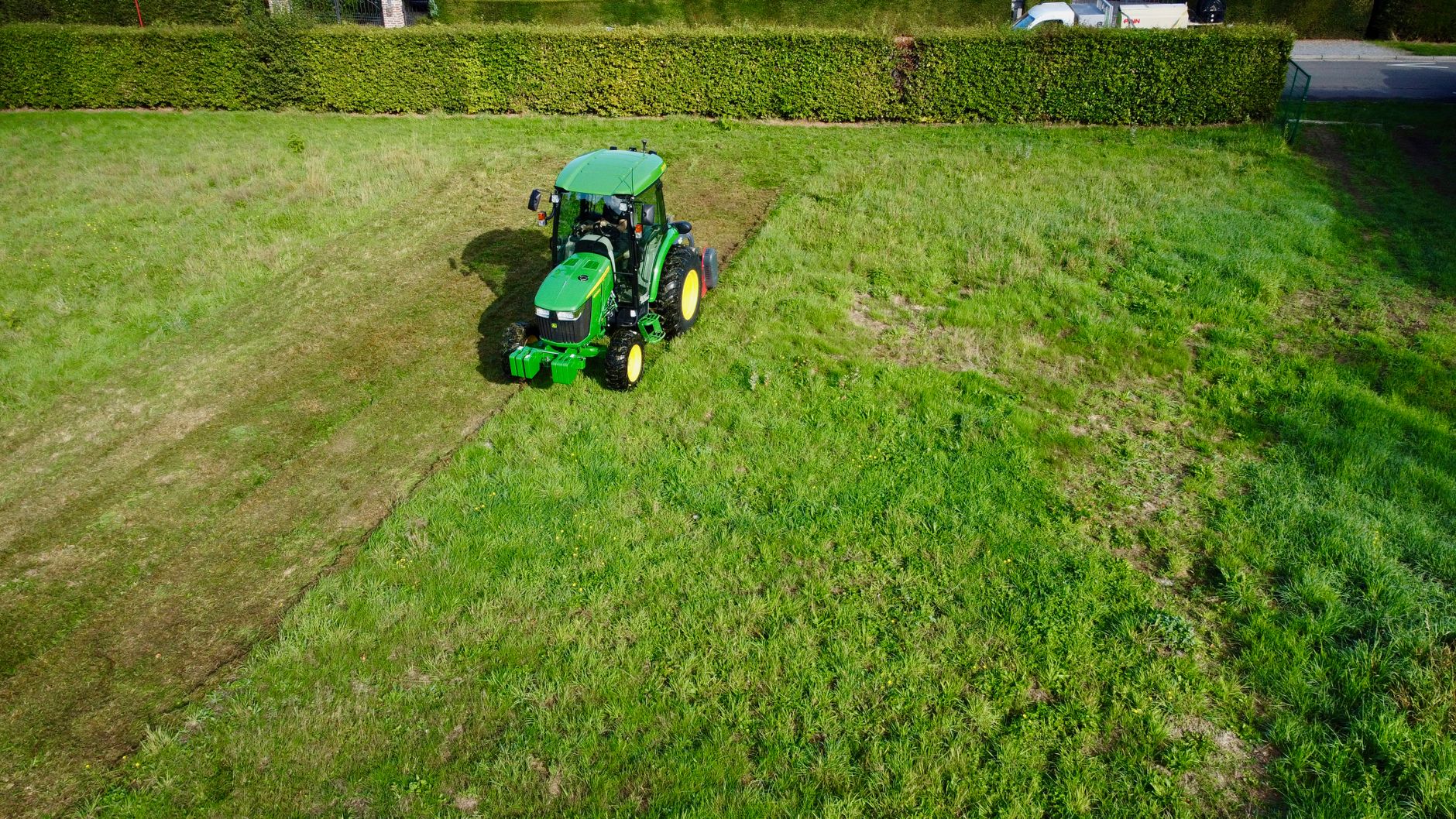
FireFly Automatix supplied the equipment, according to Golf Course Industry. Four all-electric Autonomous Mowing Platforms were used, each 100 inches wide with a five-gang reel setup. AccessNewswire identifies the company as based in Salt Lake City.
Black Desert's superintendent, Ken Yates, proposed the machines after a demo day, Golf Course Industry reported. The adoption started with a superintendent testing the machines on his own course, not with a corporate directive.
Toro also sells an autonomous fairway mower, the Greensmaster eTriFlex 3360 with GeoLink Mow. Its product pages, checked as of November 2026, do not mention Black Desert. The sources reviewed do not show Toro equipment at the event.
Why overnight timing set the schedule
Sportskeeda reports that the mowers ran roughly 2 a.m. to 6 a.m. between tournament play, and that all 18 fairways were mowed in about four hours each night.
The acreage figure varies by source. Sportskeeda reports 51 acres mowed, while Golf Course Industry reports 60 acres of fairways maintained over the four weeks leading up to and during the event. Both figures are reported as given, and neither source explains the gap.
For a daily course, the transferable idea is the window itself. A quiet stretch before the first tee time can hold a similar pass, though the exact hours depend on the course's own play schedule and staffing.
Why the first pass ran too early
FireFly's team arrived about six weeks before the event, according to Golf Course Industry. They had to remap a couple of times because the first pass ran before the gallery ropes were up.
That is the most transferable detail in the account. A map drawn on an empty course is not the map a crowd will leave behind. Ropes, stands, cart staging and temporary fencing change where a machine can safely travel, and a pass that runs ahead of them can produce a map that has to be redone.
A daily-play course faces the same problem on a smaller scale. Tree work, new tee boxes and temporary fencing for a maintenance project each change the map, so the map is only as current as the last physical change.
What happened to the crew?
Yates was skeptical at first. He said he still needed a backup plan and kept fairway mowers on hand so the event would run properly, according to Golf Course Industry. His previous operator crew was replaced, a change that touches people as much as equipment, since he had been used to a person riding a mower.
The public reporting does not say who monitored the machines overnight, how many staff were on shift, or who handled alerts. Any operator planning a similar pass should settle those questions before the first run, not after it.
What can daily-play courses borrow?
Most of the lessons are operational rather than technical. A daily course does not need a tour calendar to use them, but it does need written rules that a seasonal worker can follow on a Tuesday night.
- Map again after every physical change, not only at installation.
- Keep a manual backup mower available through the first weeks of any new routine.
- Write down who acts when a machine stops mid-pass, and what they do first.
- Log every remap and the reason for it, so the next setup starts from evidence.
What can only a tour event demand?
Tour play adds pressure a daily course rarely faces. Galleries and ropes arrive on a fixed clock, and the work window is measured in tournament rounds rather than a weekly maintenance calendar. A remap that costs a morning on a member course can consume the entire pre-round window at a tour stop.
The reporting ties the overnight pass to tournament play, and that link is what a daily course cannot copy. It can copy the habits of mapping, timing and backup. It should scale the plan to its own calendar, not the tour's.
Where should a daily-play operator start?
The first step for any operator is a site assessment that records the real map, the quiet window and the backup plan before a machine runs. Service Robot Co. is a vendor neutral robot integrator for US businesses. We pick the right robots across manufacturers, then arrange financing, deploy, integrate, train and service each unit through a nationwide US engineer network.
Our robot leasing runs on a 3-year lease, with one fixed robot lease payment quoted after a site assessment. That keeps the map, the window and the fallback sorted before the first pass rather than during it, which is where the Black Desert crew had to spend extra effort.
Frequently asked questions
Want a robot working for you?
Tell us the job and the site. We will recommend the robot, quote the lease, and keep it serviced.
Sources
Service Robot Co. is not affiliated with, sponsored by, or endorsed by the companies mentioned in this article.