
Key takeaways
- Docking sites should be reachable for staff yet mostly invisible to players on normal lines of play.
- Power spread across the course often limits how many autonomous units you can run productively.
- Routine blade work and software updates still need cart-path access and dry, level footing.
- Low-profile mower garages behind tees or along tree lines are becoming a common pattern.
- A mapped rollout beats dropping chargers wherever extension cords reach first.
Where should robotic fairway mowers dock on a busy course?
Put charging stations where maintenance can reach them in minutes, not where every foursome watches them charge. The USGA Green Section Record noted in 2026 that Atlanta Athletic Club expanded autonomous mowers into Riverside Course rough in late 2025, and that the harder question was not the mowing map but how to store, charge, and service units without stealing pace of play.
Think in corridors. Cart paths, maintenance roads, and the back side of tee complexes give you routes that staff already use at dawn. Golfers rarely notice a low enclosure tucked behind a restroom or along a tree line if it sits outside the playing corridor.
If a dock forces a technician to drive across a fairway during morning tee sheets, you will fight the program every week. Place stations so blade checks and software updates happen from the path, not from turf in play.
Start with a sketch overlay: tee times, typical cart traffic, and the maintenance loop your rough crew already drives. Docks should snap onto that loop instead of inventing a new crossing.
How do you keep mower garages out of the golfer's sight line?
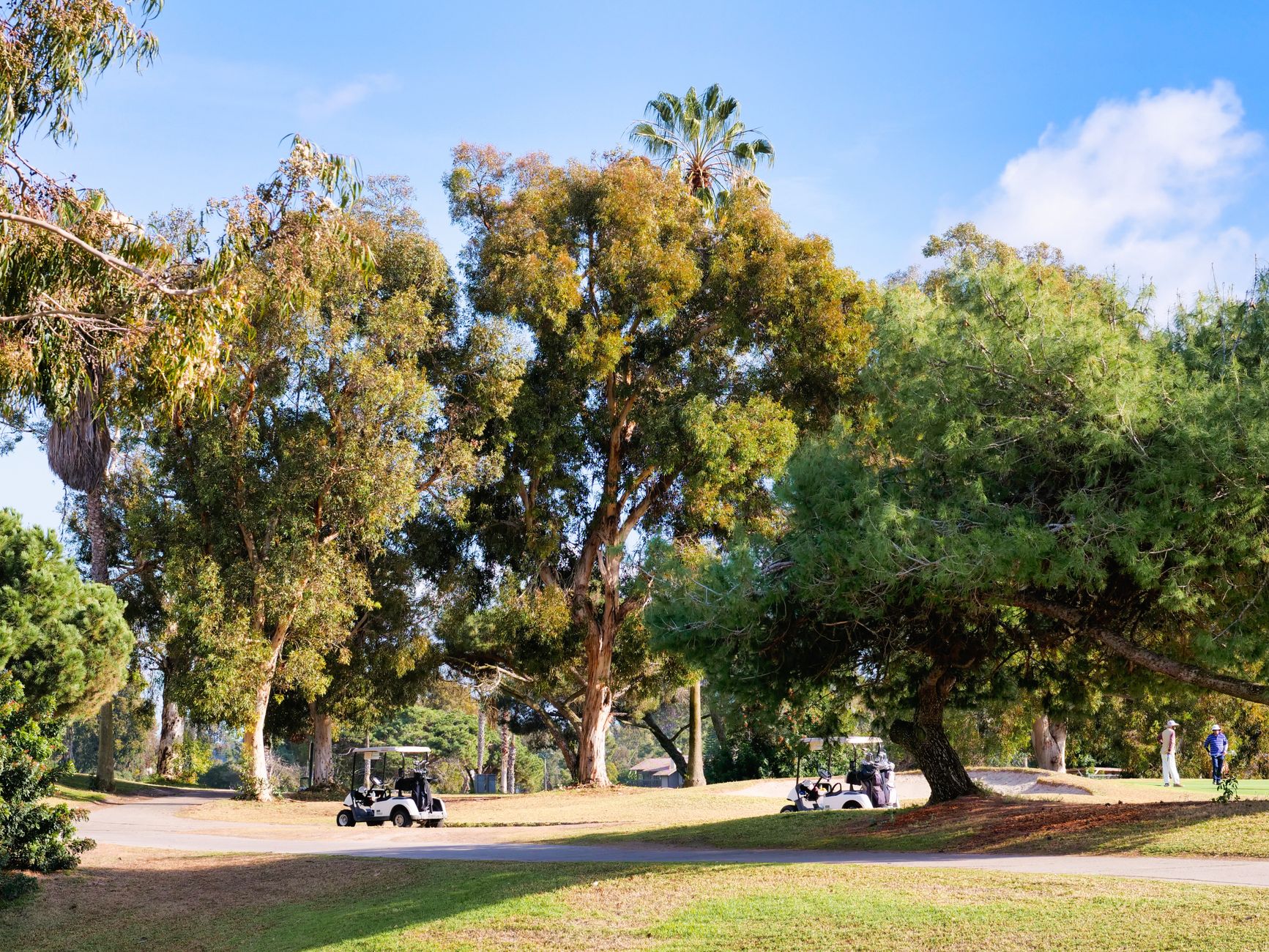
Visibility is the first complaint you hear from members, and it is the easiest to prevent in the design phase. The USGA article describes facilities using low-profile mower garages blended into native areas, ornamental screening, or berms with longer grass so stations disappear from the tee box view.
Pairing docks with existing on-course structures helps. Restroom buildings, halfway houses, and maintenance outbuildings already sit where players expect infrastructure. Atlanta Athletic Club paired restroom buildings with a subtle berm, according to the USGA piece, which hid chargers while keeping staff access short.
Night mowing changes the calculus. When units run while the course is closed, golfers mainly see the result, not the machine. Still plan daytime service visits so a charging pad never becomes a photo backdrop on a par-three walk-off.
Walk the course with a phone camera from the forward tee on your busiest holes. If a dock appears in frame, move it or screen it before the first member email arrives.
What power options work when the ninth fairway is far from the shop?
Autonomous fairway mowers only save labor when they spend hours cutting, not hours crawling back to a single outlet behind the maintenance barn. The USGA guidance stresses that travel distance to charge directly cuts productive mowing time, which makes power distribution a layout decision as important as grass height.
Start with assets you already own. Irrigation controllers, pump stations, cart barns, and practice range buildings often have power feeds that engineers can tap with proper planning. In remote corners, courses have extended low-voltage lines or added solar-assisted charging with battery storage, the USGA noted, especially where trenching a full line is impractical.
Map power before you map mowing zones. If a rough panel on the back nine lacks a viable feed, either budget for line extension or reduce the autonomous zone until power catches up. Half a program is still a program, but only if docks are honest about range limits.
USGA coverage of autonomous technology also notes that larger reel-style units may cover on the order of twenty to twenty-five acres per charge in a four-to-six-hour window, depending on setup. Your dock spacing should match that kind of working radius or you will spend the shift moving metal instead of cutting grass.
How much service space does a docking pad really need?
Robotic mowers cut headcount on the seat, not on the wrench. Blade replacement, cleaning, firmware updates, and occasional troubleshooting still happen on a schedule. The USGA piece recommends stable, level pads with room to work without trampling surround turf, plus protection from excess moisture so docks stay reliable.
Atlanta Athletic Club used artificial turf around some stations, per the USGA report, to give technicians a firm footing and keep mud off wheels during wet weeks. That small detail matters when service is due at 5:30 a.m. and the first tee is 7:00.
Leave clearance for a utility vehicle or walking path wider than you think you need. Service visits cluster after storms, after heavy growth flushes, and before member-guest weeks. Cramped pads turn five-minute jobs into twenty-minute turf damage.
Keep a small dry storage locker near each dock for blades, brushes, and the cable adapters your integrator specifies. Hunting parts across the shop at dawn is how programs miss their return-to-route window.
- Level pad with positive drainage away from playing surfaces
- Cart-path or maintenance-road access without fairway crossings
- Workspace clearance on three sides for blade service
- Covered or screened enclosure where member sight lines are tight
- Breaker map labeled in the shop and on the crew whiteboard
How should docking plans follow the mowing schedule?
Charge locations should mirror when and where you want grass cut, not where it was convenient to pour a pad last month. If rough on the west loop mows overnight, place a dock at the exit of that loop so the unit finishes near home instead of crossing finished fairways.
Tournament weeks expose weak layouts fast. Stations that require crossing holes to retrieve a unit will lose every argument with the pro shop. Build retrieval paths that maintenance can use without asking players to step aside.
Document the plan the way you document pin sheets. Crew leads should know which unit homes where, which breaker feeds which dock, and who calls when a machine misses its return window.
Seasonal growth flushes and overseed windows change how long a unit stays out. Leave buffer time in the dock schedule so a machine can finish a partial loop and still charge before the next assigned block.
What should superintendents ask before concrete goes in?
Ask whether the dock location survives a two-inch rain event without turning into a mud pit. Ask whether a spray technician can reach the station without dragging hoses across a green approach. Ask whether the club’s insurance and safety team are comfortable with the power run you chose.
Ask how you will train a backup person to reboot a stuck dock when the primary technician is on vacation. Autonomous programs fail softly when only one employee knows the pad layout.
Ask for photos from three tee boxes on the holes closest to the site. If you would not put a maintenance cart there during play, do not put a permanent charger there either.
When does an integrator help with dock layout?
Service Robot Co. walks the property before anyone buys or leases a robotic fairway mower, maps fairways and rough, and marks stay-out zones around greens, tees, bunkers, and sensitive native areas. Dock planning belongs in that same walk, because power and path access decide whether the map is realistic.
We coordinate financing, deployment, staff training, and ongoing service under RoboCare so superintendents are not juggling a mower vendor, an electrician, and a third-party trainer. Greens and tees stay with your crew; autonomous units handle the long fairway and rough loops you programmed.
A free site assessment is the right moment to argue about charger placement, not after concrete is poured. Bring your irrigation as-built, cart-path widths, and a typical weekly play sheet so the layout respects both agronomy and pace of play.
If you are expanding from a par-three pilot to full rough coverage, the integrator should revisit dock count and amperage before you add units. Atlanta Athletic Club followed that pattern, growing autonomous coverage on Riverside in late 2025 while planning the next phase, according to the USGA.
What are courses learning as adoption scales?
The 2026 GCSAA Conference floor in Orlando made clear, according to the USGA Green Section Record, that autonomous mowing is now a standard topic rather than a novelty booth. That shift means members will ask where your docks go, not whether robots belong in golf.
USGA agronomists also remind readers that autonomous equipment should reallocate skilled labor to detail work, not simply shrink budgets. Dock placement supports that goal when it keeps technicians on edging, approaches, and cleanup instead of on long transport drives.
Golf Course Management reporting in 2025 highlighted superintendents who redeployed rough-mower operators to native edges and detail work once autonomous units took the long loops. Good dock layout is what makes that redeployment possible without chaos at sunrise.
Treat chargers like irrigation satellites. They are permanent infrastructure with moving parts, not a temporary extension cord experiment.


