
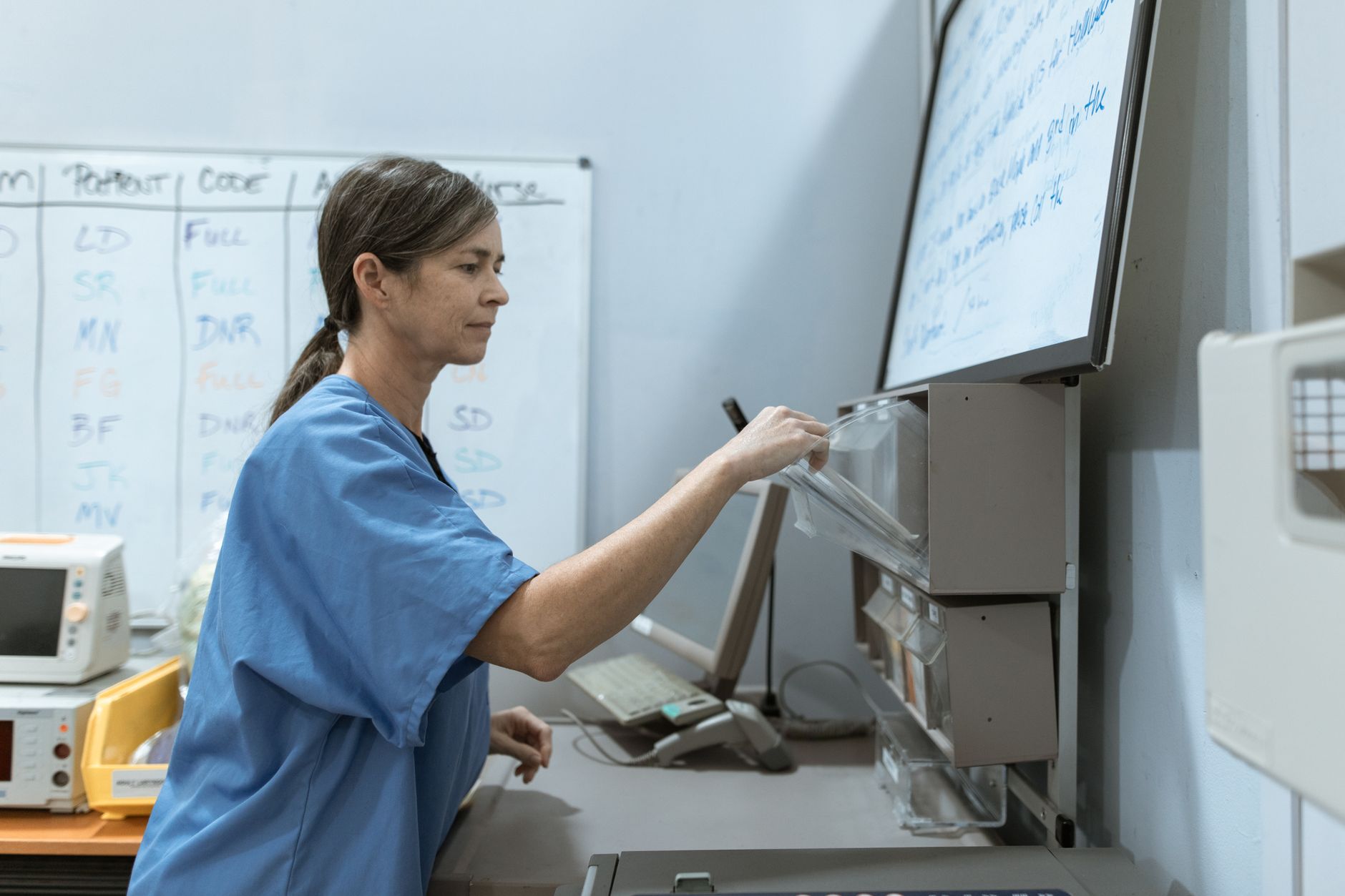
an intensive care unit at a hospital in Taiwan
Less Walking, More Bedside Time: An ICU Delivery Robot Case Study From Taiwan
An ICU at a Taiwan hospital moved nurse transport runs to a delivery robot program, and daily logistics time fell from 111.34 to 20.43 minutes.
Deployment at a glance
- 81.6%
- Drop in nurses' daily active logistics time
- 20.43 min
- Daily nurse logistics time, down from 111.34 minutes
- 1,505 m
- Less nurse walking distance each day
- NT$2,984
- Cost per nursing hour saved, above prevailing wages
Based on a documented real-world deployment. Figures are from public reporting; the organization is not named.

Nurses Carrying the Hallway Load
Much of an intensive care nurse's shift is spent close to the bed, watching monitors, adjusting care and responding to alarms. Yet transport work pulls clinicians away from that bedside work again and again, down corridors and back.
Before the change, nurses' active logistics time stood at 111.34 minutes a day, and walking added to that load. Each run was time away from patients, and the hallway trips were rarely budgeted for in staffing plans.
A Zone Based Robot Setup on the Unit
The hospital introduced an automated delivery robot program and set it up by zone, so the robot's transport work was organized around defined areas of the unit. Nurses handed routine runs over to the robot and kept their attention on the patients in their care.
The result was measured against nurses' own logistics time before and after the program, which makes the change easy to read for any unit manager.
- Move routine transport runs from nurses to the delivery robot
- Organize the robot's work into zones across the unit
- Measure nurse logistics time before and after the change
- Keep nurses focused on patient care at the bedside
Logistics Time and Walking Both Fell
Nurses' daily active logistics time dropped from 111.34 to 20.43 minutes, an 81.6 percent reduction. That leaves roughly 91 minutes a day that no longer went to transport work.
Daily walking distance fell by 1,505 meters. The drop in steps and the drop in logistics minutes point the same way, which suggests the robot took over real trips instead of adding a new chore.
Cost was part of the picture too. The incremental cost per nursing hour saved came to NT$2,984, above prevailing wages, though the costing suggested that redirecting that time to patient care may still be worthwhile. The annualized program cost was NT$1.65 million from the hospital's side, modeled over a seven year equipment life.
What This Means for a US Care Operator

Service Robot Co. is an OEM neutral commercial robot integrator for US businesses. We select the right robots across manufacturers, then finance, deploy, integrate, train and service each unit through a nationwide US engineer network, so one partner handles the whole lifecycle. Customers get their robot through a three year lease, with one fixed quote after a site assessment.
This case is a documented real world deployment that we analyze. It is not one of our installations, and we did not run it. For a hospital, care home or other healthcare operator weighing a hospital delivery robot lease, the useful lesson is the workflow: map the transport runs, set the robot's work by zone, and measure staff time before and after go live support. Robot lease options and on-site dispatch follow from that first assessment.
Frequently asked questions
Want a robot working for you?
Tell us the job and the site. We will recommend the robot, quote the lease, and keep it serviced.