
The short answer
An autonomous forklift makes sense in a cabinet plant when pallet moves repeat on fixed routes between the saw, assembly, finishing and staging areas, since a robot can run that work the same way every shift. It does not make sense where the layout changes often, where loads are irregular or oversized, or where moves need a judgment call at every step. For most plants the real answer to autonomous forklift vs forklift operator is a team: the robot takes the scheduled routes, and a smaller operator crew keeps the dock, the exceptions and the staging yard, never zero staff.
Key takeaways
- Repeatable pallet routes between saw, assembly, finishing and staging are the strongest case for a robot.
- Trailer unloading, mixed loads and exceptions stay with trained operators.
- Operator work is a slow-growing occupation, so replacing leavers is the real staffing task.
- Sector turnover averages are a starting point; your own shift logs set the numbers that decide.
- Plan for a robot plus fewer staff, and start with one route before adding more.
Autonomous forklift vs forklift operator: when does the robot make sense?
In a cabinet plant, most of the pallet traffic that matters is repetitive. Panels and boxes leave the saw line, move to assembly, pass through finishing, and wait in a staging area for the dock. When those moves follow the same paths many times a shift, the question of autonomous forklift vs forklift operator is mostly a question about route repeatability.
A robot makes sense when the routes repeat, the floor layout stays put for months, pallets arrive in known sizes, and the trucks would otherwise sit idle between runs. It makes less sense when aisles move every few weeks, when loads are oddly shaped or oversized, or when moves are short and scattered and each one needs a person to decide where the load goes.
Judge the job by its routes rather than its title. A robot is well suited to a fixed set of paths between known stations. A person is better when the work is mostly exceptions, the job changes by the hour, or the dock needs someone to manage trailers and paperwork.
What does a forklift operator actually do in a cabinet plant shift?
The operator job is rarely one job. In most cabinet plants it mixes repeated pallet transfers with unloading lumber and panels, feeding saw and assembly stations, moving finished work to staging for the dock, and shifting packaging and consumables. Much of that work follows the production schedule, so the operator's day moves with line output.
The Bureau of Labor Statistics reports that most material moving machine operators train on the job in under a month. That makes the role easier to fill, but it also means a lot of floor knowledge sits with a few people. When an experienced operator leaves, the plant loses track of which routes stall, which lanes get blocked, and which pallets need a second look before they reach a saw.
A shift also holds work a route plan does not show: checking a load for damage, clearing a blocked lane, answering a supervisor who needs a rush move, and flagging a bad pallet before it moves further. Operators also watch for people walking through aisles. Those judgment tasks are where a person still adds the most value.
Which pallet moves can an autonomous forklift take, and which can it not?
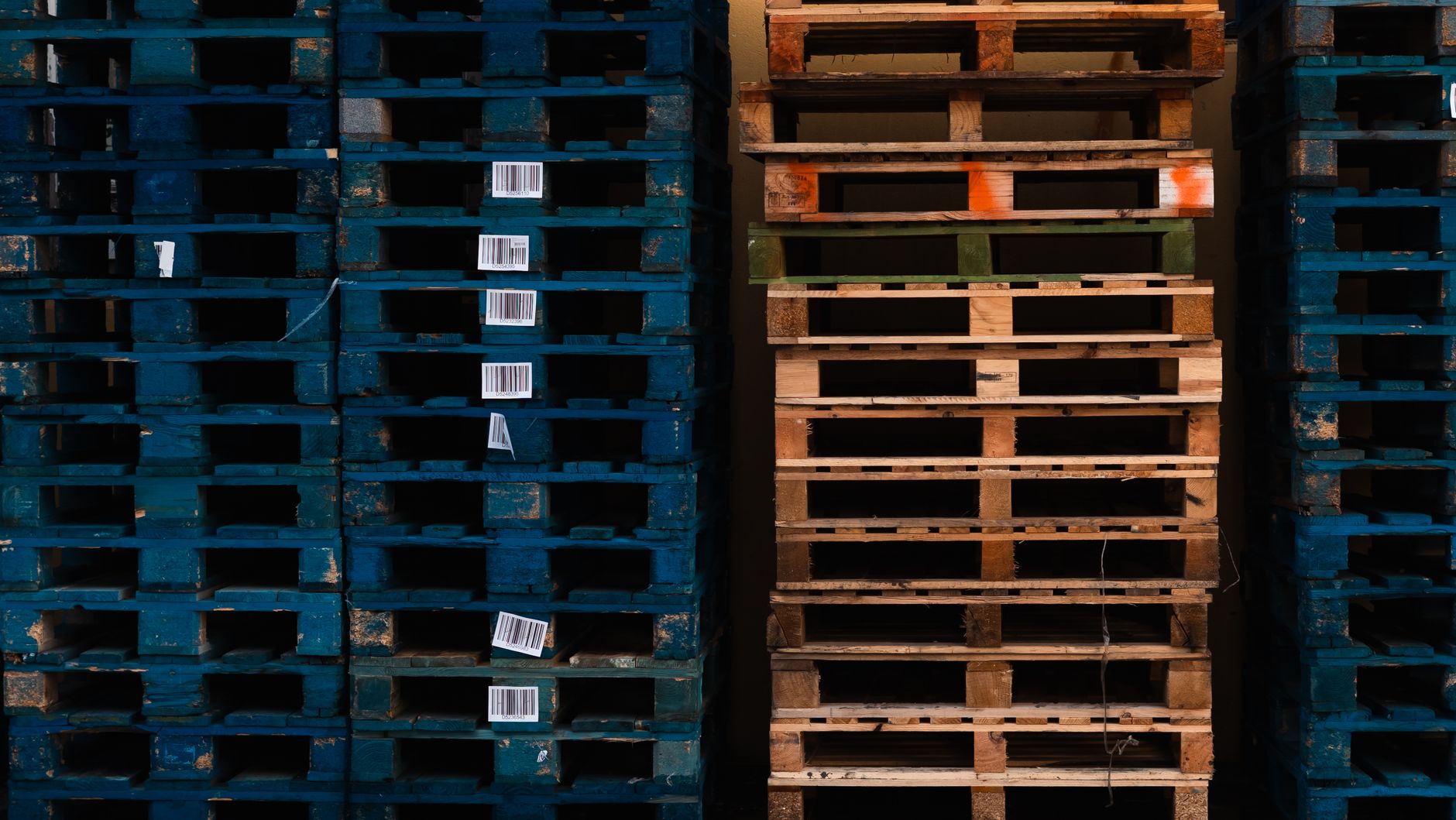
The strongest candidates are scheduled, repeatable moves. Examples include finished or semi-finished pallets carried from a fixed production cell to the staging area, empty pallets returned to the start of a line, and the same route run several times a shift. These moves follow mapped paths and can be repeated the same way every time.
Moves that usually stay with people include unloading inbound trailers and mixed lumber, handling loads that are oversized, shifted or damaged, working a staging yard where carts and vehicles come and go, and any move that needs a decision about where a load goes next.
Expect the first deployment to cover one or two repeatable routes, not the whole floor. The dividing line between the two groups will move as the team learns how the robot handles real pallet conditions on your floor.
- Saw line to assembly staging runs on a fixed schedule
- Assembly to finishing transfers between set stations
- Finished pallets from finishing to the staging area
- Empty pallet returns to the start of a line
- Repeat route consistency
Autonomous Forklift
Runs the same mapped path each time
Forklift Operator
Varies with workload and fatigue, but adapts on the spot
- Damaged or leaning load
Autonomous Forklift
Stops or routes around it, does not judge safety
Forklift Operator
Decides whether the load is safe to move
- Shift coverage
Autonomous Forklift
Runs scheduled routes across shifts once set up
Forklift Operator
Limited by shift patterns, breaks and absences
- Layout change
Autonomous Forklift
Needs remapping when aisles move
Forklift Operator
Adjusts routes without a remap
- Trailer and mixed-load work
Autonomous Forklift
Not its strength
Forklift Operator
Handles it as part of the job
- Time to productive
Autonomous Forklift
Setup and staff briefing before go-live
Forklift Operator
Most operators learn on the job in under a month, per BLS
What do staffing and turnover figures say about forklift work?
According to the Bureau of Labor Statistics Occupational Outlook Handbook, material moving machine operators held about 867,700 jobs in 2024, and 792,500 of those were industrial truck and tractor operators. Warehousing and storage was the largest employer, at 36%, and projected growth is 1% from 2024 to 2034, which the handbook describes as slower than average.
A slow-growing occupation means staffing is mostly about replacing people who leave, not adding seats. Establishment counts for the cabinet sector are small. A third-party profile of Census County Business Patterns 2023 data for NAICS 337110, wood kitchen cabinet and countertop manufacturing, lists about 6,055 establishments and about 100,225 employees. Another directory, naics.com, lists 15,246 US business entities for the same code, which points to a separate counting basis, so match whichever count you use to how your plant is counted.
For turnover, a staffing firm's summary of BLS JOLTS data reports that manufacturing separations ran at 2.4% a month in 2025 on average, with quits at 1.4%. Those are sector averages, not cabinet plant figures. Overtime, absence and night shift numbers should come from your own timekeeping records, because we did not find published figures for those at cabinet plants that we could verify for this page.
How do forklift safety records and robot adoption figures frame the decision?
An OSHA enforcement directive on powered industrial trucks states that about 1.5 million workers operate more than 855,900 powered industrial trucks, with roughly 85 forklift fatalities and 34,900 serious injuries a year. The directive's date was not visible in the excerpt we reviewed, so treat those as commonly cited annual figures rather than a fresh count. A Bureau of Labor Statistics fact sheet, as summarized in our search, reports 75 to 94 forklift-related worker deaths a year from 2011 to 2017.
Counts depend on method. The National Safety Council notes that the forklift label describes the source of an injury rather than the event, so the same death can be counted under several event categories. Totals from one source will not match another, which is why the safety review for your plant should start with your own injury log.
On the adoption side, preliminary figures from the International Federation of Robotics, released in June 2026, show US industrial robot installations rose 11% in 2025 to about 38,000 units. Automotive took about 13,500 units, down about 1%, while food processing grew 30% to about 3,000 units. Robot density reached 307 units per 10,000 manufacturing workers, eighth globally. The federation calls it a rebound rather than a record.
How does a team work with an autonomous forklift on the same floor?
The working model is a robot plus fewer staff, never zero staff. The robot takes the scheduled pallet routes, and the operators you keep move to the work that changes from hour to hour: trailers, mixed loads, exceptions and the staging yard. Plants that try to run with no one on the truck work tend to lose the person who knows what to do when a route breaks.
Supervisors need clear rules for who clears a blocked route, who approves a manual move on a robot route, and who answers a fault alert. Operators need training on how the robot signals its intent, how to stop it, and where it is not allowed to go. That training is focused and should be finished before the first live shift.
Expect a changed schedule rather than a headcount cut on day one. Staff who used to run repeat moves shift into exception handling, dock work and checking loads before they reach a saw. The same people can run those moves by hand when the robot is out of service, which keeps the floor moving during a fault.

What can an autonomous forklift not do in a cabinet plant?
It cannot make judgment calls about loads. If a pallet is leaning, a panel stack is out of square, or a wrap is torn, a person has to decide whether it is safe to move. A robot follows its route and stops for obstacles, but it does not replace an experienced operator's eye.
It cannot handle every floor condition. Wet concrete, uneven transitions between the saw room and assembly, a spill, or a dropped panel can stop a route until someone clears it. Plants with frequent layout changes, temporary staging or many hand-carried loads will keep more manual work.
It also cannot make the floor safer by itself. Forklift risk comes from the mix of people, trucks and loads, so the site plan has to set walkway separation, lighting, signage and traffic rules. A robot that moves through aisles with people walking through them needs the same zones and rules as any other powered vehicle.
How do you start an autonomous forklift lease and deployment?
Start with a site assessment. We map the routes between saw, assembly, finishing and staging, count pallets by route per shift, measure aisle widths and clearances, and note where loads are irregular. We then recommend the route set that fits, which may be one or two routes in a first phase.
As a US commercial robot integrator, we pick the robot for the site, lease it through financing, and deploy and integrate it with your floor and systems. The lease payment is quoted after a free site assessment, so there is no figure to guess at before the route data is in front of you. We train the staff who will work beside the robot and service it nationwide, with on-site dispatch and remote triage when a fault comes up.
Use a phased start. Begin with one leased unit on one repeatable route, run it through a full set of shifts, then decide on the next route. Keep operators on the team through the pilot so you can see what the robot covers and where people are still needed.
Frequently asked questions
Want an autonomous forklift at your cabinet manufacturing plant?
Tell us about your site. We will recommend the robot, quote the lease, and keep it serviced.
Sources
- Bureau of Labor Statistics, Occupational Outlook Handbook: Material Moving Machine Operators
- Vanta Insights, NAICS 337110 industry profile (citing Census County Business Patterns 2023)
- NAICS.com, NAICS 337110 code description
- Apollo Technical, manufacturing turnover summary (citing BLS JOLTS)
- OSHA enforcement directive on powered industrial trucks
- Bureau of Labor Statistics, fatal occupational injuries involving forklifts fact sheet
- National Safety Council, forklifts injury facts
- International Federation of Robotics, US robot industry preliminary figures (via BusinessWire)