
The short answer
Autonomous forklift vs forklift operator in Greenville, SC comes down to how predictable the moves are. A robot makes sense when the work is repetitive, the lanes stay fixed and the volume keeps the truck busy across shifts, while a trained operator remains the better choice for varied loads, yard work and layouts that change often. The strongest setup in most cases is a robot on the predictable lanes with fewer staff, never zero staff.
Key takeaways
- A robot fits repetitive, fixed-lane pallet moves, not the whole forklift job.
- The Bureau of Labor Statistics projects 384,300 openings a year nationally for this occupation, so staffing churn is a real planning issue.
- Warehousing and storage recorded 4.9 total recordable cases per 100 full-time workers in 2024, according to the BLS table we retrieved.
- Overtime, night shift and sick-day figures must come from your own records before you decide.
- Plan for a robot plus fewer staff, with a trained operator able to cover a stopped lane.
Autonomous forklift vs forklift operator in Greenville, SC: which makes sense?
The answer depends on how predictable the moves are. A robot makes sense when a share of the forklift work is repetitive, the lanes stay fixed and the volume keeps the truck busy across the shift. It fits poorly when loads vary widely, when much of the work happens in a yard, or when racking and floor layout change every few weeks. In those cases a trained forklift operator is the better choice.
Most Greenville sites land in the middle. The useful exercise is to split forklift hours into predictable lanes and everything else, then decide whether the predictable part is large enough to justify a leased unit. A robot can take the long, repeated runs while people keep the exceptions, the dock work and the judgment calls. The local wage for this job appears in the government wage data panel next to this text, but the hours lost to unfilled shifts and overtime often matter more, and only your own records show those.
What does a forklift operator actually do in a shift?
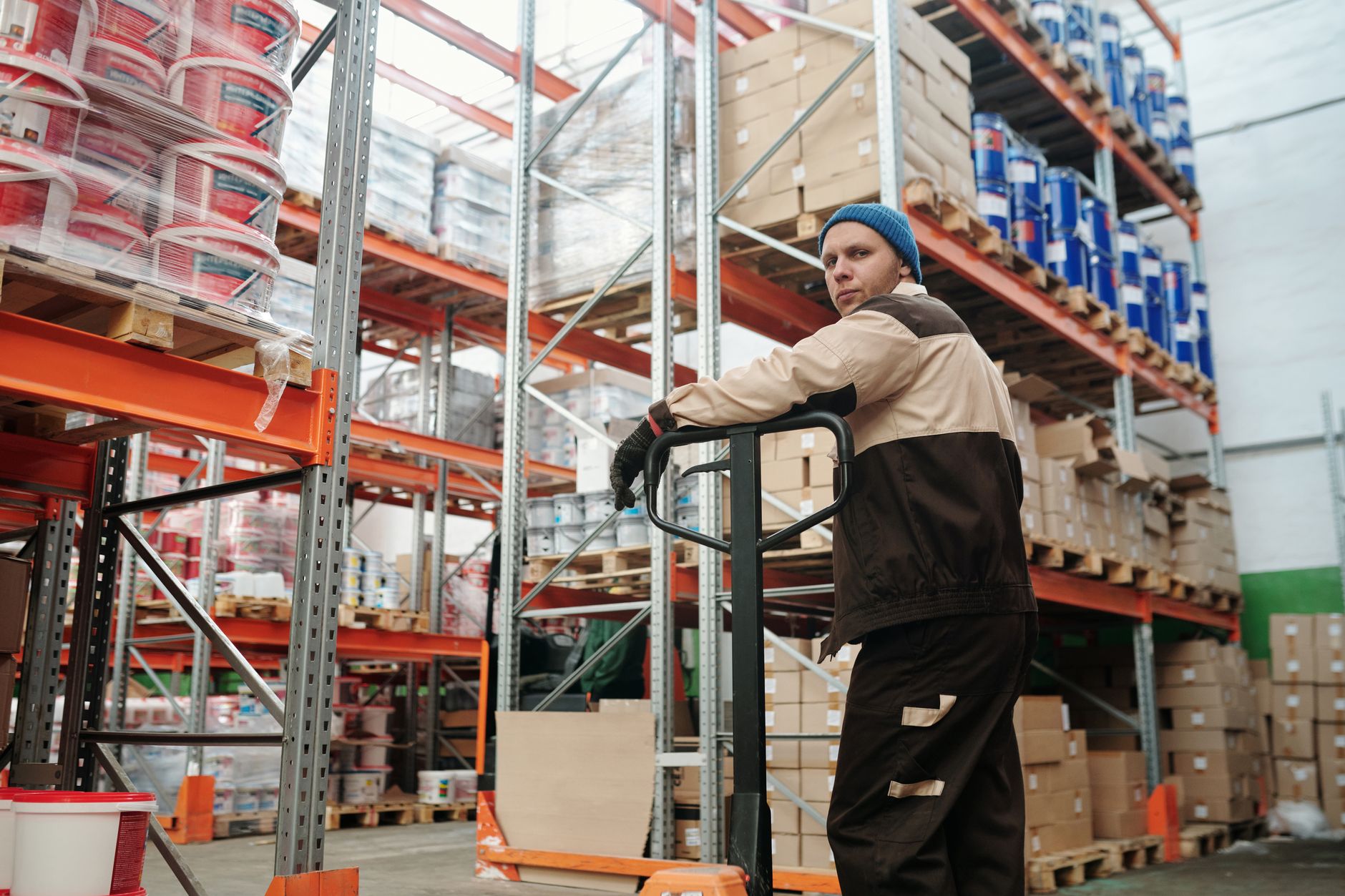
A forklift operator in a warehouse or distribution setting does more than drive. The shift usually includes receiving pallets from inbound trucks, putting them away into racks, pulling orders for outbound loads, moving product between staging areas and loading or unloading trailers at the dock. Each move involves picking up, placing and checking a load, and that checking is where an experienced person adds the most value.
The Bureau of Labor Statistics groups these jobs under material moving machine operators. According to its Occupational Outlook Handbook, that group held about 867,700 jobs in 2024, and industrial truck and tractor operators made up 792,500 of them. Warehousing and storage held 36 percent of the group's employment, and wholesale trade held 12 percent, so the work clusters in logistics rather than in general manufacturing.
The same source projects 1 percent employment growth for the group from 2024 to 2034, with about 83,200 openings a year that are mostly from replacement. Much of the hiring for this work therefore means replacing people who leave, not adding positions.
Median hourly wage, Laborers and Freight, Stock, and Material Movers, Hand
$4,228
Monthly cost of one full-time worker in Greenville, SC, at the median wage plus payroll costs (an estimate, not a quote).
Which parts of a forklift job can a robot take, and which can't it?
A robot does best on a fixed, mapped route with a consistent load, a consistent drop point and a floor that stays clear. Long putaway runs from staging to the same racks, and repeated moves between two fixed docks, are the typical candidates. Each run is a predictable sequence, which is exactly what the vehicle needs.
The robot cannot take the parts of the job that depend on judgment. It does not decide what to do with a damaged or oddly shaped load, sort mixed freight on a trailer, work around a blocked aisle, or run a yard with uneven ground and changing traffic. Dock coordination with drivers and supervisors stays with people. So does recovery after a fault, because someone has to clear the path and restart the unit.
The practical split is the robot on the repetitive lane and the operator on everything else. The comparison below sets the two side by side, including where the person clearly wins.
- Shift coverage
Autonomous Forklift
Runs a mapped lane on a schedule, including overnight when the site has monitoring
Forklift Operator
Adapts within a shift and handles changes of plan without reprogramming
- Unusual or damaged loads
Autonomous Forklift
Limited to loads within its programmed profile and stops for exceptions
Forklift Operator
Judges a damaged or odd load and decides how to move it safely
- Yard and uneven ground
Autonomous Forklift
Poor fit on uneven or changing surfaces unless mapped and maintained
Forklift Operator
Handles yard work and uneven ground as routine
- Consistency on fixed lanes
Autonomous Forklift
Same route, same speed and same stop points on every run
Forklift Operator
Consistent on most runs but affected by fatigue, breaks and distraction
- Staffing and turnover
Autonomous Forklift
Removes the lane from the hiring queue, but staff must learn to work around it
Forklift Operator
Requires hiring, training and replacement whenever someone leaves
- Layout changes
Autonomous Forklift
Needs remapping before the lane runs again
Forklift Operator
Adjusts to a new layout on the day it changes
How many people hold this job, and how many openings come up?
According to the Bureau of Labor Statistics Occupational Outlook Handbook, hand laborers and material movers held 7,105,700 jobs in 2023, and the group is projected to add 283,200 jobs from 2023 to 2033. The same page projects 4 percent growth from 2024 to 2034, about as fast as average, and 384,300 openings a year for the detailed occupation Laborers and Freight, Stock, and Material Movers, Hand.
The South Carolina Department of Employment and Workforce community profile for the Greenville metro lists 174 top occupational openings for this occupation in its 2024 second quarter reference period. Openings count vacancies that come up, not the number of people in the job, and we did not verify a local headcount for the occupation in this review.
The local wage for this job is shown in the government wage data panel next to this text. Read it alongside the openings figure, because a wage that looks competitive can still leave shifts unfilled when openings are frequent. According to the Federal Reserve Bank of St. Louis, total nonfarm employment in the Greenville metro was about 480.1 thousand in December 2025, not seasonally adjusted, which gives forklift jobs a labor market to compete in.
How high is turnover and injury risk for forklift work?
We did not find a measured government turnover rate for forklift operators in the Greenville metro in this review. Industry commentary often describes high annual turnover in this work, but without a measured rate we do not publish one. Treat your own separation records as the planning number.
On injuries, the Bureau of Labor Statistics table for warehousing and storage reports 4.9 total recordable cases per 100 full-time workers in 2024. That rate covers all injuries in the industry, not forklift injuries alone, so it sets the context rather than the forklift risk. A forklift-specific rate was not verified in this review.
Injury risk shapes the decision in one practical way. Where a fixed lane separates robot traffic from people, the lane design, markings and stop behavior become the controls to check. Where the lane mixes with pedestrians and manual trucks, the risk stays with the people, and the robot adds one more moving object to manage.
What do overtime, night shifts and sick days look like?
We did not verify overtime rates, night shift share, sick day rates or shift length for forklift operators in the Greenville metro. These figures vary by site, and they are the numbers that most change the case. Pull the last twelve months of timekeeping records for forklift lanes before you decide.
A robot does not reduce headcount on its own. Its value appears on the lanes it covers: fewer unfilled shifts, less overtime to cover them and fewer rushed shifts during peak volume. Where turnover is high, each departure also costs training time, which only your own HR records can measure.
Night shifts deserve a separate look. An unmanned lane overnight needs monitoring, a stop-and-recover plan and a person who can respond. Confirm that coverage exists before you count overnight hours as saved.
How does a team work with an autonomous forklift?
The workable model is a robot plus fewer staff, never zero staff. The robot runs the repetitive lane. People handle exceptions, dock coordination, damaged loads, yard moves and recovery after a stop. Staff also keep the lane clear and supervise the fleet, so a unit does not sit idle waiting for someone to notice.
We pick the unit for the site, lease it through financing, deploy and integrate it, train the staff who will work around it and service it nationwide. Training covers the lane map, what the unit does when it stops, how to clear a fault safely and when to call for service. Operators who understand the robot's behavior are better prepared to work around it safely than operators who have never been shown how it behaves.
What can an autonomous forklift not do?
An autonomous forklift does not supply the judgment a good operator brings. It struggles with work outside its mapped area, with loads that do not match its programmed profile, and with floors that change from day to day. It cannot fix a bad layout. If pallets are placed inconsistently or aisles are blocked, the unit slows down, stops or needs a person.
Expect a human on the floor during changeovers, after racking changes and during peak volume. Keep a plan for a stopped unit, including which trained operator takes over that lane. That plan for exceptions decides whether the project works more than the rated capacity of the vehicle does.
How do we get started in Greenville, SC?
Start with a free site assessment. We map the lanes, count the predictable moves, separate them from exceptions and check the layout and floor condition. The lease is quoted after that assessment, so the terms reflect your building and your volume rather than a generic plan.
A phased start usually beats a full conversion. One leased unit on one repetitive lane tests the assumptions while your operators cover everything else. If that lane runs reliably, you can decide whether to add units. Plan for mapping updates and periodic checks, because performance depends on floor condition and layout.
- Free site assessment and lane mapping
- Lease quote based on that assessment
- Deployment, integration and staff training
- Nationwide service after go-live
Frequently asked questions
Put a robot to work in Greenville.
We walk your site, learn the job, and recommend the unit that fits. Then we quote the lease, deploy it, and keep it serviced.
Sources
- US Bureau of Labor Statistics, Occupational Employment and Wage Statistics (OEWS May 2024)
- BLS Occupational Outlook Handbook: Hand Laborers and Material Movers
- BLS Occupational Outlook Handbook: Material Moving Machine Operators
- SC Department of Employment and Workforce: Greenville MSA Community Profile
- Federal Reserve Bank of St. Louis (FRED): Greenville Total Nonfarm Employment
- BLS Industry at a Glance: Warehousing and Storage (NAICS 493)
- BLS Occupational Employment and Wages: Greenville-Anderson-Greer, SC (May 2024)