
The short answer
For most sites, the autonomous forklift vs forklift operator in Houston decision comes down to repeatability. An autonomous forklift makes sense when pallet moves follow fixed routes across long or night shifts, while a forklift operator still fits better for mixed trailer unloading, yard work, and layouts that change often. In most cases the answer is a robot plus fewer staff, not a robot in place of the crew.
Key takeaways
- An autonomous forklift fits repeatable pallet routes, and an operator fits variable work.
- Night and weekend coverage is where a robot most often earns its place.
- Turnover, absences and overtime are real labor costs that a robot does not remove on its own.
- Forklift incidents remain serious in the US, so any deployment starts with a traffic and pedestrian safety review.
- Plan for a robot plus fewer staff, never zero staff.
Autonomous forklift vs forklift operator in Houston: which makes sense?
The short version is that an autonomous forklift earns its place when the work is repetitive and the routes stay put. A Houston distribution or manufacturing site that moves the same pallets between the same docks, racks and staging lanes every shift is the clearest case. The same site with a different floor plan every month, or with a steady stream of mixed trailers to unload, is where a person still does the job better.
The decision depends less on what the robot can do and more on how predictable the day is. Ask what share of pallet moves follow a fixed path, how often the layout changes, and how many hours the site covers with operators today, including nights and weekends. Those answers show whether a robot fills a real gap or just adds a machine that someone must manage.
A robot does not remove the need for people. It changes what those people spend their shift on, and that is the framing that holds up for most of the sites we assess.
What does a forklift operator actually do in a shift in Houston?
A forklift operator's shift is rarely just driving between two points. Most of it is pallet handling: receiving a trailer, putting pallets into reserve racking, picking pallets for outbound orders, moving staged loads to dock doors, and fetching product from locations a picker cannot reach. Operators also complete pre-shift equipment checks, charge or refuel their trucks, and report damage or leaks.
A large share of the time goes to travel and waiting. An operator waits on a dock door, on a trailer that is not yet unloaded, or on a pick list that another team is still building. Those gaps are real labor, and they are also where the robot's schedule and the operator's schedule stop matching.
Local labor is part of the picture. The government wage data on this page gives the local wage for this job in Houston. A third-party summary citing 2024 BLS OEWS data reports about 52,970 people in this occupation in the Houston-Pasadena-The Woodlands metro, but we could not check that figure against the BLS table. The government wage category on this page covers hand laborers and material movers, which is close to but not the same as a forklift operator title, so check your own operator rates against it as well.
Median hourly wage, Laborers and Freight, Stock, and Material Movers, Hand
$4,231
Monthly cost of one full-time worker in Houston, TX, at the median wage plus payroll costs (an estimate, not a quote).
- Night coverage
Autonomous Forklift
Runs a mapped route through the night without breaks
Forklift Operator
Needs a shift to be staffed, paid and rested
- Trailer unloading
Autonomous Forklift
Not a fit for mixed or disordered trailers
Forklift Operator
Handles mixed loads and adjusts to what arrives
- Fixed route consistency
Autonomous Forklift
Same path and pace on every cycle
Forklift Operator
Pace varies with fatigue and workload
- Layout changes
Autonomous Forklift
Needs re-mapping before a new layout works
Forklift Operator
Adapts the same day without setup
- Damage and safety calls
Autonomous Forklift
Stops and alerts, but does not judge a damaged load
Forklift Operator
Judges a damaged load and decides whether to move it
- Absence and turnover
Autonomous Forklift
Does not call in sick, but still needs staff for exceptions
Forklift Operator
Absence and turnover bring training and overtime
Which parts of the forklift job can an autonomous forklift take, and which can't it?
An autonomous forklift is best at the moves that repeat: carrying pallets along a mapped route from a dock to racking, from racking to a staging lane, or between two fixed points on a predictable cycle. It does not tire, it follows the same path each time, and it can keep moving through an off-peak night when a site would otherwise run fewer trucks.
Judgment work is where it falls short. Unloading a mixed trailer where pallets arrive in no order, inspecting a damaged load, deciding that a pallet is unsafe to move, or handling a pallet the system did not anticipate all need a person. Yard work outside a mapped area, and frequent changes to racking or aisles, also stay with staff until the map is updated.
- Usually suited: scheduled pallet moves between mapped locations
- Usually suited: dock staging to racking on a fixed route
- Usually suited: overnight replenishment runs and repeated outbound moves
- Stays with staff: trailer unloading and load checks
- Stays with staff: damaged loads and safety decisions
- Stays with staff: yard work and areas outside the map
- Stays with staff: exception handling and re-mapping after layout changes
How many hours and how much labor does this job take in Houston?
Labor on a forklift shift is shaped by three things that a robot changes unevenly: how many hours the site must cover, how often people leave, and how much unplanned absence the site absorbs. The hour figures for any one building depend on its route count and pallet volume, which the site assessment measures directly.
Turnover is the pressure cited most often. A vendor blog attributes a warehouse turnover rate near 49 percent to 2023 BLS data, but we could not verify that figure against the BLS table, so read it as a sign of high churn in warehousing rather than a Houston count. Each new operator needs training and supervision, which is paid labor that moves little product in the first weeks.
Houston's broader transportation, warehousing and utilities employment stood at 205.7 thousand in December 2025, up from 203.7 thousand in November 2025, according to FRED, which publishes BLS data. That category is wider than warehousing alone, so use it to read the direction of hiring in the local market, not as a count of forklift jobs.
Overtime, night shifts and sick days are the decision points. A site that covers nights with operators pays for that coverage every night, and a single absence can push work into overtime or leave a dock idle. A robot running a fixed night route does not call in sick, but it cannot clear a jam on its own, so the staff on shift must be sized for exceptions.
What do forklift injury and incident numbers say?
Forklift work carries serious risk, and the figures explain why any deployment starts with traffic and pedestrian safety. The National Safety Council, citing BLS data, reports forklift, order picker or powered platform truck incident deaths of 67 in 2023 and 84 in 2024. A parts supplier citing OSHA data reports 97 forklift deaths in the US in 2024. The gap is likely a difference in definitions, so compare figures within one source rather than across them.
Injury counts are also high. A secondary summary of OSHA estimates puts serious forklift injuries at about 34,900 a year and forklift deaths at about 85. Those are estimates passed through a third party, so cite them as estimates rather than counts.
Federal rules on powered trucks are a daily reference point. OSHA's powered industrial trucks standard, 1910.178, received 1,949 citations in FY2018, making it the seventh most cited standard that year. The standard covers operator training and truck condition, so a robot deployment still needs written procedures, inspections and clear separation from pedestrians.
National context matters too. BLS reports 5,070 fatal work injuries in 2024, down 4.0 percent from 5,283 in 2023. BLS changed its injury classification starting with 2023 data, so trend comparisons across that break need care.
How does a team work with an autonomous forklift?
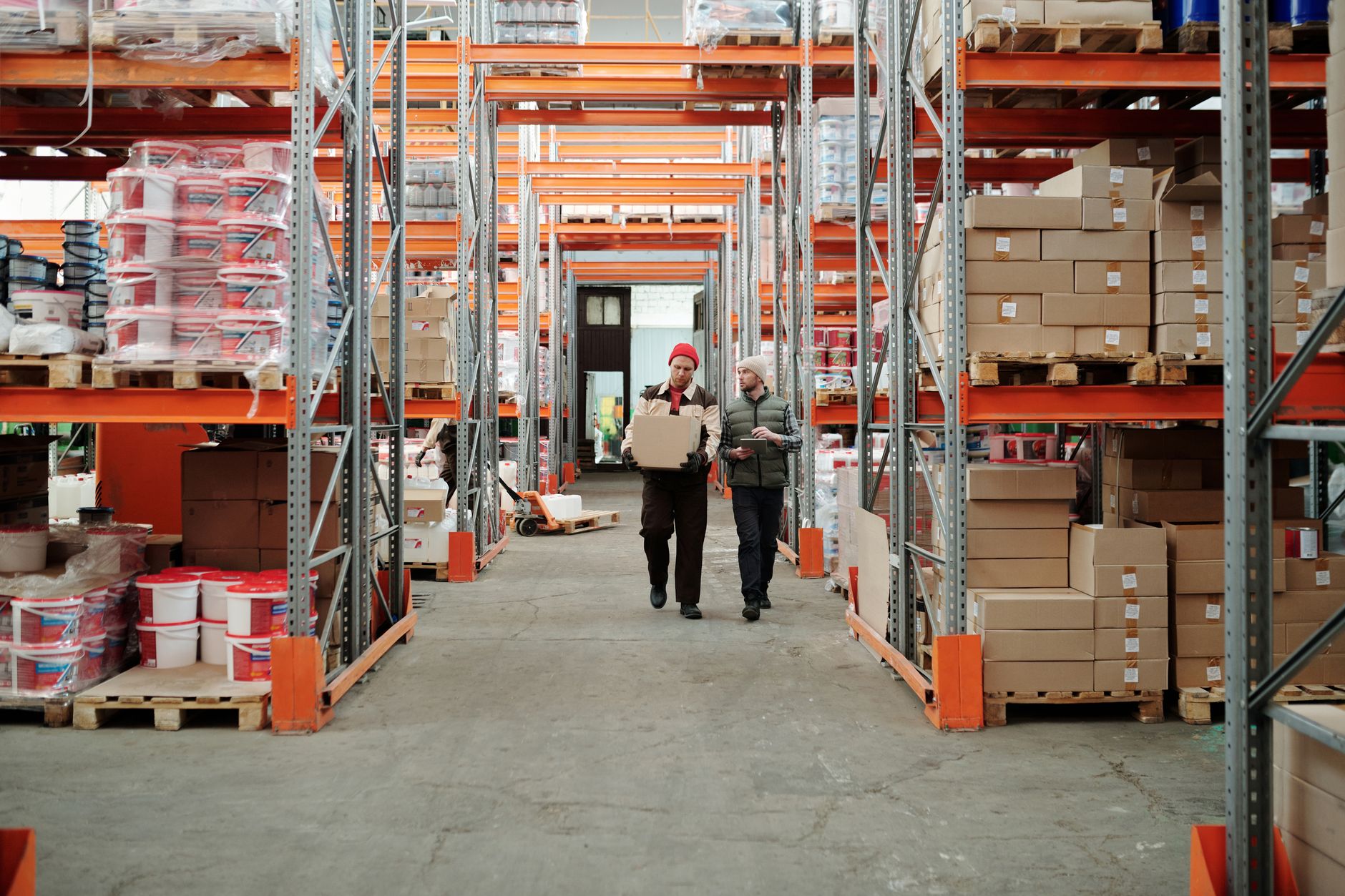
The working model is a robot plus fewer staff, not a robot in place of the crew. The robot takes the repeatable moves, and people handle trailers, exceptions, yard work and maintenance decisions. Staff who used to drive every move spend more of the shift on the work that needs judgment.
Our integration team maps the site, sets routes and charging points, and trains staff on how to clear a blocked path, respond to alerts and report problems. We lease the units through financing, deploy and integrate them, and service them nationwide. The lease is quoted after a free site assessment, and training happens before go-live so supervisors know who handles what at every hour of the shift.
What can an autonomous forklift not do?
It cannot unload an unknown trailer, judge a damaged pallet, or drive through an area nobody mapped. It does not repair itself, and when a route is blocked it stops and waits for a person. Those limits belong in the written plan rather than being discovered on a busy night.
It also depends on the floor and the charging plan. Floor condition, clear aisles, consistent pallet sizes and charging access all shape how much work a unit completes. When charging areas and battery placement are planned, raise Houston's heat and humidity with the integrator, since operating conditions affect uptime.
Severe weather can also interrupt a site, so the staffing plan needs a fallback for any day when the building or a dock is out of service.
What changes the answer, and what should you check before deciding?
The answer shifts with a small set of facts about your site. Check these before you request a lease quote, and bring the numbers to the site assessment.
Compare the robot option against the full cost of covering the same shifts with operators, including overtime, absences and turnover, rather than against a single hourly rate. The government wage data on this page is the starting point for local labor cost, but it is only one line in that comparison.
How do you get started with an autonomous forklift in Houston?
Start with a free site assessment. We map the routes, observe the pallet moves per shift, identify blocked or unsafe zones, and review the traffic plan with your safety lead. The output is a deployment plan and a lease quote through financing.
Many sites begin with one leased unit on the most repeatable route, run it through a pilot program, and then decide whether to add units. A backup plan matters from day one: keep operators trained and assigned so a robot stop never leaves a dock idle. Go-live support covers the first shifts, including the night shift, which is when problems tend to show up.
Frequently asked questions
Put a robot to work in Houston.
We walk your site, learn the job, and recommend the unit that fits. Then we quote the lease, deploy it, and keep it serviced.
Sources
- US Bureau of Labor Statistics, Occupational Employment and Wage Statistics (OEWS May 2024)
- National Safety Council, forklift safety topic page
- BLS fatal work injuries 2024 press release (archived mirror)
- OSHA directive on powered industrial trucks, FY2018
- FRED, Houston transportation, warehousing and utilities employment
- DC Velocity, forklift accidents claimed 97 lives in 2024
- Voxel AI, forklift accident statistics
- Alexander Jarvis, warehouse turnover rate article
- City Stats, Houston jobs for laborers and freight, stock and material movers, hand