
The short answer
For autonomous forklift vs forklift operator in Knoxville, a robot makes sense when pallet moves are frequent, repeatable and run on a mapped route, such as steady receiving-to-racking and dock-to-dock transfers. It does not make sense as a full replacement, because a person still handles damaged loads, unusual pallets and tasks that change from shift to shift. The practical choice is a smaller operator team plus one or more leased units, not zero staff.
Key takeaways
- An autonomous forklift fits repeatable, mapped pallet moves, while an operator still handles exceptions and changing work.
- Warehousing injury rates are high enough that separating people from vehicle travel paths deserves a formal review.
- Turnover figures vary widely across the sources we reviewed, so measure your own shift turnover before deciding.
- Start with a site assessment and a single-route pilot before committing to a larger fleet.
Autonomous forklift vs forklift operator in Knoxville, TN: when does a robot make sense?
The short version of autonomous forklift vs forklift operator in Knoxville is that a robot earns its place on predictable work. If your dock runs steady moves between receiving, staging and racking, along the same routes, with standard pallets, an autonomous forklift can run those moves while people handle the rest. If your work is mostly one-off moves, damaged stock or changing layouts, an operator is still the better fit.
Most sites end up with a mix. According to GlobeSt, a March 2026 article, full warehouse automation remains at about 3 to 5 percent of warehouses, so the technology is still early for most operations. The useful question is not whether a robot can drive a forklift but which share of your operator hours is repetitive. Measure that share before any lease discussion, because it sets how many units you need and how many people stay on the floor.
What does a forklift operator actually do in a shift?
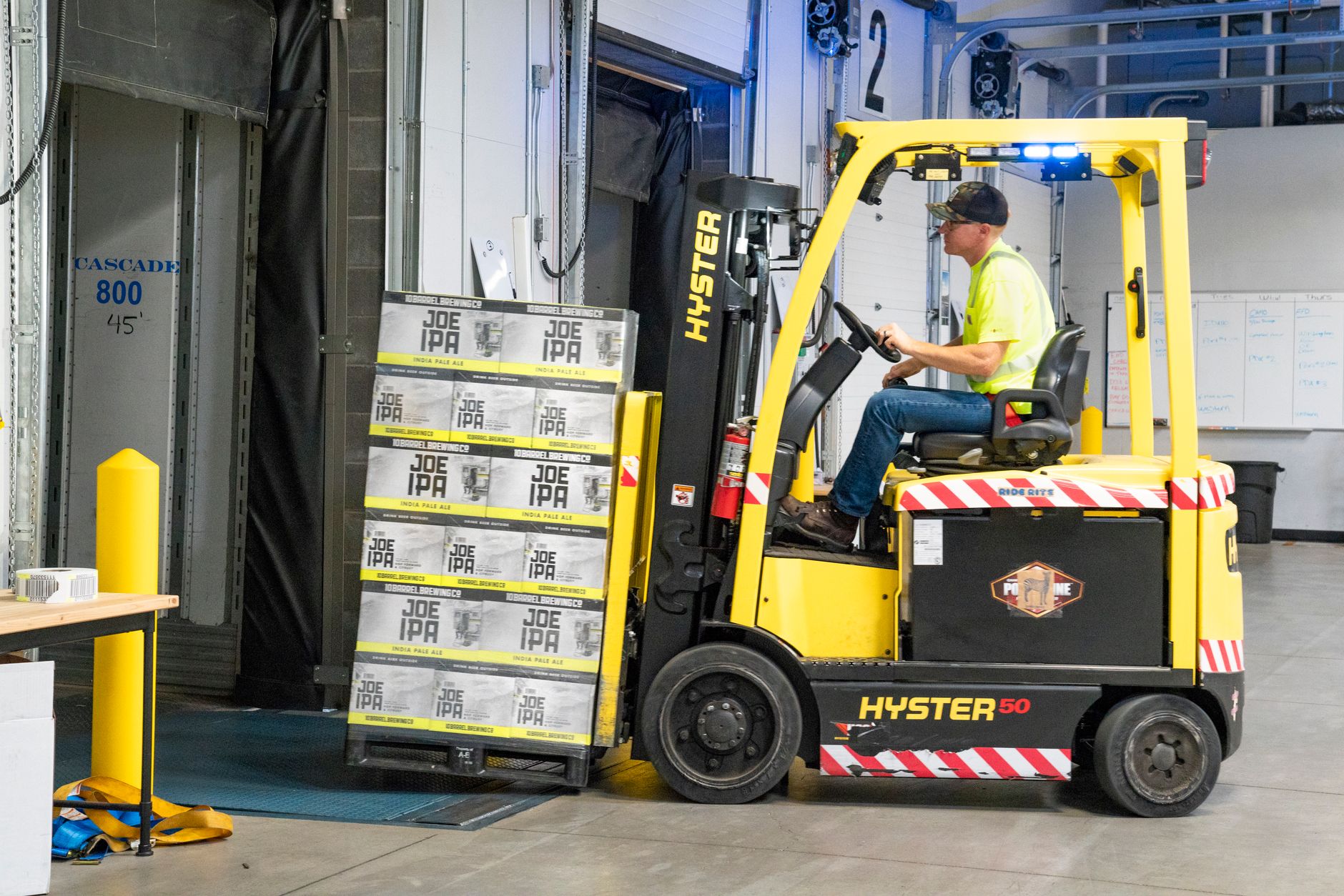
A forklift operator in a warehouse or distribution site does more than drive. A typical shift mixes unloading trailers, moving pallets from receiving to staging, putting stock away in racks, pulling orders to dock doors and loading outbound trailers. Each move involves a load check, a route through a travel path shared with people, and a drop at a specific location. A good operator also flags damaged pallets, spills and blocked aisles before they cause a problem.
Much of that work is repetitive. The same dock-to-rack lane may run many times in a shift, and the operator spends a good share of the time traveling empty or waiting at doors for a trailer to be ready. That repetition is what makes automation worth testing. The judgment calls, such as whether a pallet is safe to move or whether a trailer is ready to load, are the parts people keep.
The operator also covers the gaps. Between jobs, an operator travels empty, waits at doors and checks in with a dock lead. Those minutes are real labor even when they never appear in a move count, so note them when you assess how much work a robot can take over.
Median hourly wage, Laborers and Freight, Stock, and Material Movers, Hand
$4,186
Monthly cost of one full-time worker in Knoxville, TN, at the median wage plus payroll costs (an estimate, not a quote).
Which parts of the job can an autonomous forklift take, and which can it not?
An autonomous forklift can take standard pallet moves on a mapped route: receiving to staging, staging to racking within the aisles it has been mapped for, and dock-to-dock transfers. It works best when the pallets are standardized, the drop points are fixed and the route is free of changing obstacles. Performance depends on the layout, the consistency of the loads and the traffic on the floor, so a site assessment should check those first.
It is weaker where the work changes. Irregular loads, unusual pallets, loads that need a visual inspection, trailer loading with changing stacking patterns and tasks outside the mapped area still need a person. At sites with a wide mix of products, those tasks can take up a larger share of the day than managers expect, so count them before you count the savings.
- Repetitive pallet moves on a fixed route
Autonomous Forklift
Strong: same route, same drop points, consistent pace
Forklift Operator
Capable, but pace and attention vary over a long shift
- Night coverage
Autonomous Forklift
Can run a scheduled route with a reduced crew
Forklift Operator
Needs staffing or overtime to cover, and can adapt on the spot
- Irregular or damaged loads
Autonomous Forklift
Not suited; a person must inspect and decide
Forklift Operator
Strong: judges load safety and stability
- Changing layout or new task
Autonomous Forklift
Needs a remap and a route update before it runs well
Forklift Operator
Adapts quickly with a short briefing
- Pedestrian and traffic handling
Autonomous Forklift
Follows set paths and stops, but route design still matters
Forklift Operator
Reads people and context directly, though fatigue and distraction are risks
- Fault and exception response
Autonomous Forklift
Stops and alerts; a person clears the fault
Forklift Operator
Diagnoses and works around the problem on the spot
- Cost structure
Autonomous Forklift
Fixed lease through financing, quoted after a site assessment, with service coverage
Forklift Operator
Wages, overtime, benefits and the cost of turnover
What does the labor picture look like for warehouse work in Knoxville?
The government data for this job is a useful baseline. According to the U.S. Bureau of Labor Statistics, hand laborers and material movers as a group number about 6.95 million jobs, and the group is projected to grow 4 percent from 2024 to 2034. For the local wage for this job, see the government wage data on this page. The FRED series for transportation, warehousing and utilities employment in the Knoxville metro area reported 18.9 thousand in 2024 and 17.0 thousand in 2023, though the series label is narrower than newer monthly data, so confirm its definition before using it in a budget.
Injury data points the same direction. According to Voxel AI, which compiles 2024 figures and is not a BLS publication, warehousing and storage recorded 4.8 total recordable incidents per 100 full-time workers, with a DART rate of 4.1. According to Forklift Action, which cites BLS data, 75 to 94 workers were killed a year in forklift mishaps from 2011 to 2017. An OSHA Region I directive cites BLS data identifying pedestrians struck by lift trucks as the leading cause of lift truck fatalities.
Turnover is harder to pin down, and we did not find turnover data for Knoxville itself. According to Ahearn, which cites recent industry surveys, average turnover across warehouse and distribution operations is 11.6 percent, but the article gives no survey name or year, so treat it as a rough reference. According to the National Employment Law Project, a 2020 analysis estimated 124 percent warehouse turnover near large e-commerce facilities in New Jersey counties, versus 72 percent elsewhere in the state. That figure is dated and regional, but it shows how high turnover can climb at large facilities. Measure your own turnover, overtime and sick-day rates first.
How do hours, overtime and night shifts change the math?
Hours are where the decision is won or lost, and the government sources on this page do not give hours for any specific Knoxville site. The figures you need come from your own time records: how long each route takes, how many moves a shift requires, what the overtime pattern looks like and which shifts are hardest to staff. A robot does not change the work per move. It changes how much of the repetitive move count needs a person on the floor.
Night and weekend shifts are where most sites feel the strain. Open shifts on those runs often fall to whoever is available, which means overtime or a thin crew. A robot can run a scheduled route when the building is quiet, but it still needs a person to check it, load it, clear faults and respond to exceptions. Plan for a reduced crew on those shifts, not for no crew.
Sick days deserve the same treatment. When one operator misses a night, the move count still has to run, and the crew either stretches or the work waits. Count the sick days and open shifts from the past year, because those are the hours where a reduced crew with a robot changes the outcome most.
How does a team work with an autonomous forklift?
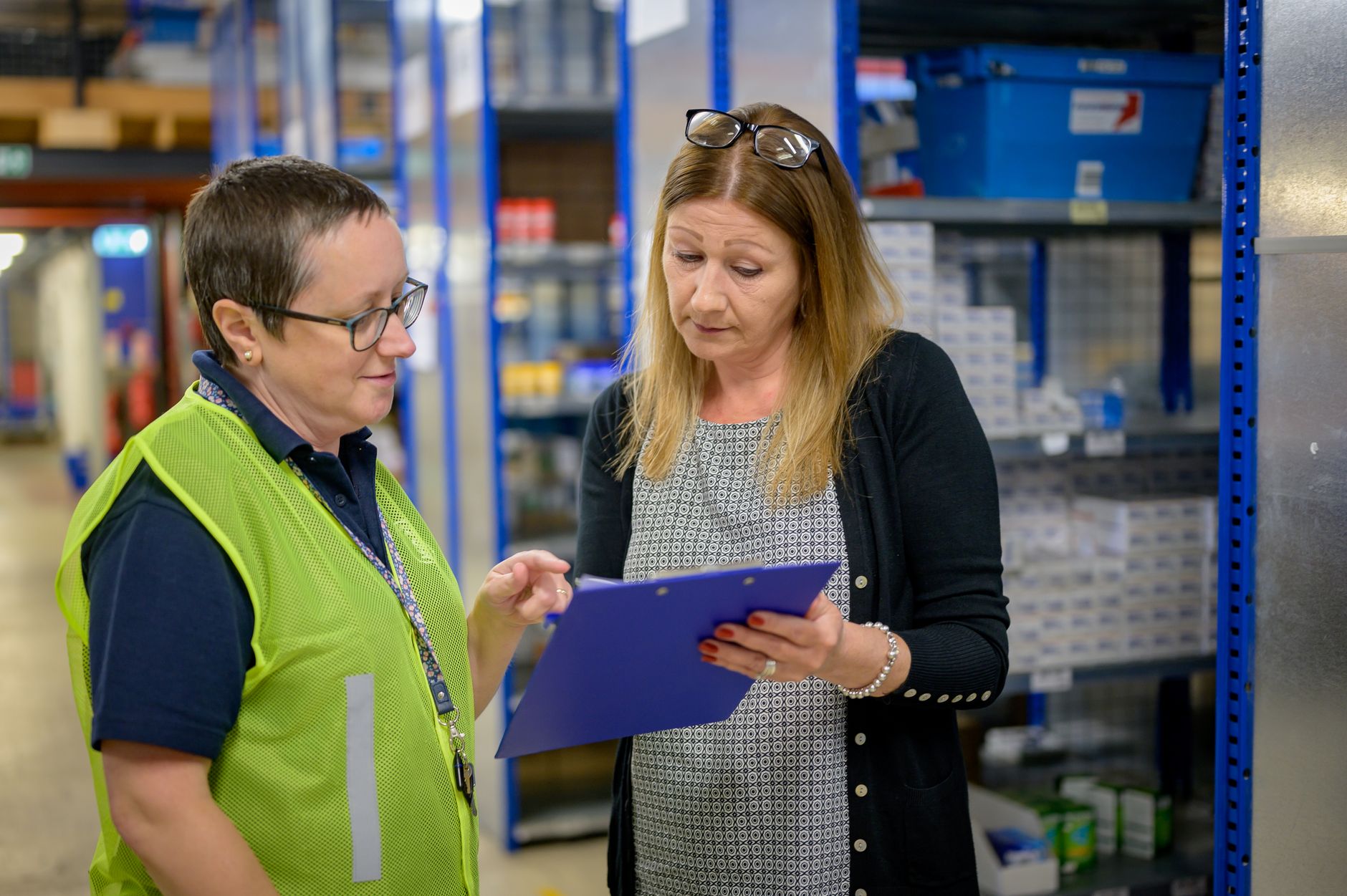
The working model is a robot plus fewer people, not a robot in place of the whole team. Operators move from driving every pallet to handling exceptions, supervising the route, staging loads and running dock flow. Plan the handoffs in advance: where the robot drops a load, who clears a fault, who checks an unusual pallet and who decides when a unit comes out of service.
Training matters more than the vehicle. Staff need to know the floor markings, the stop and fault procedures, the pedestrian rules around travel paths and what to do when a unit stops in an aisle. Your safety lead still owns the site rules. During deployment we train the crew and handle service and repair, so the team is not left waiting on a fault.
Expect the operator role to shift rather than shrink on paper. Operators spend less time driving repetitive lanes and more time on exceptions, dock flow and route supervision. Write that into the job description and the training plan so the change is planned, not discovered on a bad night.
What can an autonomous forklift not do?
It cannot judge a damaged pallet, decide whether a load is stable enough to move or spot a spill the way a person would from across the aisle. It does not read a changing dock schedule on its own, and it does not plan the day. In a mixed-product building it also needs the layout it was mapped for, so a major rack reconfiguration means a remap before the unit runs well again.
It also does not remove pedestrian risk on its own. The sources on this page show pedestrians struck by lift trucks as the leading cause of lift truck fatalities, so route design, walkway separation and speed rules matter as much as the vehicle. Treat the robot as a change to the traffic plan, not as a fix for it.
How do you get started with autonomous forklift leasing in Knoxville?
Start with a free site assessment. We map the route, measure the move mix, check the layout and identify the work that stays with operators. The output is a recommendation on which lanes to automate first, how many units make sense and what staff coverage you keep. A lease quote follows the assessment through financing, so you see the fixed lease payment next to the work it covers.
Pilot one route before scaling. A single unit on one lane tells you more about fault rates, travel times and crew adjustments than any model on paper. Agree on remote triage and on-site dispatch before go-live, and plan for spare unit coverage so a fault does not stop the dock.
Expect the assessment to say no to some lanes. A good recommendation names the work that stays manual, so you do not commit to automation where the numbers are weak.
Is an autonomous forklift worth it? Cost, savings and payback in Knoxville
Compare the lease against the hours it actually changes, not against the full cost of an operator. Include the time an operator still spends on exceptions, the overtime and open shifts you avoid on hard-to-staff runs, the injury exposure you reduce by separating people from travel paths, and the cost of downtime when a unit is out. Payback depends on your move mix, shift pattern and staff coverage, which is why the assessment comes first.
Be honest about the case where the answer is no. If your moves are irregular, your layout changes often or your operators already cover the work without overtime, an operator is still the right answer, and a robot would add cost without relief. A good assessment should say that too.
Test the business case with a few inputs: the number of repetitive moves per shift from your own records, the overtime and open shifts the unit would cover, the exposure reduction from separating people and vehicles, and the downtime cost if a unit is out. Leave out anything you cannot measure, and say so in the case you present.
Frequently asked questions
Put a robot to work in Knoxville.
We walk your site, learn the job, and recommend the unit that fits. Then we quote the lease, deploy it, and keep it serviced.
Sources
- US Bureau of Labor Statistics, Occupational Employment and Wage Statistics (OEWS May 2024)
- U.S. Bureau of Labor Statistics, Occupational Outlook Handbook: Hand Laborers and Material Movers
- FRED, Knoxville MSA transportation, warehousing and utilities employment
- Voxel AI, warehouse injury statistics 2024 (secondary compilation)
- Forklift Action, OSHA forklift accident insights
- OSHA Region I directive on lift truck pedestrian injuries
- Ahearn, warehouse turnover article
- National Employment Law Project, warehouse turnover analysis
- GlobeSt, warehouse automation article, March 2026