
The short answer
For autonomous forklift vs forklift operator in New Orleans, a robot makes sense when a facility moves the same pallets along fixed routes on a steady schedule, especially when night or weekend shifts are hard to staff. A forklift operator still makes more sense when loads, trailers and yard moves change from day to day, or when the floor is too cluttered or unmapped for a machine to run safely. In most cases the realistic answer is a robot working alongside fewer people, not a robot replacing the whole crew.
See what a autonomous forklift costsRun the numbers in the ROI calculator
Key takeaways
- An autonomous forklift fits repeatable pallet routes, not one-off trailer and yard work.
- Plan for one or two trained people per shift, with the robot covering the repeat transport legs.
- No verified New Orleans warehouse staffing or turnover data was found, so check your own shift logs.
- Warehousing's recordable injury rate of about 4.8 per 100 full-time workers is a secondary figure that still belongs in the decision.
- The lease payment is quoted after a free site assessment, so compare it with the full cost of covering the same hours.
Autonomous forklift vs forklift operator in New Orleans: which makes sense?
The short version is that an autonomous forklift fits a specific kind of pallet movement, and a forklift operator still fits most other work. The question is less about whether robots are capable and more about whether your daily freight follows a repeatable route. A robot follows a mapped path and stops when something blocks it, so it does best where the same moves happen again and again.
This page is written for the person who signs off on the decision at a New Orleans facility. It covers what an operator does in a shift, which tasks transfer to a machine, what the labor and injury data says, and where the local numbers run out. We are an integrator, so we also explain how a site is assessed, leased through financing, deployed and serviced, but the choice itself should rest on your own floor and shift data.
Treat this as a starting point for a site assessment, not a verdict. Two buildings of the same size can get opposite answers, because the deciding factors are route repetition, shift coverage and how much of the work requires judgment rather than transport.
When does an autonomous forklift make sense in New Orleans?
A robot tends to make sense when the moves are predictable: pallets from a dock to a fixed rack zone, finished goods from production to staging, or feeding a line on a set cycle. The route can be mapped once, the load types are limited, and aisles stay clear. Under those conditions the machine can run most of a shift without someone steering it.
It also makes sense when the hard part is coverage. If a site struggles to fill second or third shift, or its dock sits idle overnight, a robot can keep moving freight during hours that are difficult to staff. Freight activity in the region supports that case: according to Biz New Orleans, the ports of greater New Orleans handled 537,285 TEUs over 12 months through September, up 13.6% year over year, though the date of that period is not clear from the source.
A robot can make sense without being the whole answer. According to A3 as reported by Robotics 247, North American industrial robot orders reached 36,766 units in 2025, up 6.6%. Those counts cover industrial arms and exclude mobile robots, so they show broader automation momentum rather than a direct measure of autonomous forklift adoption.
Median hourly wage, Laborers and Freight, Stock, and Material Movers, Hand
$3,966
Monthly cost of one full-time worker in New Orleans, LA, at the median wage plus payroll costs (an estimate, not a quote).
What does a forklift operator actually do in a shift?
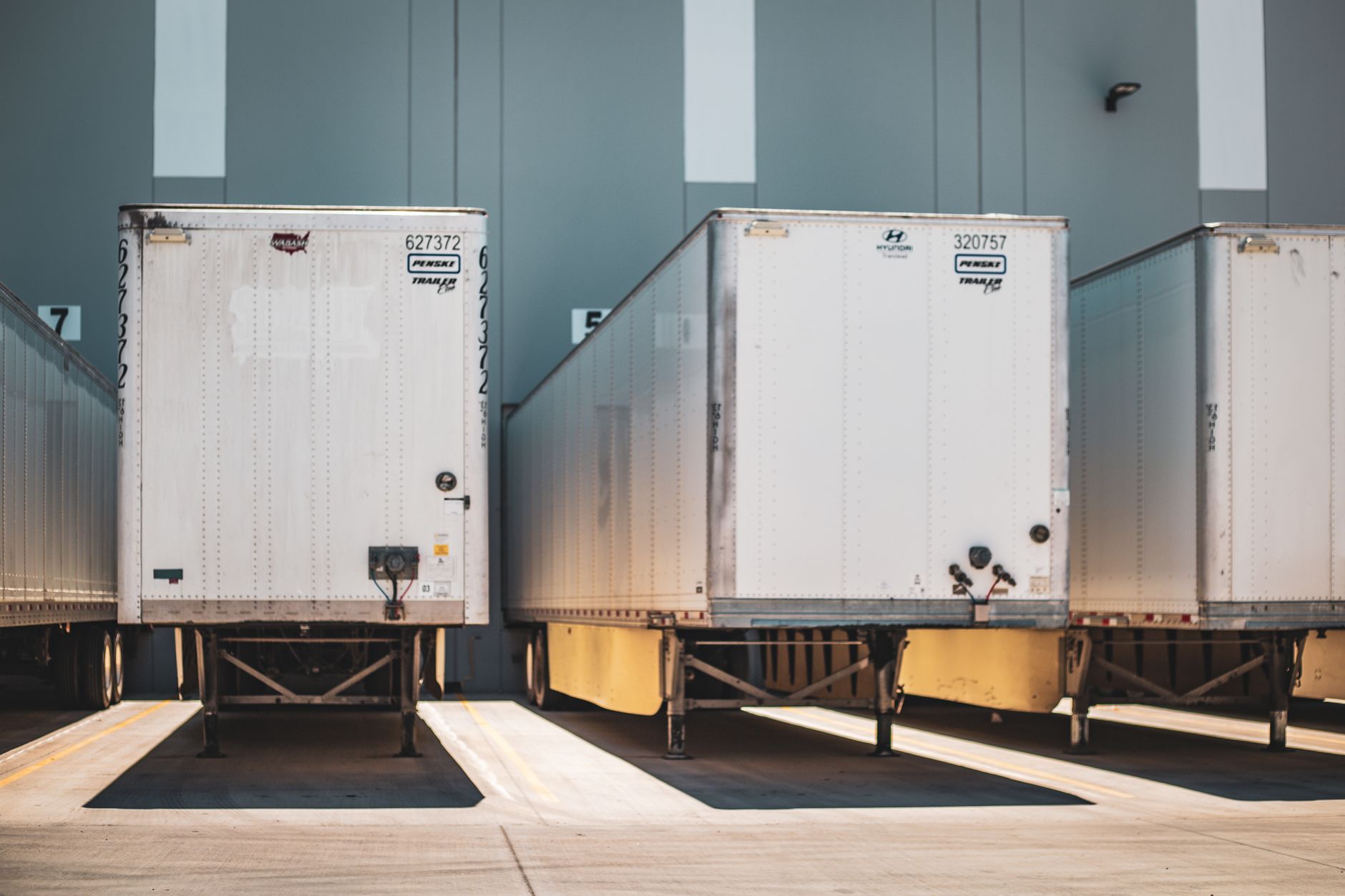
A forklift operator in a New Orleans warehouse or wholesale facility usually does more than drive between two points. A shift typically starts with a pre-shift check of the truck, then moves between receiving, putaway, picking and staging, often on a reach or counterbalance machine. Operators also read labels, confirm pallet counts, check load stability and report hazards, and that judgment is the part a route plan does not capture.
The Bureau of Labor Statistics describes this work as learned mostly on the job. According to the BLS Occupational Outlook Handbook, most material moving machine operators are trained in under a month, depending on machine type. The fast start is real, but the judgment a good operator builds over months, such as knowing which pallet is unstable or when to stop and call for help, is harder to replace than the driving.
Operator time also goes to small interruptions that rarely appear in a plan: a blocked aisle, a mislabeled pallet, a trailer that arrives early, a door that needs a supervisor. A person absorbs those quickly, which is why the operator often covers more than the job title suggests. Map those interruptions during the site assessment, because they decide how much of the shift a robot can actually take over.
Which parts of the job can an autonomous forklift take over?
An autonomous forklift can usually take the repeated transport legs: a pallet from dock to rack, production to staging, or one zone to another along a fixed route. It works best when pick and drop points are known, loads sit on the forks consistently, and stacking heights are standard. It does not decide what goes where, and that decision usually stays with the warehouse system and a person.
Tasks that stay with people include loading and unloading trailers with irregular freight, handling damaged or shifting loads, working in yards with uneven ground and mixed traffic, and clearing exceptions in the warehouse system. A robot can be sent to a staging spot, but someone still confirms the pallet, corrects a count or clears a jam. Plan the split before you plan the machine count.
The comparison below sets the two side by side on the points that most often decide the question. The person usually wins on judgment and flexibility, and the robot usually wins on repetition and coverage.
- Repeat dock-to-rack moves
Autonomous Forklift
Runs a mapped route on a fixed cycle
Forklift Operator
Slower per trip, but adapts when the route changes
- Night and weekend coverage
Autonomous Forklift
Runs without a seated operator once routes are live, though someone still supervises
Forklift Operator
Needs staffing, overtime and sick cover
- Trailer loading and unloading
Autonomous Forklift
Not suited to irregular trailer freight
Forklift Operator
Handles mixed loads and corrects them on the spot
- Unexpected obstacles
Autonomous Forklift
Stops and waits, then may need a reset
Forklift Operator
Steps around the problem, flags it and decides
- Damaged or shifting loads
Autonomous Forklift
Weak at judging load condition
Forklift Operator
Spots the problem and pulls the pallet
- Time to train
Autonomous Forklift
Route mapping and setup done once by the integrator
Forklift Operator
Most operators trained on the job in under a month, according to BLS
What does the labor picture look like for forklift work?
National data is the best starting point, and it is less local than a decision maker would like. According to the BLS Occupational Outlook Handbook, material moving machine operators held about 867,700 jobs in 2024, including about 792,500 industrial truck and tractor operators. Projected growth is 1% from 2024 to 2034, slower than average, but about 83,200 openings a year are expected, mostly from replacement needs. In practice the constraint is refilling seats as people leave, not a shortage of roles on paper.
Turnover is the figure that matters most for a staffing decision, and the best national number we found is broad. According to a secondary summary of BLS JOLTS data, the quits rate for transportation, warehousing and utilities was 2.2% in 2025, the same as 2024 and down from 3.0% in 2022, compared with 2.0% for all industries. That grouping is wider than warehousing alone, so read it as a direction and check your own separation records.
Injury risk belongs in the same calculation. OSHA estimates that about 1.5 million workers operate more than 855,900 powered industrial trucks, and its forklift operator training rules sit in 29 CFR 1910.178. An older OSHA directive cites about 85 forklift fatalities and 34,900 serious injuries a year, a dated figure that third parties repeat. A secondary warehouse safety summary puts the warehousing recordable rate at about 4.8 cases per 100 full-time workers in 2024.
For New Orleans specifically, we did not find verified warehouse or freight employment counts, shift patterns, overtime or sick-day figures. The local data that did surface concerns the port. According to the Port of New Orleans 2024 economic impact executive summary, marine cargo activity along the Port District generated 14,603 direct jobs, and 83,641 jobs in Louisiana. A 2025 port summary, reported by Breakbulk News, gives another Louisiana figure, so do not combine the two. Port jobs are a separate labor pool from warehouse work, but they signal freight volume, which is what drives forklift demand.
How does a team work with an autonomous forklift?
The realistic team is one or two trained people per shift with a robot handling the repeat legs. People supervise the fleet, clear exceptions, load and unload trailers, reconcile counts and keep aisles clear. We do not recommend zero staff, because a robot that stops needs a person to reset it, and a stopped robot can block a route for everyone else.
Your existing operators do not disappear in the change. They move from driving every leg to running the exception queue, the dock and the staging points. Most of the adjustment is in how people respond when a machine stops in an aisle, not in learning controls. Training should start before go-live, so the team knows the stop, reset and escalation steps on day one.
Coverage is what changes most. A second person on a robot-assisted night shift can handle what a single operator used to, while the robot carries the steady transport. Track exceptions per shift during the first weeks, since that count, not the robot's speed, shows whether the staffing plan holds.
What can an autonomous forklift not do?
An autonomous forklift is not a general purpose operator. It does not handle uneven, unmapped or constantly changing floors well, it does not judge a damaged load the way a trained person does, and it cannot improvise around an obstacle it was not set up for. Lifting limits, load weight and the mix of pallet types are set by the specific machine and the site, so confirm them rather than assume.
It also depends on infrastructure. Routes need clear floors, sensing that works in your lighting and conditions, and a charging plan that matches the shift pattern. A site with frequent layout changes, heavy traffic from manual trucks, or rough outdoor yards may need people for those zones even when the indoor routes run well.
Trailer loading and unloading usually stays manual. The robot can shorten the trip inside the building, but it does not remove the labor at either end of the trailer. Be cautious with any plan that promises a full crew replacement, because the work that stays with people is often the work that prevents damage, shortages and safety incidents.
Autonomous forklift cost in New Orleans: how does a lease compare with an operator?
The government wage data on this page covers Laborers and Freight, Stock, and Material Movers, Hand in New Orleans, LA. That is the local wage for this job, and it is the figure to set against the full cost of an operator. The full cost also includes overtime for night coverage, training time, sick cover and the cost of shifts that go unstaffed.
A robot is paid for through a fixed robot lease payment, usually over a set term, and that payment is quoted after a free site assessment. The number depends on route length, fleet size, floor conditions and the level of service, so any figure given before a site visit is a guess. Ask that the quote show the term, what maintenance is included, and what happens during a repair.
The useful comparison sets the lease and service against the cost of covering the same hours with people, counting the shifts that are unstaffed today. Payback is shortest where the robot adds coverage you could not staff at all, and longest where the robot only replaces work a single operator already does efficiently.
How do you get started with an autonomous forklift in New Orleans?
Start with a site assessment, not a machine count. We map the routes, measure the floor and docks, count pallet types and record the shift pattern, then recommend one unit, a small pilot or no robot at all. A pilot with one leased unit shows real travel, stops and exceptions before you commit to a larger fleet.
Deployment and integration come next: connecting the robot to your warehouse system, setting routes, training staff and going live with support. Ask any provider how repairs are handled, how quickly a technician reaches the site, and whether a backup unit is available during a repair. A fixed lease payment with maintenance included is easier to compare than a variable service bill.
Bring three things to the first conversation: your shift schedule for the last three months, a list of the routes you run most often, and a list of the tasks you consider judgment work. Those inputs let the assessment answer the question for your building rather than for an average warehouse.
Frequently asked questions
Upcoming events in New Orleans, LA
Put a robot to work in New Orleans.
We walk your site, learn the job, and recommend the unit that fits. Then we quote the lease, deploy it, and keep it serviced.
Sources
- US Bureau of Labor Statistics, Occupational Employment and Wage Statistics (OEWS May 2024)
- BLS Occupational Outlook Handbook, material moving machine operators
- Warehouse safety summary (secondary), BLS JOLTS quits rate
- Warehouse safety statistics summary (secondary)
- OSHA directive on powered industrial trucks
- A3 robot orders coverage, Robotics 247
- Port of New Orleans 2024 economic impact executive summary
- Breakbulk News, 2025 State of the Port
- Biz New Orleans, the ports of greater New Orleans