
The short answer
An autonomous mobile robot makes sense at a craft brewery when grain sacks, totes and kegs move along the same mapped routes between storage and the brewhouse on most shifts. A material mover still wins when loads change shape often, routes shift with each brew day, or the floor is crowded with foot traffic and deliveries. In the autonomous mobile robot vs material mover decision, route repetition and measured trip hours matter more than the size of the brewery.
See what a autonomous mobile robot costsRun the numbers in the ROI calculator
Key takeaways
- A robot fits grain, tote and keg routes that run the same way on most brew days.
- Plan on a robot plus fewer staff, since loading, exceptions and stops still need people.
- Public data does not publish brewery hours per trip, so measure your own trip log first.
- Material handling carries high injury rates, so route automation is worth a closer look.
- Start with one leased unit on the busiest repeat route and expand only if the numbers hold.
Should a craft brewery choose an autonomous mobile robot vs material mover?
For most craft breweries, the answer depends on whether the same loads travel the same paths over and over. Grain sacks, totes and kegs usually go from a dry goods store or cold room to the mill, the brewhouse, the fermentation area or the keg line, and then come back empty. When those trips repeat along set routes, an autonomous mobile robot can take the repeat legs while people handle the loading and anything irregular.
A robot is a weaker fit when product moves in unpredictable ways. Brew schedules that change by the day, one-off pallet moves, frequent layout changes, tight corners that cannot be mapped cleanly and floors shared with heavy event traffic all reduce the value. In those cases a material mover with a trained person usually remains the better choice.
For a sign-off decision, the test is simple. If you can name the three to five routes that carry most of your grain and keg moves, and you can time them, the robot question is worth a site assessment. If you cannot describe the routes yet, the first step is a trip log, not a robot.
How many craft breweries and brewery workers are there in the US?
According to the Brewers Association national beer statistics page, there were 9,578 operating craft breweries in the US for 2025, down 2.9 percent from the prior year, with 481 closures and 300 openings. The count includes 1,994 microbreweries, 3,525 brewpubs, 3,784 taprooms and 275 regional breweries. Most of those sites are brewpubs and taprooms rather than large production plants, so floor plans and traffic patterns vary widely from one site to the next.
The Brewers Association put craft brewing at 191,000 direct jobs in 2025 after a June 2026 revision, down 6,000 or 3 percent from the year before, as reported by the trade news site newschoolbeer. The first release had shown 189,000 jobs, down 4 percent. The association said staffing held up better than production, which fell 5.1 percent to 21.9 million barrels, and linked that to hospitality-focused models that need more staff per barrel.
Automation interest is rising outside cars, too. A3 reported that North American robot orders rose 6.6 percent in 2025, led by non-automotive sectors including food and consumer goods. That trend matters because food and consumer goods plants are part of the growth, but the fit still comes down to your own routes, not the sector average.
Median hourly wage, Laborers and Freight, Stock, and Material Movers, Hand
$4,380
Monthly cost of one full-time worker, at the median wage plus payroll costs (an estimate, not a quote).
What does a material mover actually do in a brewery shift?
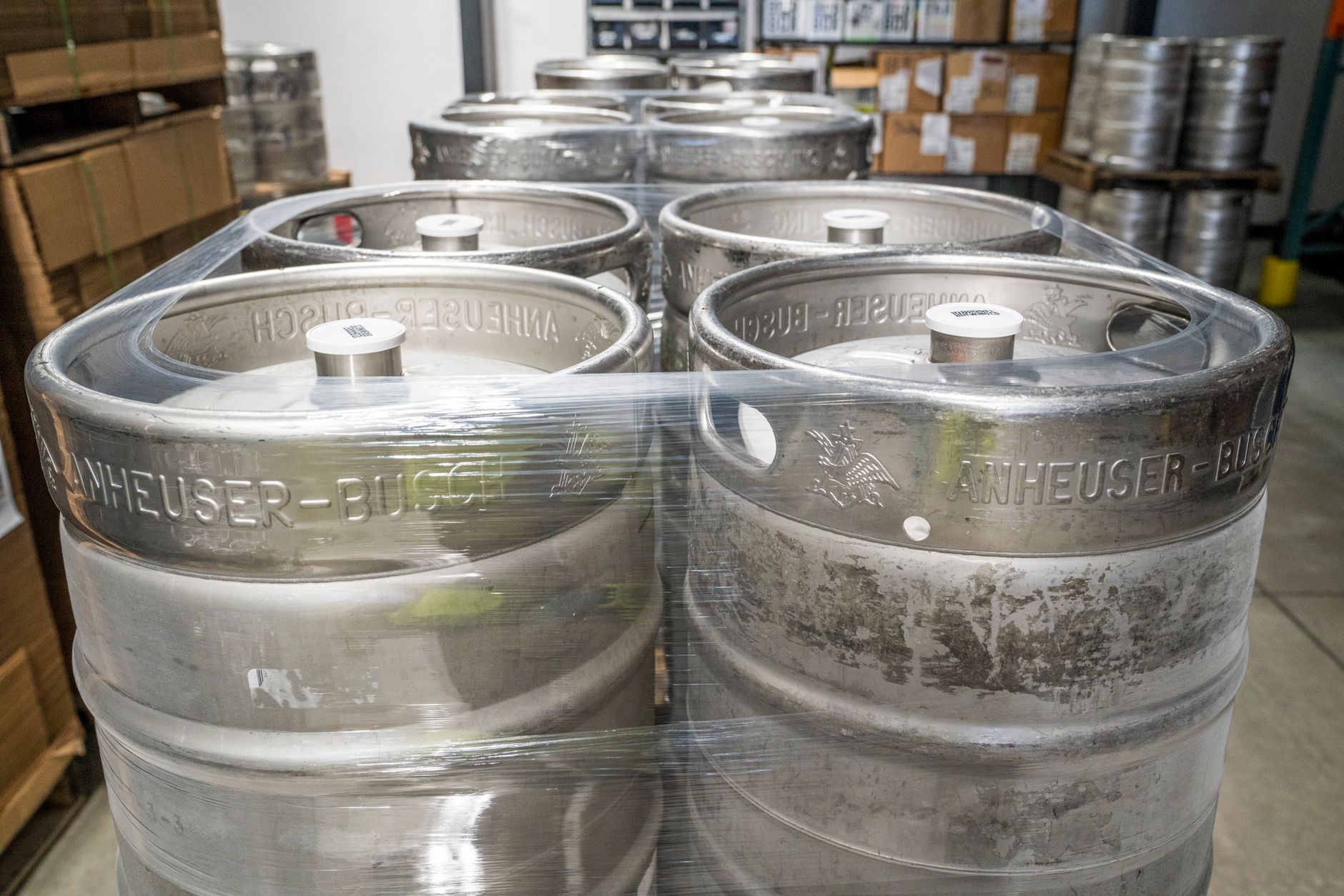
A material mover at a brewery is usually a person with a hand truck, pallet jack, cart or keg dolly. A typical shift moves grain sacks from storage to the mill or grain handling point, pulls totes of hops, adjuncts and cleaning supplies, shuttles full and empty kegs between the cold room, the keg line, the cleaning station and the loading dock, and clears empties back out.
The work is repetitive and physically hard. The Bureau of Labor Statistics counted 64,930 nonfatal injury and illness cases with days away from work for laborers and freight, stock, and material movers, hand in 2020, at a rate of 289.8 per 10,000 full-time equivalent workers. Those are the figures for the occupation group a brewery material mover belongs to, and the government wage data on this page covers the local wage for that job.
The Occupational Outlook Handbook says hand laborers and material movers have some of the highest injury and illness rates of all occupations. A BLS summary also counted 102 fatal work injuries in this occupation in 2019, down from 113 in 2018. Those are older figures, so use them to understand the direction of the risk, not as a forecast for your site.
Which parts of the work can a robot take, and which can't it?
A robot takes the repeat legs. On a mapped route it can carry a loaded cart, tote or pallet from the dry goods store to the brewhouse, return empty kegs from the keg line to the staging area, and go back to a charging point without a person pushing it. Every leg it handles is a leg a person does not walk, and the staff member can stay on the mill, the cellar or the packaging line.
A robot does not do the parts that need hands or judgment. It cannot lift a grain sack into a mill hopper, connect a keg coupler, load a keg into a washer, or decide that a tote is damaged or a pallet is unstable. It also cannot work around a stack of empties left in a corridor, a hose across the floor or a delivery truck blocking the dock, unless the route and the staff rules account for those cases.
Load limits matter too. Each unit has a rated payload and a deck size, and a full keg, a heavy grain sack on a cart or an unevenly loaded tote can each push a trip outside the rating. Check the rated load and the load shape against your heaviest real trip, not the average trip.
- Repeat route, same path
Autonomous Mobile Robot
Runs the mapped route the same way on every trip
Material Mover
Adjusts the path as it goes, but tires on long repeat runs
- Night or short-crew shifts
Autonomous Mobile Robot
Can run the set route without someone walking each leg
Material Mover
Needs a scheduled shift, cover and a supervisor
- Lifting and connecting
Autonomous Mobile Robot
Cannot lift sacks or connect kegs
Material Mover
Does the hands-on loading, connections and checks
- Unexpected obstacle
Autonomous Mobile Robot
Stops or waits, so the route and staff rules must cover it
Material Mover
Steps around a hose, a stack or a wet spot as it appears
- Layout change
Autonomous Mobile Robot
Needs remapping and route testing when tanks or stations move
Material Mover
Adapts within the same shift without a system change
- Consistency on the route
Autonomous Mobile Robot
Same speed and stop points on every trip
Material Mover
Pace varies with fatigue and the length of the shift
How do hours and labor add up across a week?
This is where the public picture is thinnest. The data we could find does not publish hours per trip, per shift or per week for brewery grain and keg moves, and it does not report overtime, night shift or sick-day rates for brewery material handlers. Any hour figure in a sign-off memo should come from your own trip log, timed on the busiest brew days and the slowest ones.
The national labor data points the direction. According to the Bureau of Labor Statistics JOLTS release, annual quits fell by 1.3 million in 2025, and the total separations rate was 3.3 percent, unchanged from 2024. FRED's series for quits in trade, transportation and utilities, a sector that includes warehousing, shows a quits rate of 2.2 for October and November 2025, 2.6 for December 2025 and 2.3 for January and February 2026. No quits rate specific to brewery production staff turned up in the search.
When you model labor, count the hours a material mover loses to sick days, overtime and short-handed shifts, not only the scheduled hours. A brewery that runs a short crew on a weekend brew day pays for the gap somehow, through overtime, a delayed brew or a missed keg fill. Those are the hours a robot can cover on the repeat legs, provided a person is still on the floor.
How does a team work with a robot on the floor?
The working model is a robot plus fewer staff, never a robot alone. A person loads the cart or pallet at the source, confirms the destination and starts the route. The robot carries the load, and a person receives it, checks the keg or sack, handles what the robot flags and resets the route for the next run. Staff time moves from walking the repeat legs to loading, checking and cover.
Training matters more than the robot itself. Operators need to know how to clear a blocked route, restart a stopped unit and call the service line before a stop becomes a lost shift. The people who load need the same stop points, route rules and no-go zones, or the robot will spend the shift waiting.
Plan the staffing around the change, not around a headcount target. Decide before the pilot which hours you will protect, and which tasks move from walking to loading, cleaning and cover. Removing every person from the route is not the goal, and it usually fails the first time a unit stops.
Where does a robot make sense at a craft brewery?
Before a site assessment, check the things that decide whether the robot earns its place. No single item settles the question, but a site that fails several of them is a poor first pilot, and a site that passes most of them is worth mapping.
Use the checklist below as a screen for your own floor. Bring the trip log, a floor plan and a rough count of traffic at the busiest hours, since those three items drive most of the recommendation.
What can an autonomous mobile robot not do at a brewery?
A robot is not a replacement for the whole material handling job. It does not lift sacks, connect kegs, judge spoiled product or damaged packaging, or clean up a spill. It also will not fix understaffing on its own, because the people still on the floor carry the loading and every exception.
It is also slow to adapt. A new tank, a changed keg rack or a new dock door means someone maps the change, tests the route and signs off on it. Brewery layouts evolve, so budget time for remapping rather than assuming the first map will last for years.
Outdoor work is a limit. A robot that crosses from the cold room to an open dock has to handle the transition, the surface and the weather. If the dock is exposed, keep the robot indoors and leave outdoor moves with staff until the surfaces and transitions have been proven.
Is an autonomous mobile robot worth the cost, and how do you get started?
Whether it is worth it depends on the hours on your repeat routes, which you should measure, and on the local wage for this job, which the government wage data on this page covers. Set the hours you can move to the robot against the lease, then add the staff hours you want to protect, such as sick-day cover, overtime and night coverage. The lease is quoted after a site assessment, because the route, floor, load and traffic decide the unit and the fit.
Our role covers the full chain. We assess the site, map the routes, recommend the robot that fits the floor and the loads, lease it through financing, deploy and integrate it, train the staff, and service it nationwide with maintenance included. We do not start with a fleet. A typical first step is one leased unit on the busiest repeat route, with a clear trip log before and after.
Plan the pilot around three measures: trips per shift on the chosen route, minutes per trip before the robot, and minutes per trip after, with stops and charging counted. If the after figure does not beat the before figure once stops are included, hold off on expanding and fix the route first.
Frequently asked questions
Want a warehouse robot at your craft brewery?
Tell us about your site. We will recommend the robot, quote the lease, and keep it serviced.
Sources
- US Bureau of Labor Statistics, Occupational Employment and Wage Statistics (OEWS May 2024)
- Brewers Association national beer statistics
- Brewers Association, A Year of Correction for Craft Beer With Early Signals of Recovery
- newschoolbeer, Revisions to Brewers Association 2025 Production Report
- BLS Injury and Illness Snapshot, Laborers and Freight, Stock, and Material Movers, Hand, 2016 to 2020
- BLS Occupational Outlook Handbook, Hand Laborers and Material Movers
- BLS JOLTS news release
- FRED, Quits Rate for Trade, Transportation and Utilities
- A3, Robot Orders Grow 6.6% in 2025