
The short answer
An autonomous mobile robot makes sense at a sawmill when the haul repeats on the same route between saw lines and stacking areas, and the floor along that route can be kept clear. A material mover still wins where loads vary, routes change often, or the job calls for judgment about which pieces to move and when. For most mills the autonomous mobile robot vs material mover choice comes down to which steady run to automate first, with a robot plus fewer people on that run, never zero people.
See what a autonomous mobile robot costsRun the numbers in the ROI calculator
Key takeaways
- Steady, repeated runs between saw lines and stacking areas are where an autonomous mobile robot earns its place.
- Changing routes, awkward loads and jams keep a material mover in the job.
- Published US sawmill employment fell to 85,400 in Q3 2025, so the pool of people for manual hauling is shrinking.
- No verified figure exists for hours hauled per shift at sawmills, so time your own runs before deciding.
- Robots are leased through financing, and the payment is quoted after a free site assessment.
Does an autonomous mobile robot make sense at a sawmill?
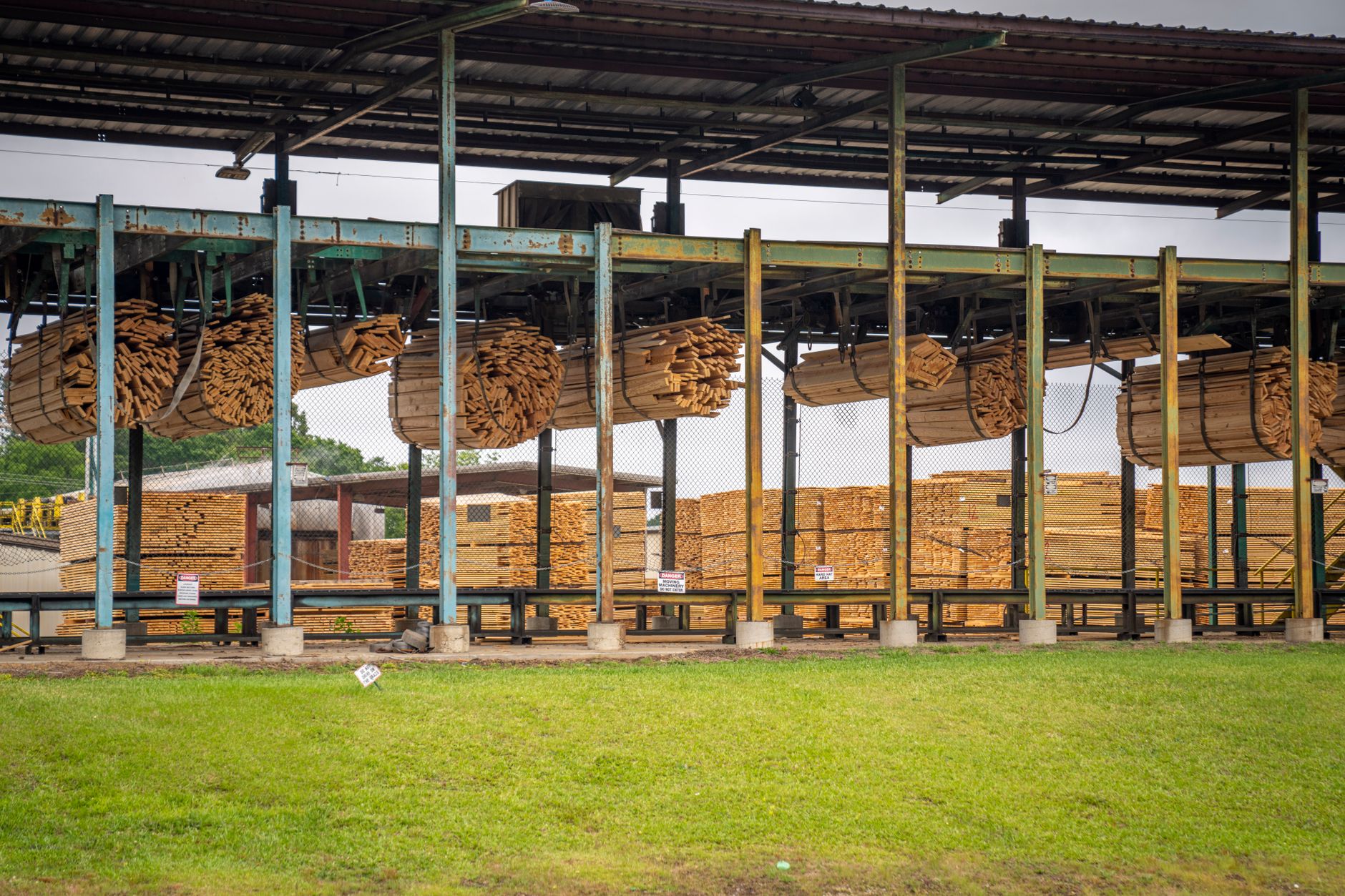
Sawmills move heavy material all shift. Cut boards, bundles and stock travel from the saw line to sorting, stacking and yard areas, and in many mills a person pushes a cart or handles totes along that path for much of the day. An autonomous mobile robot can carry carts and totes along a fixed route, which is the same job a material mover does by hand, so the real question is whether your haul is steady enough to map.
The robot makes sense when the same legs repeat every shift, the paths can be kept clear, and the loads fit a standard cart or tote. It does not make sense when every run takes a new path, when the yard is too cluttered or uneven for a stable route, or when the real shortfall is a saw-line operator rather than a hauler. Those cases stay with people.
The practical starting point is the single run that repeats most and is hardest to staff. Automate that one, measure it, and only then decide on more units. We pick the robot for the site and lease it through financing, and the rest of this page explains how that choice gets made.
What does a material mover actually do in one sawmill shift?
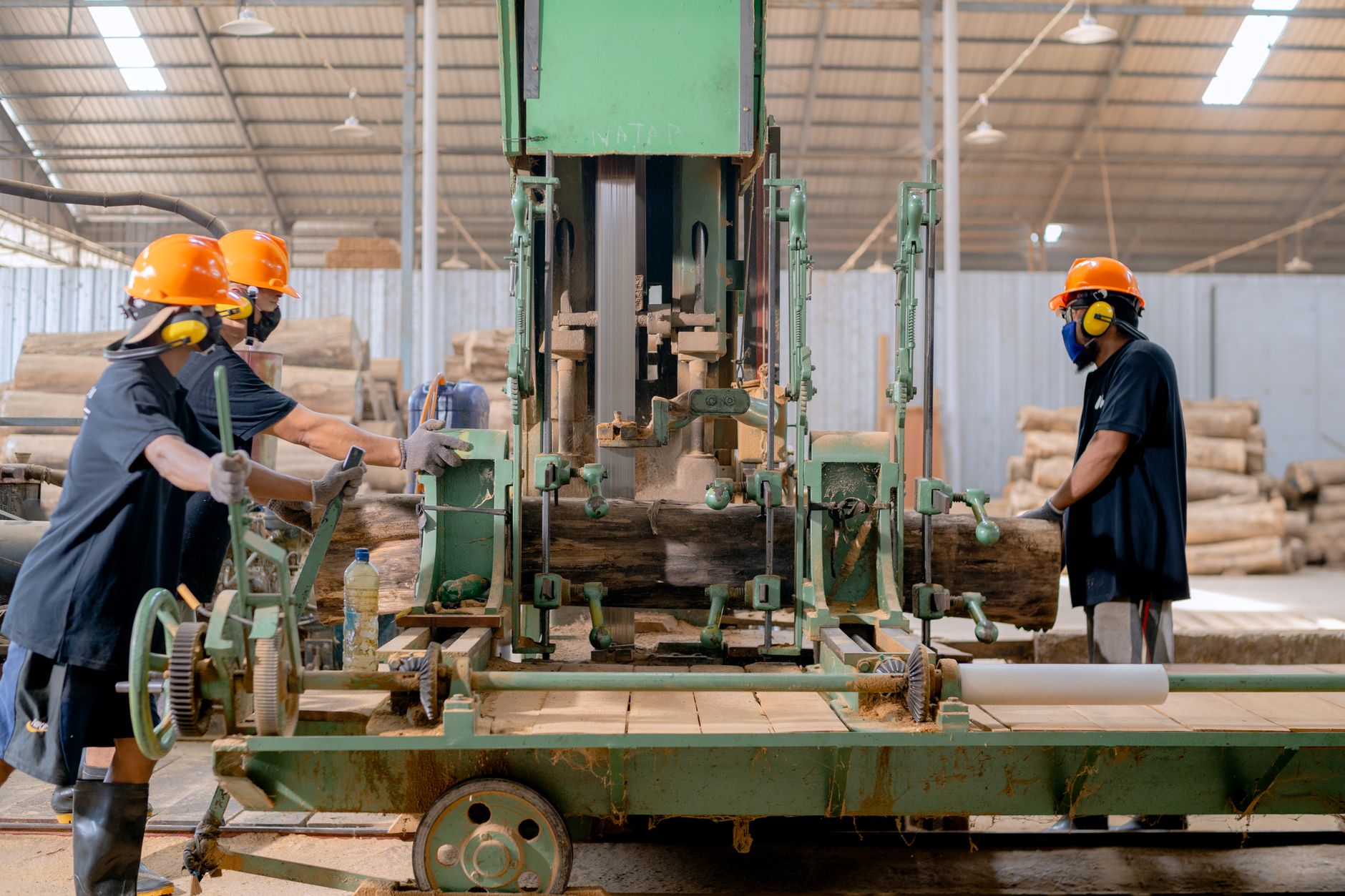
A material mover at a sawmill is usually a person with a hand cart, a tote or a pallet jack who takes pieces from the end of a saw line or a sorting point and brings them to a stacking area. The work is mostly repetitive: load, walk, unload, walk back. It is interrupted by backed-up lines, re-stacking of bundles and the occasional board that slipped off a conveyor.
The physical load is the part that adds up. Heavy boards and bundles mean bending, lifting, gripping and pushing loads that are awkward to hold, and the same movements repeat across a shift. That is why mills treat manual hauling as a strain and incident risk, a concern the injury figures later on this page reflect at subsector level.
The hours are the number a mill most needs and the one public sources do not supply. We did not find a verified figure for hours hauled per shift at sawmills, so this page does not offer one. The reliable way to get it is to time three or four full shifts of the run and count only walking, loading and unloading, leaving out the saw-line decisions the person also makes.
Median hourly wage, Laborers and Freight, Stock, and Material Movers, Hand
$4,380
Monthly cost of one full-time worker, at the median wage plus payroll costs (an estimate, not a quote).
Which parts of the haul can a robot take, and which can it not?
A robot can take the repeat legs: pulling a loaded cart or tote from a saw line discharge to a set stacking point, then returning empty. Those legs have a clear start, a clear finish and a route that stays the same most of the time, which is what fixed-route automation needs to work.
It cannot reliably take the parts that need hands or judgment. Re-banding a bundle, pulling a board that slipped off a conveyor, clearing a jam and deciding that a piece is out of spec all stay with people. Loads that are too tall, too irregular or too heavy for the platform also stay manual until they are changed to a standard cart or tote.
In most mills the split looks like this. The robot runs the same path all shift while a person handles staging, exceptions and anything that needs a decision. The robot takes the walking and the person keeps the handling that needs a body and a judgment call. The comparison below sets the two side by side.
- Changed route
Autonomous Mobile Robot
Needs the route remapped, and stops when the path is blocked
Material Mover
Reroutes on the spot around a blocked lane or a moved stack
- Heavy irregular loads
Autonomous Mobile Robot
Limited to what the platform can carry and fit
Material Mover
Handles awkward or oversized pieces by grip and feel
- Night coverage
Autonomous Mobile Robot
Runs a set route unattended between checks
Material Mover
Needs someone on shift for exceptions and loading
- Judgment about material
Autonomous Mobile Robot
Moves what it is loaded with and cannot judge a bad cut
Material Mover
Spots a bad board, a split bundle or a jam before it moves
- Pace on the same run
Autonomous Mobile Robot
Same path and pace every run
Material Mover
Pace shifts with fatigue, absence and the day
- Repetitive walking and pushing
Autonomous Mobile Robot
Takes the repeated walking and pushing off the crew
Material Mover
Still carries the lifting and bending that needs a grip
How many sawmills and workers are there in the US?
According to the Census-based profile on Data USA, the sawmill and wood preservation sector had 2,585 firms, 3,067 establishments and 89,731 employees, though the profile snippet does not state the year. IBISWorld counts 2,523 sawmill and wood production businesses in the US. Both sources point to a sector of a few thousand businesses, which is useful for sizing a market and is not a list of individual mills.
The workforce is shrinking. According to the NAHB Economic Research blog, reported in a woodcentral summary, combined sawmill and wood preservation employment was 85,400 in the third quarter of 2025, the lowest since the first quarter of 2013 and a tenth straight quarterly decline. The same NAHB blog had put the first quarter of 2024 at 89,260, so the pool of people available for manual hauling is getting smaller.
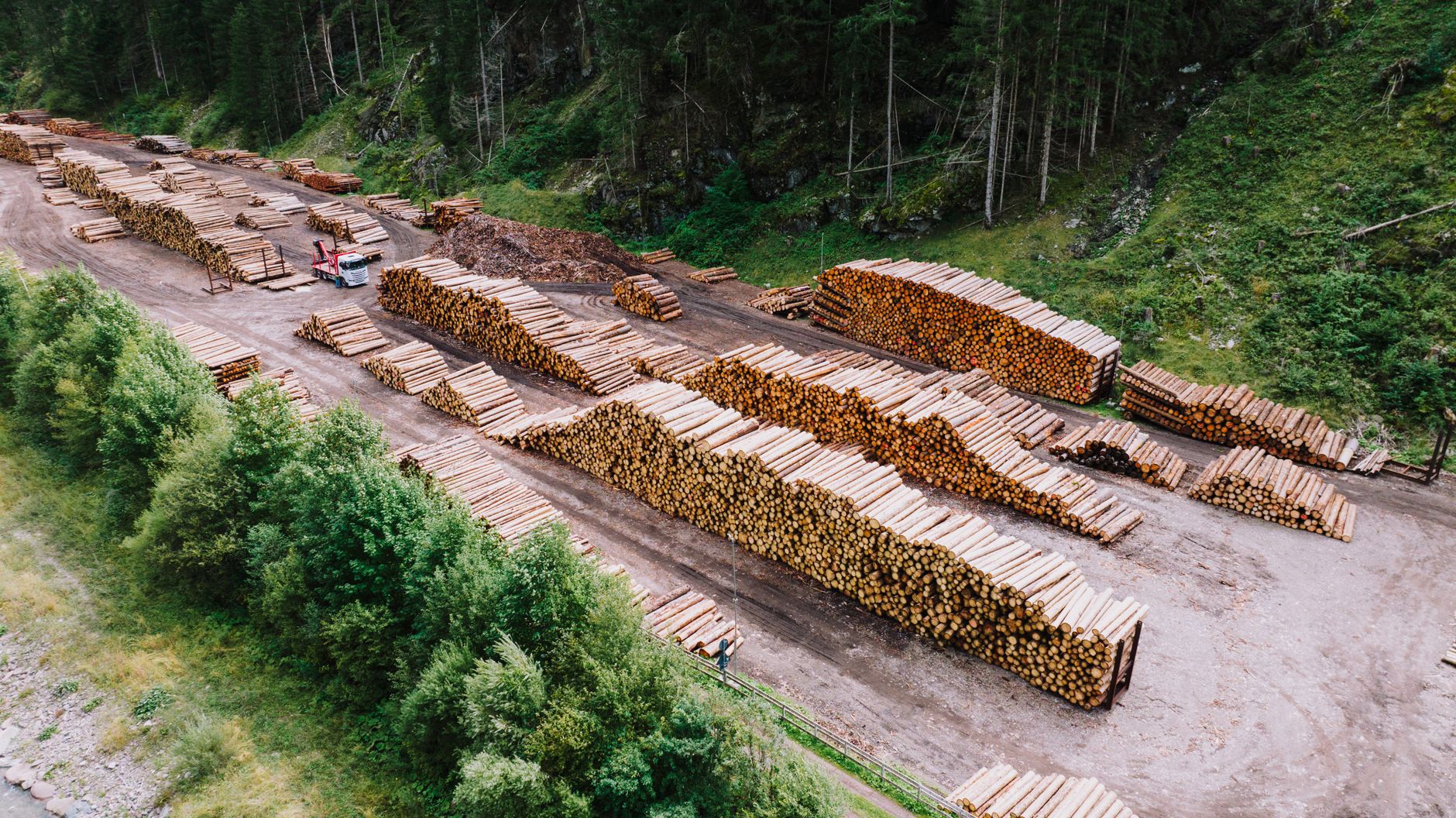
Mill operators feel this in hiring. A 2026 survey by Timber Processing, a trade publication, covered companies operating about 130 US sawmills and found that 53 percent cited flat lumber markets as their top challenge, 43 percent cited labor shortages and 41 percent cited shipping and logistics. The survey is trade press, not a government count, but labor ranks as a top-three concern for these operators.
How many hours does hand hauling take, and what do turnover numbers show?
This is the weakest part of the public record. We could not verify a figure for hours of hand hauling per shift at sawmills, nor a floor area for mill yards, so this page offers neither. Any hour figure from a vendor, including ours, should be checked against your own timed shifts before it goes into a budget.
Turnover is the labor number that matters most in day-to-day staffing, and the published rates are broad. According to BLS JOLTS for 2025, the total separations rate was 3.3 percent across all industries, unchanged from 2024, with quits at 2.0 percent and layoffs at 1.1 percent. Those rates describe the whole economy, so they show how often jobs turn over in general, not how often haulers leave a mill.
We found no published US sawmill figures for overtime, night-shift staffing or sick days. Those counts sit in your own timekeeping and HR records, and they are the ones to pull for the last year. Count how many runs ran on overtime, how many went unstaffed on nights and how many were missed because someone was out. That is the labor cost a robot lease gets compared against.
What do injury and incident rates say about hand hauling?
According to the Bureau of Labor Statistics, the wood product manufacturing subsector, NAICS 321, reported a total recordable cases rate of 4.2 for 2024. That subsector includes sawmills along with veneer, plywood and other wood products, so the figure describes the whole group and cannot be read as the risk on a single hauling route.
A CDC/NIOSH historical analysis found that the sawmills and wood preservation subsector's average incidence rate fell 71 percent between 2001 and 2009, and its lost-time incidence rate fell 87 percent over the same period. That is a long decline, but it covers an older period, so it shows direction rather than today's rate.
For the decision, the injury record and the labor record point at the same work. Manual, repetitive hauling of heavy material is the kind of task that carries strain risk. Track recordable cases for hauling jobs and near misses at stacking points in your own log, because mill-level records are what will show whether changing the haul changes exposure.
How does a team work with a robot at a sawmill?
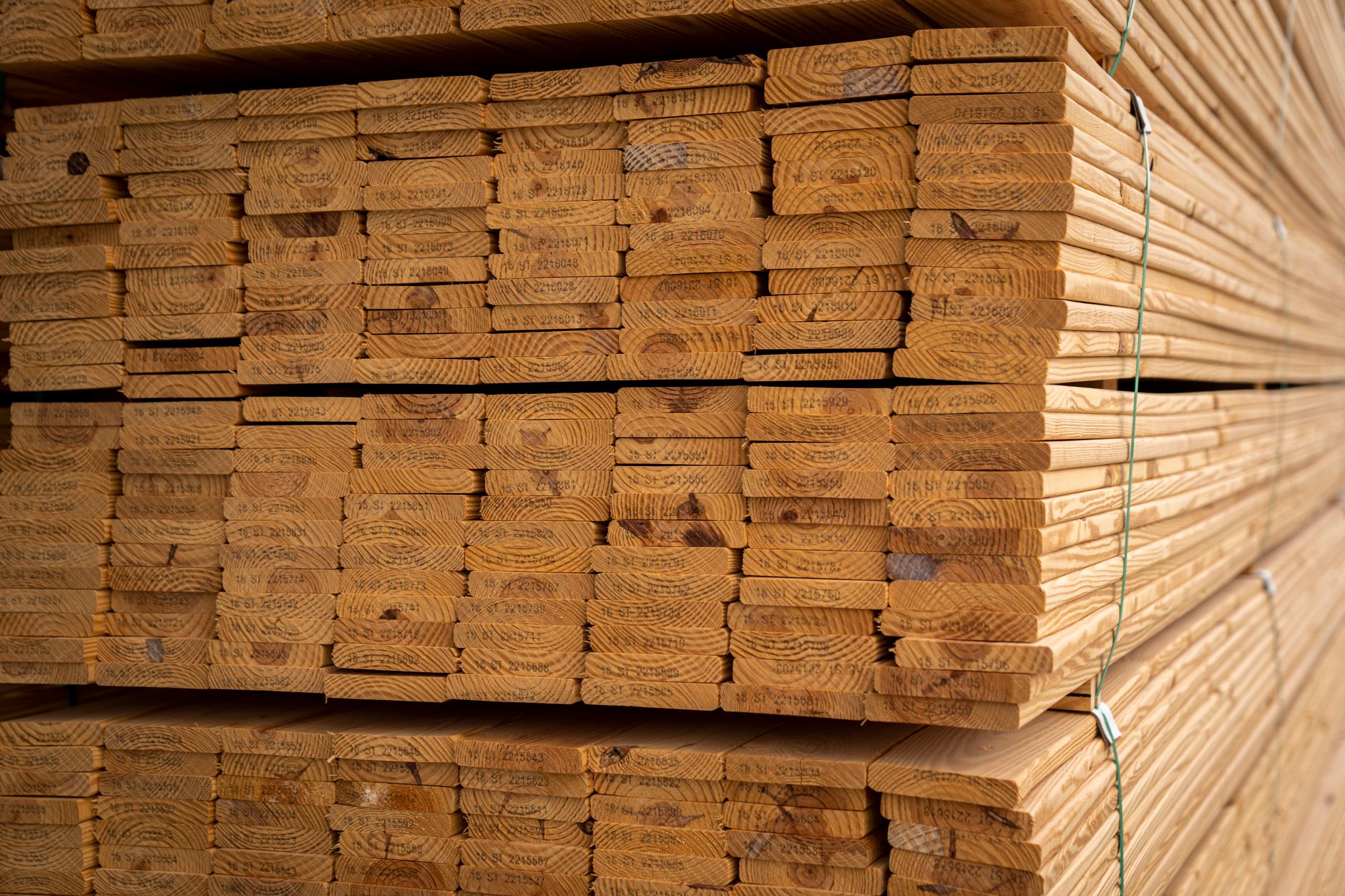
The team changes shape rather than disappears. A mill that adds a robot on a steady run still needs people at the saw line, at the staging points and on exceptions. The robot takes the walking leg and the person keeps the handling and decisions, so the work is redistributed, not removed.
We always plan for a robot plus fewer staff, never zero staff. A person starts and ends each run with the unit, clears exceptions and handles any load the platform cannot take. That coverage is what keeps the line running on nights and on days when someone is out.
Operators need training on the basics: loading the cart or tote the right way, keeping the route clear, stopping the unit safely and knowing who to call when it halts. We train the staff who will work beside the robot, so people on the floor know what it will and will not do before it goes live.
What can an autonomous mobile robot not do at a sawmill?
A robot does not replace a skilled hauler. It cannot read a stack the way a person can, judge whether a bundle is safe to move, or adapt when a backed-up conveyor or a pallet left in the wrong place blocks the path. A person still has to make those calls.
The route is only as good as the floor. Mapped paths need clear, reasonably level surfaces, and wood chips, bark, dropped boards and standing water change how the unit runs. Mills where the stacking area moves every day will spend time remapping before they save time hauling, and that belongs in the decision.
It does not fix the labor problem by itself. A robot takes the repeat haul, but it does not run the saw, sort the output or staff the line. The Timber Processing survey ranks flat lumber markets above labor, at 53 percent against 43 percent, so a robot will not address the main worry for many mills. Be wary of any proposal that promises to remove people entirely.
How do you get started, and how is the lease quoted?
Start with a site assessment. We map the route, measure the load, check the floor and count the runs, then quote a lease through financing. The quote comes after the assessment, because the right unit and the route depend on the mill, and we do not quote before we see the floor.
Robots are leased, not sold, and the payment appears in that quote. Compare it against the labor you are covering now, using your own timed shifts and your overtime and absence records. The government wage data on this page gives the local wage for this job, which is the starting point for the labor side of that comparison.
Pilot one run before committing to more. One leased unit on the steadiest haul shows whether the route, the load and the staffing routine hold in your mill. We handle deployment, integration, training and service nationwide, and we provide on-site dispatch when a unit needs attention.
Frequently asked questions
Upcoming manufacturing events
- Trade showBrats & RobotsNov 10, 2026Alliant Energy Center Exhibition Hall, Madison, WI
- Trade showMATE Farm & Ranch ShowFeb 11 to 13, 2027MetraPark, Billings, MT
- ExpoPFMA Expo 2027Feb 17 to 18, 2027Washington County Fair Park, West Bend, WI
- ExpoLouisville Facilities Maintenance ExpoApr 15, 2027Mellwood Art Center, Louisville, KY
Want a warehouse robot at your sawmill?
Tell us about your site. We will recommend the robot, quote the lease, and keep it serviced.
Sources
- US Bureau of Labor Statistics, Occupational Employment and Wage Statistics (OEWS May 2024)
- NAHB Economic Research blog, via woodcentral summary
- NAHB Economic Research blog
- Data USA, sawmills and wood preservation profile (Census-based)
- IBISWorld, sawmill and wood production businesses
- Timber Processing 2026 producer survey (trade press)
- U.S. Bureau of Labor Statistics, wood product manufacturing (NAICS 321)
- CDC/NIOSH, sawmills and wood preservation injury trends
- U.S. Bureau of Labor Statistics, JOLTS 2025 annual release