

The short answer
An autonomous mobile robot vs material mover comparison favors the robot for a steady, repeatable roll-to-line run on a fixed route at a paper converting plant, where the vehicle stays busy and the reel grip is rated for the load. It does not make sense for idle pallet moves between shifts, scattered short trips, or layouts that change often, where a person or a standard mover is the better match. The route log and reel specs decide the answer, and a site assessment turns them into a lease quote.
Key takeaways
- A robot fits a steady roll-to-line run on a fixed route, not scattered idle pallet moves.
- Reel weight, diameter, and grip are a separate check from the vehicle itself.
- Keep people on the floor and move their hours toward exceptions, staging, and reel setup.
- Paper manufacturing recorded 2.4 total recordable cases per 100 full-time workers in 2024, close to the 2.3 for all private industry.
- Log idle time for a few shifts before you ask for a lease quote.
Autonomous mobile robot vs material mover: which makes sense at a paper converting plant?
An autonomous mobile robot vs material mover decision at a paper converting plant mostly turns on one question: is the work a steady run on the same path, or a scatter of short moves that happen whenever someone has a free minute? A robot earns its place on the first kind. It carries a reel or pallet along a fixed route between a winder or staging area and the line that needs it, which is the same run a material mover makes by hand, trip after trip.
It does not make sense when the moves are idle filler between shifts, when trips are sporadic, or when the layout changes every few weeks. A robot that waits for most of a shift still needs a route, a charging spot, and someone who owns its queue. The first job is to separate those two kinds of work on paper before anyone asks for a quote.
We are a US commercial robot integrator. We pick the robot that fits the floor, lease it through financing, deploy and integrate it, train the staff, and service it nationwide. The lease is quoted after a free site assessment, so the figure reflects your route, your reels, and the uptime you need.
What does a material mover actually do in a converting plant shift?
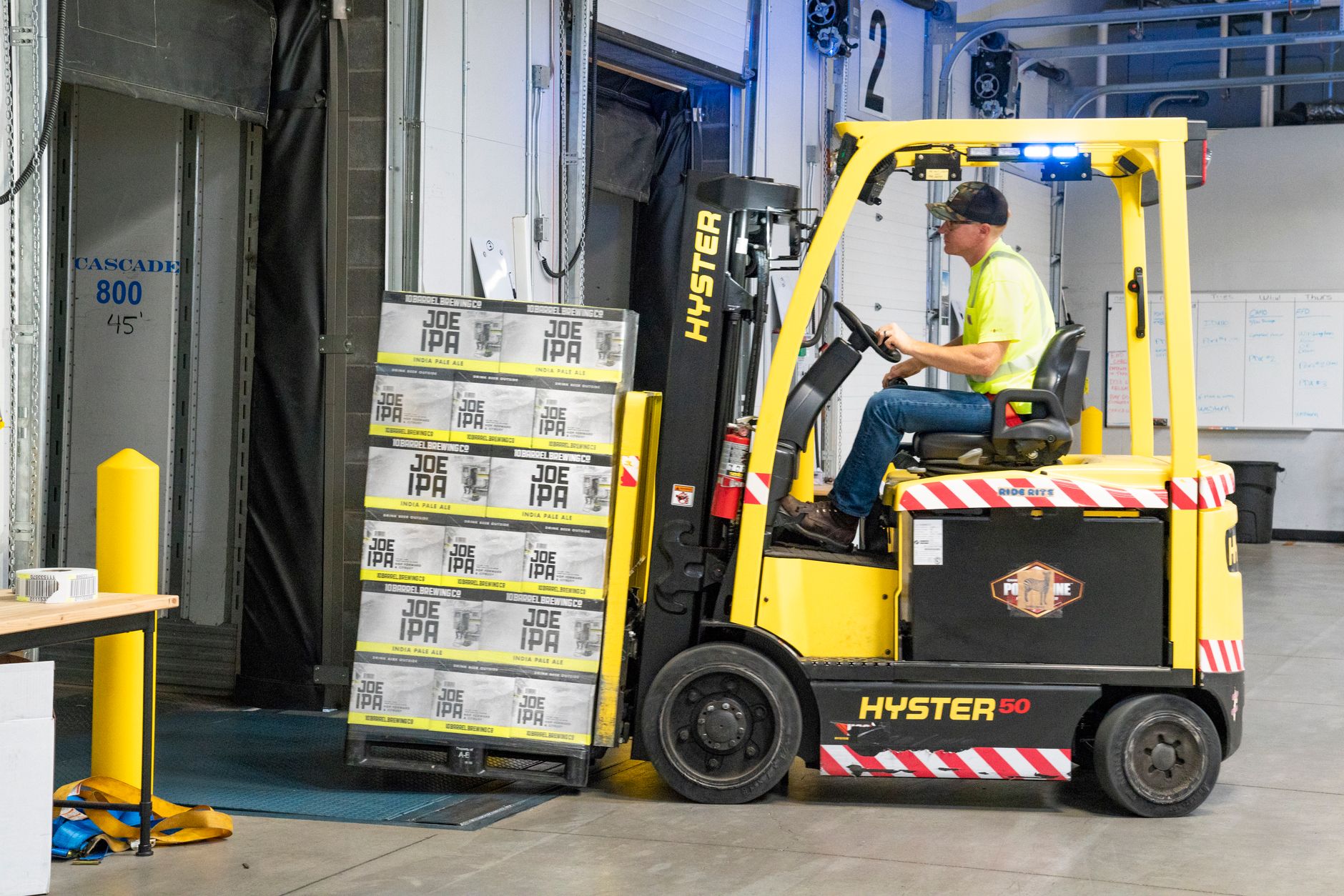
In a converting plant the material mover ties the paper machines, winders, converting lines, and warehouse together. Typical moves include reels and rolls from the winder to staging, finished rolls or pallets to the line that needs them, empty cores and packaging back the other way, and outbound product to the dock. Much of this follows the production schedule, so the route changes several times in a shift.
The shifts are not all alike. A mover on a steady roll-to-line run may make nearly the same trip for hours, while a mover on the pallet side may wait long stretches, then handle a burst of moves when a truck arrives or a changeover finishes. Much of the judgment is timing: which reel goes to which line, and when that line will be ready. A person gets that from radio calls, the board, and a look at the line.
Reel handling is what makes the job specific. A roll has to be lifted, gripped, and set down without damaging the wrap or the edge, so the grip matters as much as the vehicle that carries it.
Median hourly wage, Laborers and Freight, Stock, and Material Movers, Hand
$4,380
Monthly cost of one full-time worker, at the median wage plus payroll costs (an estimate, not a quote).
Which parts of the job can a robot take, and which can it not?
A robot can take the repeatable moves on a fixed path: winder staging to a converting line, finished goods to dock staging, and empty cores returned to the start of the line. These moves can be taught once, mapped, and repeated with the same stops. Vendor case studies at paper mills describe automated guided vehicles moving reels between paper machines and warehouses, but those reports come from suppliers, so treat them as evidence of what is possible rather than measured results.
A robot cannot take the parts that need judgment on the spot. A torn wrap, a reel sitting off-center in the cradle, a leaning load, or a dropped roll blocking the lane all need a person to decide. The robot stops and alerts rather than improvising. Reel handling is also a separate engineering question. A 1999 research project described an intelligent clamp for paper rolls, which points to reel grip as its own attachment, not a side effect of the vehicle. Confirm the reel weight, diameter, and grip rating with the integrator before you assume a reel move.
- Fixed route, same stops all shift
Autonomous Mobile Robot
Runs the same path with the same stops and no drift in pace
Material Mover
Can do it, but pace and attention vary over a long shift
- Night run
Autonomous Mobile Robot
Runs the scheduled route unattended and alerts a supervisor on a stop
Material Mover
Covers the run and handles problems on the spot, but a supervisor still needs to be reachable
- Reel grip
Autonomous Mobile Robot
Needs a tested reel clamp with a rated weight and diameter range
Material Mover
Adjusts grip by feel and spots a torn wrap before lifting
- Unexpected blockage
Autonomous Mobile Robot
Stops and alerts, then waits for a person to clear it
Material Mover
Clears a dropped roll or a blocked lane right away
- Layout change
Autonomous Mobile Robot
Needs the route remapped and tested before it runs again
Material Mover
Adapts the path the same day with no setup
- Idle time between bursts
Autonomous Mobile Robot
Still waits and charges, so idle hours are a cost of the lease
Material Mover
Can pick up other work between runs
How big is the injury and labor picture for this kind of work?
Plant size comes first. A 2016 count reported by a regional news site found 754 paper manufacturing businesses in the US with between 50 and 99 employees, so many converting sites are mid-sized operations rather than large campuses.
Paper manufacturing recorded a total recordable case rate of 2.4 per 100 full-time workers in 2024, according to the Bureau of Labor Statistics. Of those cases, 1.6 per 100 involved days away, restriction, or transfer, and 0.9 per 100 involved days away only. Across all private industry, the 2024 rate was 2.3 per 100 full-time equivalent workers, down from 2.4 in 2023, as reported by Business Insurance from the BLS release.
Hand material moving reports a higher rate than the paper average. For transportation and material moving workers in 2018, the BLS reported an incidence rate of 193.7 cases per 10,000 full-time workers, with a median of 13 days away from work. For laborers and freight, stock, and material movers, hand, the 2020 rate was 289.8 cases per 10,000 full-time equivalent workers. The units and years differ from the paper figure, so read the comparison as direction, not a head-to-head measure.
On labor supply, the BLS JOLTS annual average for 2025 showed a hires rate of 3.3 percent, down from 3.4 percent in 2024, and a separations rate of 3.3 percent, unchanged, across all industries. For transportation and material moving occupations, FRED reported unemployment of 6.4 percent in January 2026, 6.5 percent in February, and 5.4 percent in March 2026. None of these figures break out converting plants, so they describe the general market, not your local one.
What I could not verify is turnover, overtime, night shift, and sick day data for converting plants. Take those hours from your own time records before you size a robot to a shift.
When does a robot make sense, and when does it not?
The clearest fit is a route that runs most of the shift, moves the same kind of load between the same stops, and keeps the vehicle busy. The weak fit is a robot that waits between bursts of pallet work, or a plant where the layout shifts every few weeks. Idle time decides the case more than the headcount on paper does.
Take idle pallet moves between shifts first. If those moves follow a fixed route, arrive at predictable times, and add up to enough work to keep a robot busy, a lease can make sense. If they are short, scattered, and spread across the floor, a person with a cart or a standard mover is often the better match. The steady roll-to-line run is the strongest candidate, since it is repetitive, predictable, and easy to map.
Adoption is growing across industry. A3 reported North American robot orders up 6.6 percent for full-year 2025, with 36,766 units ordered and 7,212 of them collaborative robots. A3 excludes mobile robots from those counts, so the figures say little about roll-to-line vehicles directly.
Log a few shifts before you decide. Record each trip's start, stop, load, and wait time. That log is the honest basis for the assessment.
How does the team work with a robot on the floor?
The robot takes the fixed route, and the people on the floor take what remains: exceptions, reel setup, staging, and decisions that need judgment. A sound plan keeps people on the floor and moves their hours from repetitive runs toward checking the line, clearing faults, and keeping lanes open. Never plan for zero staff. A stopped robot with nobody nearby stays stopped.
Assign the handoffs. Someone owns the robot's queue at the start of each shift, someone responds to a stop within a time the plant sets, and someone checks the route map after any layout change. Train operators to read the robot's alerts and to move a stopped unit safely before touching it.
What does the lease cover, and how is the cost quoted?
The robot is leased through financing, and the fixed lease payment is set after a site assessment. The assessment maps the route, measures reels and pallets, checks floor condition, and locates the charging spot and dock access. A quote built on the real route is more useful than a generic figure, and it keeps the plant from paying for capacity it will not use.
Ask any integrator what service is included, how a stopped unit gets attention, and who carries liability on a busy floor. A lease that includes maintenance and nationwide service changes the risk of downtime, so compare written terms side by side, not only the headline. We handle deployment, integration, staff training, and nationwide service as part of the work.
What can an autonomous mobile robot not do in a paper plant?

It will not clear a jam on a converting line, change a reel on a winder, hold a roll for a quality check, or work around a damaged wrap on its own. It cannot fix a cracked, wet, or sloped floor, and it does not clear a lane blocked by a forklift or a pallet left in the path. Those stops are people tasks.
Performance depends on the site. Clear lanes, a network that reaches the whole route, and a charging spot in the right place all matter. If those conditions shift, the route will stop more often, so be candid in the assessment about how often the layout changes and whether someone keeps the lanes clear.
A robot also does not remove injury risk from the job. It takes over manual handling on a fixed route, but people still work around forklifts, staging, and line equipment, so the safety plan stays in place after the robot arrives.
How do you get started with a robot for a converting plant?
Start with one route. Pick the steady roll-to-line run that moves the most reels, log its trips for a few shifts, and note the idle time. That log becomes the basis for the site assessment and the quote, and it shows whether the robot will stay busy.
Then request the free site assessment with your route log, reel specs, floor plan, and shift schedule. We pick the robot that fits the floor, lease it through financing, deploy and integrate it, train the staff, and service it nationwide. We are vendor neutral, so the recommendation follows your floor rather than one manufacturer's line.
A single leased unit on one route is a practical way to test the decision on your own trips. The log then decides whether to expand.
Frequently asked questions
Want a warehouse robot at your paper converting plant?
Tell us about your site. We will recommend the robot, quote the lease, and keep it serviced.
Sources
- US Bureau of Labor Statistics, Occupational Employment and Wage Statistics (OEWS May 2024)
- Bureau of Labor Statistics, paper manufacturing profile (NAICS 322), 2024
- Business Insurance, report on the BLS 2024 injury release
- Bureau of Labor Statistics, transportation and material moving workers, 2018
- Bureau of Labor Statistics, laborers and freight, stock, and material movers, hand, 2020
- Bureau of Labor Statistics, JOLTS annual 2025 release
- FRED, unemployment rate for transportation and material moving occupations
- Robotics 247, A3 full-year 2025 North American robot orders
- North Dakota News, count of paper manufacturing businesses with 50 to 99 employees, 2016