

The short answer
An autonomous mobile robot makes sense at a bicycle plant when the same stockroom-to-station routes repeat all shift and the loads are standard totes, bins or carts. A parts runner still makes sense when picks are irregular, parts must be chosen from mixed shelves, or the layout changes too often to map a route. In most plants the answer is a robot plus fewer runners, not a robot in place of the whole team.
See what a autonomous mobile robot costsRun the numbers in the ROI calculator
Key takeaways
- A robot fits fixed, repeated runs from stockroom to assembly stations, not one-off hunts for parts.
- Standard, sealed, cart-sized loads suit a robot; loose, heavy or oddly sized parts often do not.
- Openings data show this job is refilled constantly, so the case rests on waits and gaps, not headcount alone.
- Plan on a robot plus fewer runners, with a site assessment deciding how many people remain.
- Start with one leased unit on one route, measure the transport share, then widen.
Autonomous mobile robot vs parts runner at bicycle plants: which makes sense?
For most bicycle assembly lines the answer is an autonomous mobile robot for the repeated stockroom-to-station runs, with a smaller number of people kept for the work a robot cannot do. The robot makes sense when the route is fixed, the load is a standard tote or bin, and the same stations are fed every hour. A parts runner still makes sense when the picks are irregular, when a person has to choose parts from mixed shelves, or when the layout changes so often that a route cannot be set.
Both jobs move components from a stockroom to assembly stations on repeated routes, which is why the comparison is worth making. The difference is judgment. A runner notices a short bin, reroutes around a blocked aisle and handles an odd part. A robot makes the same trip the same way every time, which is an advantage when the trip itself is the problem.
This page covers what the runner does, which parts a robot can carry, what the labor data says, how a team works with a robot and what the robot cannot do. Figures are cited where they were published. Where no figure for this exact job was found, we say so.
How many bicycle plants are there, and is the work changing?
The US bicycle manufacturing base is small, and published counts depend on the year and method. The Census Bureau's 1997 industry sampler listed 388 establishments in motorcycle, bicycle and parts manufacturing, with 17,151 paid employees. That count is nearly three decades old and is useful only as history. According to IBISWorld, a commercial market research estimate, employment in motorcycle, bike and parts manufacturing was 8,305 in 2025, down an average of 1.7 percent a year over 2020 to 2025, and the bicycle-only sector has 67 businesses.
A small base of plants changes the economics. In many small assembly rooms, one stockroom and one set of runners serve several lines, so a single robot route can cover a large share of the material flow. Plant layouts vary widely, which is why the labor picture covered below should be checked against your own line.
Adoption is rising in manufacturing more broadly. According to the International Federation of Robotics, preliminary US industrial robot installations reached 38,000 in 2025, up 11 percent. Its World Robotics 2026 figure is 38,400, up 12 percent, and US robot density stands at 307 units per 10,000 manufacturing workers. Automotive, the largest US market, took about 13,500 units in 2025, roughly 1 percent below the year before. Bicycle plants are not broken out, so treat these as context, not as a bicycle benchmark.

What does a parts runner actually do in a shift?
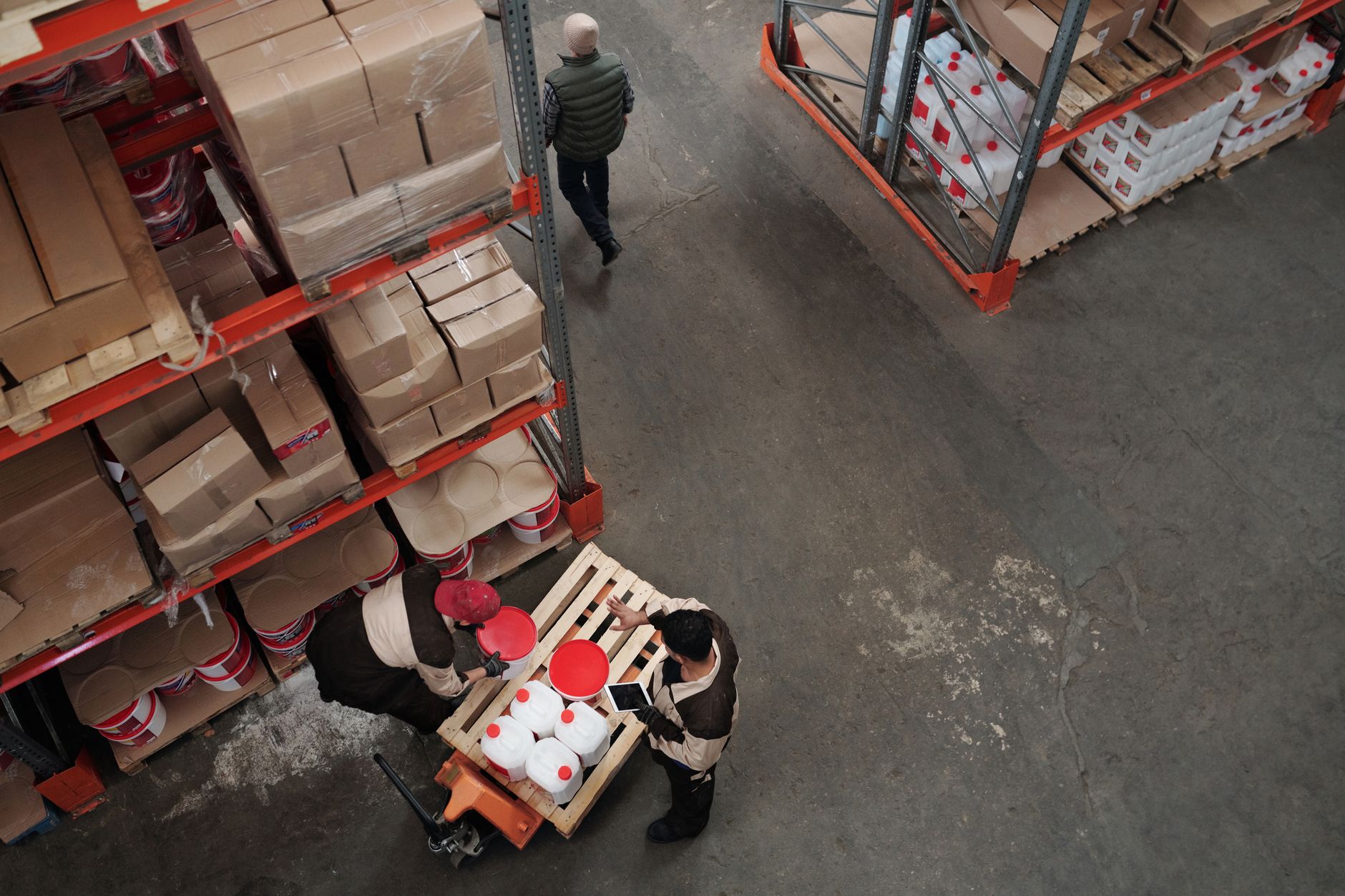
A parts runner at a bicycle plant pulls components from the stockroom or kitting area, checks part numbers against the build order and delivers them to the station that needs them. Typical loads include wheel sets, drivetrain components, brake parts, cable kits, fasteners, saddles, handlebars and small packaging. The runner also returns empties, flags shortages and warns the lead when a station is about to run dry.
Most of the job is repetition on a small number of routes. The runner walks the same aisles and returns to the same stations many times a shift. Each trip is short, but the work is continuous, so the runner is rarely at one fixed place. A line that depends on runners can stop when one is out sick or late, and the stop often shows up at the station first.
Some of the work is judgment, not transport. A runner checks a part's condition, handles a damaged box, asks a question when a bin is empty and chooses a substitute when a part is missing. A site assessment first measures how much of the shift is pure transport, because that share sets how much of the job is worth moving to a robot.
- Repeated fixed route
Autonomous Mobile Robot
Runs the same mapped loop all shift without drifting from it
Parts Runner
Keeps the route but takes breaks, and is absent on sick days and vacation
- Night and weekend coverage
Autonomous Mobile Robot
Runs the loop without a person on the floor, if the site allows it
Parts Runner
Needs a scheduled shift and cover for every absence
- Irregular or hand-picked parts
Autonomous Mobile Robot
Carries staged carts only and cannot choose parts from shelves
Parts Runner
Picks from mixed shelves and checks each part as it goes
- Damaged or odd items
Autonomous Mobile Robot
Stops and alerts the lead; does not decide what to do
Parts Runner
Decides on the spot, sets the item aside and asks the lead
- Changed layout or new routes
Autonomous Mobile Robot
Needs a new map and a test run before a route changes
Parts Runner
Adapts the same day with no setup
- Response to a missing part
Autonomous Mobile Robot
Follows the route, so a missing part means a waiting cart
Parts Runner
Can walk to another station or find the part elsewhere
Which parts can an autonomous mobile robot carry, and which can it not?
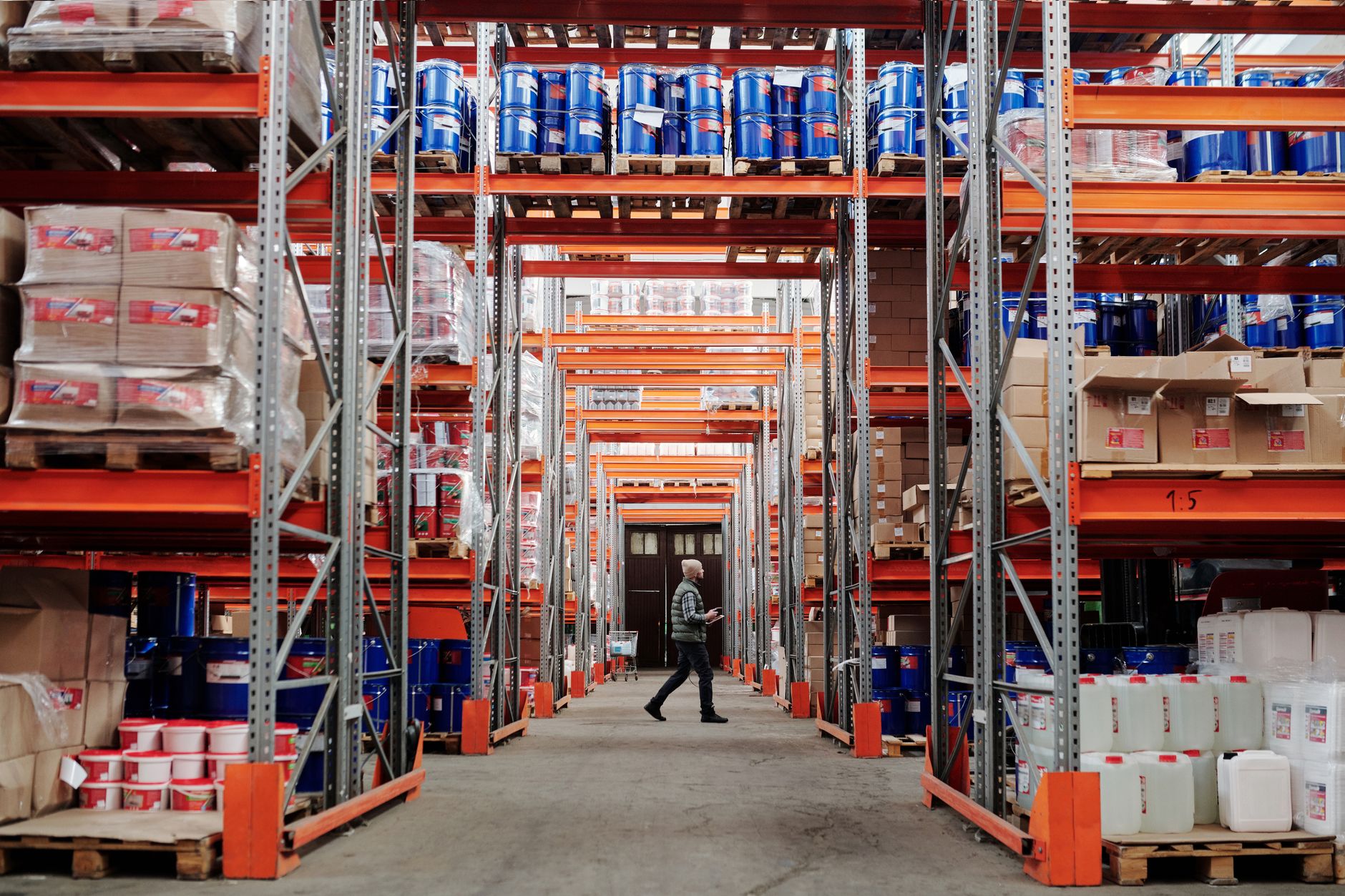
An autonomous mobile robot does best with standard containers on a fixed route: sealed totes, bins, kit carts and racks that sit on a flat, mapped floor. These loads suit a robot because it does not grip anything. It holds a cart or tote, follows its path and stops safely when a person steps into the way.
A robot also cannot pick from a shelf. That work stays with a person or a separate system. The practical split is that the robot carries a pre-picked, staged tote from the stockroom to a staging point, and a person or fixed station takes the last step if the layout requires it. Check each part family against cart size and the weight limit of the specific unit before deciding.
- Good candidates: sealed wheel and hub kits in bins, cable and housing kits, fastener bins, packaging and empty bin returns, and packed components on standard carts.
- Poor candidates: loose parts that must be counted by hand, heavy items that need a lift or a second person, oversize frames that do not fit the cart, and finished surfaces that need careful handling before assembly.
What do turnover and injury data say about this job?
The job sits inside a large occupational family. The Bureau of Labor Statistics Occupational Outlook Handbook lists about 6,917,800 jobs in 2025 for hand laborers and material movers, with a net change of 288,900 over 2025 to 2035 and projected growth of 4 percent. The handbook projects about 904,200 openings a year on average, mostly from replacing workers who leave. The bicycle parts runner is a small slice of that count, but the openings figure shows how constantly this work is refilled.
Turnover is the real staffing problem, and the signal is mixed. A tracker summarizing the BLS JOLTS survey reports the economy-wide quits rate at 1.9 percent in August 2026, near its lowest level since 2020. Fewer people leaving can mean steadier runners. We did not find a published turnover rate for this occupation in bicycle plants, so your own separation records are the best source for your number.
Injury data for the wider setting is higher. A vendor blog summarizing BLS data, Voxel AI, reports that warehousing and storage recorded a 2024 total recordable injury and illness rate of 4.8 per 100 full-time workers, against an all-industry rate of 2.6, and 32 fatal injuries in 2024, up from 28 in 2023. A GAO report citing BLS gives 3.8 per 100 full-time workers for the transportation and warehousing serious injury and illness rate in 2022. The vendor figures are secondary, so the GAO and BLS numbers are the firmer ones. Repeated carrying is a common strain exposure, and routes a robot takes over remove that exposure for the people who would have run them.
How many hours does the transport take, and what changes it?
Hour figures for a parts runner at a bicycle plant were not published in the sources we reviewed. Any hour estimate for a specific plant should come from a time study on that line, or from the site assessment. The most useful measure is the share of a shift spent on transport: walking, waiting and returning empties, as opposed to checking parts or fixing problems.
Three things change that share most. The first is route length, because a long walk to a far station multiplies every trip. The second is trip frequency, set by how many kits a station uses per hour. The third is waiting, meaning time a runner stands at a dock or stockroom for a kit that is not ready. A site that cuts waiting often gains more than one that only shortens the walk.
Overtime and night shifts are where the labor strain shows. The sources we checked did not give overtime or night-shift shares for this occupation in bicycle plants. If your plant runs a second shift, ask how many runner positions go unfilled on that shift and how often a station waits for parts.
How does a team work with a robot?
The right model is a robot plus fewer runners, never a robot with zero staff. The robot takes the repeated transport, and the people keep the work that needs judgment: picking, checking, handling exceptions and supervising the route. Plants that plan this split usually see the runner role shift toward kit preparation and station support, not disappear.
Training is the part most often skipped. Stock leads need to know how to stage a cart so the robot can load it, how to clear a route, what each alert means and who responds to it. Line staff need to know where the robot stops and how to step out of its path. We train the staff on site as part of deployment, so the handoff is planned rather than improvised.
Our role is to pick the robot for the site, lease it through financing, deploy and integrate it, train the staff and service it nationwide. The process starts with a free site assessment that maps the route and measures the transport share. The lease quote follows that assessment, so nothing is quoted before the site has been seen.
What can the robot not do?
A robot cannot replace judgment, and it will not do everything a runner does. It does not pick loose parts from shelves, handle damaged goods, choose substitutes or fix a station that runs out of a part. It also cannot cover a route that changes every week, because a robot needs a mapped route, and mapping takes time and a test run.
Floor conditions matter. Uneven floors, unmarked aisles, dock edges with level changes and areas where people walk without watching for vehicles all raise setup effort and the number of stops. Robot speed and load are limited, so heavy frames and oversize cart loads may still need a person or a different handling system. Batteries need charging time, and a unit down for service removes its route until it returns or a spare covers it.
Safety is shared. The robot stops when a person enters its path, but people have to know where that path runs. A robot does not solve a blocked or crowded aisle; it stops and waits. Set a plan for days the robot is down, such as a spare unit, a person on the short route or a reduced build order.
How do you get started, and how does the lease work?
Start with one route, not the whole plant. Pick the line with the most repeated transport and the most frequent waits, map the route and measure the transport share over a few weeks before deciding. A single leased unit on one route shows whether the route holds, how much runner time comes back and where the layout needs work.
The lease is a fixed robot lease payment through financing, so the cost is predictable rather than a large upfront commitment. The payment comes in a quote after a free site assessment, which covers the route, container types, floor condition and the number of runners the plant still needs. Service, repair and on-site dispatch are part of the program, so a unit out for repair does not leave the plant without a plan.
Ask any integrator, including us, for the same things: the route map, the container standard, the expected transport share, the spare unit plan and the staff training schedule. Set the quote against the labor the plant loses to gaps and waits, not against a single shift. If the numbers do not support one route, the site assessment should say so.
Frequently asked questions
Upcoming manufacturing events
- Trade showBrats & RobotsNov 10, 2026Alliant Energy Center Exhibition Hall, Madison, WI
- Trade showMATE Farm & Ranch ShowFeb 11 to 13, 2027MetraPark, Billings, MT
- ExpoPFMA Expo 2027Feb 17 to 18, 2027Washington County Fair Park, West Bend, WI
- ExpoLouisville Facilities Maintenance ExpoApr 15, 2027Mellwood Art Center, Louisville, KY
Want a warehouse robot at your bicycle manufacturing plant?
Tell us about your site. We will recommend the robot, quote the lease, and keep it serviced.
Sources
- BLS Occupational Outlook Handbook, Hand Laborers and Material Movers
- Census Bureau 1997 Economic Census Industry Sampler, NAICS 336991 (archived)
- IBISWorld, Motorcycle, Bike and Parts Manufacturing in the US
- Voxel AI, Distribution Center Safety Statistics
- GAO report citing BLS injury and illness data (via Publicnow)
- International Federation of Robotics, US Robot Industry Returns to Double-Digit Growth
- Manufacturing Dive, US Robotics Rebounded in 2025 (IFR data)
- Coalition for a Prosperous America, Re-shoring the US Bike and E-Bike Industry