

The short answer
An autonomous mobile robot makes sense at a semiconductor fab when the supply runner's job is repeatable hauling along fixed routes, such as moving consumables, empty carriers and waste between stockers, staging areas and tool-side stations. It does not make sense for work that needs gowned hands, tool access or judgment about a fault, and it cannot replace the technician who keeps the tools running. In practice, the sensible split is a robot that takes the hauling while trained staff keep the work that needs a person.
Key takeaways
- A robot fits fixed, repeatable hauling routes, not tool work that needs gowned and trained hands.
- Wafer carriers in 300mm fabs more often move on overhead systems, so a floor robot's main lane is non-wafer supply.
- Older 200mm fabs use floor vehicles more often, which gives a floor robot its clearest lane.
- Plan for a robot plus fewer staff, never zero staff, with trained people on every tool and every fault.
- No published turnover or overtime figures for this job were found, so log your own shift before deciding.
Does an autonomous mobile robot vs supply runner make sense in a semiconductor fab?
It makes sense when the work is a fixed, repeatable haul. In a fab, that means consumables, empty carriers, spare kits and waste moving between stockers, staging points and tool-side stations, on routes that rarely change. A floor robot can run those loops on a schedule without tying up a person's walking time.
It does not make sense when the job needs a person. Gowning, entering a tool, reacting to an alarm, deciding whether a part is good enough to use, and handling hazardous material all stay with trained staff. A robot that cannot do those jobs will leave a technician doing them, so the useful question is how many hauling trips a person makes today, not whether the robot can do the technician's work.
The decision usually turns on how fixed the routes are and how much of the runner's shift goes to walking rather than tool work. If the same loops repeat and technicians lose time to carts and carriers, a robot has a clear lane. If the routes change every hour, the mapping and reprogramming work grows and the case gets weaker.
What does a supply runner actually do in a fab shift?
The supply runner keeps stations stocked so that technicians and engineers can stay at the tool. Across a shift, the runner pulls consumables and kits from stores, delivers them to tool-side stations, collects empty containers and waste, and carries sealed items through the bay to gowning or staging. Much of this moves on foot or by cart along the same corridors.
Much of the time goes to the walk, the wait for a door or elevator, and the record of what moved. The runner also works around the fab's traffic, including overhead transport, other carts, maintenance crews and people working at the tools. Each trip is short, so the total becomes visible only when someone logs trips across a full shift.
The research for this page did not find published hours per shift or trips per shift for this job. The only reliable count comes from logging the runner's trips during a site assessment, and that log is the number your decision should rest on.
Which supply tasks can a robot take, and which can it not?
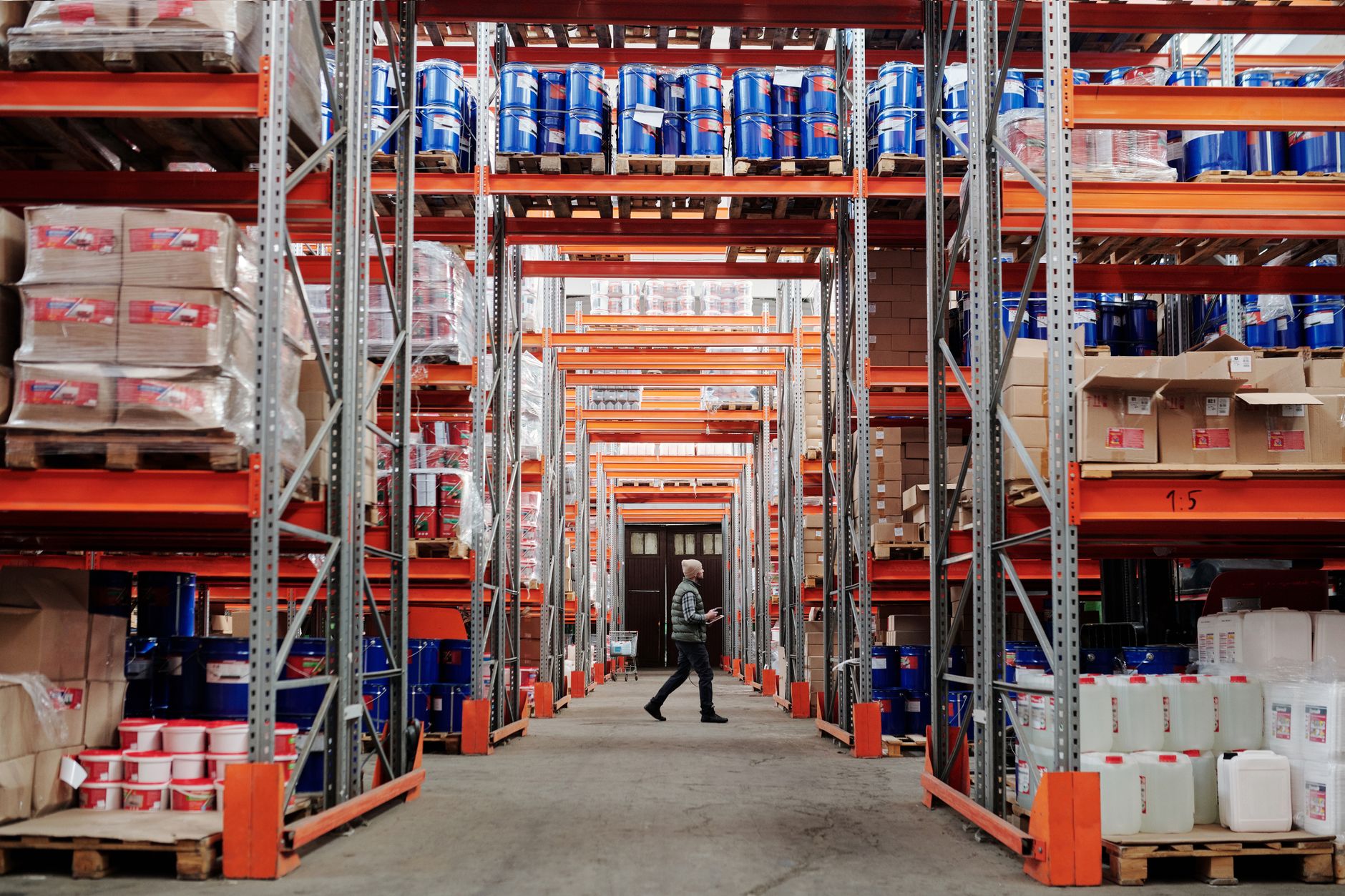
A floor robot can take non-wafer material on defined routes: consumable bins, spare parts kits, empty containers, waste to the dock, and sealed items between stations that the robot can reach. These are the tasks where the path is known and the load is boxed or caged.
Wafer carriers are a separate case. According to a March 2024 trade newsletter, automated guided vehicles and rail guided vehicles are more common in older 200mm fabs, while overhead hoist vehicles and overhead transport systems are more common in 300mm fabs. In a 300mm bay, the carrier path is usually overhead, so the floor robot's main lane is supply, not wafers.
Some tasks sit in between, such as staging gowning supplies near an entry or moving chemical containers that need a trained handler. Those need approval from the fab's safety and process owners before anything is automated, and they often stay with staff. The honest split is that the robot takes the transport, and a person does the handling that carries risk or judgment.
- Fixed route trips
Autonomous Mobile Robot
Runs the same loop on schedule
Supply Runner
Adapts when the route or priority changes
- Wafer carriers
Autonomous Mobile Robot
Not the normal path in 300mm bays
Supply Runner
Can handle the exceptions that need a hand on the load
- Gowned and tool-side work
Autonomous Mobile Robot
Cannot enter or handle tools
Supply Runner
Works with gowned staff at the entry and tool edge
- Faults and exceptions
Autonomous Mobile Robot
Stops and waits for staff
Supply Runner
Judges what to do next
- Night and thin shifts
Autonomous Mobile Robot
Runs routes with no operator aboard while staff are on site
Supply Runner
Needs breaks, handoffs and a shift change
- Consistency
Autonomous Mobile Robot
Same path on every trip
Supply Runner
Varies with workload and fatigue
How many semiconductor fabs and workers are there in the US?
The U.S. Census Bureau counts the industry in establishments and employment. According to its October 2024 spotlight, which uses BLS data, semiconductor and related device manufacturing establishments rose from 1,876 in the first quarter of 2020 to 2,545 in the first quarter of 2024. Employment in the same industry rose from 185,370 in January 2020 to 202,029 in January 2024.
A broader count gives a much larger number. A 2026 vendor benchmark report, citing BLS Current Employment Statistics, put semiconductor and other electronic component manufacturing (NAICS 3344) at 368,400 workers in March 2026, preliminary and seasonally adjusted, down from a 2023 peak of about 401,000. The BLS figure was not confirmed on bls.gov, and the two counts cover distinct scopes, so they should not be compared directly.
Trade press coverage of a study commissioned by the Semiconductor Industry Association projects a shortfall of 67,000 semiconductor workers by 2030. The same coverage projects industry employment growing 33%, from about 345,000 to about 460,000 jobs. For a fab, the staffing pressure is real, and the people you keep should be on the tools, not on the carts.
What does the labor picture look like for fab technicians and material handlers?
The Bureau of Labor Statistics Occupational Outlook Handbook puts semiconductor processing technician jobs at about 31,900 in 2024. Those technicians are the group whose hours are most costly to lose, so protecting their time at the tool is the main reason to take hauling off their day.
Material moving is a separate occupation. The BLS May 2020 estimate counted about 640,950 industrial truck and tractor operators nationally. That count covers all industries rather than fabs, so it shows the scale of the occupation, not what a fab runner does.
The research could not confirm several labor numbers. No published turnover, overtime, night shift or sick day figures for fab technicians or material handlers were found, and BLS turnover rates for industrial truck operators were not found either. Ask any fab for its own turnover and overtime data before building the case on those numbers.
On safety, the BLS regional release for Illinois reports 47 fatal injuries in transportation and material moving in 2024, down from 55 in 2023. That is one state, not a national rate, but it shows that hauling work carries real risk on the floor, which is a reason to take fixed routes off people where the layout allows.
How does a team work with a robot on the fab floor?
The robot does not replace the runner. It changes the runner's day. The robot covers fixed routes, and the runner covers exceptions, pickups that do not fit a route, and any stop that needs a person. Staffing stays at a level where someone is always on the floor, never zero.
Setup matters more than the robot model. Routes, door and elevator access, staging points and the link to the fab's material control system are mapped and tested before go live. Staff who will clear a stopped robot learn the fault list and the restart steps, and they know who to call when a fault is not on that list.
After go live, the team runs a short loop. Staff load the robot at stores, check it at staging points, and review the log for repeated stops. Repeated stops at the same spot usually point to a layout or traffic problem rather than a robot problem, and they should be fixed before the route is trusted.
What can a robot not do in a fab?
A robot cannot gown, enter a tool, adjust process hardware, or decide whether a part is acceptable. It cannot respond to a process excursion, read a tool alarm in context, or manage a chemical spill. Those jobs stay with trained people however well the route runs.
It also needs a plan to run at all. A floor robot needs an accurate map, reliable wireless coverage across the bay, and doors and elevators it can use. Heavy overhead traffic and frequent layout changes add work that a simple route on paper does not show.
Adoption evidence is thin. The research for this page found no published adoption figures for robots inside fab cleanrooms. The case therefore has to rest on your own routes and trip counts, not on how many other fabs run a robot.
Which fab layouts give a robot the best chance?
Layout decides more than the robot does. Older 200mm fabs that already use floor vehicles have clearer lanes and a familiar pattern for guided transport, so a floor robot has a better chance of finding a place. Fabs built around 300mm overhead systems leave less open floor for supply runs and more crossings to manage.
Look for bays where supply trips share a short set of corridors, where stores and staging points are on the same floor, and where the runner's walking time is large compared with time spent at the tool. Those are the cases where a fixed route earns its place.
Do not assume one layout answer covers every bay. An interbay corridor with heavy overhead traffic, next to a cleanroom entry that needs manual staging, can make one bay a good candidate and the next a poor one.
How do you get started with a robot lease at a fab?
Start with a site assessment. Your team maps the routes, logs the runner's trips over a normal shift, notes the doors and elevators, and marks the stations that need supplies. That data decides whether a robot fits and how many units make sense.
We are a commercial robot integrator. We choose the robot that fits the site, lease it through financing so the fab does not need upfront capital for the hardware, deploy and integrate it, train the staff, and service it nationwide. The lease is quoted after the free site assessment, and the quote reflects the routes you actually run.
Pilot one unit on one route before scaling. A single route shows whether the trips fall where the log said they would, and it gives staff time to learn the fault list before the robot carries more load. Once the route holds, add routes or units in phases so production keeps running through each change.
Frequently asked questions
Want a warehouse robot at your semiconductor fab?
Tell us about your site. We will recommend the robot, quote the lease, and keep it serviced.
Sources
- Trade press coverage of a Semiconductor Industry Association workforce study
- U.S. Census Bureau, Semiconductor Industry Spotlight, October 2024
- Bureau of Labor Statistics, Occupational Outlook Handbook, semiconductor processing technicians
- Bureau of Labor Statistics, OES May 2020, industrial truck and tractor operators
- Trade newsletter, March 2024, fab material handling systems
- Vendor benchmark report citing BLS Current Employment Statistics
- Bureau of Labor Statistics, Illinois fatal work injuries, 2024