

The short answer
For a medical device plant, the autonomous mobile robot vs kit runner choice comes down to route repetition and what a shortage costs the line. An autonomous mobile robot makes sense when kit trips follow fixed routes from the stockroom to the same assembly cells and a single missing component stops a build. It does not make sense when the work depends on judgment, inspection, or items that no bin can hold.
Key takeaways
- A robot fits repeat kit trips on fixed routes, not judgment work at the cell.
- Measure shortage stops and trips per shift from the site's own logs before deciding.
- Public data gives industry context, not a verified kit runner hour count.
- The model is a robot plus fewer staff, never zero staff.
- Start with one route and a free site assessment before any lease quote.
Is an autonomous mobile robot vs kit runner the right call at a medical device plant?
Most plants ask this question because the kit runner role is hard to fill, and a gap in it shows up on the line fast. The answer depends on the shape of the work, not the size of the plant.
The fit is strongest when the trips repeat. A runner who walks the same loop from stockroom to cells, with a set pickup point and set drop points, is doing work a vehicle can run on a fixed route. The fit is weakest when a runner spends the shift deciding what to pull, checking revisions and handling exceptions. A robot carries the trips. It does not make those decisions.
Service Robot Co. treats this as a staffing change, not a headcount cut. The model is a robot plus fewer staff on the route, never zero staff, and the first step is a free site assessment rather than a vehicle recommendation. The assessment decides whether the route, the trip count and the shortage history justify a lease. For context, according to the SelectUSA medical technology industry page, the industry had 9,009 establishments across the US as of 2022.
What does a kit runner actually do in a shift at a medical device plant?
A kit runner pulls the components for an upcoming build, usually from a stockroom, against a pick list. The runner places them in bins or kits and delivers them to assembly cells before the cell runs short. On a typical route the runner also checks lot labels, signs for what was taken and returns empty bins, so the job is part picking, part delivery and part paperwork.
The hours split is site-specific. Walking, waiting at doors and elevators, and staging kits all take time, and the share of each depends on the plant layout. The site's own timing will show where the hours go, and that breakdown decides how much of the job a vehicle can take.
When a runner is out or a shift goes unfilled, the cell either draws on its own buffer, which runs down, or the line waits. Overtime is the common patch. It adds hours to the people already on the route and does not add a second route. A fixed robot route is the part that can run on its own schedule.
Median hourly wage, Laborers and Freight, Stock, and Material Movers, Hand
$4,380
Monthly cost of one full-time worker, at the median wage plus payroll costs (an estimate, not a quote).
- Route changes
Autonomous Mobile Robot
Runs the mapped route; a changed route needs a new survey
Kit Runner
Can change the route on the spot when a cell moves
- Night coverage
Autonomous Mobile Robot
Runs a fixed route overnight if staging is ready and a person is on site
Kit Runner
Can work nights, but night shifts are harder to fill
- Blocked path or unknown item
Autonomous Mobile Robot
Stops and calls staff
Kit Runner
Finds another way and decides what to do
- Lot and label checks
Autonomous Mobile Robot
Reads codes only where the site has a scan step
Kit Runner
Can spot a smudged label or wrong lot visually
- Absence
Autonomous Mobile Robot
Does not call out, but a stopped unit still needs cover
Kit Runner
Absence must be covered by someone else on the route
- Fragile or sterile items
Autonomous Mobile Robot
Carries sealed bins within its load and speed limits
Kit Runner
Handles delicate or sterile items with gloves and care
Which parts can an autonomous mobile robot carry, and which can it not?
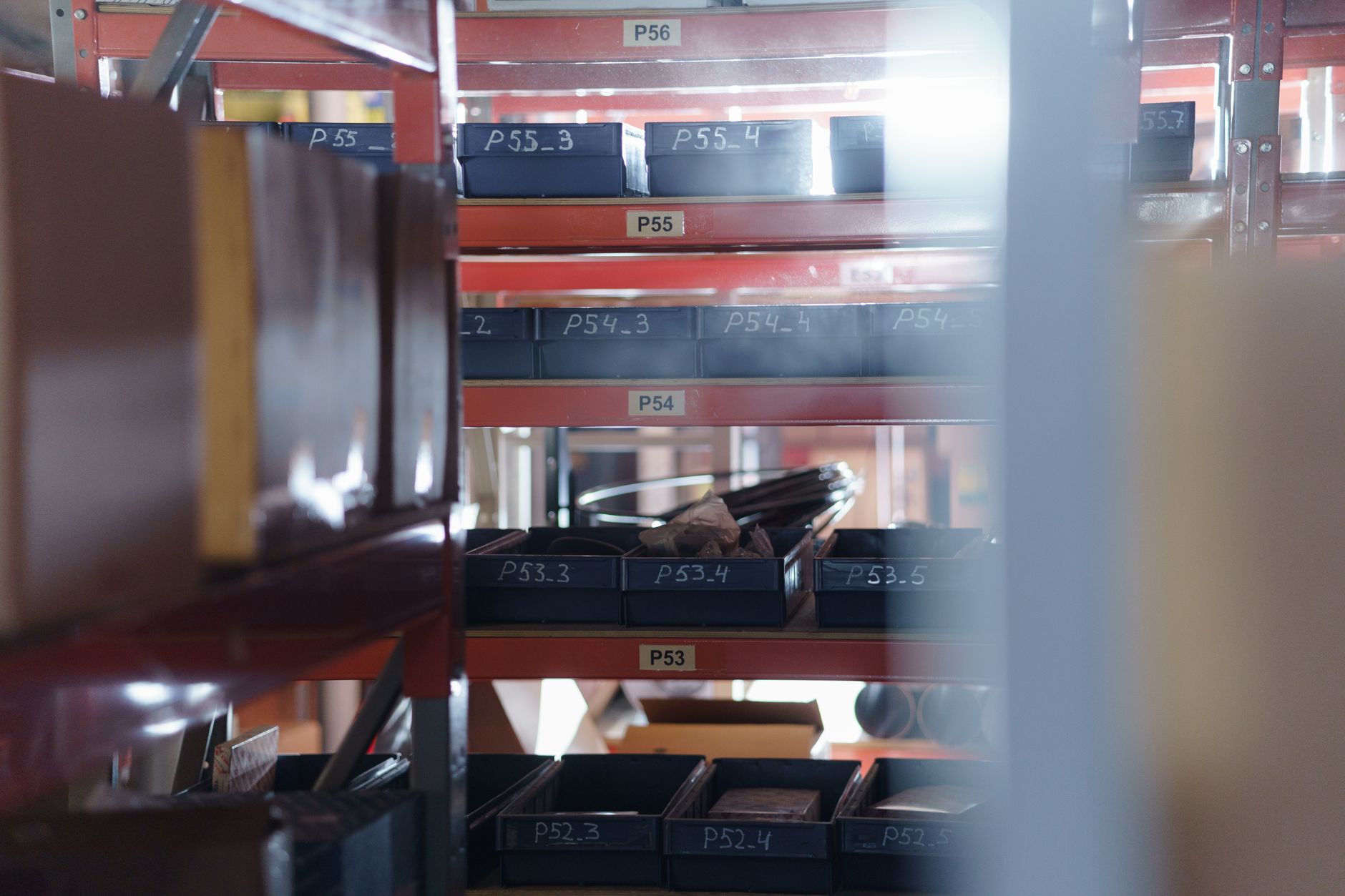
A robot is good at carrying what fits its tray or tote, leaving from a set staging point and going to a set drop point. In a medical device plant that often means labeled bins of bagged or boxed components, assembled kit trays, and sealed packs that a person has already checked at staging.
What stays with people is the work that needs sight, hands or a decision. A person picks loose components from a mixed bin, checks a revision against the build record, opens cleanroom packaging and approves a substitute. Those steps are where a quality system looks for errors, so they should not move to a vehicle just because the walking can.
The practical rule is to automate the transport and keep the judgment. Put the robot between the stockroom and the cell, and keep staff at the two ends where items are checked and handed over.
- Carries: labeled bins and totes that fit the vehicle tray
- Carries: assembled kit trays staged at a fixed pickup point
- Carries: sealed packs already checked at the staging point
- Cannot: pick loose parts out of a mixed bin without a fixture
- Cannot: open cleanroom or sterile packaging
- Cannot: check a revision or approve a substitute
What do the hours and labor numbers look like for kit runs?
Public data does not give a clean hour count for kit runners in medical device plants. The searches run for this page found no verified figure for kitting shift hours, overtime, or sick days in this industry. Treat any hour number as a placeholder until the site's own shift log or a timed walk of each route replaces it.
The industry headcount gives context. According to FRED, the employment series for this industry, in thousands, shows 342.4 in 2022, 340.1 in 2023 and 333.3 in 2024. The series fell across those three years, which means a smaller pool to draw from when a shift needs filling, and more load on the people who stay on a route.
A timed walk should record four things for each route: trips per shift, minutes per trip, the stops that cause a wait, and the hours covered by overtime or by a cell running short. Those four numbers set how many hours a vehicle can take and how much of the job stays with staff.
How do turnover, overtime and night shifts affect kit runs?
Turnover is the most useful signal available for this role. According to the 18th annual materials handling salary survey, average departmental turnover rose to 11.6% from 8.6%. Those respondents are materials handling professionals, not floor handlers, so the figure is a proxy for how hard these roles are to hold rather than a count of runner exits.
Manufacturing as a whole runs lower. According to the National Association of Manufacturers, the manufacturing total separations rate was 2.3% in February 2025, down from 2.5% a year earlier. A later summary from the same association reports the rate at 2.2%, unchanged from May 2025. These are all-manufacturing rates, so a medical device plant may sit anywhere near them, and the local log is the better test.
A vendor view adds another angle. The 2025 State of Warehouse Labor report, which is vendor-reported, found that most respondents saw facility worker turnover under 10%, while a notable share saw 20% or higher. The roles it named as hardest to staff were pick and pack workers, forklift operators and shift leads. A kit runner sits close to pick and pack, so the named roles point the same direction.
Night shifts add a second strain. A short night shift leaves the same routes unserved until the day crew arrives, and a cell that runs out overnight may stay stopped until morning. Those lost hours show up as stoppages rather than as a labor line, which is why the shortage count matters more than the headcount.
How does a team work with a robot on the floor?
The working model is a robot plus fewer staff, never zero staff. The robot takes the fixed trips. The people who stay on the floor own the staging point, the lot checks, the substitutions, the handoffs to cells, and the exceptions when a route is blocked. Most plants find the job shifts from walking the route to running the staging point and clearing exceptions.
Training is short but specific. Staff need to know how to clear a blocked route, how to load a bin at the staging point, what the vehicle does when it stops, and who to call when it does. Those skills are learned on the floor with a supervisor, not from a manual alone.
Go-live support matters most in the first weeks. The first shifts reveal route problems a survey can miss, such as a cart parked in a corridor at a certain hour or a door that sticks in the cold. Safety training also has a baseline: according to a trade news summary of BLS 2024 injury data, the total recordable incident rate for private industry fell to 2.3 in 2024 from 2.4 in 2023. A vehicle route adds a new hazard point, so the training covers it from day one.
What can an autonomous mobile robot not do in a medical device plant?
It cannot judge a part. It does not know that a component is the wrong revision, that a label is smudged, or that a substitute is approved for a build. Those checks belong to people and to the quality system, and a robot does not replace them.
It is limited by the building. Blocked doors, tight corners, uneven floors, thresholds and cleanroom boundaries all shape the route. A route that works on paper can fail when a cart is parked in the aisle, so the route needs clear space that staff keep clear.
It does not fix a plant wide shortage. If the stockroom has no component on hand, the robot carries nothing and the line still stops. The benefit comes from the repeat trips and the faster delivery of what is on hand, so supply planning still has to be right.
How much does a robot lease for kit runs cost, and what changes the answer?
The lease is quoted after a free site assessment, not from a list. The assessment maps the route, measures doorways and floor condition, and counts kit trips per shift from the site's own log. Those inputs set the configuration, so two plants with the same headcount can get separate quotes.
On the labor side, use the government wage data on this page for the local wage for this job, and set it against the hours the timed walk supports. That product is the labor the robot can take, not the full saving. Add the shortage count, the line stoppage cost from the plant's own records, and the overtime hours that disappear, and the decision has a real basis.
Adoption is growing across the broader industry. According to A3 as summarized in a trade news report, North American robot orders rose 6.6% in 2025, with 26,441 robots ordered from January through September 2025. Collaborative robots reached 7,212 units, or 19.6% of total robots ordered in 2025. A3 did not break out mobile robots in the material pulled for this page, so that category is not verified here.
How do you get started with a robot for kit runs?
Start with one route and one vehicle, not the whole plant. Pick the route with the most repeat trips and the most stoppages, measure it for several weeks, and let those numbers decide whether a second vehicle is needed. A phased start keeps the existing kit runners in place while the route proves out, so the plant is not betting everything on the first run.
Service Robot Co. is a US commercial robot integrator. We pick the right robot for the site, lease it through financing, deploy and integrate it, train the staff and service it nationwide. The first step is a free site assessment that maps the route and produces the lease quote, after which deployment is scheduled.
Ask for the route map, the training plan, the go-live support window and the service response plan before you sign. A spare unit or backup plan matters when a route is the only one feeding a cell, because one stopped vehicle should not take that cell down.
Frequently asked questions
Want a warehouse robot at your medical device manufacturing plant?
Tell us about your site. We will recommend the robot, quote the lease, and keep it serviced.
Sources
- US Bureau of Labor Statistics, Occupational Employment and Wage Statistics (OEWS May 2024)
- SelectUSA medical technology industry page
- FRED employment series for NAICS 3391
- National Association of Manufacturers labor summary
- National Association of Manufacturers separations summary
- 18th annual materials handling salary survey
- 2025 State of Warehouse Labor report, vendor-reported
- Trade news summary of BLS 2024 injury data
- Trade news summary of A3 robot orders