
Key takeaways
- Robots carry parts and kits between cells on fixed routes so operators stay on the bench.
- Labor shortage is the pressure point, and 68% of medical device manufacturers report its impact, according to MD+DI.
- The strongest fit is repeated transport between fixed points, not one-off or highly varied moves.
- Hours come back from transport time, so measure your trips and waits before deciding.
- A free site assessment comes before any lease quote, and the payment appears in that quote.
How can autonomous mobile robots benefit medical device manufacturing plants?
Autonomous mobile robots for medical device manufacturing plants do one job well. They carry parts, kits and totes between cells along fixed paths, on time, so an operator does not have to push a cart. Skilled staff stay on assembly, inspection and packaging, where the work needs trained hands and careful judgment.
The fit is strongest where the same moves repeat every shift. A kit leaves the store room for a cell, empty totes come back, and finished lots head to packaging, and the route rarely changes. A fixed-route robot handles that cycle reliably, and the floor feels the benefit as fewer interruptions at the bench.
The main gains are parts that arrive when the cell needs them, more operator time on the line, and a material flow you can plan around. The sections below cover the problem in detail, how the robot works day to day, which areas it serves, and what it cannot do.
Why are medical device plants so short on people?
According to MD+DI, citing the ETQ Pulse of Quality in Manufacturing 2025 survey, 68% of medical device manufacturers report a labor shortage impact. That survey was commissioned by a vendor, and it measures how shortage affects a company, not how many roles are open. Treat it as a strong signal, and check it against your own open requisitions.
SDCExec reports on the same survey across all US respondents, where 70% say their organization is affected by a labor shortage and 88% say the shortage has affected product or service quality. Quality is the number that worries operators most. A rushed or interrupted build is where mistakes creep in, and a cell waiting on parts is exactly that kind of interruption.
MD+DI's 2023 coverage of hiring in this sector describes shortages of master machinists, floor leads, programmers and manufacturing engineers, along with too few semi-skilled and unskilled staff. Those are the people you most need at the bench, and the least available to push carts. Taking transport off their schedule is one way to protect their time while hiring continues.
The scale of the sector also matters. According to an FDA registration analysis reported by MedDeviceGuide, 9,992 establishments in the United States are registered, equal to 40.3% of 24,795 FDA-registered device establishments worldwide. That database includes foreign sites and some non-manufacturing types. IBISWorld counts 971 medical device manufacturing businesses in the US as of 2026, up 1.7% from 2025, as an industry market estimate. MD+DI, citing the 2012 Economic Census, counted 5,800 medical device establishments, with 80% having fewer than 50 employees. That census is older, but it points to many small plants where one robot on one route can be a sensible first step.
Where does material movement eat into assembly time?
In many medical device plants, parts and kits still move by hand. A technician pushes a cart from the store room to the cell, waits for a shared forklift, and walks back with empty totes. None of it is skilled work, yet it is steady, repeated and pulls people off the bench every hour.
A Danish medical device maker offers a clear example. According to Material Handling & Logistics, staff there previously walked more than 4.5 miles a day pushing carts between departments. A fixed-route mobile robot now carries materials between them, and the hours freed amount to half a full-time position, redeployed to tasks other than internal transport.
Read that case carefully. It reports a daily walking distance and a freed share of one position. It does not give a full financial picture, and the coverage does not say which robot type was used. Ask for the same before and after numbers from your own route data, and ask for them before you decide.
How does the robot work day to day?
Day to day, the robot follows a fixed set of routes that link your store room, cells, inspection area and packaging. Requests come in from your plant system or a simple call point. The robot takes the next job on its route and stops at the cell, where an operator confirms the load and takes the tote. Then it moves on to the next stop.
Route design happens during the site assessment. We map the floor, mark doors, dock plates, elevators and no-go zones, and set speeds that suit people working nearby. Staff go live with the robot on a supervised schedule.
Once the route runs, the first weeks are about tuning. We review stops, dwell times and any cell where the operator waits, and we adjust the schedule together with your floor lead.
Which areas of the plant does it work in?
Autonomous mobile robots for medical device manufacturing plants fit best where material crosses between fixed points many times a shift. Six areas come up most often in these plants, listed below. Each one should be confirmed against the real floor plan during the assessment.
Access rules come first. Clean and controlled rooms have their own entry, gowning and gating requirements, so a route into one is set only after the site team confirms what is allowed. Mixed traffic areas need marked lanes, clear crossings and a plan for the people who walk through them.
Layout matters as much as distance. A long straight run between two fixed points is easy to route, while a path that crosses three busy aisles needs a plan for traffic and for staff walking through.
How does it work alongside existing staff?
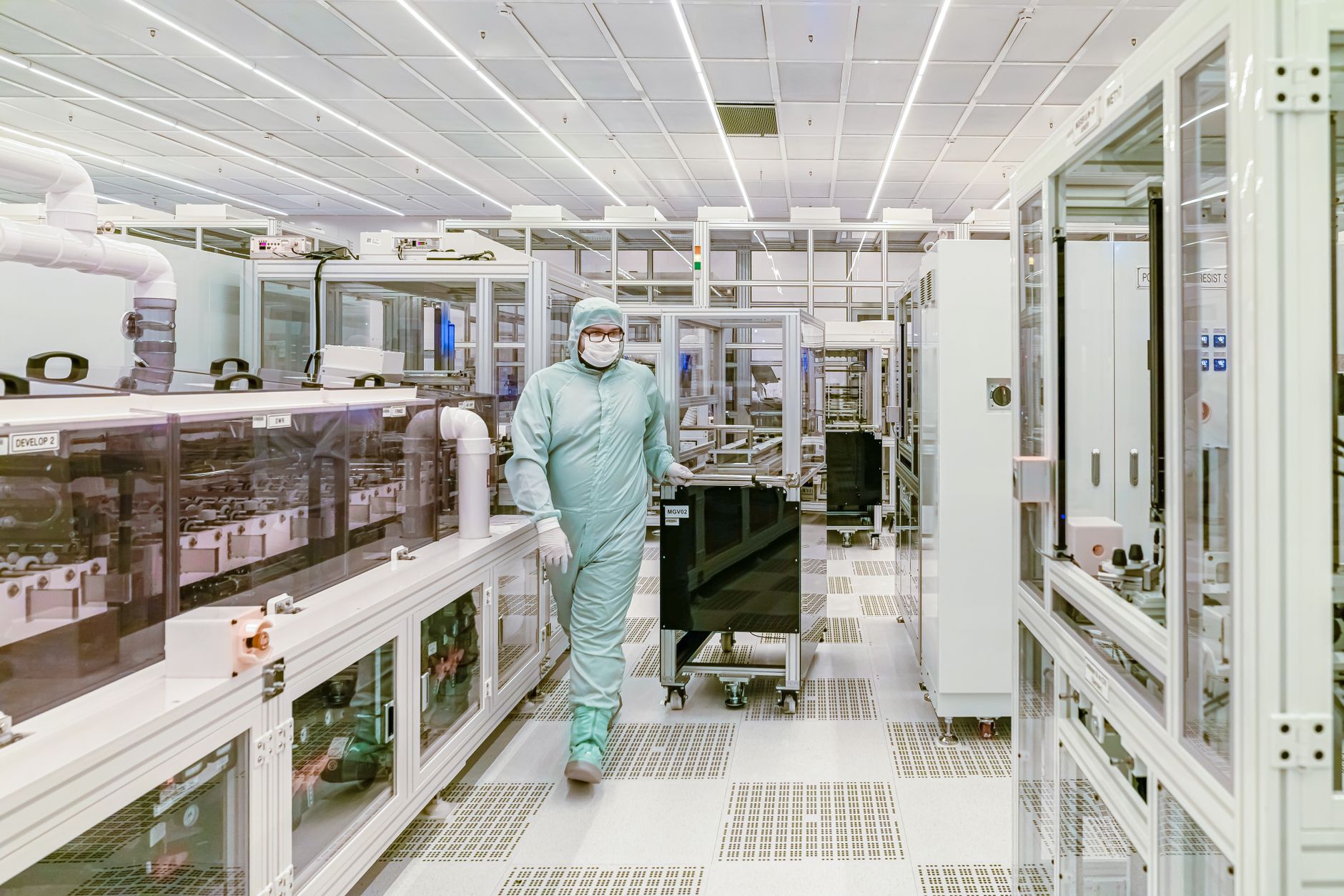
The robot takes over carrying, not judgment. Operators keep the work that needs a trained eye, such as checking a kit against its build record, inspecting a sub-assembly, or deciding what to do with a nonconforming part. The plant still needs its people, and usually needs them on the line more than before.
Plan for a robot plus a smaller team, not for a robot in place of a team. A floor lead or trained technician should own the route schedule, the exceptions and the handoffs. Our training covers the operators who load and confirm totes, the leads who watch fleet status, and the maintenance staff who clear faults.
Operators also need a simple way to call for the robot and report a problem, with a clear handoff at each stop. When that handoff is obvious, the team trusts the route and stops working around it.
What drives the savings?
Savings come from hours that stop going to transport, fewer waits at the cell, and staff time that moves back to assembly and inspection. The one hours figure we can verify from the case is half a full-time position freed, reported as time redeployed. Your own result depends on distances, shift patterns and how many cells the route serves.
We will not promise a percentage. Start with a baseline: count the trips per shift, the minutes each trip takes and the waits at each cell. The site assessment turns that baseline into a route plan and an estimate of the hours you can expect to free up, and the payment comes in the quote after that assessment.

What can the robot not do?
A mobile robot is not a pair of general hands, and several limits matter in a medical device plant.
Treat the robot as a carrier on a set route. Plan cells and staffing around that, and the limits become manageable rather than surprising.
- It does not assemble, torque, solder or inspect parts. Those tasks stay with operators or fixed automation.
- It does not replace gowning, sterile packaging steps or any task a validated process requires a person to perform.
- It needs doors, elevators and lanes planned into the route, and it cannot cross a barrier that was not designed in.
- It does not repair itself. Faults need a trained technician and a maintenance plan.
- Layout changes need a route update, and heavy traffic slows every trip.
How do you get started?
Start with a free site assessment. We map the floor, list the routes and the cells they serve, check doors, lifts and traffic, and recommend the right robot for the site. We then handle deployment and integration, train your staff and provide go-live support.
Commercial robot leasing runs through financing. The payment comes in the quote after the site assessment, so you see the full lease terms before you commit. Many plants begin with one robot on one route, measure the hours, and extend once the numbers hold. Service is nationwide, with remote triage first and on-site dispatch when a technician must go to the floor.
Frequently asked questions
Want a warehouse robot at your medical device manufacturing plant?
Tell us about your site. We will recommend the robot, quote the lease, and keep it serviced.