
Key takeaways
- Peak volume outruns hiring, so robots carry freight between zones and keep sorters on the line.
- Vendor case material shows fewer people overseeing a robot fleet, but those figures are not independently audited.
- No source gives a peak labor-hours saved figure, so measure your own shift hours first.
- Robots fit repetitive freight moves, not exception handling, damaged parcels or judgment calls.
- We assess the site for free, then quote a lease through financing.
How can autonomous mobile robots help a parcel sorting facility?
Autonomous mobile robots for parcel sorting facilities take over the hauling that pulls sorters off the line. In most sort buildings the people on the floor are paid to scan, sort and load, yet a meaningful part of their shift often goes to pushing carts of cartons from induction to a chute and back. Robots that move totes and cartons between induction, sort and dock zones return those hands to the work only people can do.
The benefit shows most in peak season, when volume climbs faster than the hiring pipeline. Mobile robots add movement capacity without asking every sorter to also be a material handler. A sortation vendor's material says robots can be added for peak and taken out of service when they are not needed, which matters when the extra load lasts only a few weeks.
The gains are real but they vary. Most published results come from vendor and operator case material, not independent studies, and staffing ratios depend on layout, parcel mix and how the sort is designed. The sensible first step is to measure where your people actually walk before choosing which moves a robot should take.
What problem do peak-season sorting lines face today?
Peak season at a parcel operator is a hiring race. According to Supply Chain Dive, one large parcel operator planned to hire more than 2,000 seasonal sorters and package handlers in the U.S., and expected volume to rise 38%, still below its 2021 peak. When hiring falls behind volume, the shortfall lands on the sort line first, and the freight still has to move.
The hiring picture is tightening, not easing. According to AJOT, a national parcel carrier planned 100,000 seasonal workers, about 9% fewer than the prior year, its second straight year of reduced holiday hiring. Fewer seasonal hands means the crew that stays has to cover more ground, and the first tasks to slip are often the ones nobody counted, such as hauling freight between zones.
The labor pool is large and has few formal entry requirements. According to the U.S. Bureau of Labor Statistics, about 7.0 million people worked as hand laborers and material movers in 2024, and the typical entry requirement is no formal credential. A workforce analysis citing BLS data found that from September to December 2025, courier and messenger employment rose 26.6% while warehousing and storage rose 0.8%, so a sort site may be competing with delivery work for the same people.
What are the main benefits for the operator?
The first benefit is fewer hours lost to hauling. A sorter pushing a cart to a chute is not scanning or sorting, and every trip eats into hours you already schedule. Moving that freight with robots returns those hours to the sort, and to the exception work that still needs a person.
The second is steadier throughput at volume. One sortation vendor reports that its robots sorted 7.4 million packages at 410 sorts an hour during peak 2023, handling more volume without added operating hours. That is vendor-reported, not independently audited, but it points to what operators want: a sort that holds its pace when the trailers keep arriving.
The third is flexibility, and the fourth is less congestion. Capacity can follow the calendar instead of sitting idle through slow months, and less cart traffic shares aisles with people. The exact reduction depends on the building, so measure before you promise it internally.
How does the robot work on the sort floor day to day?
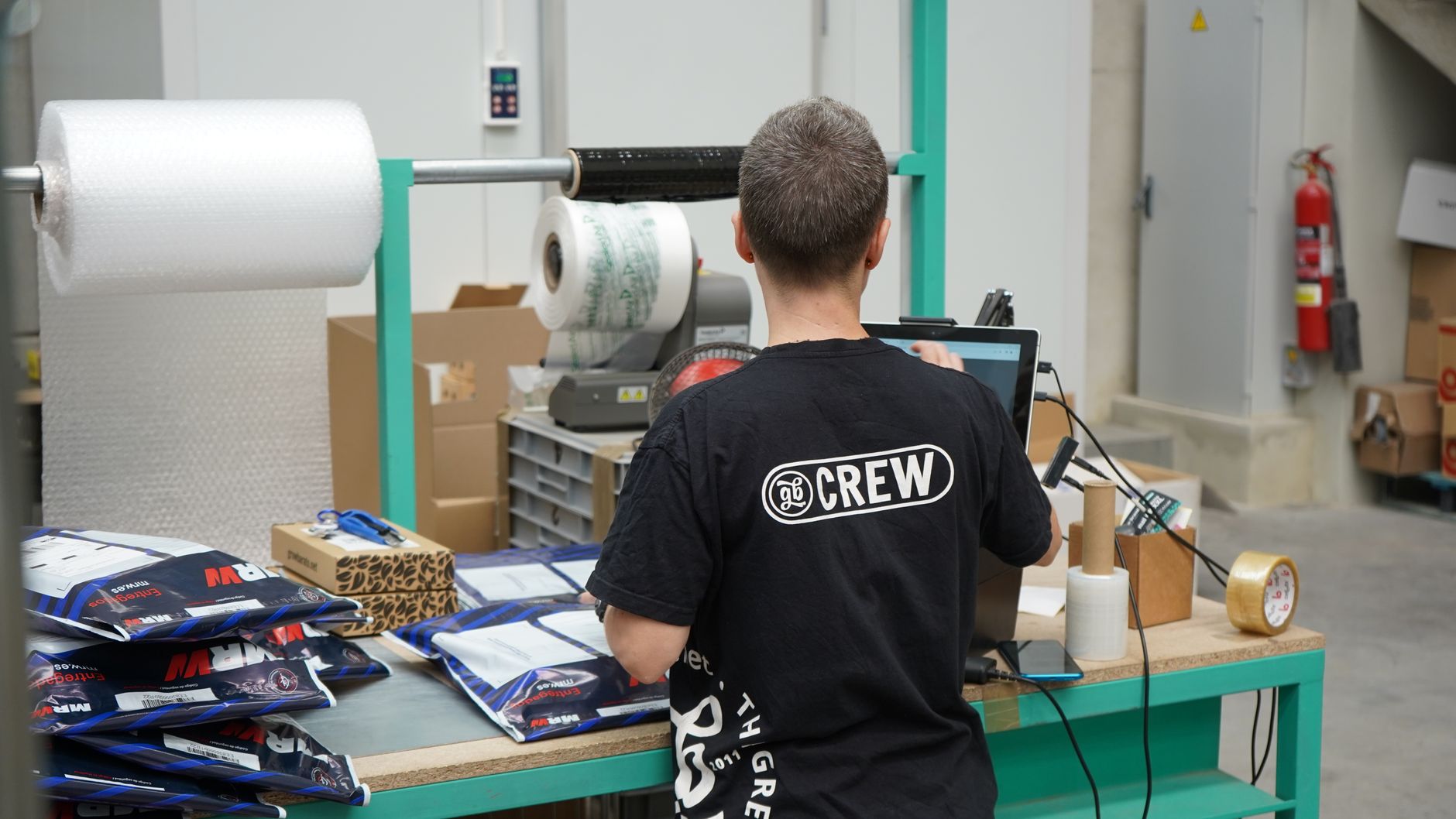
A robot is mapped to the building and given routes between induction, sort and dock zones. At the start of a wave, staff load totes or cartons at a defined pickup point, the robot carries them along its route, and it stops at the destination where a person unloads or scans. Between waves, the fleet returns to charging, and the crew checks exceptions and clears any stop.
One vendor's case material shows what this looks like at scale. A manual process with 10 workers handled 600 parcels an hour. After deployment, four workers oversee 80 robots that sort more than 2,400 parcels an hour to 250 destinations. In that case the sort crew fell from 10 workers to four, and the remaining four spent their time overseeing the fleet rather than carrying freight.
Plan charging and battery windows into the schedule, not after it. A fleet that runs out of power in the busiest hour loses the very capacity it was meant to add.
Which areas of the building does the robot cover?
Robots pay off where the same move repeats many times in a shift. In a parcel building that usually means the path from receiving or induction to the sort lines, from the sort lines to outbound staging, and from staging to the trailer loading doors. These routes are long, repetitive and easy to map, which is what makes them good candidates.
The six zones below cover the kinds of space where this work usually lands. Layout decides which ones matter for your building. A cross-dock with short runs may need only two or three zones, while a large hub with multiple sort levels may use all six.
Some areas should stay manual. Damaged, oversized or fragile parcels, and exception lanes where a person must read a label and decide, are better handled by staff, with a robot bringing the items to them.
How do robots and your existing staff work together?
A robot does not replace the crew. It replaces the cart. The right model is a robot fleet plus a smaller team, never a building with robots and no people. Staff still load, supervise, clear stops, handle exceptions and decide what gets opened, so plan a team for every shift from day one.
Training matters more than most operators expect. Sorters need to know how to clear a stop, when to call for a technician, and how to reroute a tote when a path is blocked. Leads need a live view of the robot queue so they can move people to where freight is backing up. We train the staff who will own the fleet and set up the handoffs before go-live.
Backup capacity belongs in the plan. Spare units and on-site dispatch keep one stopped robot from becoming a stopped shift, and a clear path for emergency swaps shortens any outage during the busiest weeks.
What drives the savings?
Savings come from two places: fewer people pulled off sort tasks to haul freight, and more parcels moved through the same crew in the same shift. One sortation vendor describes a customer that sorted by hand at about 180 sorts an hour and moved to robotic sorting that beat a 325-sorts-an-hour target. The same vendor says operating expenses fell by over 20%, a figure it reports itself.
The labor side is measured in hours, and the sources reviewed here do not give a peak labor-hours saved figure. Do not take a vendor ratio and assume it fits your floor. Pull a week of shift data on the hours sorters spend hauling freight, then compare that to the share of moves a robot could take.
Timing matters as well. According to one vendor's material, AMR sortation can be implemented in as little as 15 days, so the real question is whether your site assessment and go-live plan can match that timeline.
What can the robots not do?
Robots do not handle every parcel. They move freight well, but they do not read a smudged label, decide which box to open, or lift a crushed carton off a jammed belt. Those judgment calls stay with people, and a plan that assumes otherwise will fail on the first bad shift.
They depend on the building. Floors need to be level and clear, doors and aisles need to fit the fleet, and traffic lanes need planning so robots and forklifts do not compete for the same space. A robot cannot fix a layout that was never designed for shared travel, so the site assessment checks those points first.
They also do not remove supervision. A fleet still needs a daily check on battery state, routing and exceptions, and someone must own the call to take a unit offline. The robots change where the work happens. They do not erase the work.
How do we get started?
Start with a free site assessment. We walk the building, map the routes, measure the freight moves and identify which zones earn a robot. We will also say where a robot does not fit, which is often the most useful part of the visit.
Next comes the lease. We offer commercial robot leasing through lease financing programs, and the payment comes in the quote that follows the site assessment. You see the terms, what service is included and how repairs are handled before you commit. Robot lease options are shaped to the site and the peak calendar, not to a fixed package.
Many operators begin with one pilot zone, such as the induction to sort route, and expand once the measured hours hold. Phased deployment keeps the line running during installation, and a backup unit plan covers the stop day every fleet eventually has. We handle integration, training, go-live support and nationwide service, so one partner answers for the robots from install onward.
Frequently asked questions
Want a warehouse robot at your parcel sorting facility?
Tell us about your site. We will recommend the robot, quote the lease, and keep it serviced.
Sources
- U.S. Bureau of Labor Statistics, Occupational Outlook Handbook: Hand Laborers and Material Movers
- Supply Chain Dive: seasonal hiring at a parcel operator
- AJOT: holiday hiring at a national parcel carrier
- Workforce analysis citing BLS data, September to December 2025
- Vendor case study: manual sort versus robot sort
- Vendor case study: peak season sortation results
- Vendor material: AMR sortation implementation
- Material Handling and Warehousing: sortation robots added for peak