

The short answer
For cleaning robot vs floor scrubber operator at a furniture showroom, the robot makes sense when the large open sales floor is wide, mostly clear and scrubbed on a fixed route after closing. A floor scrubber operator still wins where the floor carries frequent spills, staged deliveries, heavy displays moved each night, or work that needs a person's judgment. For most showrooms the practical answer is a robot plus fewer staff, not a robot in place of the team.
See what a cleaning robot costsRun the numbers in the ROI calculator
Key takeaways
- A furniture showroom's open sales floor is the wide, repeatable hard-floor area a cleaning robot handles best after closing.
- The robot takes the scheduled scrub pass; a person still handles spills, staged deliveries and anything that needs judgment.
- Turnover in janitorial work is high, so the stronger case is often covering hard-to-fill night shifts rather than cutting headcount.
- Plan for a robot plus fewer staff, never zero staff, with one trained person for setup, exceptions and the nightly check.
- Lease quotes follow a free site assessment, so the first step is a site walk, not a quote request.
Cleaning robot vs floor scrubber operator: which fits a furniture showroom?
The short answer for cleaning robot vs floor scrubber operator at a furniture showroom is that the robot fits the scheduled scrub of a wide, open sales floor after closing. That is the same floor work a scrubber operator does, on the same route, on the same surface, in the same overnight window. The match is strongest where the floor is mostly hard surface with clear lanes between display groupings.
The fit breaks down in the rest of the store. Carpeted vignettes, rugs, raised platforms, stairs and areas stacked with delivery cartons need a person or another tool. A robot also needs the floor empty at its run hour, so a showroom that stays open late, takes deliveries after close or rearranges displays every night is a weak first candidate.
Scale matters too. A furniture retail statistics site estimates about 48,667 furniture stores in the US, but that figure is a forecast for 2023 rather than an official Census count, so treat it as rough scale. Adoption is still early: the AACEM and ISSA autonomous cleaning survey from 2019, which is dated, found that about a third of non-adopters said they were somewhat likely to adopt within a year.
What does a floor scrubber operator actually do in a showroom shift?
On a showroom floor, a scrubber operator usually runs a ride-on or walk-behind machine on a set pass. The shift starts with clearing the path, which in furniture retail means moving stray cords, delivery pallets, carts and loose cushions out of the lanes. The operator then fills the tank, scrubs the main aisles, edges along walls and under display lines, and checks for debris or wet spots.
After the pass, the operator drains and rinses the tank, checks the squeegee and brushes, and logs any leaks, damage or missed areas. In practice much of the shift goes to clearing the path and handling obstacles rather than to the scrub itself. We would expect that to hold in a showroom, but the site walk should time it so the comparison uses measured minutes, not a guess.

Median hourly wage, Janitors and Building Cleaners
$4,041
Monthly cost of one full-time worker, at the median wage plus payroll costs (an estimate, not a quote).
Which parts of the showroom floor can a robot take, and which can it not?
A cleaning robot can take the repeatable hard-floor passes: the main sales aisles, the wide corridors between furniture groupings, the entry and checkout zone, and the back aisle if it stays clear. Those zones can be drawn once on a map and repeated every night with the same overlap. Floor area varies widely. A trade press report on a Long Island furniture showroom expansion described a planned 4,200 square foot space replacing a 1,000 square foot one, in a report from some years back. The bigger and more open the floor, the more the robot can take over, and the more carefully the site walk must map it.
It cannot take the parts that depend on judgment or on moved objects. Spills from a broken display, a pallet left across a lane, rug and carpet edges, stairs and the loading area during a delivery window still need a person. Those zones are often a small share of the floor, but they decide whether the night ends clean, so plan for a person to handle them even when the robot runs the main floor.
- Repeatable scrub route
Cleaning Robot
Runs the same mapped route every night with the same overlap
Floor Scrubber Operator
Follows the route but varies with fatigue and habit
- Night coverage
Cleaning Robot
Runs the scheduled pass without a callout once the run hour is set
Floor Scrubber Operator
Needs a shift filled, which is hard in a churning labor pool
- Spills and broken displays
Cleaning Robot
Stops or reports; does not clean up glass or liquid
Floor Scrubber Operator
Responds, closes the area and makes the call
- Moved furniture and stray cords
Cleaning Robot
Can stall or route around a blockage, then report it
Floor Scrubber Operator
Clears the lane before the pass and reads the room
- Edges, corners and under-display areas
Cleaning Robot
Often leaves these for a manual pass
Floor Scrubber Operator
Finishes them by hand or with a small machine
- Judgment on new situations
Cleaning Robot
Limited to what its sensors and map cover
Floor Scrubber Operator
Handles the unexpected with authority and context
How much labor does this job take, and how high is turnover?
This work sits in a large, churning labor pool. According to the BLS Occupational Outlook Handbook, janitors and building cleaners held about 2.4 million jobs in 2024, with projected growth of 2% from 2024 to 2034, which is slower than average. The same source projects about 351,300 openings a year, mostly from replacement hiring rather than new positions.
Turnover is the bigger pressure. A workforce vendor blog says annual separation rates in janitorial work commonly exceed 50%, and that many contract cleaners run at 100% or more, which it attributes to low pay, hard scheduling and limited advancement. A trade publication's February 2025 survey found that 61% of janitorial companies name labor shortages as a major obstacle to growth. For a showroom, a night crew trained in spring may be gone by fall, and the hiring and retraining cost repeats every year.
We did not find verified, published overtime or sick-day figures specific to showroom scrubber work. Pull those from your own payroll for the last twelve months, since they often weigh more than the national turnover rate. When you build the labor comparison, use the government wage data on this page for the local wage for this job, not a national average.
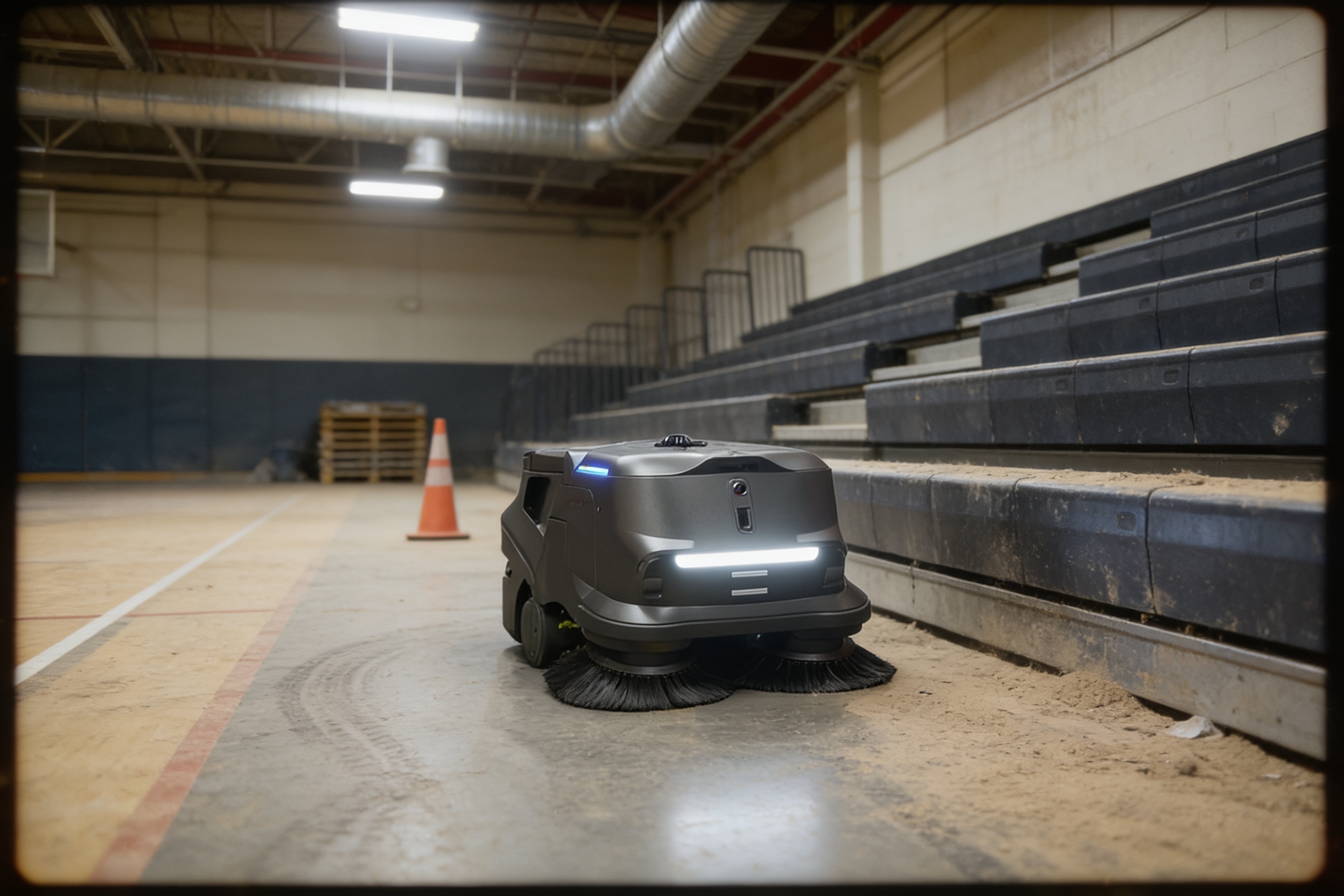
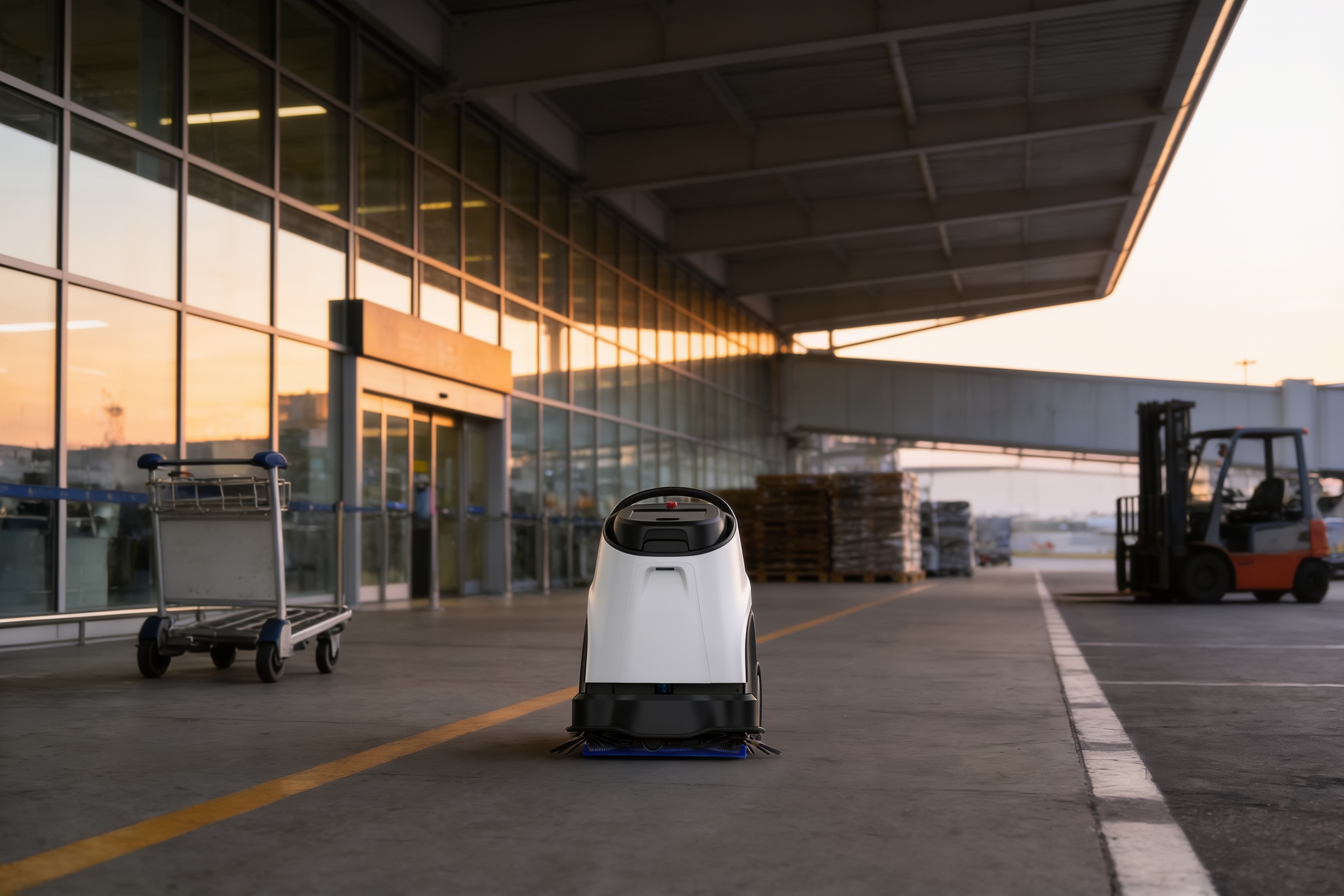
How does a team work with a cleaning robot?
The model that holds up is a robot plus fewer staff, never zero staff. The robot runs the scheduled scrub of the main floor after closing. One trained person sets it up, clears the route, handles exceptions and does the end-of-night check. That person covers the robot's zones and the work the robot cannot do, while the rest of the crew shrinks or moves to other tasks.
Staffing changes once the robot runs. A store may keep one closing lead instead of a full scrub crew, and move the freed hours into restocking, restroom and high-touch surface cleaning, or daytime spill response. Write the new duties into the job description before go-live, so the person left behind does not inherit an undefined mix of tasks. Train two people on setup and recovery, so one absence does not stop the run.
- Closing lead: clears the route, starts the run and handles exceptions.
- Second trained person: covers recovery and absences.
- Day staff: spill response and daytime upkeep the robot cannot do.
What can a cleaning robot not do in a furniture showroom?
A robot does not read the floor the way a person does. A display moved into its route, a dropped item in a lane, a loose cord or a glossy patch can stop it or send it around the problem. Those events need a fast on-site response, so the robot plan should name a person who can reach the store within a set time and a vendor contact who can triage faults remotely.
It also does not finish the edges. Corners, the zones under display lines and areas beside columns and walls often need a manual pass with a mop or a small machine. Plan that as a separate task from the start, and expect that some of it will stay manual.
Finally, a robot cannot make an unplanned decision. A broken display with glass, a customer injury or a water leak needs a person with authority to close an area and call for help. The robot is the scheduled floor tool, not the response team, and a showroom plan that treats it as the response team will fail on the first bad night.
What do injury and safety numbers say about this work?

Janitorial work carries real injury exposure. A secondary summary of BLS 2024 injury data reports 2.5 recordable cases per 100 full-time workers in janitorial services, compared with 2.3 for all private industry, which the summary describes as the lowest all-industry rate since 2003. The BLS injury and illness snapshot for janitors and cleaners, except maids, reported an incidence rate of 157.4 per 10,000 full-time-equivalent workers in 2019 and 191.6 in 2020, a year shaped by the pandemic.
Those rates are a reason to plan for safety, not to skip it. A robot takes the operator off the machine pass, which removes some of the manual risk, but the person who sets up, refills, lifts and inspects still carries the manual exposure. Write those tasks into the procedure, keep lifting and tank-handling training current, and check whether the robot's route creates trip hazards such as charging cables.
How does leasing a cleaning robot work for a showroom?
We are a US commercial robot integrator. We pick the robot for the site, lease it through financing, deploy and integrate it, train the staff, and service it nationwide. Robots are only leased through financing, and the lease payment comes in a quote after a free site assessment. The assessment sets the zones, the route, the charging point and the run hour, so the quote reflects your floor rather than an average floor.
Ask what the lease includes before comparing numbers. Confirm maintenance, on-site dispatch, remote triage, and whether a backup unit covers a repair week. For a showroom, those terms often matter more than the headline payment, because one dead run a week erodes the case quickly. Ask for the list of exclusions too, so the quote has no hidden fees.
How do you start a cleaning robot pilot at a furniture store?
Start with one floor and one shift. Walk the showroom with the store manager and a closing lead, mark the lanes that stay clear every night, and list the obstacles that appear each week. Record where staff scrub today, how long the path clearing takes, and which nights run late. That baseline is the only fair way to judge the result later.
Run the pilot long enough to cover at least one delivery day and one rearrangement week, because those events break routes. Confirm the go-live support plan, the remote triage contact and the spare unit before the first run. If the pilot holds, extend to the back warehouse aisle or another floor, and keep the trained person who handles exceptions.

Frequently asked questions
Want a cleaning robot at your furniture showroom?
Tell us about your site. We will recommend the robot, quote the lease, and keep it serviced.
Sources
- US Bureau of Labor Statistics, Occupational Employment and Wage Statistics (OEWS May 2024)
- BLS Occupational Outlook Handbook: janitors and building cleaners
- Workforce vendor blog on janitorial turnover
- Trade publication survey on janitorial labor shortages, February 2025
- Secondary summary of BLS 2024 injury data for janitorial services
- BLS injury and illness snapshot: janitors and cleaners, except maids
- Furniture retail statistics estimate, US store count
- Trade press report on a Long Island furniture showroom expansion
- AACEM and ISSA autonomous cleaning survey, 2019