

The short answer
A cleaning robot vs night janitor choice at an urgent care clinic is rarely a straight either or decision. A cleaning robot makes sense for scheduled floor passes in open corridors, the waiting room and the lobby, especially when closing cleaning shifts are hard to fill. It does not cover restrooms, exam rooms, spills or infection control, so the workable model is a robot plus fewer staff, never zero staff.
Key takeaways
- A cleaning robot covers scheduled floor passes, while a night janitor covers the whole closing routine.
- Environmental services turnover in hospitals was 28.1 percent nationally in 2024, according to Becker's Hospital Review.
- Janitors and cleaners logged 191.6 nonfatal injury and illness cases per 10,000 full time equivalent workers in 2020, according to the Bureau of Labor Statistics.
- The robot takes the floor passes, and a person keeps rooms, restrooms, spills and sharps.
- The lease is quoted after a free site assessment, so the layout and closing hours decide the answer.
Which makes sense for an urgent care clinic: a cleaning robot or a night janitor?
A cleaning robot vs night janitor comparison at an urgent care clinic is rarely a choice between one and the other. A robot fits the large, open, repeatable floor work: the main corridor, the waiting room and the lobby, run on a set route after the last patient leaves. It does not take over the whole closing routine, because restrooms, exam rooms, spill response and infection control still need a person.
The robot is the better fit when the floor layout is predictable, the clinic stays open into the evening, and the night or closing cleaning shift is hard to fill. It is the weaker fit when floors are crowded with equipment most evenings, when the building is small enough that a brief pass is all it needs, or when the real problem is room turnover and restroom work. In most cases the workable model is a robot plus fewer staff, not zero staff.
What does a night janitor actually do in an urgent care clinic?
A night janitor at an urgent care clinic works a closing routine, not a single task. The list usually includes emptying trash in the waiting room, exam rooms and restrooms, cleaning and disinfecting high touch surfaces, mopping and scrubbing hard floors, restocking paper goods and soap, cleaning up spills, and emptying sharps and biohazard containers according to the clinic's own policy.
Timing matters. According to a 2025 urgent care hours guide, typical weekday hours run roughly 8 am to 8 or 9 pm, with shorter weekend hours. The cleaning window therefore often opens right after the last patient, while the front desk and back office are still closing out, so the janitor frequently works in a building that is partly lit and partly occupied.
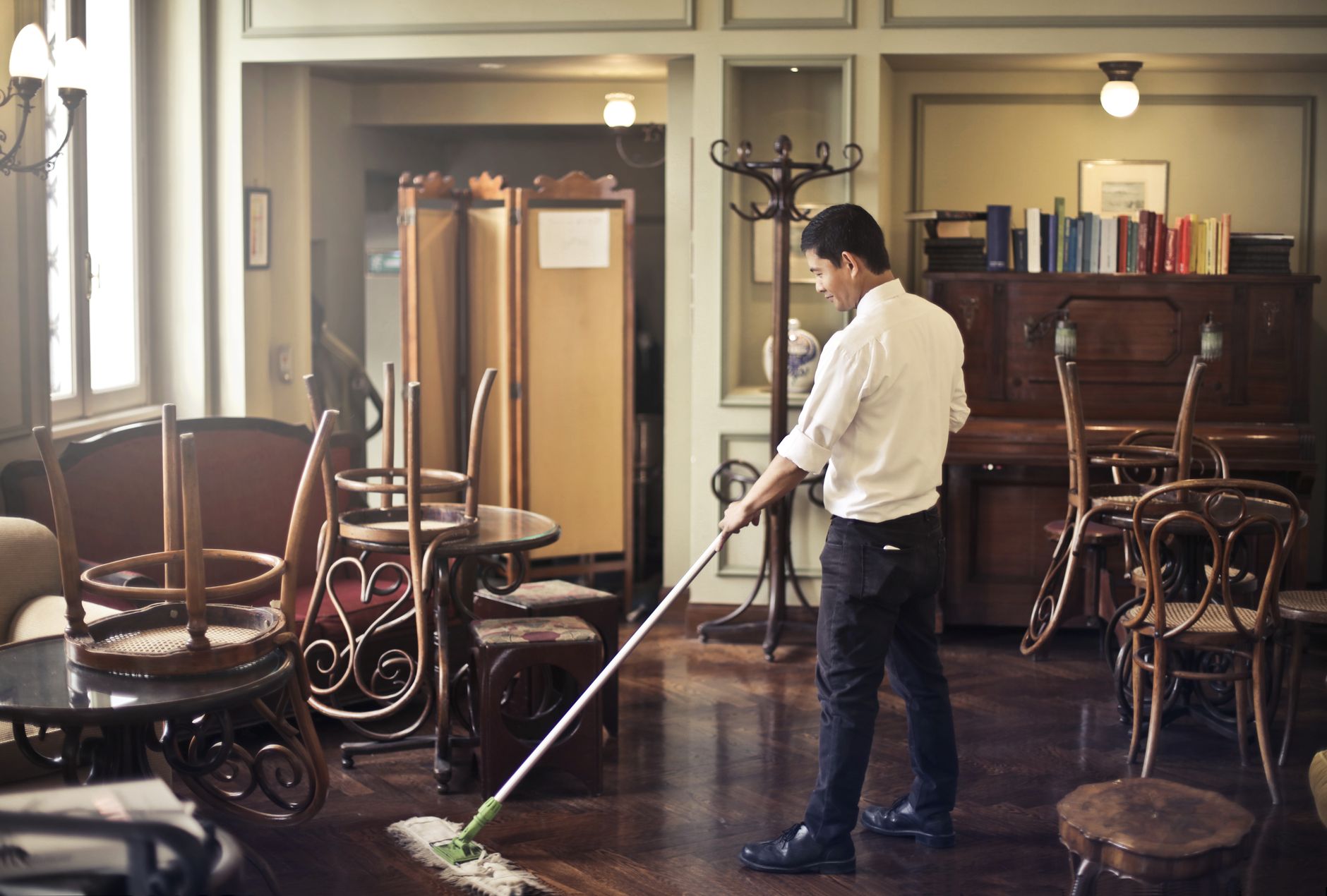
The floor work is the repeating part. A janitor covers the same corridors and waiting room each night, which is the same ground a scheduled robot route covers. The rest of the routine is interrupted work: a spill here, a full bin there, a room that needs a second pass. The government wage data on this page gives the local wage for this job, and that wage pays for the interruptions as much as for the mopping.
Median hourly wage, Janitors and Building Cleaners
$4,041
Monthly cost of one full-time worker, at the median wage plus payroll costs (an estimate, not a quote).
Which parts of the night work can a cleaning robot take, and which can't it?
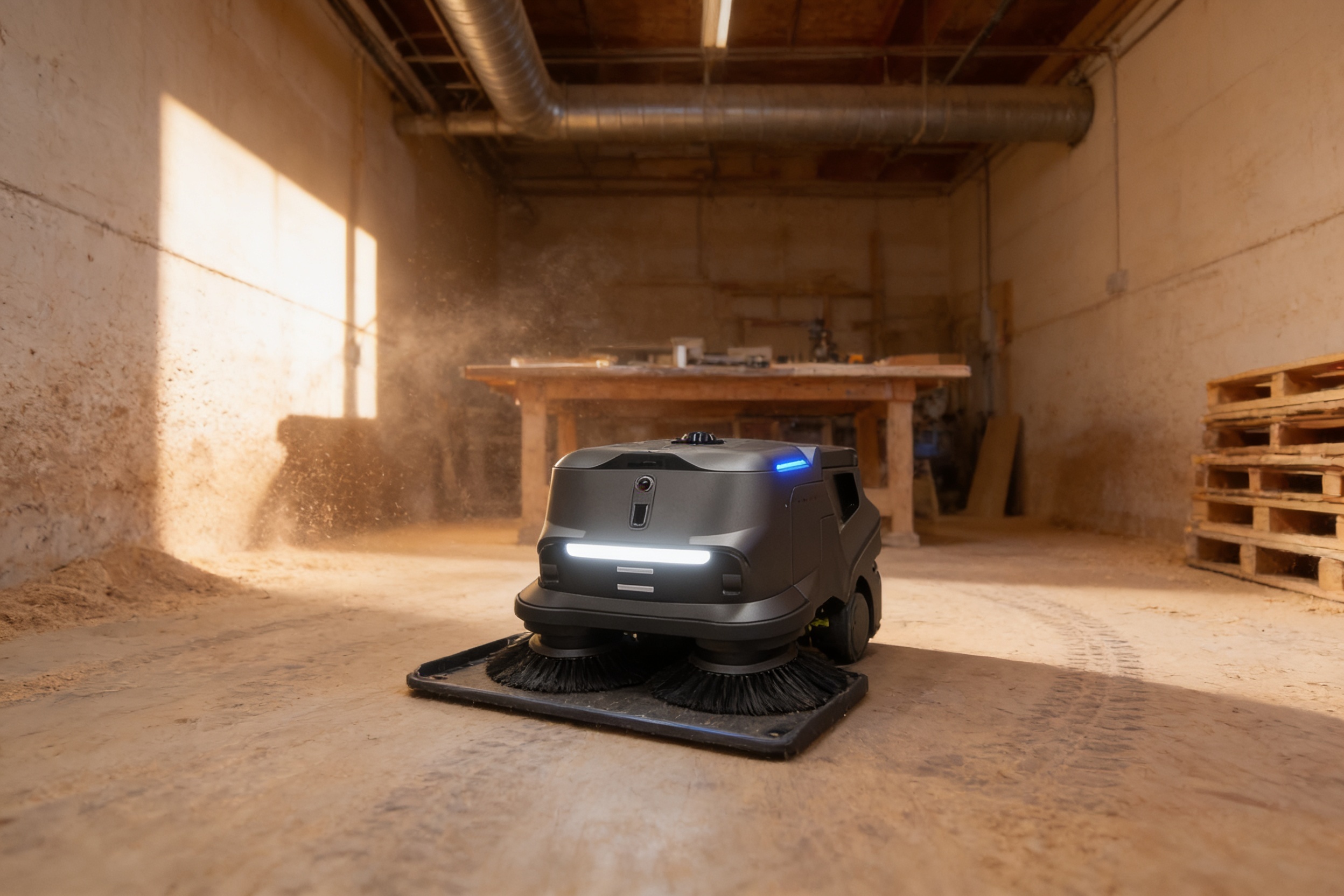
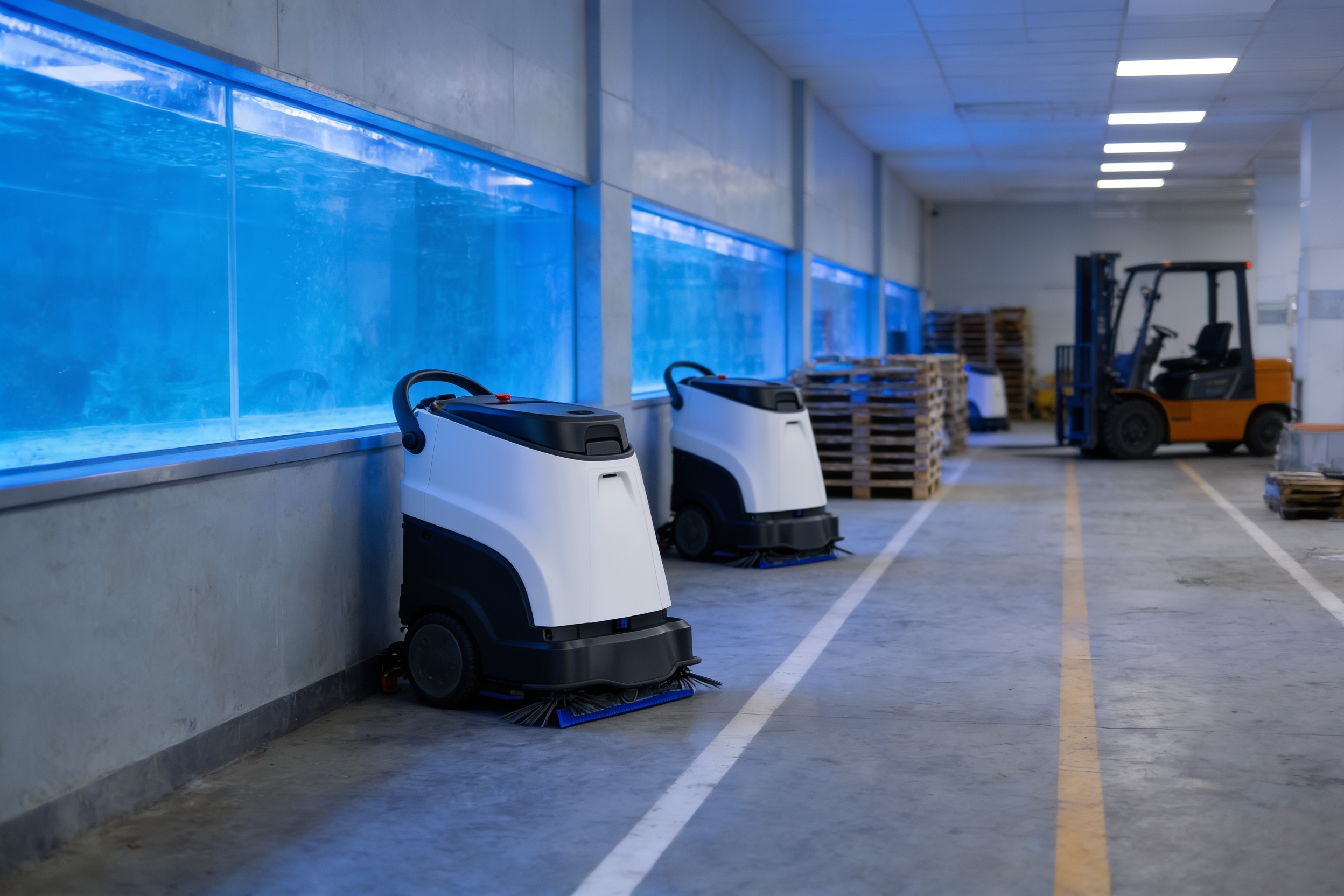
A cleaning robot takes the scheduled floor passes. That means scrubbing or sweeping open hard floors in corridors, the waiting room and the lobby along a mapped route, then returning to its dock when the pass is done. Because the route is fixed, the same ground gets covered the same way each night, which matters most to a clinic that struggles to hold a closing shift.
A robot cannot take the parts that need hands, judgment or a patient facing clean. Restrooms, exam rooms with beds and cabinets, surfaces patients touch, trash removal, spills involving body fluids, sharps and biohazard handling, and restocking all stay with a person. The robot also cannot move furniture out of its path or decide that one patch of floor needs a second pass by hand.
- Scheduled floor passes
Cleaning Robot
Runs the mapped route on the same schedule each night
Night Janitor
Covers the same ground but can adjust the route when a room is not ready
- Restrooms and exam rooms
Cleaning Robot
Cannot do this work
Night Janitor
Cleans and checks each room to clinic policy
- Spills and body fluids
Cleaning Robot
Stops when it meets an obstacle, but cannot clean up a spill
Night Janitor
Responds at once, contains the spill and cleans it
- Coverage on a short night
Cleaning Robot
Runs the route without sick days or call outs
Night Janitor
Cannot cover the floor and the rooms at once, and sick days leave gaps
- Judgment about what needs another clean
Cleaning Robot
Follows the route and nothing else
Night Janitor
Makes the call on the spot
- Work around people in a busy lobby
Cleaning Robot
Needs the lobby clear to run
Night Janitor
Works around people and moves chairs
How many urgent care clinics and janitors are there, and how much turnover is there?
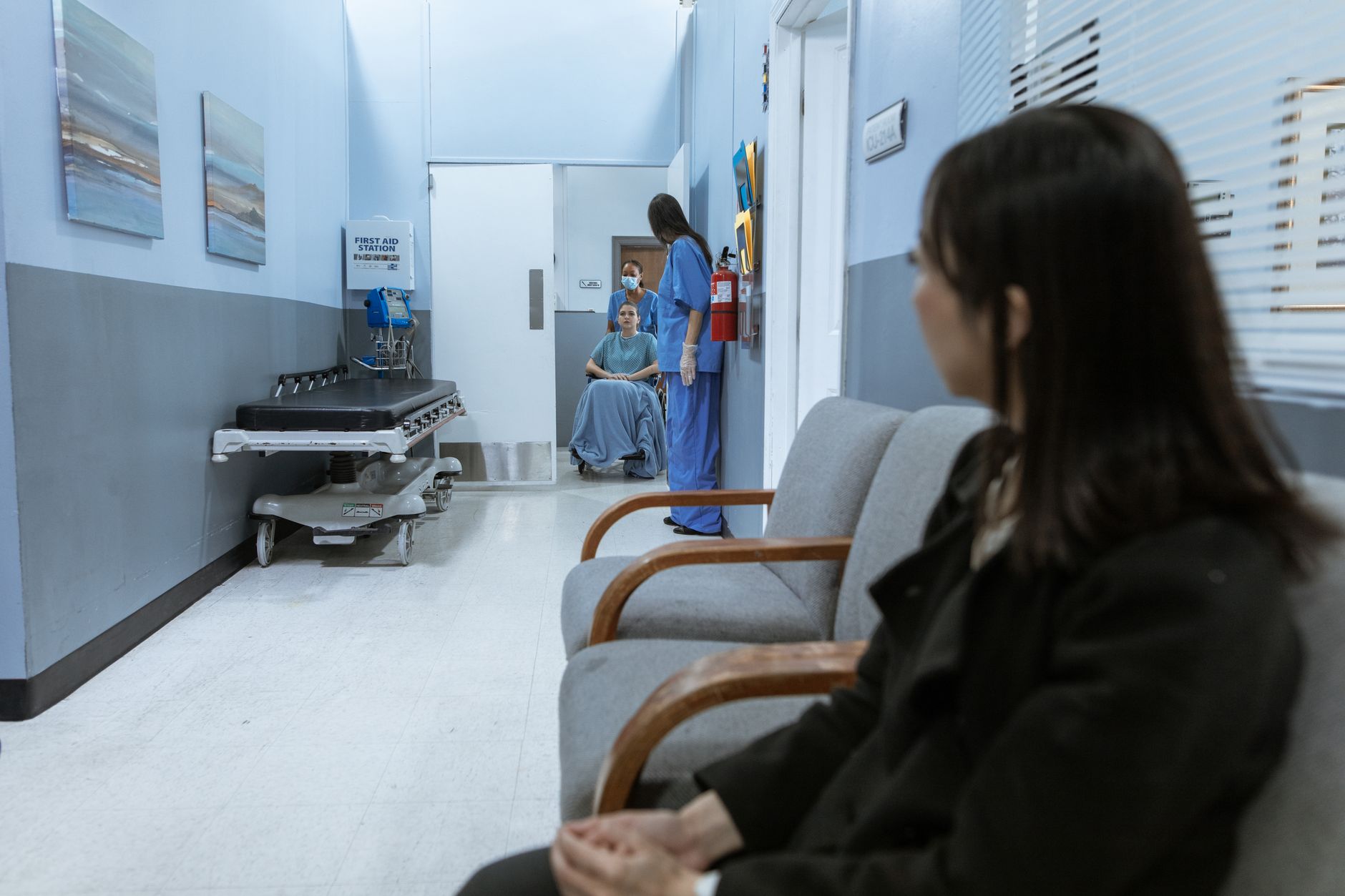
The sector is large and still growing. According to the Urgent Care Association, there were 15,032 centers in January 2025, with 611 new centers opened in 2025 and net growth of 277 after closures. A UCA linked summary gives 15,309 open centers as of January 2026, so the number of clinics running a closing cleaning routine keeps rising.
The people doing the work are also a large group. According to the Bureau of Labor Statistics, janitors and building cleaners held about 2.4 million jobs in 2024. BLS projects 2 percent employment growth from 2024 to 2034 and about 351,300 openings a year, mostly from replacing workers who leave. BLS does not present that as a turnover rate, so it should not be read as one.
Turnover in hospital environmental services is high. According to Becker's Hospital Review, citing a national 2024 hospital survey, environmental services turnover was 28.1 percent, against 18.3 percent for all hospital staff. The Missouri Hospital Association's 2026 Workforce Report, as reported by the Missouri Independent, put environmental services turnover at 42.5 percent in 2025 in Missouri hospitals.
Outpatient clinics show another picture. The AMGA 2025 Medical Clinic Staffing Survey reported median turnover of 17 to 18 percent for critical back office support staff, a group that includes registered nurses and medical assistants, and 12 to 26 percent for support staff overall. AMGA ties the rise to workload. No urgent care survey of cleaning staff turnover, sick days or overtime was found, so those figures belong in the clinic's own payroll records.
What can't a cleaning robot do at an urgent care clinic?
A robot cannot do the infection control and patient facing parts of the job. Scrubbing a floor does not disinfect the handrails, the counters or the exam table, so those still need a person working to clinic policy. A robot also does not respond to an emergency, a fall or a staff call, and it stops at an obstacle until someone clears it.
Layout is a real limit. A route needs clear floor, predictable doorways and room to turn. Stored equipment on the floor, wet floor signs, loose cords or a waiting room that is rearranged each week can stop a pass or make it skip ground. Those problems show up at the site assessment, and they should be fixed before the clinic counts on the robot.
The robot also needs care. It needs a maintenance and service plan, a plan for the nights it is down for repair, and a named person who can start it, clear it and read its status. If the only plan for a breakdown is to send the closing person back to the mop, the robot has not reduced the labor risk.
What changes the number, and what should you check before deciding?
The math moves with a few site facts, and the only way to know them is to measure. Closing time, the share of open hard floor, the number of rooms on the closing list and how hard the night shift is to fill all change the answer. The government wage data on this page gives the local wage for this job, which anchors the labor side of the comparison, but the hours and the vacancy record belong to your clinic.
No urgent care figure for night cleaning hours was found, so the hours for your clinic have to come from a timed walk through the closing routine. Track how long each task takes over several weeks, record each shift that goes uncovered, and note any overtime used to cover it. Those figures, plus the site layout, are what the lease quote is built on.
How do you get started with a cleaning robot at an urgent care clinic?
Start with a site assessment, not a product choice. Service Robot Co. is a US commercial robot integrator. We pick the right robot for the site, lease it through financing, deploy and integrate it, train the staff and service it nationwide. The assessment measures the floor plan, the closing routine and the night staffing, and the lease is quoted after it.
A sensible first step is one unit on the corridors and waiting room, run for several weeks alongside the closing routine. The pilot should measure route completion, staff time on the rooms, and any stop that needed a person. Use those results to decide whether to add a route or keep one unit on the floor. Starting with one unit is easier to judge than a plan sized on a guess.
Ask for a go live plan that covers training for the people who open and close, a named contact for stops and faults, and a plan for floor coverage when the unit is down. A repair that takes the robot off its route for a shift should have a stated plan, not an improvised one.
Is a cleaning robot worth it at an urgent care clinic, and how is the lease quoted?
Whether it is worth it depends on the hours moved, the vacancy record and the layout, all of which the site assessment pins down. The payback question is a simple comparison: the closing hours and overtime the robot takes over, set against the fixed robot lease payment, deployment, training and service in the quote. The government wage data on this page gives the local wage for this job, which covers the labor side of that comparison.
The lease runs through financing and is quoted after a free site assessment. Compare the quote with what the clinic pays now for night coverage, including the cost of shifts that go unfilled and the overtime used to cover them. A clinic with a steady closing team may get less from the robot than one that has gone weeks without a full night crew.
The honest test is whether the robot removes a shift that is hard to fill, or only shortens one that is already covered. Answer that with the clinic's own schedule and the quote in hand, and the decision gets much easier to make.

Frequently asked questions
Want a cleaning robot at your urgent care clinic?
Tell us about your site. We will recommend the robot, quote the lease, and keep it serviced.
Sources
- US Bureau of Labor Statistics, Occupational Employment and Wage Statistics (OEWS May 2024)
- Urgent Care Association, 2025 recap of new urgent care centers
- Bureau of Labor Statistics, Occupational Outlook Handbook: Janitors and Building Cleaners
- Bureau of Labor Statistics, injury and illness snapshot for janitors and cleaners, 2016 to 2020
- Becker's Hospital Review, hospital turnover and attrition survey findings
- Missouri Independent, Missouri hospitals seek to address workforce challenges
- AMGA, 2025 Medical Clinic Staffing Survey press release
- Child Health Institute of Singapore, implementation of autonomous robotics to enhance daily manual task
- SoftBank Robotics, healthcare case study 2023