
The short answer
A cobot makes sense at a cereal plant when the placing work is repetitive, the product formats are few enough to run on a fixed recipe, and changeovers are costing real packing hours. A manual packer still makes more sense when case sizes change often, runs are short and irregular, or the job depends on judgment a robot arm cannot supply. In most plants the cobot vs manual packer choice is not all or nothing, because the best fit is usually a robot plus fewer staff on the line.
Key takeaways
- A cobot fits steady, repeated placing into cases, while a manual packer fits frequent case size changes and judgment-heavy work.
- Changeover time is often where a cereal line loses packing hours, so count those hours before comparing options.
- Voxel AI, citing BLS data, reports 3.3 recordable cases per 100 full-time food manufacturing workers in 2024.
- Most cereal lines keep staff on the line and add a robot to take the repetitive placing, rather than replacing the crew.
- Public data on cereal changeovers and shift patterns was not found, so measure your own line before deciding.
Cobot vs manual packer at cereal plants: when does a robot make sense?
A cobot, meaning a collaborative robot arm that picks product off the line and places it into cases, makes sense at a cereal plant when the placing work is repetitive, the product formats are few enough to run on a fixed recipe, and the plant loses real packing hours at each changeover. That mix shows up most clearly on lines that run the same few box or bag sizes for long stretches.
It does not make sense when case sizes change constantly, when runs are short and the line starts and stops often, or when the packing job depends on judgment a robot arm cannot supply, such as spotting a damaged bag by feel. In those cases a manual packer, or a crew that moves between packing and other tasks, is the more practical choice. The useful question is which option loses fewer hours on your line, not which is better in general.
What does a manual packer actually do in a cereal plant shift?
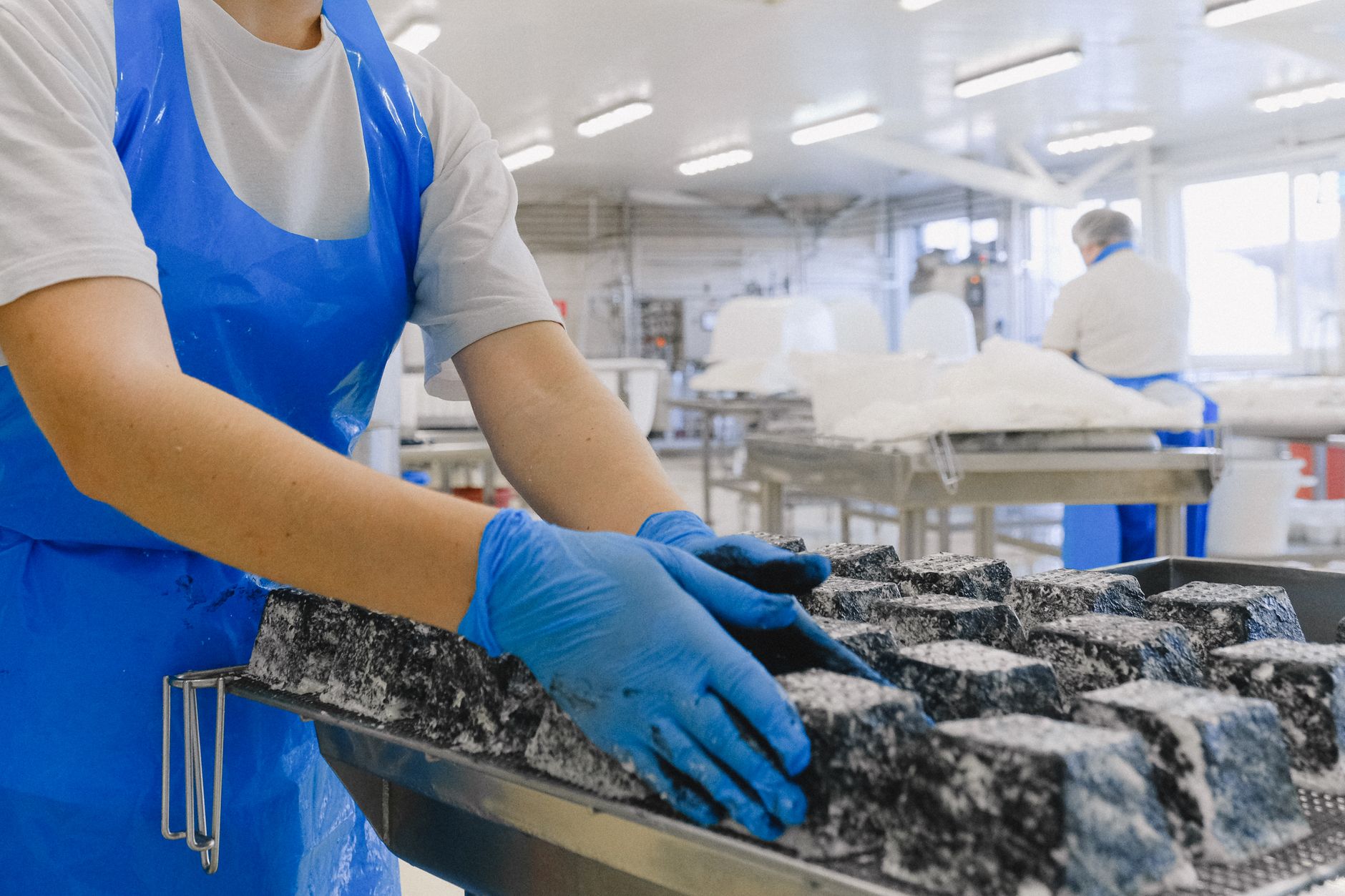
A manual packer on a cereal line takes finished product off the conveyor, places it into a case or tray in a set pattern, and keeps the case moving toward sealing and palletizing. The motion repeats all shift, but the job is more than placing. The person also resets the station when the case size changes, clears jams, checks that cases are formed properly and that product is intact, and covers breaks and absences at the same station.
Because the cycle is short and repetitive, the job is also hard on the hands, wrists and shoulders, which is why injury data for this kind of work matters. The next sections cover those figures. Cereal-specific numbers for changeover minutes or cases handled per shift were not found in the sources reviewed for this page, so those figures should come from your own line records.
- Take finished product off the infeed conveyor
- Place product into cases or trays in a set pattern
- Check case formation and product condition
- Reset the station at each changeover
- Clear jams and cover breaks or absences
Which packing tasks can a cobot take, and which can it not?
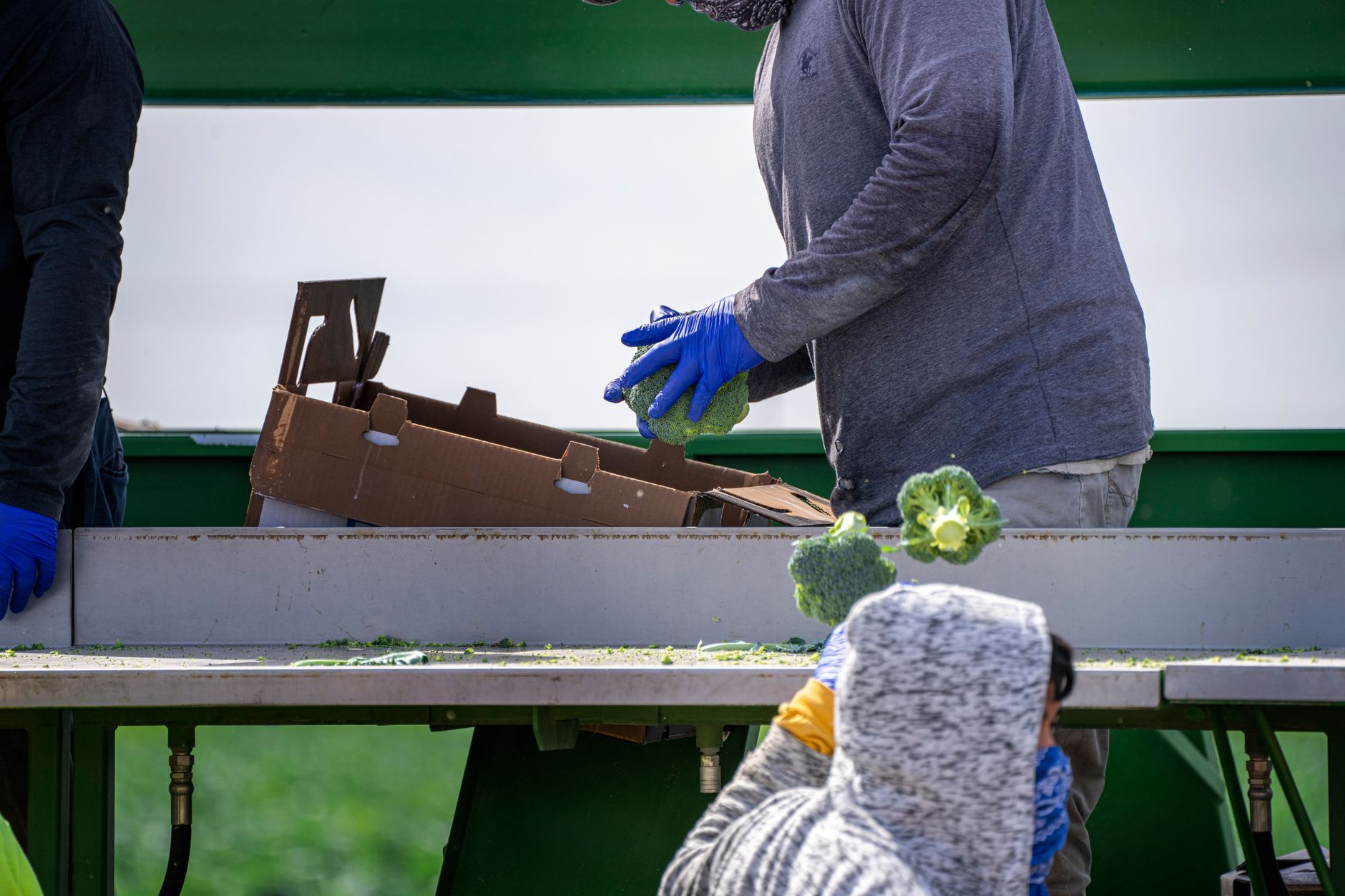
A collaborative arm does well at the placing itself. It can pick product from a defined position on the line and place it into a case at a repeatable pace, and it holds that pace through the shift without the tiring that comes with hand work. Across case sizes, the gripper, reach and program have to match the product and the case footprint, so each setup is planned around a site assessment rather than taken off a shelf.
Several parts of the packer's job sit outside what a placing arm does on its own. Case erecting and loading blanks usually stay with staff or need dedicated equipment. Checks for damaged or irregular product, and recovery from jams in awkward positions, still need a person or added sensing. Changeovers also need hands on the line, because grippers, guides and case positions are physically swapped. A cobot takes the placing, not the whole station.
- Pace across a shift
Cobot
Repeatable pace set by the program, held through the run
Manual Packer
Steady, but slows with fatigue and breaks
- Case size changes
Cobot
Needs gripper, guide and program changes planned ahead
Manual Packer
Adjusts by hand and by eye, quicker on short notice
- Damaged or odd product
Cobot
Limited, needs sensing and clear reject rules
Manual Packer
Strong at spotting problems by sight and feel
- Night and weekend runs
Cobot
Runs with staff supervising the station
Manual Packer
Depends on shift cover, hiring and absences
- Jam recovery
Cobot
Stops and needs staff to clear it before restart
Manual Packer
Clears and resumes the station in place
- Cost over time
Cobot
Lease terms fixed in a quote after site assessment
Manual Packer
Wages and hiring recur with every vacancy
- Flexibility
Cobot
Does the placing task and little else
Manual Packer
Moves to erecting, sealing or cleaning when needed
What do the labor and injury numbers say about packing work?
The Bureau of Labor Statistics counted 645,210 packers and packagers, hand, in May 2023, according to its Occupational Employment and Wage Statistics program. That is a large workforce doing short-cycle work, and in plants where that work is hard to fill, one open station can hold up a whole line. Overtime, night shift coverage and sick-day rates for cereal packing were not found in the sources reviewed for this page.
Apollo Technical reports a separations rate of 2.4 percent on a monthly basis, and a quits rate of 1.4 percent, for US manufacturing overall in 2025. Those are not food-specific figures and they do not come from BLS, so use them as a general benchmark and not as a measure of your plant. No food-specific US turnover figure was verified for this page.
On injuries, Voxel AI, citing BLS data, reports that food manufacturing recorded 3.3 recordable cases per 100 full-time workers in 2024, which it describes as about 43 percent above the 2.3 average for private industry. Feedstuffs reports poultry processing at 2.4 in 2024, a record low for that subsector, and cites 2.7 for all manufacturing as a comparison. Voxel AI is a secondary citation, so check the BLS table before quoting the exact figure in an internal report.
Repetitive-motion injuries are tracked separately. In BLS data for 2016, reported in a 2018 BLS Economics Daily article, poultry processing recorded 13.3 repetitive-motion cases with days away from work per 10,000 full-time workers, against 2.1 for all private industry. Poultry is not cereal, but it is a high-repetition food packing and processing line, and the pattern is worth knowing when you plan staffing for a placing station.
Is robot adoption in food and beverage plants growing?
According to the International Federation of Robotics, US robot installations reached 38,400 in 2025, up 12 percent, and the US moved ahead of Japan to become the second-largest market. Food and beverage installations rose 30 percent to 2,900 units in the same year. Automotive remained the largest US customer at 13,500 units, down 1 percent.
IFR also puts US manufacturing robot density at about 307 robots per 10,000 manufacturing workers, eighth in the world, in its news release. One outlet reports 302 for the same measure, so treat the exact figure with some care. The food and beverage growth is the figure most relevant here because it shows peers in the sector adding units, but it is an aggregate and says nothing about cereal lines specifically. No food-specific density figure was found.
Where does a cobot fit on a cereal packing line?
A cereal line has several zones, and a cobot usually works in one of them. The placing station is the core: product arrives on the infeed, the arm picks and places it into cases, and the case moves on. Upstream and downstream equipment, such as conveyors, case erectors, sealers and palletizers, stays where the plant already runs it.
Layout decides most of the fit. Reach, infeed height, case position and the clear space staff need during changeovers all have to suit the floor. A site assessment maps those dimensions before any quote is written, so the zone list below is a guide to what to check, not a fixed layout.
How does a team work with a cobot on a cereal line?
In practice the arm is a station on the line, not a replacement for the crew. The usual pattern is a robot plus fewer staff. One or two people stay on the line for case erecting, checks, changeovers, jam recovery and breaks, while the arm carries the repetitive placing. A line with no one assigned to it stops at the first jam or format change until someone walks over.
Staff roles shift toward supervision, checks and changeover support rather than hand placing. That is a training decision as much as a hardware one. Operators need to swap parts, read the station status and clear faults safely. Go live support from the integrator is where that training usually happens, and it should be written into the plan before the first run.

What can a cobot not do on a cereal line?
A cobot is not a complete packing crew. It does not replace case erecting, cannot judge every damaged or irregular piece of product by sight, and does not clear every jam on its own. If the line changes formats often, changeover time can use up much of the placing gain, and a plant with many short runs may still need manual packers for most of the week.
The floor also limits it. Reach, height, power and clear staff access to the station all matter, and a layout that works for one case size can need changes for another. Lease terms, service response and uptime are set in the quote after a site assessment, not assumed in advance. Be skeptical of any plan that promises the same output across every product and case size.
How do you get started with a cobot lease for a cereal plant?
Start with a site assessment. Keep logs of changeover frequency, case sizes, product condition at the infeed and staffing on each shift for several weeks, then bring them to the assessment. Ask for a single station pilot before any multi-line plan, so the plant can learn the changeover routine on one line first.
We are a US commercial robot integrator. We pick the robot for the site, lease it through financing, deploy and integrate it, train staff and service it nationwide. The lease payment is set in a quote after a free site assessment, and service terms are written into that quote, so the plant sees the full picture before it commits. If a manual packer is the better fit for your line, the assessment is where we will say so.
Frequently asked questions
Want a cobot at your cereal plant?
Tell us about your site. We will recommend the robot, quote the lease, and keep it serviced.
Sources
- Bureau of Labor Statistics, Occupational Employment and Wage Statistics, SOC 53-7064
- Voxel AI, food manufacturing safety statistics
- Feedstuffs, poultry processing incident rate 2024
- BLS Economics Daily, poultry processing injuries 2018
- International Federation of Robotics, US press release 2026
- International Federation of Robotics, US robot industry news
- Apollo Technical, manufacturing turnover 2025