

The short answer
For most Baton Rouge palletizing lines, a cobot makes sense as an addition to a worker rather than a replacement: it takes steady, repeat stacking runs and the hours that are hardest to staff, while a person still handles irregular loads, damaged cases and pattern changes. A cobot is a weak fit when the line changes patterns often, handles heavy or unstable loads, or has no room to stage pallets. Cobot vs palletizing worker in Baton Rouge comes down to the shift pattern and product mix, which a free site assessment measures.
Key takeaways
- A palletizing cobot fits repeat stacking runs and hard-to-cover shifts, not a whole line with no people.
- A person keeps pallet supply, exception handling, quality checks and any heavy or irregular load.
- The local wage on this page is one input; your own coverage hours decide the comparison.
- Palletizing-specific turnover and injury rates were not verified, so measure your own line.
- Every deployment keeps trained staff on each shift the cell runs, and the lease is quoted after a free site assessment.
Cobot vs palletizing worker in Baton Rouge: which makes sense?
A cobot makes sense in Baton Rouge when a palletizing line has a steady, repeatable flow of cases and the shifts are hard to cover across nights, weekends or absences. It does not make sense as a full replacement for the person on the line, because the job includes judgment and handling that a cobot does not do well. For most sites the practical answer is a cobot taking the repetitive stacking while one or more people stay on the line.
A cobot is a poor fit when the pattern changes many times in a shift, when loads are heavy or unstable, or when there is no space to stage incoming and outgoing pallets. In those cases the work returns to a person, and a robot that waits on pallet supply still has to earn its place on the lease. The decision rests on your shift pattern and product mix more than on the machine.
Service Robot Co. assesses the line before recommending anything. We map the cell, time the current stacking runs and check staffing gaps by shift, then quote a lease through financing after a free site assessment. If a person is the better answer for your line, we say so.
What does a palletizing worker actually do in a Baton Rouge shift?
A palletizing worker takes finished cases from a conveyor or staging area, builds the layer pattern on a pallet, and keeps the stack square and within height. Between layers the worker places slip sheets or pads, checks for damaged cases and moves full pallets to a wrap station or staging lane. On many lines the same person restocks empty pallets, clears small jams and reports the count to the shift lead.
Most of the physical load is repetitive lifting and turning in one spot, often at the same height for hours. That is why palletizing is among the jobs where fatigue and strain come up first. The work also carries a quality role: a person notices a crushed corner or a leaking case before it goes on a truck, and a stacking machine will not reliably catch that without sensors or a camera check.
A line that runs more than one shift needs the same tasks covered at every hour, with different staffing levels at each one. The government wage data on this page gives the local pay for the closest occupation, Laborers and Freight, Stock, and Material Movers, Hand. That is one input. The hours the line needs covered are the other, and they vary by site.
Median hourly wage, Laborers and Freight, Stock, and Material Movers, Hand
$3,997
Monthly cost of one full-time worker in Baton Rouge, LA, at the median wage plus payroll costs (an estimate, not a quote).
Which parts of palletizing can a cobot take, and which can't it?
A cobot arm can take the repetitive motion: picking cases from a known infeed, placing them into a programmed layer pattern and building layers to a set height. Paired with a vision check, it can also flag a case that sits out of position. For a line with a few product sizes and a stable pattern, that covers most of the handling time at the cell.
Cobots have payload and reach limits, and those depend on the model. Heavy cases, large bags and loads that shift in the gripper sit outside the easy range. Speed is also lower than a dedicated high-speed palletizer, so a line with a high case rate may need a second arm or a person on the cell.
Several tasks usually stay with a person on any cobot line, including the ones below. Check each one against your own product list before deciding.
- Loads above the rated payload of the arm, or with an unstable center of gravity
- Frequent pattern changes or new product sizes that are not yet programmed
- Damaged, leaking or mislabeled cases that need a judgment call
- Staging, wrap and truck-loading decisions
- Clearing jams and reseating the infeed
- Building the supply of empty pallets and slip sheets
- Repeat stacking on a stable pattern
Cobot
Same motion each layer, with no fatigue across the run
Palletizing Worker
Consistent, but output and attention drop over long runs
- Night and weekend coverage
Cobot
Runs while a trained person is on site for refills and exceptions
Palletizing Worker
Needs to be scheduled, paid for overtime and covered when someone calls out
- Irregular, damaged or leaking cases
Cobot
Only flags what its sensors or camera can see
Palletizing Worker
Judges the case by eye and decides what to hold
- Frequent pattern changes
Cobot
Needs reprogramming or a recipe change by trained staff
Palletizing Worker
Adapts to a new pattern within the shift
- Heavy or unstable loads
Cobot
Limited by rated payload and reach
Palletizing Worker
Can adjust grip and posture, within safe lifting limits
- Pallet supply and staging
Cobot
Still needs staff to keep pallets and slip sheets full
Palletizing Worker
Does this work directly as part of the job
- Sick days and absence
Cobot
Does not call out, but a fault still needs a person
Palletizing Worker
Creates coverage gaps that someone has to fill
What do the labor numbers say about turnover, overtime and night shifts?
Turnover data for palletizing specifically was not verified for this page. The closest published work we found is a 2022 analysis of New Jersey data by the National Employment Law Project. It reported average warehouse worker turnover of 124% in 2020 in counties with a heavy concentration of large fulfillment facilities, against 72% in counties without them. That is advocacy research on older data from one state, but it shows that turnover at high-volume sites can run far above typical levels, and that the site matters.
Injury data points the same direction. According to a secondary summary of BLS data for 2024, warehousing and storage's total recordable rate was 4.8 cases per 100 full-time workers. The BLS Industry at a Glance page for warehousing and storage (NAICS 493) reports 32 fatalities in 2024, up from 28 in 2023. Those are whole-industry figures, not palletizing numbers, so use them as a backdrop for your own injury log.
Local employment is also moving. According to the Federal Reserve Bank of St. Louis (FRED), transportation, warehousing and utilities employment in the Baton Rouge metro read 17.2 in December 2025, up from 17.1 in October and November 2025, against a 2024 annual average of 16.8. Over the same period the statewide Louisiana series fell from 90.7 in September 2025 to 88.1 in December 2025. The sector is broad and includes utilities, so it describes the local logistics labor pool rather than palletizing alone.
Overtime, sick-day and night-shift figures for palletizing were not verified. The number that decides the case is your own: overtime hours, absence coverage and unfilled shifts over the last twelve months, split by shift.

How many hours of a palletizing shift does a cobot take over?
No published hours-per-shift figure for palletizing was verified for this page, so the hour picture below is qualitative. It shows the task groups a cobot usually takes over and the ones a person keeps. Treat the table as a starting frame, and get the actual split from timed measurements on your own line during the site assessment.
A useful check is to divide the shift into three parts: stacking time, handling and exceptions, and coverage gaps. Stacking time is what a cobot can take. Exceptions and coverage gaps decide whether a robot fits the shift at all, because a cell cannot clear a jam or refill its pallet supply on its own.
| Task | Today | With a robot |
|---|---|---|
| Stacking repeat layers on a stable product | Most of the stacking time for one worker | Taken over by the cobot during the run |
| Pallet and slip sheet supply | A steady task between runs | Still done by staff, often batched into fewer trips |
| Clearing jams and reseating the infeed | Handled by the worker as they occur | Handled by trained staff, alerted by the cell |
| Quality checks on incoming cases | Done by eye while stacking | Split between a vision check and staff review |
| Pattern changes for new products | Set by the worker to the pattern in use | A recipe change by trained staff, which takes staff time |
No palletizing hours-per-shift figure was verified in this research. Entries describe task groups, not timed hours. Replace them with timed measurements from your own line during the site assessment.
How does a team work with a cobot on a palletizing line?
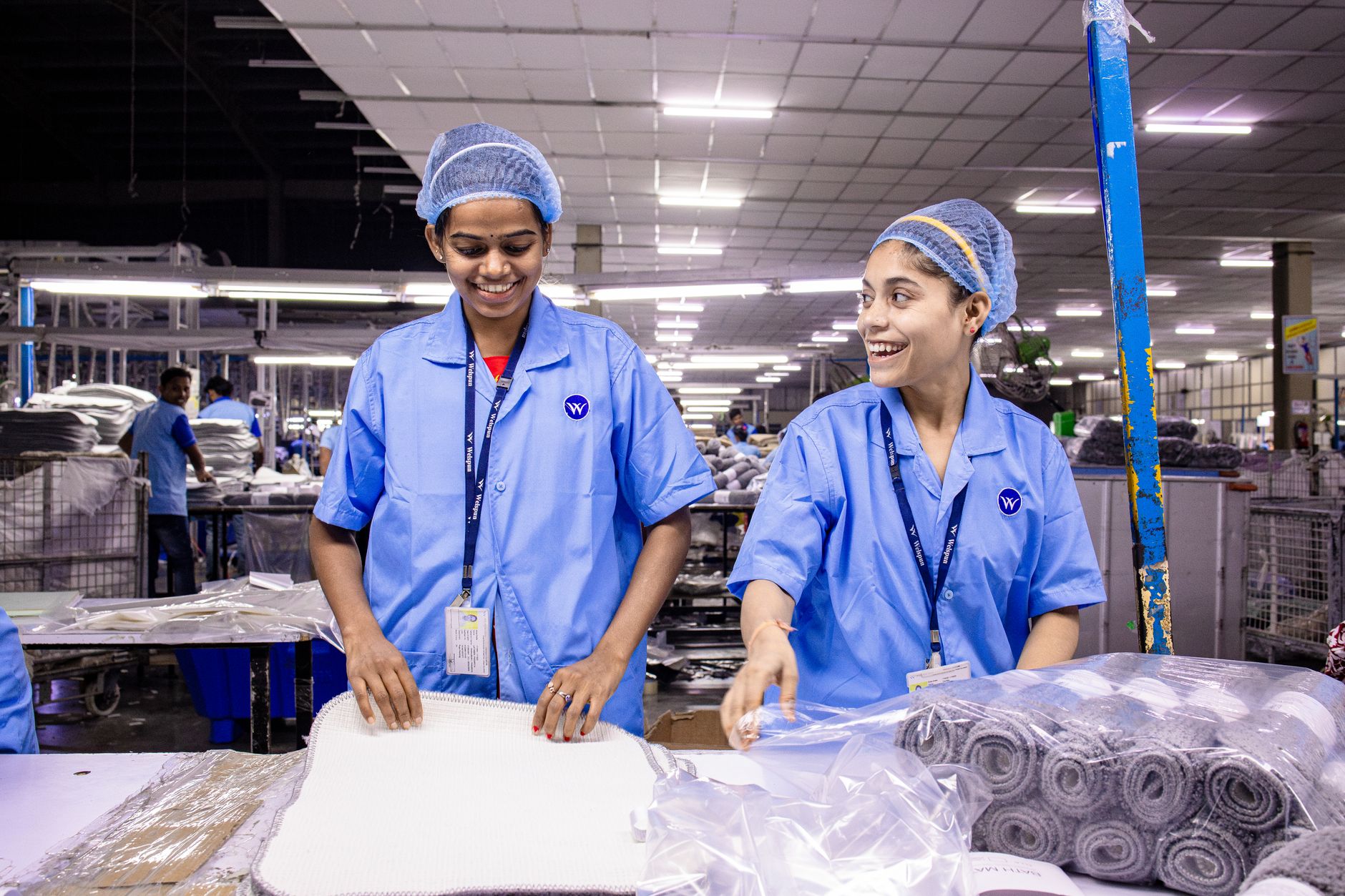
The working model is a cobot plus fewer people on the line, never a cell with zero staff. The cobot takes the stacking run, and the person moves to pallet supply, exceptions and quality checks. One trained worker can often oversee a cell that used to need a dedicated stacker, but only while the infeed and pallet supply stay full.
The job changes more than it shrinks. Staff learn the cell panel, how to clear faults safely, how to change the recipe for a new product, and when to stop the cell. Service Robot Co. trains the staff during deployment and provides service nationwide, so the team is not left to work out faults alone.
Is a cobot cheaper than a palletizing worker in Baton Rouge?
The comparison turns on coverage hours, not the hourly rate alone. The government wage data on this page shows the local pay for the closest occupation, and that rate applies to every hour a person is on the line. A cobot lease is a fixed lease payment set through financing, and it runs the same whether the cell is busy or idle.
Where the cell runs nights and weekends with hard-to-fill shifts, the comparison can favor the cobot. Where the line runs one stable day shift, the case is weaker and a person may remain the better choice. The honest test is to put the local wage next to the hours the cell needs covered and the payment quoted after the site assessment.
Pricing is not published on this page. Each quote follows a free site assessment and is based on the cell, the installation and the service plan for your site.

What can't a cobot do on a palletizing line?
Several worries about cobots on palletizing are overstated and a few are real. The main limits are payload, speed, pattern flexibility and judgment. A cobot does not notice what it has not been taught to notice, and being plain about these limits is what keeps a deployment from failing in its first month.
A cobot can stop and wait, but it does not make decisions about a load. It cannot reliably tell a crushed case from a sound one without a sensor or camera check, it cannot reseat a misaligned pallet by feel, and it cannot decide to hold a truck. If a line depends on any of these, a person stays on it.
Collaborative robots are built to work near people, but the cell still needs a risk assessment and guarding that suit your layout. Review that with your safety lead before go-live, and treat it as part of the project rather than a box to tick.
How common are cobots in industry?
Cobots are a growing but still small share of industrial robots. According to the International Federation of Robotics, cobot installations reached 66,000 units in 2025, 11% of all industrial robot installations. The same report says cobot growth at 7% trailed the overall industrial robot market for the first time.
The global operational stock of industrial robots rose 9% to a record 5 million units in 2025, and annual installations reached 603,000. That shows a large and maturing market, but it does not isolate palletizing or Baton Rouge. No palletizing-specific IFR share was verified for this page.
How do you get started with a cobot lease in Baton Rouge?
Start with the line, not the robot. Service Robot Co. begins with a free site assessment that maps the cell, times the current stacking runs and records staffing gaps by shift. We then propose a configuration and quote the lease through financing. Deployment, integration, staff training and nationwide service follow approval.
A pilot path starts with one leased unit, so a site can test the stacking run before adding capacity. A spare unit plan can cover the cell during service visits, and one partner handles the robot, the integration and the service. We are a vendor neutral integrator, so the machine is chosen for your floor and your product mix.
Frequently asked questions
Put a robot to work in Baton Rouge.
We walk your site, learn the job, and recommend the unit that fits. Then we quote the lease, deploy it, and keep it serviced.
Sources
- US Bureau of Labor Statistics, Occupational Employment and Wage Statistics (OEWS May 2024)
- BLS Occupational Employment and Wages, Baton Rouge metro
- BLS Occupational Outlook Handbook, hand laborers and material movers
- FRED, Baton Rouge transportation, warehousing and utilities employment
- FRED, Louisiana transportation, warehousing and utilities employment
- BLS Industry at a Glance, warehousing and storage
- BLS injuries and illnesses by industry
- NELP, New Jersey warehouse turnover data brief
- International Federation of Robotics, World Robotics statistics