
The short answer
In Bridgeport, CT, a cobot makes sense when one palletizing line repeats the same stacking pattern across long shifts, the cases are similar in size, and the floor can hold a fixed cell with people still loading, checking and handling exceptions. A palletizing worker still makes more sense for mixed product, irregular pallet patterns, frequent changeovers and short runs, where a person's judgment covers what a fixed arm cannot. For most sites the real choice is a robot plus fewer staff, not a robot in place of everyone.
Key takeaways
- A cobot fits steady, repeatable stacking, while a palletizing worker fits mixed, irregular and frequently changing loads.
- The government wage data on this page gives the local wage for this job, but the decision turns on shift coverage and staffing as well.
- Published Bridgeport-area labor data shows a sizable transportation and warehousing base, but no occupation-level turnover figure.
- Warehousing injury rates sit well above the all-industry rate, so the stacking area needs a safety plan with or without a robot.
- Plan for fewer people on the line, never zero, and get a site assessment before asking for a lease quote.
Cobot or palletizing worker in Bridgeport, CT: which makes sense?
A cobot earns its place on a palletizing job that repeats the same pattern for most of a shift, with cases of similar size and weight, a clear feed from the line and a product mix that changes rarely. A palletizing worker earns it where the load changes all day: different case sizes, custom patterns, damaged product that needs a call, or changeovers several times a shift.
The robot makes less sense when the line runs short or one-off jobs, when the floor cannot hold a fixed cell with clear access, or when current staff can absorb the work without losing output. It makes more sense when you run a steady line, have shifts you cannot fully staff, and a station where repetitive lifting is hard to fill.
Our research did not produce a verified hours-saved figure for palletizing, and the case reports we reviewed measure throughput rather than hours. The decision should rest on your own line data: cases per shift, pattern changes per week and what happens to the line when a shift is short.
What does a palletizing worker actually do in a shift?
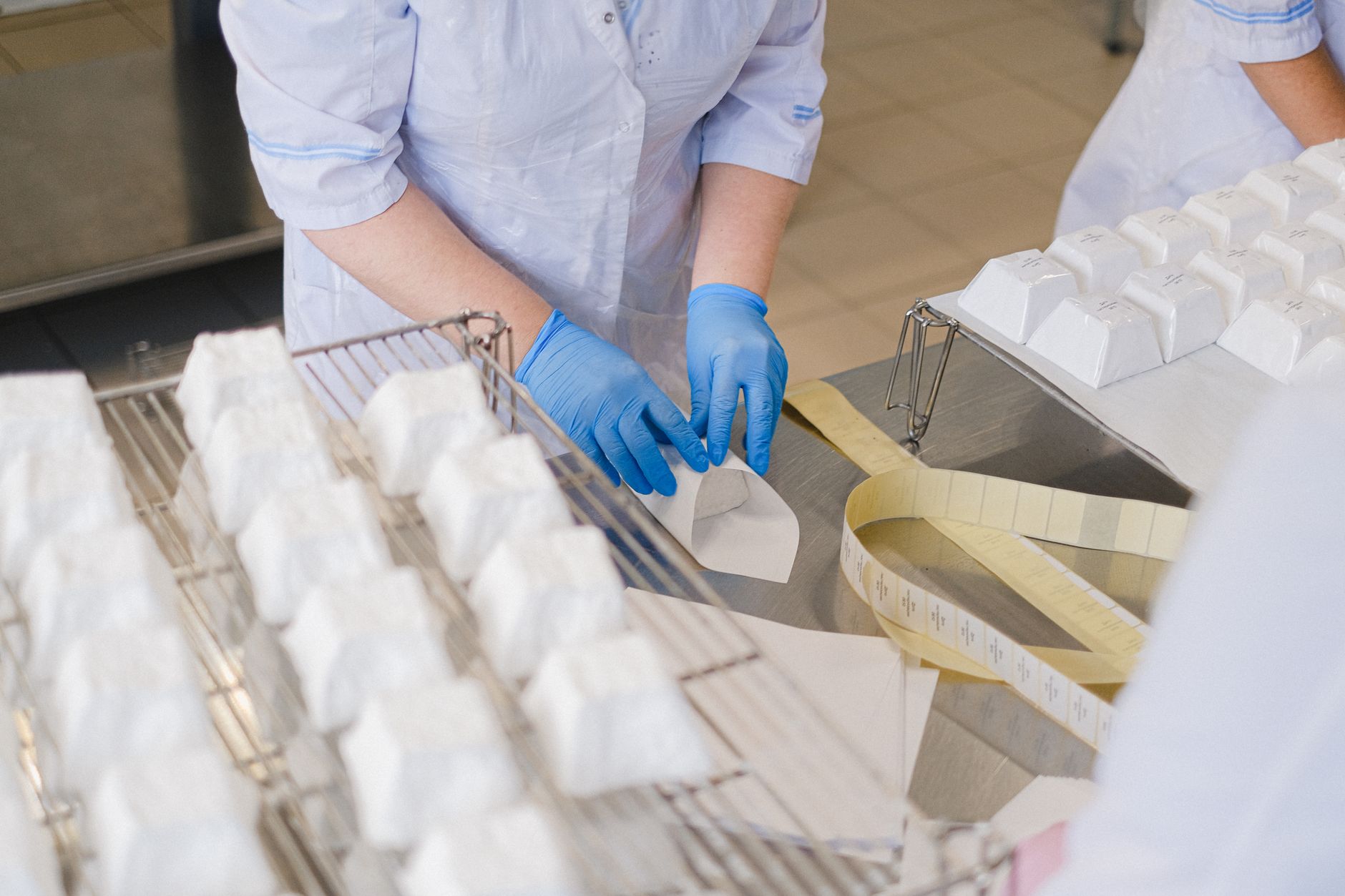
A palletizing worker takes finished cases from a conveyor or staging area and builds layers on a pallet, following a stacking pattern so the load stays stable through wrapping and transport. The core work is repetitive lifting and placing, but the person also checks case orientation, sets slip sheets or corner boards, reads labels and stops the line when a case is crushed or leaking.
Around the stacking, the same person usually brings empty pallets to the station, swaps full pallets for empties, moves finished loads to staging or hands them to a wrapper, and clears jams. On a changeover the worker resets the pattern and checks the first layers of the new product. Each task is small, and together they fill the shift.
This split matters for the comparison. A robot can usually take the stacking, but the rest of the station still needs a person or a separate material handling system. Map every task at your station before you compare it with a robot, or you will compare only the stacking and miss the rest.
Median hourly wage, Laborers and Freight, Stock, and Material Movers, Hand
$4,486
Monthly cost of one full-time worker in Bridgeport, CT, at the median wage plus payroll costs (an estimate, not a quote).
Which parts of palletizing can a cobot take, and which can it not?
A cobot arm suits picking uniform cases from a fixed feed and placing them in a programmed pattern, layer after layer. The fit is strongest when case dimensions and weights stay within the arm's rated payload, the pallet footprint stays the same and the pattern changes only occasionally.
A well laid out cell can also run through long stretches without a break and repeat the same pattern and spacing for the whole run. The integrator and vendor case reports in our research describe throughput gains on stacking lines, but those figures were not independently verified, so we leave them out here.
A cobot cannot judge a damaged case, drive a forklift to move a full pallet across a building, or switch to a mixed-product pattern without setup work. Loads that shift, bags that sag or packaging with unusual shapes still need a person until the process is redesigned for the robot.
- Repeating the same stacking pattern
Cobot
Holds the same pattern and spacing through a long run
Palletizing Worker
Steady, but pattern drift can creep in over a long run
- Mixed product and frequent changeovers
Cobot
Needs setup and testing for each new pattern, which stops the line during the change
Palletizing Worker
Adapts to a new pattern without reprogramming
- Damaged or odd cases
Cobot
Cannot judge a crushed case, so a person has to pull it
Palletizing Worker
Spots the problem and decides what to do with it
- Covering a shift nobody can staff
Cobot
Runs the stacking only when its cell has an owner on shift
Palletizing Worker
Cannot cover a shift that nobody is free to work
- Repetitive lifting over a long shift
Cobot
Takes the repetitive stacking without tiring
Palletizing Worker
Carries the strain of repetitive lifting and the injury risk that comes with it
- Pallet handling and floor work
Cobot
Stays in the cell unless paired with a separate material handling system
Palletizing Worker
Moves pallets, works with forklifts and fixes what the cell cannot
How many people hold this job, and what does the local labor picture show?
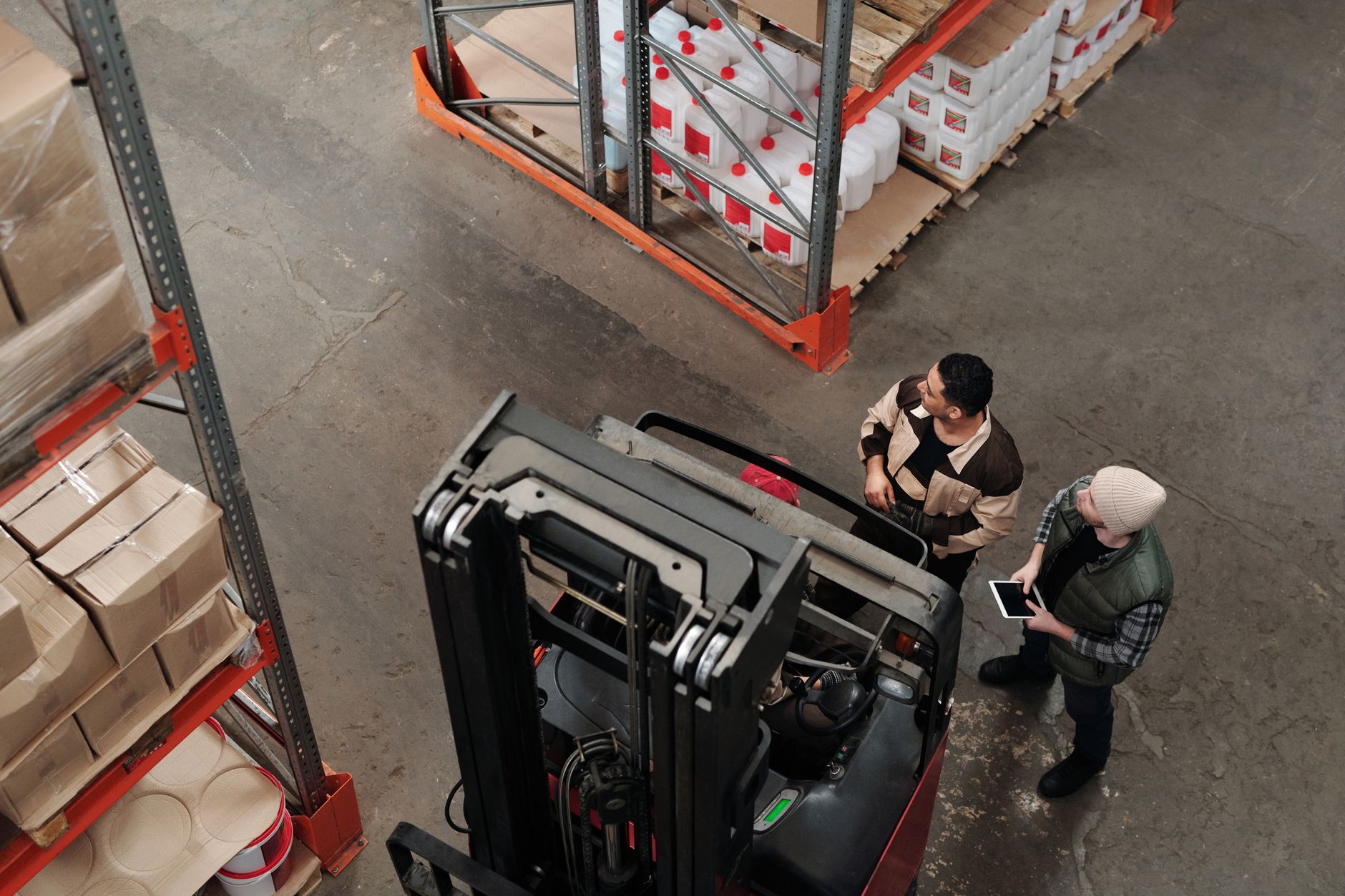
The U.S. Bureau of Labor Statistics Occupational Outlook Handbook reports about 6,950,000 jobs in the hand laborers and material movers group in 2024, with 4 percent projected growth from 2024 to 2034, or 258,400 added jobs. The detailed laborers and freight, stock, and material movers, hand occupation is listed at 2,988,900 jobs in the same handbook. Growth of 4 percent over a decade is modest, so the occupation will not ease staffing on its own.
The Connecticut Department of Labor reports transportation, warehousing, and utilities at 11,200 jobs in the Bridgeport-Stamford-Danbury labor market area in January 2026, up 400, or 3.7 percent, from January 2025, not seasonally adjusted. The Federal Reserve Bank of St. Louis, using BLS data for the Bridgeport-Stamford-Norwalk area, reports transportation, warehousing, and utilities at about 9.06 thousand in December 2024, seasonally adjusted. The two series use different area definitions and adjustments, so read them as a direction, not a single count.
Openings are mixed. The BLS Job Openings and Labor Turnover Survey reports an annual average job openings rate of 4.3 percent in 2025, down from 4.6 percent in 2024. FRED reports the trade, transportation, and utilities job openings rate at 3.8 percent in January 2026, seasonally adjusted, up from 3.3 percent in December 2025. These are industry rates, so they do not show palletizing turnover.
We did not find verified occupation-level turnover, overtime, night-shift or sick-day figures for material movers in the Bridgeport area. Your own payroll and absence records will show those numbers more accurately than any national average. The government wage data panel on this page gives the local wage for this job, and that wage is most useful when set against the paid hours your line really needs, including overtime and absence.
What do injury rates say about stacking and warehouse work?
Palletizing sits inside warehousing and storage, which carries higher injury rates than the economy as a whole. A secondary summary of BLS data reports a 2024 total recordable injury rate of 4.8 per 100 full-time workers in warehousing, versus 2.6 per 100 across all industries. The same summary reports a DART rate of 4.1 per 100 full-time workers in 2024 and 32 fatal injuries in warehousing and storage, up from 28 in 2023.
The U.S. Department of Labor Office of Inspector General reported in 2023 that the warehousing rate in 2021 was 5.5 per 100 workers, against a national rate of 2.7. These figures describe warehousing as a whole, not palletizing alone, and we found no palletizing-only rate, so they show the setting rather than the task.
For the decision, the practical lesson is that a cobot changes the lifting, not the need for a plan. The station still needs guarding, clear walkways, lift aids for cases the robot cannot take and a fresh risk review after installation.
How does a team work with a cobot, and how many people does it still need?
The usual setup is a cobot plus fewer people, never zero. The cell takes the repetitive stacking, while a person keeps the feed supplied, clears exceptions, checks patterns, runs changeovers and handles the pallets the robot cannot take. The station that once had several people at it often needs fewer, but it still needs someone who owns the cell on every shift.
Adoption is spreading beyond car plants. The International Federation of Robotics reports that U.S. industrial robot installations rose 11 percent to 38,000 units in 2025, a preliminary figure presented at Automate 2026, with food and other non-manufacturing sectors driving the growth. Automotive remained the largest user at about 13,500 units, 1 percent below the prior year. These counts cover all industrial robots, not cobots alone, but they show the direction of adoption.
The people who stay need a different skill set: running the cell, clearing faults, changing patterns and basic upkeep. Plan training before go-live, and name the person responsible for the cell on each shift, because an unowned cell stops at the first fault and the line stops with it.
What can a cobot not do, and where does the worker still win?
A cobot will not fix a bad pallet pattern, a crushed case or a supplier that changes case sizes without warning. A person sees these problems quickly and decides whether to pull a case, reroute a pallet or call a supervisor. That judgment should stay on the floor even after the cell goes in.
On variety, a person adapts without reprogramming. Each new product or pattern means someone sets it up, tests it and signs it off, which takes time and can stop the line during the change. If your line changes product several times a shift, the labor saving is smaller than the headline suggests.
On speed, a cobot is not always the fastest machine on a line. Dedicated palletizers are often built for high volume, so a cobot fits lines where a steady, moderate rate is enough. Check the rate you need against the rate the cell can hold, including the pallets that must leave the station each hour.
On reliability, a cell stops when a sensor, gripper or pallet feed fails. A backup plan matters: a trained person who can take over, a service agreement with clear response terms, or a second cell on a busy line. Ask how fault response works before you sign any lease.
What changes the answer before you ask for a lease quote?
The answer turns on a few facts about your line, not on a general rule. Start with cases per shift, the spread of case sizes, pattern changes per week, the floor space available and the staffing you can fill on each shift. Each of these moves the decision more than a headline comparison does.
Set the local wage for this job from the government wage data on this page against the paid hours your line really needs, including overtime and absence from your own records. If you cannot fill a shift at all, the value of a robot is coverage rather than a wage saving, and the comparison changes accordingly.
Lease cost is quoted after a site assessment, with the financing terms set in that quote. Compare the lease against the staffing cost and coverage gap you are actually carrying, not against a figure from a general article.
How do you get started with a cobot in Bridgeport, CT?
Start with a site assessment. We map the station, the case flow, the pallet footprint and the staffing by shift, then recommend a robot and a cell layout that fits your floor. The lease is quoted after that assessment, with the financing term written into the quote so you can compare it with the staffing cost you carry today.
We lease the robot through financing, deploy and integrate it, train your staff and service it nationwide. For a first project, a single cell on one line is usually the sensible start, so pattern changes and fault handling get tested on one station before more are added.
Before the site visit, pull three things from your records: cases per shift, overtime and absence by shift, and pattern changes per week. Those numbers decide the answer, and they describe your site rather than an industry average.

Frequently asked questions
Put a robot to work in Bridgeport.
We walk your site, learn the job, and recommend the unit that fits. Then we quote the lease, deploy it, and keep it serviced.
Sources
- US Bureau of Labor Statistics, Occupational Employment and Wage Statistics (OEWS May 2024)
- U.S. Bureau of Labor Statistics, Occupational Outlook Handbook: hand laborers and material movers
- Connecticut Department of Labor, Bridgeport-Stamford-Danbury labor market area employment table
- Federal Reserve Bank of St. Louis (FRED), Bridgeport-Stamford-Norwalk transportation, warehousing and utilities series
- U.S. Bureau of Labor Statistics, Job Openings and Labor Turnover Survey release
- FRED, trade, transportation and utilities job openings rate
- International Federation of Robotics, U.S. robot industry news release
- Warehouse safety statistics summary, a secondary summary of BLS data
- U.S. Department of Labor Office of Inspector General, 2023 report on warehousing injury rates