
The short answer
For most Bridgeport sites, an autonomous forklift makes sense when a meaningful share of pallet moves repeat on the same fixed route every shift, such as dock to staging or staging to rack. A forklift operator still makes sense when the work changes daily, loads are awkward to handle, or aisles and docks are often blocked and someone has to decide on the spot. In practice an autonomous forklift vs forklift operator in Bridgeport is rarely either-or, because the robot still needs a person to load, supervise and handle exceptions, so the realistic plan is a robot plus fewer operators, never zero staff.
Key takeaways
- Automate the repeating fixed-route moves and keep people on the changing work.
- Plan for a robot plus fewer operators, not a site with zero staff.
- No Bridgeport turnover or injury count was found, so measure your own site before deciding.
- The lease quote follows a free site assessment, not a guess about your floor.
- Pilot one route or one shift before scaling to the whole building.
Autonomous forklift vs forklift operator in Bridgeport: which makes sense?
An autonomous forklift makes sense in Bridgeport when a meaningful share of pallet moves repeat on the same route every shift, such as dock to staging or staging to rack. A forklift operator still makes sense when the work changes from day to day, when loads are awkward to handle, or when aisles and docks are often blocked and someone has to make calls on the spot. Most sites sit somewhere between those two cases, which is why the decision starts with counting trips rather than picking a machine.
The robot rarely replaces every operator. The realistic outcome is a robot plus fewer staff: a person still loads, supervises and clears exceptions, while the robot covers the trips that repeat. Test any claim that a robot can take a whole shift against your own route list before you accept it.
Adoption is still early in general. GlobeSt, citing a report, says full warehouse automation remains at about 3 to 5% of warehouses, and quotes an industrial real estate company saying nearly 10% of new leases now include automation. Adoption figures for forklifts specifically are thin, so treat these numbers as context for the whole warehouse market rather than as a forklift benchmark.
What does a forklift operator actually do in a shift?
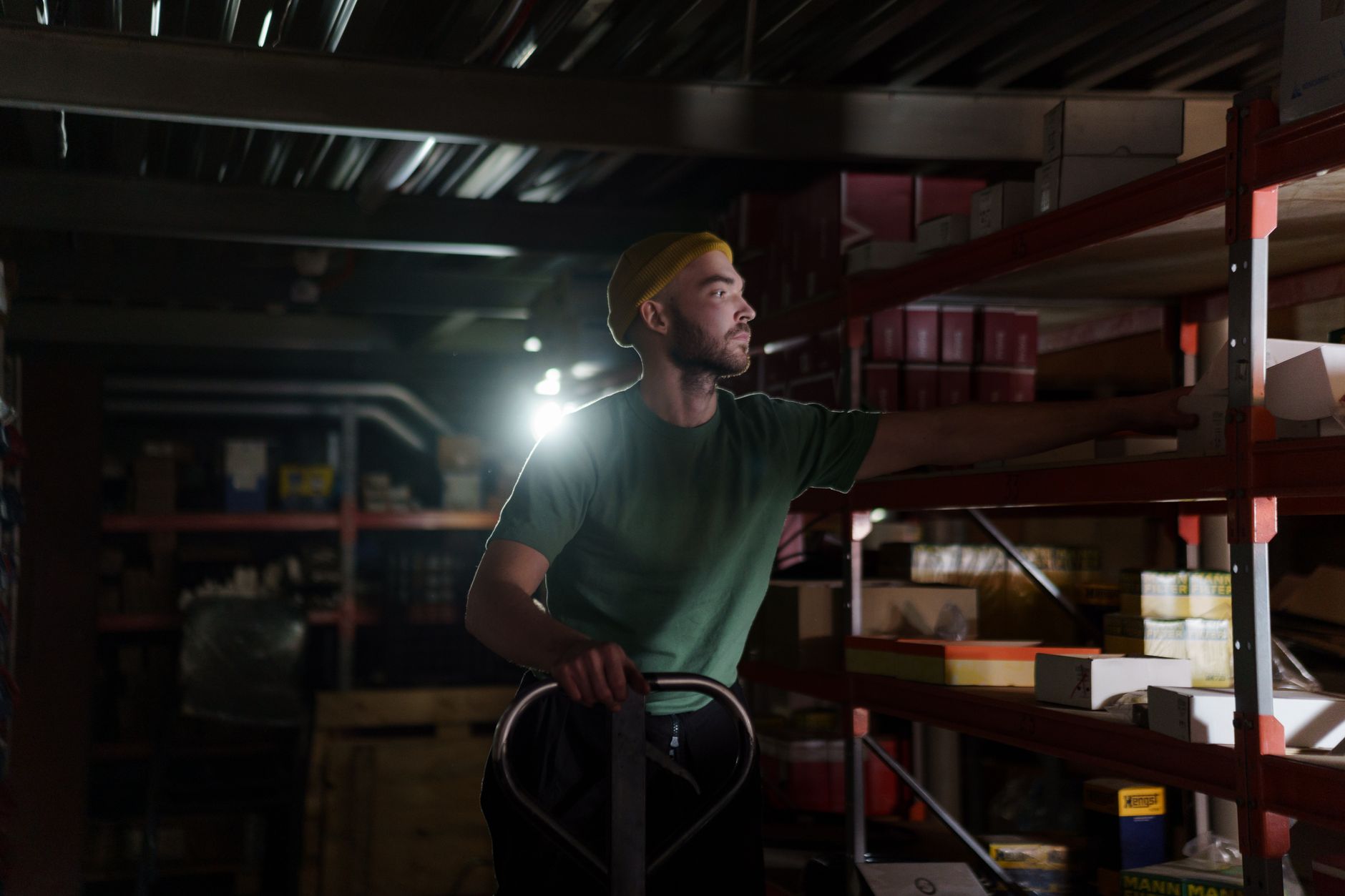
A forklift operator at a dock or warehouse usually does a mix of moves rather than one repeated task. The shift often includes unloading trailers, moving pallets from receiving to storage, pulling orders to staging, loading outbound trailers and restacking. Much of the time goes to travel between points, waiting for dock doors and checking labels or paperwork, so the lifting is only part of the picture.
The operator also acts as a safety point. Before use they check the truck, watch for pedestrians in the aisle, and report damaged racking, spills or pallets that are unsafe to move. Those checks do not follow a fixed route, and they are where a person adds value that a route cannot.
The national labor figures show how large this occupation is. The BLS Occupational Outlook Handbook reports about 7.0 million jobs for hand laborers and material movers in 2024, and says the narrower Laborers and Freight, Stock, and Material Movers, Hand occupation accounts for about 2,988,900 jobs. BLS projects 4% growth for the broader group from 2024 to 2034, about as fast as average. O*NET OnLine projects 2% growth for the freight and stock laborer occupation over the same period, which is slower than average, so the two sources do not agree on the direction of demand for this work.
Median hourly wage, Laborers and Freight, Stock, and Material Movers, Hand
$4,486
Monthly cost of one full-time worker in Bridgeport, CT, at the median wage plus payroll costs (an estimate, not a quote).
Which parts of the job can a robot take, and which can't it?
A robot does well on repeatable, mapped moves: traveling a known route between fixed points, picking up pallets from defined positions and stopping when a person or obstacle enters its path. These moves are usually the first to automate because they follow the same pattern each time, which makes setup and testing predictable.
It does poorly on work that depends on judgment or on a floor that keeps changing. Trailers loaded out of order, pallets with damaged bases, loads that need hand adjustment and aisles blocked for long periods all need a person. The robot also depends on clear, mapped paths, so a site that changes its layout often will need more setup time after each change.
Do not assume a single truck covers every load or floor. Lift heights, load weights, floor surfaces and dock edges vary by machine, so check those limits during the site assessment rather than at go live. The comparison below sets the robot and the operator side by side, point by point.
- Repeat fixed-route trips
Autonomous Forklift
Runs the same mapped route the same way on each trip
Forklift Operator
Works the route but gets tired and can drift in pace over a long shift
- Changed layout or blocked aisle
Autonomous Forklift
Waits or stops until the path clears, and needs remapping after a layout change
Forklift Operator
Reroutes on the spot and tells the lead what changed
- Off-hours coverage
Autonomous Forklift
Runs when the site is lightly staffed, once set up and tested
Forklift Operator
Needs a scheduled shift and someone willing to work it
- Awkward or damaged loads
Autonomous Forklift
Handles pallets within its rated limits only
Forklift Operator
Adjusts, restacks and makes calls on damaged or odd loads
- Pedestrian and dock safety
Autonomous Forklift
Stops when a person enters its path, but the site still needs separation rules
Forklift Operator
Watches the aisle directly, but can tire and miss things
- Priority changes
Autonomous Forklift
Follows the queue it was given
Forklift Operator
Reprioritizes when a trailer arrives early
- Scaling up
Autonomous Forklift
Adds units after mapping, setup and testing
Forklift Operator
Hiring and training take time, and turnover adds to the load
How do turnover, injuries and overtime shape the labor case?
Turnover is where the labor case looks strongest and where the numbers are weakest. A vendor blog derives from BLS JOLTS data that quits in transportation, warehousing and utilities averaged 2.2% a month in 2025, against 2.0% for total nonfarm, and calculates about 26.4% annual voluntary turnover. That is a derived figure, not one the BLS publishes. A staffing vendor's research page cites 35 to 49% annual turnover in warehouse and fulfillment work, attributed to JOLTS, but we could not confirm that against BLS.
A vendor-run 2025 State of Warehouse Labor report found that most respondents reported turnover below 10%, with a notable share reporting 20% or higher. That spread is wide. The useful reading is that turnover depends on the site, and your own records from last year are the number to put into the assessment.
Injury risk is the other half of the case. The BLS handbook says hand laborers and freight, stock and material movers have some of the highest injury and illness rates of all occupations. A forklift safety vendor, repeating older estimates whose dates are not clear, reports about 85 forklift deaths a year, 34,900 serious injuries and 61,800 non-serious injuries, with tip-overs as the leading fatal cause at 42%.
Overtime, night shifts and sick days are the labor items that matter most for a robot case, and we did not find verified national or Bridgeport figures for them. Track them yourself for several weeks before the assessment. The local wage for this job, shown in the government wage panel beside this text, prices each filled hour, while the hours you cannot reliably fill are where the case should be tested first.
How is a robot leased, and what goes into the quote?
We lease robots through financing rather than a sale, so upfront capital stays in the business. The quote comes after a free site assessment, because the number depends on the floor, the number of routes, the units needed, the shift pattern and the service level. Our lease financing programs set the term, and maintenance included in the lease keeps repair costs out of the day to day budget.
When you compare offers, ask for the terms in writing: term length, what the lease covers, who handles repairs, how fast a technician reaches your site, what happens to queued moves during a fault, and whether a spare unit is available while a machine is serviced. Those answers change operating cost more than a headline lease figure does.
Ask for your own hours data before you compare. A lease makes sense when the robot covers hours you already pay for or cannot fill, and the quote should show how many of those hours it takes over.
How does a team work with a robot on the floor?
The pattern that holds up is a robot plus fewer staff. One lead or operator stays on the floor to load and unload, monitor the route, clear exceptions and respond to alerts, while the robot takes the repeated trips. Fewer operators are needed across the shifts the robot covers, but no shift runs with nobody on site.
Setup usually begins with a site map, a test route and a go live period with staff watching each trip. Staff learn which conditions stop the robot, how to clear a blocked path safely and when to call for service. Training happens before the first full shift, so the people who stay on the floor know the stop conditions before they matter.
Assign ownership early. Someone has to update routes when the layout changes, match the robot's queue to dock appointments and review the stop log each week. Give that job to a named person, not to whoever happens to be free.
What can an autonomous forklift not do?
It cannot judge a load it was not taught, handle a trailer that is not ready, or decide that a route is unsafe for reasons its sensors do not detect. It needs a mapped and reasonably clear floor, and it will stop or wait when a path is blocked. If nobody notices the wait, a dock can slow down quickly.
It does not remove pedestrian risk. People still walk through aisles and dock areas, so separation, marked walkways and clear rules remain necessary. The robot takes the operator out of the seat on planned moves, but the building still has people in it.
It does not fix a process that is already broken. If pallets arrive mislabeled or docks run late, the robot moves the same confusion faster. Fix the receiving and labeling flow first, or test it during the assessment, so the robot is not blamed for upstream problems.
How do we get started with an autonomous forklift in Bridgeport?
Start with a free site assessment. We map the routes, count the trips and measure the shift pattern, then show where operator time goes. The assessment answers two questions: which routes repeat often enough to automate, and how many operators can move to other work without leaving the site short.
Then run a pilot on one route or one shift, not the whole building. Our deployment covers site mapping, integration with your current workflow, go live support and staff training. The first weeks of trip and stop data decide whether to add units.
We are a commercial robot integrator, not a single-machine shop. We choose the robot for the floor, lease it through financing, deploy and integrate it, train the staff and service it nationwide. The point is that one partner handles the machine from assessment through service, so your site has one team to call when a route stops.
What we could not verify for Bridgeport
This page relies on national figures for most labor and safety points. We did not find a current count of warehousing or forklift employers in Bridgeport, nor Bridgeport turnover or injury counts. The state figures we found are dated, and some turnover figures come from vendors that derive or cite numbers without a clear method.
Several forklift safety figures come from a forklift safety vendor repeating older estimates with unclear dates. Treat them as context, not as a benchmark for your site. Adoption figures for forklifts specifically are also thin, since the most usable survey numbers cover robot classes that are not forklifts.
Before deciding, ask for trip counts, overtime records and turnover from your own site for the last year. Those numbers will carry more weight than any national average, including the ones on this page.
Frequently asked questions
Put a robot to work in Bridgeport.
We walk your site, learn the job, and recommend the unit that fits. Then we quote the lease, deploy it, and keep it serviced.
Sources
- US Bureau of Labor Statistics, Occupational Employment and Wage Statistics (OEWS May 2024)
- BLS Occupational Outlook Handbook, hand laborers and material movers
- O*NET OnLine, freight, stock and material mover occupation trends
- BLS OEWS current estimates, laborers and freight, stock and material movers
- Warehouse turnover rate analysis (vendor blog)
- Warehouse and fulfillment staffing costs (staffing vendor research page)
- 2025 State of Warehouse Labor report (vendor-run survey)
- Powered industrial truck statistics compilation (safety vendor)
- GlobeSt, warehouse automation as modern logistics space (2026)