
The short answer
Autonomous forklift vs forklift operator in Buffalo comes down to repetition and coverage. An autonomous forklift makes sense where the same pallet moves repeat along fixed routes on several shifts, especially where night or weekend coverage is hard to staff. A forklift operator is still the better choice when loads need judgment, the yard changes daily, or the work is mostly mixed tasks, and for most sites the practical answer is a robot plus fewer staff.
Key takeaways
- A robot fits fixed routes, repeat loads and shifts that are hard to staff.
- A person fits judgment calls, mixed tasks and yards where trailers move every day.
- Nationally, there were 7,105,700 jobs for hand laborers and material movers in 2023.
- The labor math should use your own hours and turnover, since the verified turnover figure is economy wide.
- Start with a free site assessment, a lease quote after it, and one route before scaling.
Autonomous forklift vs forklift operator in Buffalo: which one fits your site?
The short version is about repetition and coverage. An autonomous forklift is a good fit when the same pallet moves repeat along the same aisles, the floor layout changes rarely, and the work runs on shifts that are hard to fill, including nights and weekends. Those conditions show up in many warehouses and distribution sites, in Buffalo as elsewhere, but the fit is decided by your floor, not by the city.
A forklift operator still wins in several situations. Loads that need judgment, such as damaged pallets, unstable stacks or loads that must be inspected before they move, need a person. So do yards and docks where trailers park in new spots every day, and sites where one worker moves between receiving, picking, returns and the yard within a single shift.
For most sites the answer is neither pure option. It is a robot doing the repeat moves, with fewer staff handling the exceptions, the checks and the work the robot cannot take. The rest of this page shows how to test that split at your own facility, because the split is what decides the result.
What does a forklift operator actually do in a shift?
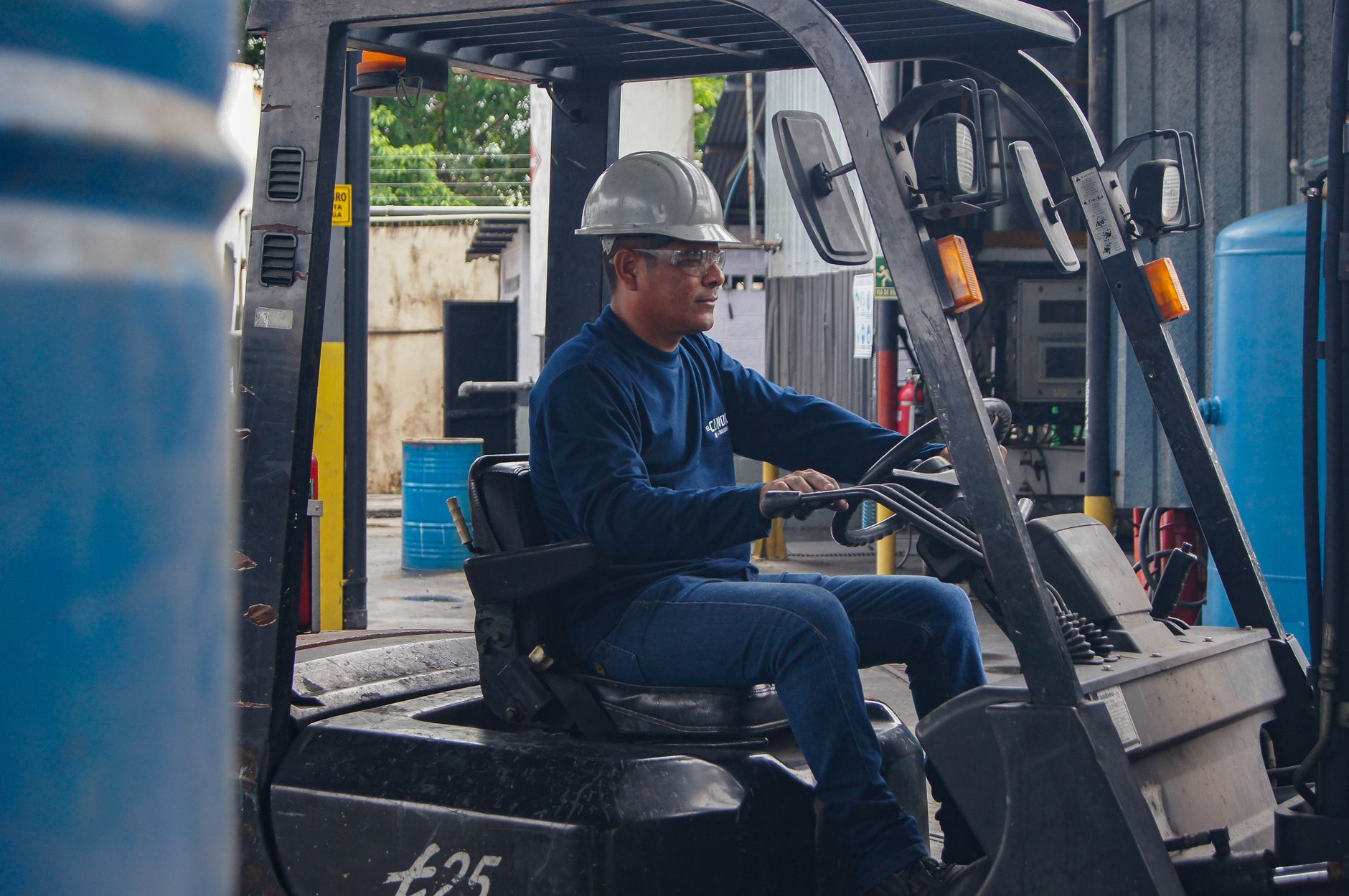
A forklift operator's shift is rarely one long run of pallet moves. It usually includes receiving trailers and putting pallets away, pulling orders for outbound loads, staging freight at the dock, moving stock between floor and racking, and clearing exceptions like a dropped load or a mislabeled pallet. A large share of the time goes to travel between points, waiting on a dock door or trailer, and checking a load before it moves.
That mix matters for the decision. A machine can take the repeat moves, but it only covers the part of the shift that is repeat. Checks, handoffs and exceptions do not disappear when the robot arrives, so someone has to own them, and that someone is part of the labor picture you are comparing.
The government wage data on this page gives the local wage for this job in the Buffalo metro, which is the right starting point for the labor side of the comparison. Treat it as the wage only. The full cost of a worker also includes benefits, overtime, sick days and the cost of replacing someone who leaves.
Median hourly wage, Laborers and Freight, Stock, and Material Movers, Hand
$4,642
Monthly cost of one full-time worker in Buffalo, NY, at the median wage plus payroll costs (an estimate, not a quote).
Which parts of the job can an autonomous forklift take, and which can it not?
An autonomous forklift can take steady, mapped moves. These include pallet transfers between fixed points, runs from receiving to a staging area on a set route, and repeat trips between a production line and a storage zone. A good integration maps those routes, sets the stop points and confirms that the floor stays clear enough for the unit to run without stopping.
It generally cannot take work that depends on judgment or on a space that keeps changing. That includes inspecting a load and deciding to refuse it, placing product into tight or irregular racking, loading and unloading trailers that are not in a fixed position, and working in outdoor yards with changing surfaces and traffic. Those tasks stay with people, and the staff who remain need the training to do them.
Ask for a task-by-task walk of your own operation, with each task labeled routine, exception or judgment. The labels show how much of the shift the machine can carry before a person has to step in, and they expose the tasks that were never written down.
What do the labor numbers say about this job in Buffalo and nationally?
Start with the national picture, which is the best verified data on this page. According to the Bureau of Labor Statistics Occupational Outlook Handbook, there were 7,105,700 jobs for hand laborers and material movers in 2023. The same source projects 4 percent growth from 2023 to 2033, about 283,200 jobs, and about 1,008,300 openings a year on average over the decade.
The Buffalo figures here are from May 2023. According to the BLS Buffalo metro release for that month, the largest occupational groups in the Buffalo-Cheektowaga-Niagara Falls area were office and administrative support at 13.5 percent, food preparation and serving at 8.9 percent and sales at 8.5 percent. That shows the metro's overall job mix, and it does not measure warehouse staffing directly.
For the local wage itself, use the government wage data on this page. We did not verify a local turnover rate for forklift or material-moving work in Buffalo, so any turnover figure you use should come from your own records for the last two years, which will say more about your site than any regional average.
How many hours does the operator cover, and what does turnover cost?
Hours are the most site-specific part of the decision. This review did not verify hours per shift, overtime, night shift share or sick days for forklift operators, so this page does not give those figures. The site assessment measures them directly, including travel time, load counts, dock waits and the hours that fall outside daytime cover.
Turnover is where the cost hides. Each vacancy means recruiting, training and a stretch of lower productivity while a new person learns the floor. According to the Bureau of Labor Statistics Job Openings and Labor Turnover Survey, the 2025 annual average total separations rate was 3.3 percent across all industries, unchanged from 2024. That is an economy wide average, so use it for context, not as a forklift rate for your building.
The same release puts total separations for 2025 at about 62.8 million, down 251,000 from 2024. Those numbers show churn across the whole economy. For your decision, count how many shifts went unfilled last year and how many of them fell at night or on weekends.
How does a team work with an autonomous forklift?
The working model is always a robot plus fewer staff, never zero staff. The robot takes the repeat moves across the shift, and people handle receiving exceptions, inspections, dock and yard work, and the checks that keep the unit on its routes. A site that drops to zero people has no one to clear a blocked aisle or to pick up a load the robot will not move.
Training comes before go live. OSHA rule 29 CFR 1910.178 sets operator training and evaluation requirements for powered industrial trucks in general industry, and the staff who still run manual trucks need that training. Ask your safety lead how the rule applies to a mixed fleet and get the answer in writing before the first day.
We handle the integration, the staff training and the service after go live. We lease the unit through financing, so the cost arrives as a fixed lease payment rather than a large up front outlay. That payment comes in a quote after a free site assessment, so it reflects your floor, your routes and your service needs.
How safe is forklift work, and what do the incident numbers show?
Forklifts are among the more hazardous pieces of equipment in a warehouse. According to a secondary safety summary of OSHA data, forklift-related deaths run roughly 85 a year in US workplaces, and operator crush from tip-overs accounts for 42 percent of those fatalities. The same summary cites BLS counts of 75 to 94 workers killed a year in forklift incidents from 2011 to 2017.
The same safety summary gives an OSHA-based estimate of about 35,000 serious injuries and about 62,000 non-serious injuries a year. A separate secondary source reports 78 work-related deaths and 7,290 nonfatal injuries with days away from work involving forklifts in 2020. Those figures were not checked against BLS, so treat them as rough context rather than a precise count.
The National Safety Council fact sheet puts the overall days-away-from-work injury rate at 23.6 per 10,000 full-time workers and names transportation and warehousing as the industry most at risk for those cases. It does not break out the sector rate. A robot removes the operator from some moves and so reduces exposure on those moves, but it adds hazards where people walk through its routes, so the safety plan has to be written for both.
What can an autonomous forklift not do?
It cannot judge a load. A robot can detect an obstacle and stop, but it cannot decide that a pallet is cracked, that a stack looks unstable or that a mislabeled shipment should stay in the building. Those calls stay with a trained person, and the site needs a defined way to hand them off.
It is limited by layout. Narrow or irregular aisles, floor damage, loose debris and frequently rearranged racking can slow a unit or stop it. Dock plates, trailer positions and yard surfaces need checking before anyone commits to a yard route. This review did not verify cold storage or outdoor performance for any specific unit, so ask for the operating temperature range and surface requirements in writing.
It cannot repair itself on the floor. Recovery depends on service coverage, spare units and how fast a fault is triaged. Ask what happens when a unit fails in the middle of the night, because a single unit with no backup turns one fault into a stopped route.
How do you get started with a robot forklift in Buffalo?
Start with a free site assessment. We map the floor, time the existing moves, mark exception points and identify which routes repeat enough to automate. The first output is a task list labeled routine, exception and judgment, plus the hours that fall outside daytime cover.
Then look at the financing. Robots are leased through financing, and a fixed lease payment is quoted after the site assessment, so you can set it against the staffing picture you already have. Many sites begin with one unit on the most repetitive route, prove throughput and exception rates, and then add units or routes. Payback depends on your numbers, and the assessment is where those numbers get built.
Before the first day, agree on training for the staff who remain, the escalation path for exceptions and the service response for a failed unit. Then go live with support on site. Every decision here should rest on your own hours, your own turnover and your own floor, not on a national average.

Frequently asked questions
Put a robot to work in Buffalo.
We walk your site, learn the job, and recommend the unit that fits. Then we quote the lease, deploy it, and keep it serviced.
Sources
- US Bureau of Labor Statistics, Occupational Employment and Wage Statistics (OEWS May 2024)
- BLS Buffalo metro occupational employment and wages release, May 2023
- BLS Occupational Outlook Handbook, Hand Laborers and Material Movers
- BLS Job Openings and Labor Turnover Survey release, 2025
- SafetyNow summary of OSHA and BLS powered industrial truck statistics
- National Safety Council injuries fact sheet
- MySafetySign forklift statistics blog